Collaboration in India’s Defence Sector: Tata
Chairman Calls for Joint Efforts under Make in
India
India’s defence sector is at a turning point, with growing geopolitical challenges, rising national security needs, and a strong government push toward indigenization. Against this backdrop, Tata Sons Chairman N. Chandrasekaran recently highlighted the importance of collaboration among multiple players—ranging from domestic companies to global Original Equipment Manufacturers (OEMs)—to develop robust defence manufacturing capabilities under the “Make in India” initiative.
His remarks are significant at a time when India is not only one of the world’s largest importers of defence equipment but also increasingly committed to becoming a major hub of indigenous manufacturing.
The Strategic Context of India’s Defence Push
India’s defence sector has long relied heavily on imports for advanced weaponry, aircraft, and naval systems. However, escalating regional tensions, the need for technological sovereignty, and economic considerations have placed a renewed focus on self-reliance.
The Indian government has launched multiple reforms and policies, including:
-
Defence Acquisition Procedure (DAP) 2020 prioritizing indigenous procurement.
-
Defence Production and Export Promotion Policy (DPEPP) 2020 setting targets for $25 billion turnover and $5 billion in exports by 2025.
-
The creation of a negative import list, banning imports of hundreds of defence items to promote local manufacturing.
It is within this ecosystem that Chandrasekaran’s call for collaboration resonates deeply.
Why Collaboration is Essential
1. Complexity of Modern Defence Systems
Defence platforms today are highly complex, integrating technologies from aerospace, electronics, cybersecurity, AI, robotics, and materials science. No single company—domestic or international—can master all domains. Collaboration ensures knowledge-sharing and technology infusion.
2. Bridging the Capability Gap
Indian companies have developed strong capabilities in areas like information technology, automotive engineering, and advanced materials. However, critical technologies such as stealth systems, precision-guided munitions, and high-end avionics often come from global OEMs. Partnerships allow Indian firms to absorb and adapt these technologies.
3. Speed of Delivery
With rising security threats, India cannot afford long delays in procurement. Collaborative ecosystems, where multiple players co-develop and co-produce, accelerate delivery timelines and improve project execution.
4. Cost Optimization
Collaboration allows shared investments in research, testing, and production facilities. It also creates opportunities for economies of scale, lowering costs and making Indian products more competitive globally.
Domestic Players Taking the Lead
Several Indian conglomerates have entered the defence space with ambitious strategies:
-
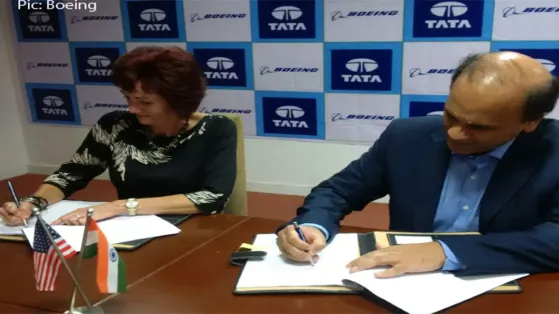
Tata Advanced Systems Limited (TASL): Engaged in aerospace and defence manufacturing, including aircraft assembly and partnerships with Lockheed Martin and Boeing.
-
Larsen & Toubro (L&T): Key player in naval shipbuilding, artillery systems, and defence engineering.
-
Mahindra Defence Systems: Active in armored vehicles, naval systems, and aerospace components.
-
Hindustan Aeronautics Limited (HAL): India’s largest aerospace manufacturer, producing Tejas fighter jets and Dhruv helicopters.
These companies demonstrate India’s growing industrial base, but Chandrasekaran’s call underscores that working together is the only way forward.
Role of Global OEMs
Foreign defence manufacturers are equally important in this vision. Many have already partnered with Indian firms under joint ventures and technology-transfer agreements:
-
Lockheed Martin and TASL assembling C-130 Hercules aircraft components in India.
-
Boeing and HAL collaborating on Apache and Chinook helicopters.
-
Thales, Airbus, and Dassault Aviation establishing engineering and supply chain hubs in India.
By participating in India’s manufacturing ecosystem, global OEMs benefit from cost competitiveness and access to a rapidly growing market, while India gains cutting-edge technology and industrial expertise.
Challenges Hindering Collaboration
While collaboration is the way forward, certain hurdles remain:
-
Regulatory Bottlenecks: Long approval cycles and complex procurement rules discourage faster partnerships.
-
Technology Transfer Hesitancy: Global OEMs are often cautious about sharing sensitive technologies.
-
Supply Chain Limitations: India’s defence supply chain lacks maturity compared to advanced defence economies.
-
Skilled Workforce Shortage: High-end defence R&D requires a deeper talent pool in niche technologies.
Chandrasekaran’s call implicitly points toward resolving these bottlenecks through proactive policy measures and industry-wide dialogue.
The Way Forward: Building a Collaborative Defence Ecosystem
1. Public–Private Partnerships (PPPs)
A closer alignment between PSUs like HAL, BEL, and DRDO and private conglomerates such as Tata and L&T will ensure better resource utilization.
2. Defence Clusters and Hubs
Developing integrated defence corridors, like the ones already announced in Tamil Nadu and Uttar Pradesh, can create ecosystems where domestic and global players co-exist.
3. Incentivizing Technology Transfers
Through tax breaks, offsets, and assured contracts, India can make technology transfers more attractive to foreign OEMs.
4. Expanding MSME Participation
Small and medium enterprises form the backbone of supply chains. Collaboration must trickle down to MSMEs to ensure scalability and inclusivity.
5. International Collaborations in R&D
Joint research programs between Indian and international institutions in AI, robotics, and aerospace can future-proof India’s defence readiness.
The Strategic Payoff
If collaboration succeeds, India stands to gain:
-
Self-reliance in defence manufacturing, reducing dependency on imports.
-
Boosted exports, positioning India as a global defence supplier.
-
Job creation, with millions of new roles in advanced engineering, design, and manufacturing.
-
Geopolitical leverage, as defence partnerships strengthen India’s role as a reliable security partner globally.
Conclusion
Tata Sons Chairman N. Chandrasekaran’s emphasis on collaboration in India’s defence sector is more than a corporate viewpoint—it reflects the urgent need of the hour. India’s defence industry, standing at the crossroads of opportunity and necessity, cannot afford isolated efforts.
By bringing together domestic champions, global OEMs, research institutions, and policymakers, India can build a truly world-class defence ecosystem under the “Make in India” initiative. The path to self-reliance is paved not just with ambition but with partnerships, shared vision, and collective action.