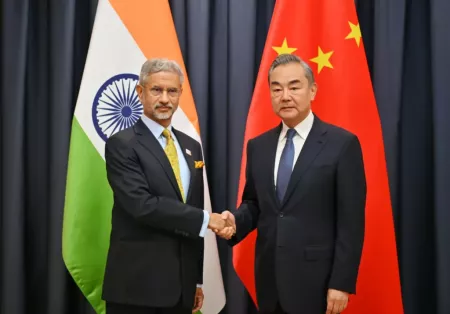
Chinese Foreign Minister Wang Yi to Visit India for
Border Dialogue
China’s Foreign Minister Wang Yi is set to arrive in New Delhi on 18 August 2025 for a crucial round of high-level talks with India’s National Security Advisor, Ajit Doval. The meeting will take place under the framework of the Special Representatives Mechanism, the highest-level platform for resolving the two countries’ protracted boundary disputes.
The visit comes amid sustained diplomatic deadlock following the 2020 Galwan Valley clash, which triggered a severe deterioration in bilateral relations. While several rounds of military and diplomatic talks have been held since, both nations continue to maintain significant troop deployments along the Line of Actual Control (LAC).
Aimed at Easing Border Tensions
According to officials from both sides, the agenda will focus on:
-
Restoring peace and tranquility along the LAC through phased disengagement and de-escalation.
-
Strengthening border communication mechanisms to avoid accidental clashes.
-
Discussing confidence-building measures in disputed areas.
Indian diplomatic sources indicated that New Delhi will press for full restoration of the pre-April 2020 status quo, insisting that normalization of ties cannot occur without substantive progress on the border issue.
Strategic Significance of the Meeting
The Special Representatives Mechanism—first established in 2003—serves as a political-level channel for negotiating a final boundary settlement. Ajit Doval and Wang Yi have met multiple times in this format, though talks stalled in recent years due to heightened mistrust and competing security postures.
Observers see the upcoming meeting as a potential inflection point, given that both governments face economic and geopolitical pressures to stabilize relations:
-
India is seeking to expand trade, boost investment inflows, and maintain regional security amid multiple fronts of tension.
-
China is facing slowing growth and increased scrutiny from global markets, making improved ties with a major neighbor strategically advantageous.
Diplomatic Timing and Broader Context
The visit is scheduled shortly after a BRICS+ foreign ministers’ virtual meet, where both sides participated but avoided any direct confrontation in public statements. Analysts believe this bilateral engagement signals a muted thaw in what has otherwise been a period of frosty interactions.
The timing also precedes India’s hosting of the G20 Trade and Investment Ministers’ Meeting, where Chinese participation is expected at the ministerial level, potentially creating additional avenues for dialogue.
Previous Efforts and Challenges
Since the 2020 border crisis, India and China have held 21 rounds of Corps Commander-level talks and multiple Working Mechanism for Consultation and Coordination (WMCC) meetings. While disengagement has been achieved in select friction points like Pangong Tso and Galwan, others—such as Depsang Plains and Demchok—remain unresolved.
China’s infrastructure buildup along the LAC, including new roads, bridges, and forward deployments, has been a sticking point for Indian negotiators, who view such moves as undermining the spirit of de-escalation.
Potential Outcomes
While expectations for an immediate breakthrough remain low, the Wang Yi–Ajit Doval meeting could:
-
Set a roadmap for accelerated disengagement in the remaining friction zones.
-
Revive annual strategic dialogues and people-to-people exchanges.
-
Create space for incremental normalization of economic ties, including reopening of trade channels in select border regions.
Any agreement would likely be followed by a joint statement, signaling mutual commitment to dialogue and conflict avoidance, though implementation will remain the true test.
International Reactions
Global stakeholders, particularly the United States, Russia, and ASEAN members, will be watching closely. Stability in India-China relations is viewed as critical for regional security, supply chain continuity, and broader Asian economic growth.
Analysts note that even limited progress in talks could reduce the risk of military escalation, free up diplomatic bandwidth for multilateral cooperation, and improve the investment climate in both nations.