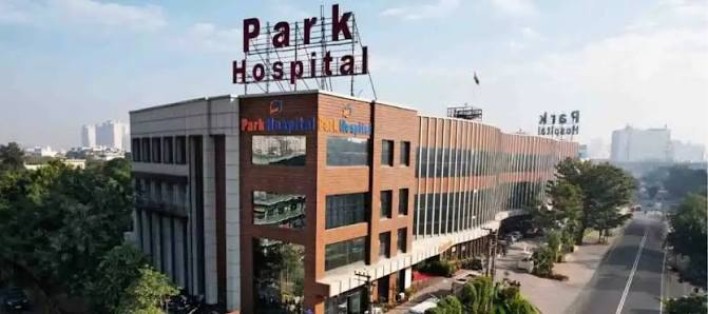
Park Medi World Plans 550-Bed Speciality Hospital in Prayagraj
Park Medi World is planning to develop a 550-bed speciality hospital in Prayagraj, expanding its healthcare network into one of Uttar Pradesh’s major urban and religious centres.
The proposed hospital would significantly increase the availability of organised tertiary and speciality care in the city while extending Park Medi World’s footprint beyond its existing hospital markets.
A project of this scale could support advanced treatment across multiple clinical departments and create new demand for doctors, nurses, technicians and healthcare-support professionals.
For Park Medi World, the Prayagraj project also reflects a broader trend in Indian private healthcare: large hospital operators are increasingly expanding into Tier-II and Tier-III cities where rising incomes, better insurance penetration and limited high-end medical infrastructure are creating new demand.
Park Medi World Plans 550 Beds in Prayagraj

The proposed facility is expected to have approximately:
550 beds.
That would place it among the larger private hospital projects in Prayagraj.
A hospital of this size can support a wide range of specialties while also providing enough scale for:
critical care,
diagnostics,
surgery,
emergency medicine,
and inpatient services.
Speciality Care Will Be Central to the Project
The new hospital is expected to focus on speciality and tertiary healthcare.
Such facilities typically provide advanced treatment in areas such as:
cardiology,
neurology,
orthopaedics,
oncology,
gastroenterology,
nephrology,
and critical care.
The final mix will depend on Park Medi World’s clinical planning and the requirements of the local market.
Prayagraj Is a Large Healthcare Catchment
Prayagraj serves not only its own urban population but also patients from surrounding districts.
Large hospitals in the city can therefore draw patients from a much wider catchment area.
For many families in smaller towns, access to advanced treatment currently requires travel to cities such as:
Lucknow,
Varanasi,
Kanpur,
or Delhi-NCR.
A larger local hospital can reduce that need.
Tier-II Cities Are Becoming Major Healthcare Markets
Private hospital operators are increasingly looking beyond metros.
India’s next phase of hospital expansion is moving into cities where:
population is large,
healthcare demand is rising,
and specialist supply remains relatively limited.
Prayagraj fits this pattern.
It has substantial population scale but still has room for more organised tertiary-care capacity.
Rising Incomes Support Private Healthcare Demand
As household incomes increase, more patients are willing and able to seek advanced treatment in private hospitals.
Consumers increasingly expect:
modern diagnostics,
specialist doctors,
private rooms,
and shorter waiting times.
This creates opportunities for hospital chains that can provide consistent standards.
Insurance Penetration Is Expanding the Addressable Market
Health insurance also plays an important role.
A patient who cannot afford a major hospital bill entirely from savings may still be able to access private care through:
employer insurance,
retail health insurance,
or government-supported schemes.
Broader insurance coverage therefore increases the number of people who can use organised hospitals.
Government Schemes Also Influence Patient Volumes
Public health-insurance programmes can direct significant patient volumes toward empanelled private hospitals.
Hospitals capable of meeting accreditation and treatment standards can participate in these schemes.
This can create another source of demand, especially outside the largest metros.
550 Beds Require Significant Clinical Workforce
A hospital of this scale needs far more than doctors.
It requires:
nurses,
pharmacists,
technicians,
physiotherapists,
administrative staff,
and support workers.
The employment impact can therefore be substantial.
Healthcare expansion is labour-intensive compared with many infrastructure investments.
Doctor Recruitment Will Be Critical
The success of the hospital will depend heavily on attracting specialist doctors.
Patients often choose hospitals based on:
doctor reputation,
clinical outcomes,
and specialist availability.
Hospital chains therefore compete aggressively for high-quality medical talent.
Building a strong medical team can take as much effort as constructing the physical facility.
Nursing Capacity Is Equally Important
Beds do not create healthcare capacity unless they are supported by trained nurses.
High-quality nursing is essential in:
ICUs,
operating theatres,
and general wards.
India continues to face shortages of trained healthcare professionals in many regions.
Park Medi World may therefore need to invest significantly in recruitment and training.
Diagnostics Could Become Major Revenue Stream
Modern hospitals depend heavily on diagnostics.
Facilities may include:
MRI,
CT scanning,
pathology,
and advanced imaging.
Diagnostics support treatment decisions but also represent an important commercial component of hospital economics.
A large hospital typically benefits from having many of these services in-house.
Critical Care Capacity Could Be Significant
A 550-bed speciality hospital can allocate substantial capacity to:
ICUs,
high-dependency units,
and emergency care.
This matters because advanced cases often require continuous monitoring and specialised equipment.
More critical-care capacity can reduce the need to transfer complex patients to other cities.
Surgery Infrastructure Will Be Important
Speciality hospitals usually require multiple operating theatres.
These may support:
cardiac surgery,
orthopaedic procedures,
neurosurgery,
and other complex interventions.
High operating-theatre utilisation is also important for hospital profitability.
Infrastructure therefore needs to be matched with sufficient specialist demand.
Oncology Could Be Important Growth Area
Cancer treatment is one of the most capital-intensive areas of hospital care.
Comprehensive oncology can require:
medical oncology,
surgical oncology,
radiation oncology,
and advanced diagnostics.
If Park Medi World includes oncology in the Prayagraj facility, it could help reduce long-distance travel for patients requiring repeated treatment.
Cardiology Is Another Common Tertiary-Care Focus
Heart disease creates substantial demand for specialist treatment.
Large hospitals often invest in:
cardiac catheterisation labs,
cardiac surgery,
and critical care.
Because cardiovascular disease is widespread, cardiology can become one of the anchor specialties in a tertiary hospital.
Orthopaedics Can Generate High Procedure Volumes
Orthopaedic services include:
trauma,
joint replacement,
and rehabilitation.
An ageing population and rising road traffic increase demand for these services.
Orthopaedics can therefore become an important source of patient volumes for large hospitals.
Emergency Medicine Expands Catchment
A large emergency department can attract patients from across the region.
Emergency cases can include:
accidents,
cardiac events,
and other acute conditions.
Strong emergency infrastructure can also feed into:
ICU,
surgery,
and inpatient departments.
Hospital Location Will Influence Performance
For a 550-bed project, location is critical.
The site needs:
road access,
land for expansion,
utilities,
and connectivity to surrounding districts.
A hospital that is difficult to reach can struggle even if its clinical quality is strong.
Prayagraj’s expanding urban infrastructure can therefore be an important advantage.
Parking and Patient Access Matter
Large hospitals receive thousands of visitors daily.
Patients are often accompanied by family members.
The facility therefore needs adequate:
parking,
drop-off areas,
and public-transport access.
These factors may appear operational rather than medical, but they strongly influence patient experience.
Digital Healthcare Will Likely Support Operations
Modern hospitals increasingly use digital systems for:
appointments,
medical records,
billing,
diagnostics,
and pharmacy management.
Integrated digital infrastructure can reduce errors and improve patient flow.
It also allows hospital groups to standardise operations across multiple locations.
Telemedicine Can Extend Specialist Reach
A major hospital can also serve patients beyond its physical campus.
Telemedicine can allow specialists in Prayagraj to consult with patients in smaller surrounding towns.
This can increase access while creating referral pathways for patients needing advanced procedures.
Digital healthcare therefore expands the practical catchment of the facility.
Hospital Chains Benefit From Centralised Procurement
Large hospital networks can purchase:
medicines,
medical equipment,
and consumables
at scale.
This can reduce procurement costs compared with standalone hospitals.
Park Medi World’s network structure could therefore provide operating advantages for the Prayagraj facility.
Centralised Clinical Protocols Can Improve Consistency
Hospital chains can standardise:
infection control,
clinical pathways,
and quality assurance.
This can help provide consistent treatment across locations.
Patients increasingly value recognised hospital brands partly because of these standardised systems.
Private Healthcare Is Becoming More Organised
India’s hospital sector remains fragmented.
Many cities still depend heavily on:
small nursing homes,
and individual practitioners.
Large organised hospital chains are gradually increasing their share.
Expansion into cities such as Prayagraj accelerates that transition.
Organised Hospitals Require Heavy Capital Investment
Hospitals are capital-intensive.
Money is required for:
land,
construction,
medical equipment,
and technology.
The financial return therefore depends on achieving sufficient occupancy and procedure volumes after opening.
A 550-bed hospital can take several years to reach mature utilisation.
Occupancy Is a Key Hospital Metric
Hospital operators closely monitor:
bed occupancy rate.
Low occupancy means expensive infrastructure sits unused.
Very high occupancy can reduce patient experience and create operational pressure.
Most hospitals therefore aim for a sustainable middle range that balances utilisation and service quality.
Average Revenue Per Occupied Bed Matters
Another important metric is:
Average Revenue Per Occupied Bed, or ARPOB.
This measures revenue generated from each occupied bed.
It depends on factors such as:
specialty mix,
procedure intensity,
and payer mix.
A hospital focused on complex tertiary care can generate higher ARPOB than a basic secondary-care facility.
Specialty Mix Influences Profitability
Not all medical departments have identical economics.
Complex procedures may generate higher revenue but also require expensive doctors and equipment.
General medicine can generate steady occupancy but lower revenue per patient.
Hospital management therefore needs to balance clinical needs and economics carefully.
Patient Affordability Will Remain Important
A premium hospital cannot depend only on high-income patients.
Prayagraj serves a broad population across different income groups.
The hospital may need a mix of:
premium services,
insurance-based care,
and lower-cost treatment options.
That balance will influence both access and commercial sustainability.
Healthcare Quality Will Determine Brand Strength
Hospital expansion can increase beds quickly.
Building trust takes longer.
Patients judge hospitals based on:
clinical outcomes,
doctor quality,
infection rates,
and transparency.
One poor experience can damage reputation substantially.
Park Medi World will therefore need to prioritise clinical quality alongside expansion.
Accreditation Could Improve Trust
Hospitals often seek accreditation such as NABH standards.
Accreditation can demonstrate formal processes around:
patient safety,
quality,
and governance.
It can also help with insurance and institutional tie-ups.
For a large new hospital, accreditation can become an important credibility signal.
Medical Tourism Could Be a Secondary Opportunity
Prayagraj is not currently a major international medical-tourism destination.
But it attracts large numbers of visitors for religious and cultural reasons.
A strong hospital ecosystem can support tourists and pilgrims who need healthcare during visits.
The city’s national connectivity could also allow the hospital to attract patients from neighbouring states.
Maha Kumbh Highlighted City’s Infrastructure Scale
Prayagraj has demonstrated its ability to handle extremely large temporary populations during major religious gatherings.
The city has invested substantially in:
roads,
transport,
and public infrastructure.
That broader development can improve the environment for large healthcare projects.
Healthcare Demand Can Rise With Urban Expansion
As cities grow, healthcare requirements become more complex.
Population growth increases demand for:
emergency care,
chronic-disease management,
and specialist treatment.
A large hospital can therefore benefit from long-term urbanisation trends.
Chronic Diseases Drive Recurring Demand
India faces rising prevalence of chronic conditions such as:
diabetes,
heart disease,
kidney disease,
and cancer.
These conditions often require repeated interaction with the healthcare system.
That creates sustained demand for specialised hospitals rather than one-time treatment.
Ageing Population Will Add Further Pressure
India remains relatively young overall, but the elderly population is growing.
Older patients generally require more healthcare.
Demand rises for:
cardiology,
orthopaedics,
and chronic-disease management.
Hospitals built today therefore need to plan for changing demographic needs over the coming decades.
Park Medi World Can Build Referral Network
A tertiary hospital becomes more effective when it develops relationships with:
local doctors,
clinics,
and smaller hospitals.
These providers can refer complex cases that require advanced treatment.
A strong referral network can significantly influence patient volumes.
Smaller Hospitals Can Benefit Too
A large tertiary-care centre does not necessarily replace smaller providers.
It can complement them.
Local clinics can handle basic treatment.
Complex cases can move to the larger hospital.
After stabilisation or surgery, patients can return to local providers for follow-up.
This creates a tiered healthcare ecosystem.
Prayagraj Project Could Strengthen Uttar Pradesh Footprint
Uttar Pradesh is one of India's largest healthcare markets because of its enormous population.
Private hospital chains increasingly view the state as a long-term growth opportunity.
A 550-bed Prayagraj facility could give Park Medi World a substantial position within that market.
Future expansion could then leverage the same regional operating network.
Competition Will Remain Significant
The hospital will compete with:
government medical institutions,
existing private hospitals,
specialist clinics,
and larger hospital networks in nearby cities.
Patients also increasingly travel for healthcare when they believe another city offers better treatment.
Park Medi World therefore needs to compete on:
clinical quality,
service,
and affordability.
Large Hospital Can Reduce Patient Migration
One important economic effect could be keeping more healthcare spending within Prayagraj.
When patients travel to Lucknow, Delhi or other cities for treatment, local healthcare spending leaves the region.
A stronger tertiary hospital can retain a larger share locally.
That also reduces travel and accommodation costs for families.
Hospitals Create Local Economic Multiplier
The economic impact extends beyond the hospital payroll.
Nearby businesses can benefit, including:
pharmacies,
diagnostic suppliers,
food services,
transport providers,
and accommodation businesses.
Large hospitals can therefore become economic anchors within growing cities.
Construction Phase Will Also Create Employment
Before the hospital opens, development itself creates work.
Construction requires:
engineers,
contractors,
and equipment suppliers.
Medical equipment installation creates another layer of technical activity.
The project therefore generates economic activity well before patient services begin.
Commissioning Will Be Complex
Opening a hospital is not like opening an ordinary commercial building.
Before patients can be admitted, operators need to:
install equipment,
recruit staff,
establish protocols,
test systems,
and obtain approvals.
Commissioning can therefore take substantial time even after construction is complete.
Regulatory Compliance Will Be Extensive
Hospitals operate under multiple regulations covering:
clinical establishments,
pharmacy,
radiology,
biomedical waste,
fire safety,
and labour.
A 550-bed facility requires sophisticated compliance systems.
Regulatory capability therefore becomes an important part of hospital management.
Biomedical Waste Management Is Critical
Hospitals generate:
sharps,
infectious waste,
pharmaceutical waste,
and other hazardous materials.
Safe disposal is essential.
Large hospitals therefore require strict waste segregation and treatment systems.
Environmental compliance becomes more complex as capacity increases.
Energy Consumption Is Significant
Hospitals operate 24 hours a day.
They require continuous power for:
ICUs,
operating theatres,
diagnostics,
and ventilation.
Energy reliability is therefore critical.
Large hospitals increasingly invest in:
backup generation,
and energy-efficiency systems.
Some also adopt renewable power to reduce operating costs.
Water Infrastructure Is Equally Important
A 550-bed hospital consumes large volumes of water.
It also needs wastewater treatment.
Healthcare facilities therefore require resilient utility infrastructure.
Site design must account for these requirements from the beginning.
Technology Investment Will Continue After Opening
Medical technology evolves quickly.
Equipment installed during construction may eventually need upgrades or replacement.
Hospitals therefore require ongoing capital expenditure.
A successful business model needs to generate enough cash to support continuous modernisation.
Expansion Reflects Confidence in Healthcare Demand
Private operators commit to large hospital projects only when they expect long-term demand.
A 550-bed facility requires significant capital and operational planning.
Park Medi World’s decision therefore signals confidence in Prayagraj’s healthcare market and wider regional catchment.
Conclusion
Park Medi World's plan to develop a 550-bed speciality hospital in Prayagraj represents a significant addition to the city's organised healthcare infrastructure and reflects the accelerating expansion of private hospital chains beyond India's largest metropolitan markets.
A facility of this scale can bring advanced:
speciality care,
diagnostics,
critical care,
and surgical capability
closer to patients across Prayagraj and surrounding districts.
It can also reduce the need for families to travel to larger cities for complex treatment.
For Park Medi World, the project provides access to a large and growing healthcare catchment in Uttar Pradesh while strengthening its broader hospital network.
The opportunity is substantial, but execution will determine success.
A 550-bed speciality hospital requires far more than physical construction. It needs specialist doctors, trained nurses, advanced equipment, strong clinical governance, digital systems and sufficient patient volumes to support the large fixed-cost base.
If Park Medi World can build those capabilities effectively, the Prayagraj hospital could become an important regional tertiary-care centre and illustrate a broader structural shift in Indian healthcare: large organised hospital networks are increasingly bringing advanced medical infrastructure to Tier-II cities where demand is growing faster than high-quality speciality capacity.