





US Awards $500 Million to Seven Domestic Lithium and Critical-Mineral Projects
The United States is awarding $500 million to seven companies developing domestic lithium, cobalt, battery-recycling and advanced-materials projects as Washington accelerates efforts to build a critical-minerals supply chain less dependent on overseas processing.
The Department of Energy selected the projects through the third funding round of its Battery Materials Processing and Battery Manufacturing programmes after receiving hundreds of applications. Three recipients — Lilac Solutions, Jervois and Nth Cycle — are receiving $100 million each, while several downstream battery-material developers are receiving $50 million awards. (Reuters)
The funding targets one of the most important weaknesses in the US minerals strategy: extracting resources is only part of the challenge. Lithium, cobalt and recycled battery materials also need to be processed, refined and converted into products that manufacturers can actually use.
That makes the latest awards significant for industries extending far beyond electric vehicles. Critical minerals are increasingly important to batteries, electronics, defence systems, grid infrastructure and advanced manufacturing.
DOE Targets Domestic Critical-Mineral Processing

The $500 million programme was originally announced in March with a specific focus on expanding US processing, recycling and battery-material manufacturing capacity.
Eligible areas included lithium, graphite, nickel, copper, aluminium and other critical materials used in commercially available batteries. (The Department of Energy's Energy.gov)
The programme focuses on three broad areas:
domestic processing of raw critical minerals,
recycling of battery materials,
and manufacturing of battery components and advanced materials.
This is strategically important because a country can possess mineral resources while remaining dependent on foreign countries to convert those resources into usable industrial products.
Lilac Solutions Receives $100 Million for Utah Lithium Project
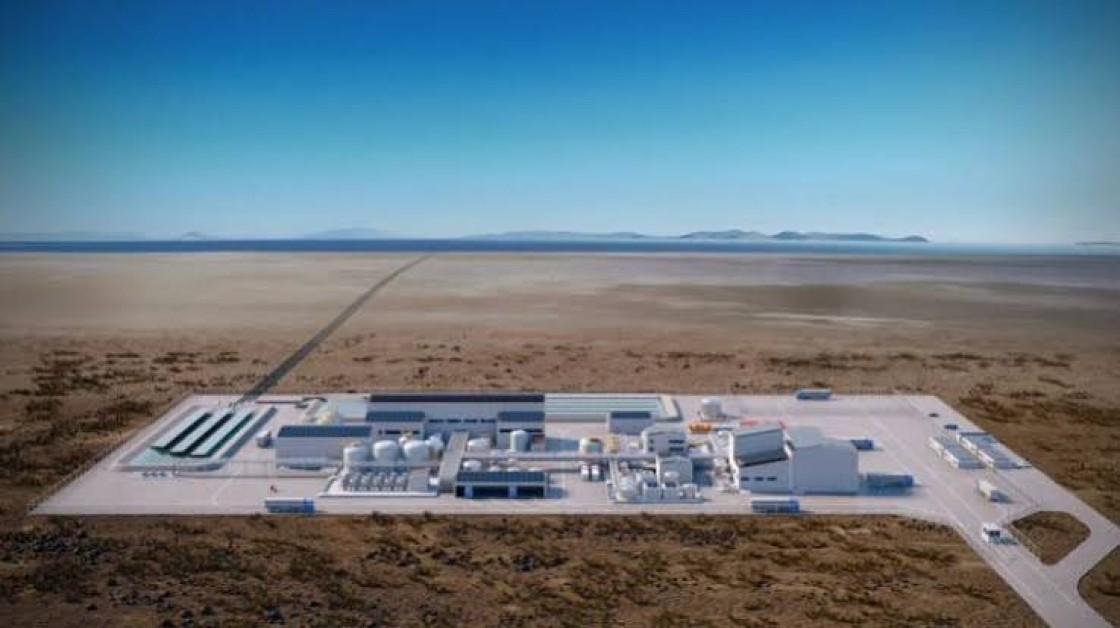
Lilac Solutions will receive $100 million to build a direct-lithium-extraction processing facility at Utah's Great Salt Lake.
The company expects the project to begin operating by 2028 and ultimately produce approximately 5,000 metric tons of lithium carbonate annually. (Reuters)
Lilac has developed technology designed to extract lithium from brines without relying exclusively on conventional evaporation ponds.
Direct Lithium Extraction Could Change Production Economics
Traditional brine-based lithium projects can require large evaporation ponds and lengthy processing periods.
Direct lithium extraction, commonly called DLE, aims to separate lithium more rapidly from mineral-rich brines.
Potential advantages can include:
smaller physical footprints,
faster processing,
and potentially higher lithium recovery.
Commercial performance still depends heavily on local geology and process economics.
But governments and mining companies increasingly view DLE as an important technology for unlocking additional domestic lithium resources.
Lithium Is Central to Battery Manufacturing
Lithium-ion batteries remain the dominant technology across electric vehicles, consumer electronics and many stationary energy-storage applications.
A battery cell requires processed lithium compounds such as lithium carbonate or lithium hydroxide.
That means domestic mineral deposits alone cannot secure the supply chain.
The material must also be purified to battery-grade specifications.
Jervois Receives $100 Million for US Cobalt Refinery
Jervois is receiving another $100 million to develop what would become the only cobalt refinery in the United States.
The company controls a major cobalt resource in Idaho.
The planned refinery could supply material for batteries, electronics and defence applications and could potentially process other cobalt-bearing feedstocks in the future. (Reuters)
This is a particularly strategic project because cobalt refining remains geographically concentrated.
Cobalt Has Applications Beyond Electric Vehicles
Cobalt is commonly associated with lithium-ion batteries.
But its uses extend across:
electronics,
specialised alloys,
and defence equipment.
That makes domestic refining capability relevant to both commercial industry and national security.
A country dependent on imported refined cobalt remains exposed even if raw cobalt resources are available elsewhere.
Refining Is One of America’s Biggest Supply-Chain Gaps
Critical-mineral policy often focuses heavily on opening mines.
But refining can be an even more difficult bottleneck.
A mineral extracted from the ground is rarely ready for use in a battery or semiconductor.
It must undergo multiple processing stages.
Countries controlling those middle stages can therefore possess significant strategic influence over the global supply chain.
Nth Cycle Gets $100 Million for Battery-Metal Recycling
Nth Cycle will receive $100 million for a facility designed to process battery scrap known as black mass.
Black mass is the concentrated mixture of valuable materials left after batteries are mechanically processed.
It can contain:
lithium,
nickel,
cobalt,
and other metals.
Recovering these materials allows them to re-enter manufacturing supply chains rather than becoming waste.
(Reuters)
Battery Recycling Is Becoming Strategic Resource
Every battery eventually reaches the end of its useful life.
Manufacturing facilities also generate scrap during production.
That material contains metals already extracted, refined and transported through the supply chain.
Recycling therefore provides a potential domestic source of critical materials without requiring an entirely new mine.
Black Mass Has Become Policy Priority
The US government has also moved to keep more battery scrap inside the country for domestic processing.
The administration recently restricted exports of black mass, increasing pressure to build sufficient US processing capacity.
DOE has said the latest funding was not directly tied to that export action, although both measures support the same broader goal of keeping valuable battery materials inside domestic supply chains. (Reuters)
Princeton NuEnergy Receives $50 Million
Princeton NuEnergy is receiving $50 million for technology that reprocesses battery cathode materials.
Cathodes are among the most valuable components inside lithium-ion batteries.
They can contain combinations of:
lithium,
nickel,
cobalt,
manganese,
and other materials.
Instead of breaking every material down completely into basic chemical feedstocks, advanced recycling techniques can potentially preserve more of the original material's value.
Direct Recycling Could Lower Processing Requirements
Traditional recycling can involve multiple chemical stages.
Direct recycling aims to recover and restore electrode materials more efficiently.
If successfully commercialised, this approach could reduce:
energy consumption,
processing steps,
and manufacturing costs.
The economic viability will depend on scale, battery chemistry and product quality.
Arcanum Ventures Receives $50 Million for Electrolyte Chemicals
Arcanum Ventures is receiving $50 million for a project producing chemicals used in battery electrolytes. (Reuters)
Electrolytes allow ions to move between a battery's electrodes.
They are therefore essential to cell operation.
A domestic battery supply chain needs more than lithium and cathode materials.
It also needs high-quality chemicals used throughout cell manufacturing.
Battery Chemicals Are Often Overlooked
Large battery factories attract significant attention because of their physical scale.
But those factories depend on dozens of specialised upstream materials.
Examples include:
electrolyte salts,
solvents,
binders,
and conductive additives.
A shortage of any essential input can constrain production.
This is why the US is increasingly targeting the entire battery-material ecosystem rather than simply financing cell factories.
Coreshell Technologies Gets $50 Million for Silicon Anodes
Coreshell Technologies will receive $50 million for development of silicon-based battery anodes.
Most conventional lithium-ion batteries rely heavily on graphite in their anodes.
Silicon has attracted considerable interest because it can theoretically store substantially more lithium than graphite.
(Reuters)
Silicon Could Increase Battery Energy Density
Higher energy density can allow a battery to store more energy without proportionately increasing its size.
For electric vehicles, that could potentially support:
longer range,
smaller battery packs,
or lower vehicle weight.
The challenge is durability.
Silicon expands considerably during charging, which can damage the electrode over repeated cycles.
Companies are developing different methods to control that expansion.
One Recipient Was Not Identified in Reuters’ Public Report
Reuters reported that seven companies were selected for the $500 million award programme but publicly detailed six recipients in its August 20 report: Lilac Solutions, Jervois, Nth Cycle, Princeton NuEnergy, Arcanum Ventures and Coreshell Technologies. The awards described for those six total $450 million. (Reuters)
The remaining recipient and $50 million allocation were not identified in that report.
That distinction is important because it avoids treating an unconfirmed company as a disclosed award winner.
Funding Is Part of Much Larger Minerals Strategy
The grants form only one component of Washington's expanding critical-minerals policy.
The US government has increasingly used:
grants,
loans,
and direct strategic investments
to encourage domestic mineral production and processing.
The aim is to reduce dependence on geographically concentrated foreign supply chains.
China Remains Central to Critical-Minerals Debate
China has developed an exceptionally strong position across several mineral-processing industries.
Its advantage is not based solely on domestic mining.
Chinese companies have invested extensively in:
refining,
materials production,
and battery manufacturing.
That integrated ecosystem is difficult to recreate quickly.
US policy is increasingly focused on closing those downstream gaps.
Mining Alone Cannot Create Supply Security
Imagine that a country discovers a large lithium deposit.
That is useful.
But if the lithium must still be shipped overseas for processing before returning as battery material, the supply chain remains internationally dependent.
The same applies to cobalt and recycled metals.
This explains why much of the $500 million is directed toward processing rather than conventional mine development.
Battery Supply Chains Have Several Stages
A simplified battery supply chain can be viewed as:
mineral extraction,
refining,
and cell manufacturing.
Each stage requires different technology and investment.
US policy increasingly aims to establish domestic capability across all of them.
Processing Plants Can Be Harder to Finance Than Mines
Mining projects have a clear commodity output.
Processing businesses can face more complicated economics.
They need:
consistent feedstock,
competitive energy costs,
and customers willing to purchase output.
Government funding can help bridge the gap between promising technology and commercial-scale manufacturing.
Grants Require Private Capital Too
The underlying DOE funding programme generally requires significant recipient cost sharing, meaning federal money is intended to leverage additional private-sector investment rather than finance every project entirely on its own. (The Department of Energy's Energy.gov)
That approach allows a $500 million federal programme to support a substantially larger total investment base.
Domestic Minerals Are Important to Defence Industry
Critical minerals have become an increasingly important national-security issue.
Modern defence equipment depends on sophisticated:
electronics,
batteries,
and advanced materials.
A supply interruption during a geopolitical crisis could therefore affect military production.
This gives mineral processing strategic importance beyond ordinary commodity economics.
Electric Vehicles Remain Major Commercial Demand Driver
The automotive industry remains one of the largest potential consumers of battery materials.
Electric vehicles require significantly larger batteries than smartphones or laptops.
Millions of EVs therefore translate into substantial demand for:
lithium,
graphite,
nickel,
and other battery materials.
Building domestic supply can reduce manufacturers' exposure to overseas disruptions.
Stationary Energy Storage Expands Market Further
Battery demand is no longer limited to electric vehicles.
Power grids increasingly use battery systems to balance electricity supply.
Storage can help manage variable generation from renewable resources and provide backup capacity.
This creates another large potential market for battery materials.
Data Centres Could Increase Storage Demand
The rapid expansion of artificial-intelligence data centres is also increasing interest in reliable power systems.
Large computing facilities require continuous electricity.
Battery storage can support:
backup power,
and grid management.
The AI infrastructure boom therefore has indirect implications for critical-mineral demand.
US Battery Manufacturing Has Expanded Rapidly
Federal incentives and private investment have already triggered construction of numerous battery and electric-vehicle facilities across the United States.
The next challenge is ensuring those factories have sufficient domestic material supply.
Without upstream investment, a battery factory can still remain heavily dependent on imported components.
Local Materials Can Strengthen Manufacturing Economics
Domestic processing can potentially reduce:
shipping exposure,
and supply disruption risk.
However, local production still needs to compete on cost.
Government support can help plants reach scale, but long-term viability ultimately requires commercially competitive operations.
Recycling Could Become Increasingly Important Over Time
New mining will remain necessary because battery demand is growing faster than the volume of old batteries available for recycling.
But that balance will change.
As today's EVs age, more batteries will reach end of life.
The recycling industry could therefore become a much larger domestic source of lithium, nickel and cobalt during the 2030s.
Recycling Reduces Exposure to New Mining
Every tonne of material recovered from an old battery is a tonne that does not need to come entirely from new extraction.
That does not eliminate mining.
But it can reduce long-term pressure on primary supply.
Recycling can also reduce exposure to international commodity markets.
Battery Chemistry Is Changing
Not every future battery will use the same combination of minerals.
Lithium iron phosphate batteries, for example, do not require nickel or cobalt in the cathode.
Other technologies may use different materials entirely.
This creates investment risk.
A processing plant needs to remain economically useful even as battery chemistry evolves.
Lithium Demand Is More Durable Across Major Chemistries
Most mainstream lithium-ion chemistries still require lithium.
That makes the metal central across a wide range of battery technologies.
The exact lithium compound and processing requirements can vary.
But lithium itself remains strategically important.
Cobalt Faces Greater Chemistry Risk
Battery manufacturers have worked to reduce cobalt use because of:
cost,
and ethical sourcing concerns.
That creates uncertainty around long-term battery demand for the metal.
However, cobalt remains important across several industrial and strategic applications, supporting the rationale for domestic refining capability.
Silicon Could Reduce Reliance on Graphite
The Coreshell award demonstrates another strategy: technological substitution.
Instead of merely sourcing more graphite, advanced anode technologies could eventually reduce the amount required.
This illustrates how critical-mineral security can be improved both by increasing supply and by changing technology.
Innovation Can Change Strategic Dependencies
Material science can alter entire supply chains.
If a new battery uses less of a constrained mineral, dependence decreases.
Government policy therefore increasingly supports:
extraction,
and alternative materials
simultaneously.
This creates a diversified approach to supply security.
China Still Has Significant Cost Advantages
Building domestic supply chains will not automatically make US materials cheaper.
China's industry benefits from:
large scale,
and mature supplier networks.
New US plants may initially have higher costs.
Government support is partly designed to help domestic producers reach commercial scale before competing without subsidies.
Long-Term Success Depends on Customer Contracts
A processing plant needs buyers.
Battery manufacturers and automakers can support new projects through long-term purchase agreements.
These contracts give project developers revenue visibility.
They can also make financing easier.
The most successful critical-mineral projects will likely combine government support with durable private-sector demand.
Commodity Prices Remain Major Risk
Lithium, cobalt and nickel prices can fluctuate dramatically.
A project that appears profitable during a commodity boom can become uneconomic when prices collapse.
This has already affected several Western mining and processing companies.
Government support cannot completely remove this commodity-cycle risk.
Jervois Demonstrates That Challenge
Jervois was taken private following a restructuring after low cobalt prices created financial pressure.
Its new $100 million federal award demonstrates the tension facing Western critical-mineral policy.
Governments want domestic capacity for strategic reasons even when prevailing commodity prices make that capacity difficult to operate commercially. (Reuters)
Strategic Supply and Market Economics Can Conflict
The cheapest supplier is not always the most strategically secure supplier.
Governments therefore sometimes support domestic capacity that would struggle under purely short-term market economics.
The policy question becomes how much additional cost society is willing to accept for supply-chain resilience.
US Policy Could Influence Global Investment
Large federal awards can attract private capital into sectors that investors previously viewed as too risky.
If these projects reach commercial operation successfully, additional developers may find financing more easily.
That can gradually create a larger domestic industry.
Canada and Australia Remain Important Allies
US mineral security does not necessarily mean complete domestic self-sufficiency.
Allied countries possess important mineral resources.
A resilient supply strategy can combine:
domestic production,
and diversified imports from trusted partners.
This is more realistic than attempting to mine and process every material entirely within US borders.
India Also Has Critical-Mineral Ambitions
The US funding programme has relevance for other countries developing battery ecosystems, including India.
India is expanding electric vehicles, energy storage and domestic battery manufacturing while seeking more secure supplies of lithium and other critical minerals.
The American strategy demonstrates that cell manufacturing alone is insufficient.
Countries need capabilities across:
mineral sourcing,
recycling,
and advanced materials.
India Can Develop Recycling Before Large-Scale Mining
India does not currently possess commercial domestic resources for every critical battery material.
Recycling can therefore become strategically important.
As the country's EV fleet expands, battery scrap will create a growing secondary mineral resource.
Building recycling infrastructure early could reduce future import dependence.
Specialty Chemicals Are Another Opportunity
Battery manufacturing requires extensive chemical inputs.
India already possesses a large specialty-chemicals industry.
Domestic chemical companies could potentially move into higher-value battery materials as manufacturing volumes increase.
The US awards to companies such as Arcanum illustrate how important these less-visible parts of the battery ecosystem can become.
Critical Minerals Are Becoming Industrial Policy
For decades, governments largely allowed global commodity markets to determine where minerals were mined and processed.
That approach is changing.
Critical minerals are increasingly being treated similarly to:
semiconductors,
and energy infrastructure.
Governments see control of supply chains as a strategic economic capability.
Conclusion
The US Department of Energy's $500 million award programme represents another major step in Washington's effort to build a domestic critical-minerals and battery-material ecosystem.
Three projects account for $300 million of the disclosed funding: Lilac Solutions will receive $100 million for direct lithium extraction at Utah's Great Salt Lake, Jervois will receive $100 million for a US cobalt refinery, and Nth Cycle will receive $100 million for black-mass recycling. Princeton NuEnergy, Arcanum Ventures and Coreshell Technologies are receiving $50 million each for cathode recycling, electrolyte chemicals and silicon-anode technology respectively. (Reuters)
Reuters reported seven recipients in total, although its public report identified six of them, representing $450 million of the $500 million programme.
The broader strategy is clear.
The United States is no longer focusing only on finding new mineral deposits. It is investing in the entire industrial chain required to convert raw and recycled materials into products that battery, electronics and defence manufacturers can actually use.
That means lithium processing.
Cobalt refining.
Battery recycling.
Electrolyte chemicals.
Advanced cathodes.
And next-generation anodes.
Whether the programme ultimately succeeds will depend on something more difficult than government funding: whether these projects can reach commercial scale, secure customers and compete economically against mature overseas supply chains.
If they can, the $500 million awards could help establish some of the infrastructure needed for a significantly more resilient US battery and critical-minerals industry.
 US Awards $500 Million to Seven Lithium and Critical-Mineral Projects FAQs
POST A COMMENT (0)
All Comments (0)
Replies (0)