





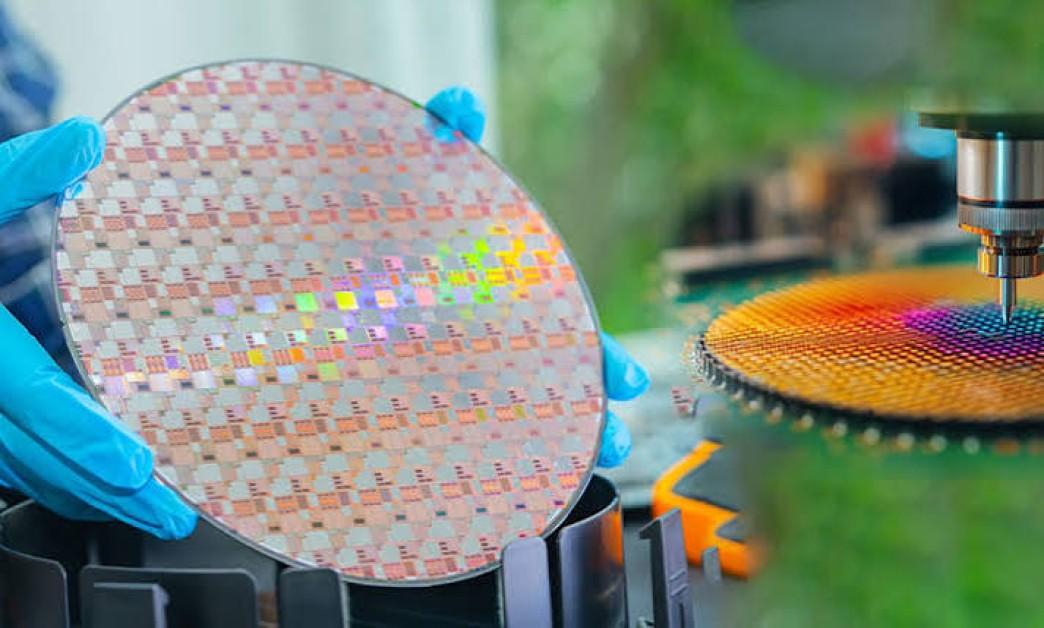
Tata’s Dholera Semiconductor Fab Explores Entegris Partnership for Critical Chemical Supplies
Tata Electronics is in exploratory discussions with US-based advanced-materials company Entegris for specialty chemicals and process solutions for its upcoming semiconductor fabrication plant in Dholera, Gujarat, as India’s first commercial front-end fab builds out a global supplier ecosystem ahead of production. (The Economic Times)
The discussions are particularly significant because semiconductor manufacturing depends on ultra-high-purity chemicals, contamination-control systems and specialised material-handling technologies that are substantially more demanding than conventional industrial chemical supplies.
Entegris specialises in advanced materials, micro-contamination control, critical materials handling and other semiconductor-process solutions. A partnership would give Tata access to another globally established supplier as it prepares the ₹91,000 crore Dholera facility for commercial operations.
Talks With Entegris Remain Exploratory

The potential arrangement has not yet been announced as a completed commercial partnership.
Tata Electronics is understood to be exploring cooperation with Entegris around specialty chemicals and semiconductor-process solutions required by the Dholera fab. (The Economic Times)
That distinction matters.
The discussions indicate active supply-chain development, but the final scope, commercial terms and product categories will depend on any eventual agreement.
Semiconductor Chemicals Are Mission-Critical Inputs
Chip manufacturing involves repeated deposition, cleaning, etching and surface-treatment processes.
Each stage requires materials with extraordinarily high purity.
Even microscopic contamination can affect wafer yield.
Tiny Impurities Can Destroy Chip Economics
A semiconductor wafer contains many individual dies.
If contamination damages part of the wafer, fewer usable chips can be produced.
That reduces yield.
Because fabrication plants require enormous capital investment, yield improvement is one of the most important drivers of profitability.
Chemical purity therefore has a direct financial impact.
Entegris Specialises in Contamination Control
Entegris is known for technologies designed to prevent contamination throughout semiconductor production.
Its portfolio spans advanced materials and systems used to store, transport and deliver critical chemicals.
In chip manufacturing, contamination control can extend across:
liquids,
gases,
wafer handling,
and process equipment.
This makes suppliers such as Entegris an important part of the semiconductor value chain even though they do not manufacture chips themselves.
Dholera Fab Represents ₹91,000 Crore Investment
Tata Electronics is building the Dholera semiconductor fabrication facility with a planned investment of approximately ₹91,000 crore, or around $11 billion. (Tata Electronics)
The project is one of the largest industrial investments in India's emerging semiconductor ecosystem.
It is being developed in partnership with Taiwan's Powerchip Semiconductor Manufacturing Corporation.
Fab Will Use 300mm Wafers
The Dholera facility is planned as an AI-enabled 300mm, or 12-inch, wafer fabrication plant.
Tata says the fab is expected to have monthly capacity of approximately 50,000 wafers. (Tata Electronics)
The plant is intended to manufacture analog and logic chips based on technologies ranging from approximately 28 nanometres to 110 nanometres.
Chips Will Serve Multiple Industries
The planned products include semiconductor devices used across:
automotive,
communications,
computing,
data storage,
and artificial intelligence applications. (Tata Electronics)
This diversification is strategically important.
It reduces dependence on one end market while supporting several industries India wants to localise.
Automotive Is Major Target Market
Modern vehicles contain large numbers of semiconductors.
They are used in:
power management,
infotainment,
safety systems,
and microcontrollers.
Electric vehicles increase semiconductor content further.
A domestic fab can therefore support India's expanding automotive supply chain.
Power-Management Chips Are Strategically Important
Tata has identified power-management ICs among the products targeted at Dholera. (Tata Electronics Careers)
These chips regulate and distribute electrical power inside electronic devices.
They are used across:
vehicles,
consumer electronics,
industrial equipment,
and data centres.
Their broad application base can create relatively diversified demand.
Microcontrollers Are Another Important Product
Microcontrollers act as compact computing units embedded inside devices.
They can control everything from automotive subsystems to industrial machinery.
India currently imports substantial quantities of these components.
Domestic production could therefore reduce dependence on overseas suppliers.
Display Drivers Add Consumer-Electronics Exposure
Display-driver chips control how electronic displays operate.
They are used in smartphones, televisions and other devices.
India's growing electronics-manufacturing base creates a potentially large domestic customer market for such chips.
High-Performance Computing Logic Extends Opportunity
Tata has also identified high-performance computing logic among the potential product categories for Dholera. (Tata Electronics Careers)
This creates potential exposure to increasingly sophisticated computing applications.
The plant will not compete directly with the most advanced global nodes used for frontier AI accelerators, but it can participate across a wide range of commercially important semiconductor products.
Tata Is Building a Global Supplier Network
The Entegris discussions fit into a broader strategy.
Tata Electronics has been assembling partnerships across the semiconductor value chain.
These span:
materials,
equipment,
design,
technology,
and manufacturing. (Tata)
A semiconductor fab cannot operate successfully with only manufacturing equipment.
It needs an entire ecosystem of specialised suppliers.
Merck Already Has Materials Partnership With Tata
Tata Electronics previously signed an agreement with Merck Electronics covering high-purity electronic materials, advanced gas and chemical delivery systems and fab infrastructure services. (Tata Electronics)
That partnership also includes supply-chain development, local warehousing and safety practices.
The potential Entegris relationship would therefore complement rather than necessarily replace existing materials partnerships.
Multiple Suppliers Can Improve Resilience
Semiconductor manufacturers rarely want excessive dependence on one critical-material supplier.
Disruptions can stop production.
A diversified supplier base can improve resilience.
This is particularly important for a new fab in a country still developing domestic semiconductor supply chains.
ASML Partnership Covers Lithography
In May 2026, Tata Electronics signed a strategic partnership with ASML to support the establishment and ramp-up of the Dholera fab using ASML's lithography tools and solutions. (Tata Electronics)
Lithography is one of the most important stages in semiconductor fabrication.
It uses extremely precise equipment to transfer circuit patterns onto wafers.
ASML Will Also Support Skills Development
The Tata-ASML partnership extends beyond equipment.
The companies plan to work on:
training,
supply-chain resilience,
and R&D infrastructure. (Tata Electronics)
This reflects a recurring challenge for India's semiconductor ambitions.
Building a fab requires not just physical assets but also specialised human expertise.
Synopsys Supports Design Enablement
Tata has also partnered with Synopsys for process-technology bring-up and foundry design enablement.
The collaboration includes factory automation, yield analytics, process design kits and semiconductor intellectual property. (Tata Electronics)
This gives Dholera capabilities extending from manufacturing toward customer design support.
PSMC Provides Core Technology Transfer
Taiwan's PSMC is providing technology and execution support for the Dholera fab.
Technology transfer is critical because semiconductor manufacturing requires accumulated process knowledge built over years.
The partnership gives Tata access to established foundry expertise while it develops local capabilities.
Chemical Supply Is Often Less Visible Than Equipment
The semiconductor industry receives extensive attention for lithography machines and advanced chips.
But fabs consume large quantities of specialised chemicals every day.
These can include:
acids,
solvents,
cleaning chemicals,
and high-purity process materials.
Without reliable supply, expensive manufacturing equipment cannot operate.
Purity Standards Are Extremely High
Semiconductor-grade chemicals require contaminant levels far below those acceptable in ordinary industrial production.
Impurities can include:
particles,
metals,
and organic contaminants.
Suppliers therefore need specialised purification, packaging and transportation systems.
This creates substantial barriers to entry.
Chemical Delivery Systems Matter Too
The material itself is only part of the challenge.
Chemicals need to be stored and delivered safely to manufacturing equipment.
A semiconductor fab may use automated distribution systems capable of moving ultra-pure materials without exposing them to contamination.
Companies such as Entegris provide products designed for these controlled environments.
Materials Handling Can Determine Yield
Every time a wafer or process chemical is moved, contamination risk exists.
The manufacturing system therefore needs highly controlled:
containers,
filters,
and transfer equipment.
A defect prevented before it reaches the wafer can save significantly more money than detecting it after production.
This makes contamination prevention economically valuable.
Dholera Needs Supply-Chain Localisation
Importing every chemical and consumable from overseas would create a vulnerable operating model.
A modern fab needs continuous replenishment.
Long shipping routes can increase:
costs,
lead times,
and disruption risk.
Tata's partnerships increasingly include plans for local warehousing and supply-chain development. (Tata Electronics)
Entegris Could Support Local Ecosystem Development
If Tata and Entegris reach an agreement, the relationship could potentially extend beyond simply shipping materials into India.
Large semiconductor customers often encourage suppliers to establish local:
warehousing,
technical support,
and eventually manufacturing.
The exact structure has not yet been confirmed.
But Dholera's scale could create a strong commercial incentive for suppliers to deepen their Indian footprint.
Semiconductor Fabs Create Supplier Clusters
A fab can act as an anchor industrial project.
Once one large semiconductor manufacturer operates in a region, suppliers have greater reason to locate nearby.
That can attract companies specialising in:
chemicals,
gases,
equipment maintenance,
and logistics.
Over time, the surrounding cluster can become as important as the fab itself.
India Needs More Than One Fab for Deep Localisation
One semiconductor plant can create substantial demand.
But suppliers often require multiple customers before building major local manufacturing capacity.
India's broader semiconductor pipeline therefore matters.
Additional fabs, packaging plants and electronics facilities can create enough aggregate demand to support domestic supplier investment.
Government Policy Is Designed to Build an Ecosystem
The India Semiconductor Mission is intended to support more than individual chip plants.
The broader objective is to create an integrated ecosystem involving:
design,
fabrication,
and materials.
Tata's supplier partnerships align directly with this strategy.
Dholera Has Received SEZ Status
The government notified Tata Semiconductor Manufacturing's Dholera project as a special economic zone in April 2026. (Press Information Bureau)
SEZ status can support the project's integration into global supply chains through a dedicated industrial framework.
The notification also reflects the national strategic importance assigned to the facility.
Dholera Is India’s First Commercial Front-End Fab
India already has significant chip-design capability and is expanding semiconductor assembly and packaging.
Front-end fabrication has remained the major missing element.
Dholera is intended to change that.
It will manufacture integrated circuits directly on silicon wafers.
This represents a significantly more complex manufacturing process than packaging completed chips.
Front-End Manufacturing Has Higher Technical Barriers
A modern fab requires precise control over thousands of process steps.
Temperature.
Chemical concentration.
Particle levels.
Equipment calibration.
Even small deviations can reduce yield.
This explains why established suppliers and technology partners are so important during the ramp-up period.
Fab Ramp-Up Is Often More Difficult Than Construction
Completing the buildings and installing machinery does not automatically create a commercially successful fab.
Production needs to reach acceptable yield.
Yield Determines Economics
A plant can manufacture thousands of wafers but still lose money if too many chips are defective.
Yield improvement requires continuous optimisation across:
equipment,
chemicals,
and process recipes.
This is where suppliers can provide significant technical support.
Entegris Expertise Could Support Ramp-Up
Entegris' contamination-control and materials-handling capabilities are directly relevant to yield management.
For a greenfield fab, access to suppliers already experienced with leading international semiconductor plants can reduce operational learning curves.
That could help Tata stabilise processes more quickly.
Chemical Safety Is Another Major Requirement
Semiconductor fabs use hazardous materials.
Safe handling requires:
specialised infrastructure,
and emergency systems.
The Merck partnership already includes best-practice sharing around chemical safety. (Tata Electronics)
Any additional materials partnership would also need to operate within stringent safety standards.
Environmental Management Is Critical
Fabs consume significant quantities of:
water,
and chemicals.
Waste treatment is therefore central to plant design.
Tata says the Dholera fab is being designed to meet high environmental and sustainability standards. (Tata Electronics)
The performance of its materials and chemical systems will influence whether those objectives are achieved.
Water Purity Is Essential
Semiconductor manufacturing requires ultra-pure water.
Ordinary industrial water contains far too many impurities.
Water systems therefore need extensive purification.
After processing, wastewater must also be treated carefully.
This creates another significant infrastructure requirement around Dholera.
Gujarat Is Building Semiconductor Cluster Ambitions
Dholera has become central to Gujarat's high-technology manufacturing strategy.
The region is being developed with industrial infrastructure intended to support large-scale investment.
Tata's fab can potentially attract a wider network of suppliers and electronics manufacturers into the region.
Supplier Proximity Can Reduce Inventory Needs
If a critical chemical supplier operates close to the fab, Tata does not need to hold as much inventory as protection against shipping delays.
Lower inventories can reduce working-capital requirements.
It also improves responsiveness when production needs change.
This is one reason semiconductor clusters are geographically concentrated.
Geopolitics Reinforces Supply-Chain Diversification
The global semiconductor industry remains heavily concentrated in East Asia.
Governments and companies increasingly want geographically diversified production.
India is attempting to position itself as another major manufacturing location.
Dholera is a central test of whether the country can attract both chip manufacturing and the supplier ecosystem needed to sustain it.
Tata’s Scale Gives India Credibility
Building a semiconductor fab requires enormous capital and patience.
The Tata Group's balance-sheet strength and industrial experience give the project greater credibility with global suppliers.
Companies such as ASML, Merck and potentially Entegris have reasons to participate when a customer can support long-term demand.
Supplier Relationships Can Extend for Decades
Once a semiconductor chemical or process material is qualified for manufacturing, changing suppliers can be complex.
The replacement needs extensive testing.
That creates potentially long-duration commercial relationships.
Winning an early position at Dholera could therefore be strategically valuable for suppliers.
Qualification Processes Take Time
A fab cannot simply purchase a new chemical and immediately use it in production.
Materials need to be tested against process requirements.
Engineers need to verify:
purity,
compatibility,
and yield impact.
This is why supplier selection occurs well before mass production.
The exploratory Entegris discussions fit naturally into the pre-production phase.
Local Semiconductor Chemical Industry Could Grow
India already has a large specialty-chemicals sector.
But semiconductor-grade materials require substantially higher standards than conventional chemicals.
The development of domestic fabs could create incentives for Indian companies to move into:
ultra-high-purity purification,
and specialised packaging.
International partnerships may help accelerate that transition.
Domestic Chemical Companies Could Eventually Participate
Indian suppliers may not initially manufacture every advanced material required.
But opportunities can emerge gradually.
They may first provide:
basic inputs,
or logistics.
Over time, some could move into higher-value semiconductor-grade products.
This would deepen domestic value addition.
Semiconductor Materials Can Be Attractive Business
Once qualified, critical materials can generate recurring demand.
A fab needs chemicals continuously during operation.
This differs from one-time equipment purchases.
Suppliers therefore gain recurring revenue tied to wafer production volumes.
As India's installed fab capacity grows, the materials market can become increasingly valuable.
Entegris Would Gain Entry Into Major New Market
For Entegris, a partnership with Tata would provide exposure to one of India's most important semiconductor investments.
India's chip ecosystem remains early-stage but is receiving significant policy and corporate funding.
Being involved from the beginning could position Entegris for future projects beyond Dholera.
Competition Among Global Materials Suppliers Could Increase
Merck is already working with Tata on advanced materials.
Other global suppliers are likely to pursue opportunities as Indian semiconductor manufacturing expands.
This competition can benefit Tata by providing:
technology choices,
and supply resilience.
It can also accelerate local investment from global materials companies.
Supplier Diversification Can Protect Against Disruption
The pandemic and subsequent chip shortages demonstrated the fragility of global supply chains.
Semiconductor manufacturers increasingly prioritise resilience.
Having multiple qualified sources for critical materials can protect production during:
transport disruptions,
or geopolitical events.
Tata's growing network of partners suggests resilience is being incorporated into the fab from the beginning.
Dholera Could Influence India’s Future Fab Projects
If Tata successfully ramps production, the project will provide evidence that front-end semiconductor manufacturing can operate commercially in India.
That could make future projects easier to finance.
It could also reduce perceived risk for suppliers considering local investments.
Dholera's performance therefore matters to the broader industry.
Failure Would Carry Wider Consequences
The opposite is also true.
A semiconductor fab of this scale needs strong execution.
Delays, low yields or supply problems could weaken confidence in India's manufacturing ambitions.
Tata therefore has strong incentives to partner with experienced global companies across every critical part of the production process.
Construction and Supplier Development Are Happening in Parallel
Tata says construction of the Dholera facility is progressing rapidly. (Tata Electronics)
At the same time, it is building partnerships around:
equipment,
materials,
and talent.
This parallel approach is necessary because supplier qualification cannot wait until the physical plant is complete.
Talent Remains Another Critical Constraint
India possesses significant chip-design talent.
Manufacturing requires additional skills.
Fab engineers need experience across:
process control,
and materials.
Tata is working with universities and technical institutions to develop this workforce. (Tata)
Global Suppliers Can Help Train Local Teams
Partnerships with ASML, Merck and other experienced companies can support knowledge transfer.
Supplier engineers often work directly with fab teams during installation and ramp-up.
This creates practical training that classroom programmes alone cannot provide.
Dholera Could Create Thousands of Skilled Jobs
Tata's original project announcement projected more than 20,000 direct and indirect skilled jobs associated with the fab and surrounding ecosystem. (Tata)
Supplier localisation could expand that employment effect.
Chemicals, equipment servicing and logistics all require specialised workers.
India’s Semiconductor Opportunity Extends Beyond Chips
The economic value of a fab is not limited to semiconductor revenue.
A successful ecosystem supports upstream suppliers and downstream electronics manufacturers.
That creates a multiplier effect.
Dholera's chemical-supply strategy illustrates how one semiconductor investment can stimulate several adjacent industries.
Conclusion
Tata Electronics' exploratory discussions with Entegris for specialty chemicals and semiconductor-process solutions represent another important step in building the supply chain around India's first commercial front-end semiconductor fab in Dholera.
The potential partnership remains under discussion rather than finalised, but its strategic logic is clear. Entegris specialises in advanced materials, contamination control and critical-material handling—capabilities that directly affect wafer yield and manufacturing reliability. (The Economic Times)
Tata is investing approximately ₹91,000 crore in the Dholera facility, which is planned as an AI-enabled 300mm fab with capacity of around 50,000 wafers a month across 28nm-to-110nm technologies. (Tata Electronics)
The company has already assembled partnerships with PSMC for process technology, Synopsys for design enablement, Merck for high-purity materials and chemical-delivery systems, and ASML for lithography equipment and expertise. (Tata Electronics)
Entegris could add another critical layer to that ecosystem.
For India, the significance goes beyond one supplier relationship. Semiconductor fabrication requires an entire network of ultra-pure chemical, equipment, materials and engineering companies operating to exacting global standards.
Dholera's success will therefore depend not simply on building a fab, but on creating the industrial ecosystem around it.
The exploratory Entegris talks indicate Tata is now working through exactly that challenge.
 Tata Dholera Semiconductor Fab Explores Entegris Chemicals Partnership FAQs
POST A COMMENT (0)
All Comments (0)
Replies (0)