Heavy Rain Alerts Issued Across Delhi, Mumbai and Several States as Monsoon Intensifies
The IMD has placed Delhi under a red alert and Mumbai under orange, with heavy-to-very-heavy rain forecast across more than a dozen states, as the monsoon regains strength and brings relief from a punishing heat spell.
By Naina, 2nd July 2026
Heavy rain alerts have been issued across Delhi, Mumbai, and several states as the monsoon intensifies, bringing relief from a spell of intense heat but raising the risk of urban flooding and disruption. The India Meteorological Department (IMD) placed the national capital under a red alert for intense rainfall, while Mumbai and neighbouring districts were under an orange alert, with the nearby district of Raigad upgraded to red for extremely heavy rain. Widespread heavy to very heavy rainfall has been forecast across more than a dozen states as the southwest monsoon regains strength and advances. The intensifying rains mark a welcome turn after a below-normal June, though authorities have urged residents to stay alert to flooding, waterlogging, and thunderstorms.
The rain has already lashed parts of Delhi and the National Capital Region, sharply lowering temperatures after days of oppressive heat and humidity, as the monsoon edges closer to the capital. Along the west coast, Mumbai and the Konkan region are bracing for a resurgence of heavy showers. The revival of the monsoon carries significance well beyond daily life, given its critical role in agriculture, rural demand, and the broader economy. Here is where the alerts have been issued, what the intensifying monsoon means for safety and the economy, and what lies ahead as the rains spread.
The Delhi Alert
The capital saw a dramatic weather shift. The IMD placed Delhi under a red alert for intense rainfall during the morning hours, and heavy showers lashed several parts of the city and the wider National Capital Region, bringing a significant drop in temperatures. The rain offered much-needed relief after days of sweltering heat and high humidity. Conditions have become increasingly favourable for the southwest monsoon's advance toward the capital, expected to arrive within days. The sudden downpours, while welcome for cooling the city, prompted warnings of waterlogging and traffic disruption, a familiar challenge for the capital when heavy rain arrives after a prolonged dry, hot spell.
The Mumbai and Maharashtra Alert
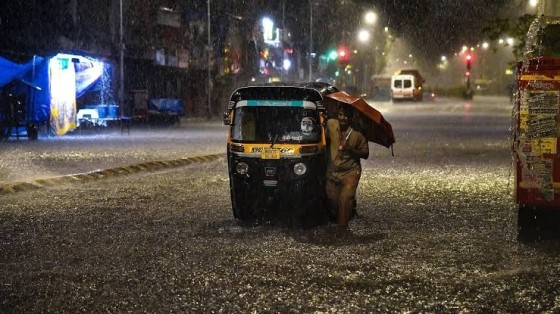
The west coast braced for intense rain. Mumbai and neighbouring districts were placed under an orange alert, with moderate to heavy rainfall expected across the city, Thane, and Palghar, and the possibility of intense showers during the day. The nearby district of Raigad was upgraded to a red alert, signalling extremely heavy rainfall that could exceed twenty centimetres in a single day. The Konkan coast, too, faced a resurgence of heavy showers as the monsoon regained strength across the region. Authorities warned of urban flooding and traffic disruptions, particularly during peak hours, in a city where heavy monsoon rain routinely strains drainage and transport systems.
The States on Watch
The alerts extended far beyond the two metros. The IMD forecast widespread rainfall across large parts of the country, with heavy to very heavy rain expected over coastal Karnataka, the Konkan and Goa, Maharashtra, and isolated areas of several states including Madhya Pradesh, Odisha, Chhattisgarh, Gujarat's Saurashtra and Kutch, Uttarakhand, Himachal Pradesh, and Vidarbha. Heavy rainfall was also likely over Bihar, eastern Rajasthan, Haryana, Punjab, Uttar Pradesh, Jharkhand, Kerala, Telangana, and Jammu and Kashmir. Thunderstorms accompanied by lightning and gusty winds were forecast across northern, central, and peninsular India, underscoring the breadth of the intensifying monsoon activity across the country.
The Monsoon Revival
The intensification marks a notable turnaround. After a below-normal June that had raised concerns about a rainfall deficit, the monsoon has regained strength and is spreading across the peninsula and northward. Conditions have turned favourable for its advance into remaining regions, including the northwest. This revival is significant, as a timely and well-distributed monsoon is vital for the country's agriculture and water resources. The shift from a sluggish start to a more active phase offers reassurance, though meteorologists caution that the overall seasonal outcome depends on the rains remaining well-distributed across regions and the full four-month season, not just a strong spell in early July.
The Safety Concerns
The heavy rain brings real hazards. Authorities warned of urban flooding, waterlogging, and traffic disruptions in cities, along with the risk of falling trees, weak structures, and localised power outages from thunderstorms and gusty winds reaching up to fifty kilometres per hour. In hilly and northeastern regions, heavy rain raised the danger of landslides and flash floods, prompting calls for vigilance among travellers. Marine warnings were issued for fishermen along parts of the coast, where rough seas made venturing out dangerous. Residents in affected areas were advised to avoid waterlogged roads, stay indoors during thunderstorms, and heed official advisories as the intense rainfall continued across multiple regions.
The Agricultural Angle
For farmers, the rains are a mixed blessing. The intensifying monsoon is crucial for the kharif, or summer, cropping season, providing the water needed for sowing and healthy crop growth after a dry start had delayed planting in some areas. Timely rain supports agriculture, which employs a large share of the population and underpins rural incomes. However, excessive or intense rainfall can also damage standing crops, disrupt sowing, and harm stored produce. Agricultural advisories urged farmers to harvest matured crops, drain excess water from fields, protect stored grain, and safeguard livestock. The balance between beneficial and damaging rain will depend on the intensity and distribution of the downpours in the days ahead.
The Economic Significance
The monsoon's revival carries broad economic weight. The rains are central to India's agriculture, which shapes food production, rural demand, and inflation, and by extension influences the wider economy. A healthy monsoon supports crop output, keeps food prices in check, and boosts rural spending on everything from vehicles to consumer goods, while a poor one can stoke inflation and dampen growth. The intensification eases earlier concerns about a weak start to the season, offering relief to policymakers watching food inflation and rural demand. Yet the economic benefit depends on the rains being well-distributed and not so excessive as to cause flooding and crop damage, making the coming weeks important to watch.
The Road Ahead
The intensifying monsoon is expected to continue spreading across the country in the coming days, bringing both relief and risk. Its advance into the remaining regions, including the northwest, will be closely tracked, as will the distribution and intensity of the rainfall. For cities, the priority is managing flooding and disruption, while for rural areas and agriculture, well-distributed rain over the full season is what matters most. Authorities have urged the public to stay updated with the latest forecasts and heed warnings as conditions evolve. After a hesitant start, the strengthening monsoon offers hope for a better agricultural season, provided the rains remain timely and balanced in the weeks ahead.
Frequently Asked Questions
Which areas are under heavy rain alerts?
The IMD placed Delhi under a red alert and Mumbai under an orange alert, with the nearby Raigad district under red. Heavy to very heavy rain was forecast across many states, including coastal Karnataka, the Konkan, Goa, Maharashtra, Madhya Pradesh, and others.
What do the alert colours mean?
A red alert signals extremely heavy rainfall requiring action, an orange alert indicates heavy to very heavy rain and a need to be prepared, and a yellow alert calls for awareness. Red is the most severe, warning of significant potential disruption.
Why is the monsoon intensifying now?
After a below-normal June, the southwest monsoon has regained strength and is advancing across the peninsula and northward, with conditions turning favourable for its spread, bringing widespread rain and relief from earlier heat.
What are the main risks?
Urban flooding, waterlogging, and traffic disruption in cities, thunderstorms with lightning and gusty winds, landslides and flash floods in hilly and northeastern areas, and rough seas prompting marine warnings for fishermen.
Why does the monsoon matter economically?
The monsoon is vital for agriculture, which shapes food production, rural incomes and demand, and inflation. A healthy, well-distributed monsoon supports crops and keeps food prices in check, while a poor or excessive one can hurt growth and stoke inflation.