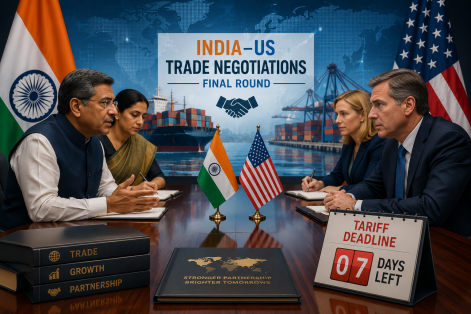
India–US Trade Negotiations Enter Final Round Ahead of Tariff Deadline
India and the United States have entered the final round of trade negotiations ahead of an important tariff deadline, with policymakers from both countries working to resolve outstanding issues and strengthen bilateral economic relations. The latest discussions are being closely monitored by businesses, exporters, manufacturers, investors, and global supply chain participants, as the outcome could influence trade flows between two of the world's largest economies.
The negotiations come at a time when both countries are seeking to deepen strategic and commercial ties while expanding cooperation across manufacturing, technology, digital trade, agriculture, energy, and investment. Industry participants expect both governments to continue pursuing a balanced agreement that promotes market access while protecting key domestic sectors.
A successful conclusion to the negotiations could improve trade certainty, encourage fresh investment, and create new opportunities for businesses operating across both markets.
Bilateral Trade Remains a Strategic Priority
India and the United States have developed one of the world's fastest-growing trade relationships, supported by increasing economic cooperation and private sector investment.
Key areas of bilateral trade include:
-
Information technology
-
Pharmaceuticals
-
Engineering goods
-
Electronics
-
Agriculture
-
Energy products
-
Textiles
-
Professional services
Continued trade expansion remains an important objective for both governments.
Tariff Discussions Focus on Market Access
Tariff negotiations remain one of the central elements of the current discussions.
Key objectives include:
-
Improved market access
-
Lower trade barriers
-
Greater export opportunities
-
Simplified customs procedures
-
Predictable trade policies
-
Stronger investment environment
-
Supply chain resilience
-
Enhanced business cooperation
Reducing trade barriers could improve competitiveness for businesses in both countries.
Manufacturing Sector Closely Watches Progress
Manufacturers across multiple industries are monitoring the negotiations due to their potential impact on exports and production.
Industries expected to benefit include:
-
Electronics manufacturing
-
Automotive components
-
Chemicals
-
Machinery
-
Medical devices
-
Renewable energy equipment
-
Consumer goods
-
Industrial products
Greater trade certainty may encourage companies to expand production and long-term investment.
Exporters Look for Improved Opportunities
Export-oriented businesses view the negotiations as an opportunity to strengthen access to one of the world's largest consumer markets.
Potential benefits include:
-
Higher export volumes
-
Better pricing competitiveness
-
Faster market access
-
Diversified customer base
-
Improved logistics
-
Increased business confidence
-
Expanded supply chains
-
Long-term commercial partnerships
Export growth could support employment and industrial expansion across several sectors.
Investment Climate May Strengthen
Progress in trade negotiations can improve investor confidence by creating a more predictable business environment.
Areas likely to attract investment include:
-
Advanced manufacturing
-
Technology
-
Infrastructure
-
Logistics
-
Clean energy
-
Financial services
-
Digital economy
-
Research and development
Stable trade policies often encourage multinational companies to increase long-term capital commitments.
Supply Chains Continue to Diversify
Global businesses continue seeking diversified supply chains to improve resilience and reduce operational risks.
Key trends include:
-
Manufacturing diversification
-
Regional sourcing
-
Digital trade integration
-
Logistics modernisation
-
Warehouse expansion
-
Export infrastructure
-
Strategic partnerships
-
Cross-border investment
India's growing manufacturing capabilities position the country as an increasingly important global production hub.
Financial Markets Monitor Negotiation Outcomes
Investors are closely tracking developments as trade agreements can influence market sentiment.
Market participants are watching:
-
Export-oriented companies
-
Manufacturing stocks
-
Currency movements
-
Commodity prices
-
Foreign investment flows
-
Industrial production
-
Trade balance
-
Economic growth expectations
Positive progress could support business confidence across multiple industries.
Challenges Remain Before Final Agreement
Despite constructive engagement, several issues continue to require careful negotiation.
Market Access
Both countries continue discussing greater access for selected products and industries.
Tariff Structures
Negotiators are working to balance domestic priorities with international competitiveness.
Regulatory Alignment
Businesses continue seeking greater clarity and consistency in trade-related regulations.
Sector-Specific Interests
Agriculture, manufacturing, digital trade, and services remain important areas of discussion.
Future Outlook
The outlook for India–US trade relations remains positive as both governments continue working toward a mutually beneficial framework. Strong economic ties, increasing bilateral investment, and expanding business cooperation provide a solid foundation for future growth.
Key trends expected to shape the relationship include:
-
Higher bilateral trade volumes
-
Greater manufacturing cooperation
-
Increased foreign investment
-
Stronger supply chain integration
-
Expansion of technology partnerships
-
Growth in digital trade
-
Enhanced export opportunities
-
Infrastructure collaboration
-
Improved business confidence
-
Long-term economic cooperation
If negotiations conclude successfully, the agreement could further strengthen commercial ties between India and the United States while supporting sustainable economic growth.
Conclusion
The final round of India–US trade negotiations represents an important step in strengthening one of the world's most significant economic partnerships. With the tariff deadline approaching, businesses and investors are closely watching the discussions for signals on future trade policy and market access.
A successful outcome has the potential to expand bilateral trade, improve investment flows, enhance supply chain resilience, and create new opportunities across manufacturing, technology, agriculture, and services. As negotiations progress, both countries remain focused on achieving a balanced agreement that supports long-term economic cooperation and shared prosperity.