





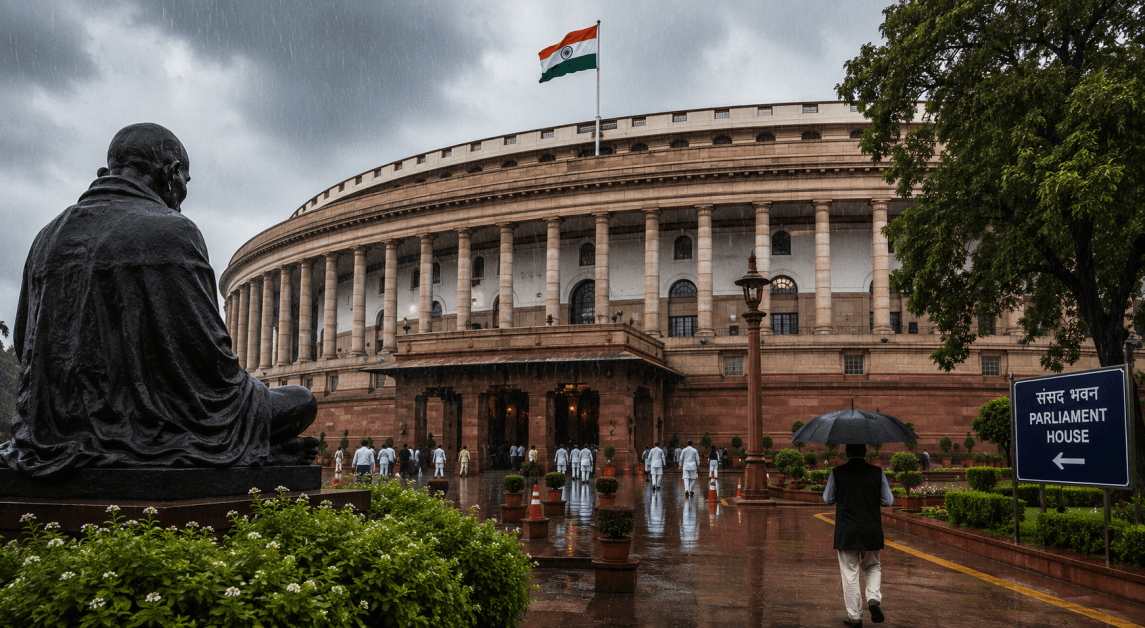
Monsoon Session of Parliament Continues with Income Tax Bill Discussions and Key Economic Reforms
India's Monsoon Session of Parliament continues with detailed discussions on the proposed Income Tax Bill, one of the most significant pieces of economic legislation currently before lawmakers. The bill is expected to play an important role in shaping the country's future direct tax framework by simplifying tax laws, improving compliance, reducing litigation, and creating a more transparent system for individuals and businesses.
The ongoing session is being closely watched by industry leaders, tax professionals, investors, and financial markets as Parliament debates measures that could influence India's taxation landscape and broader economic environment. Alongside the Income Tax Bill, lawmakers are also expected to deliberate on several policy initiatives covering infrastructure, financial sector reforms, digital governance, public expenditure, and industrial development.
The discussions come as India continues to position itself as one of the world's fastest-growing major economies, with the government focusing on improving ease of doing business, attracting investment, strengthening manufacturing, and modernising tax administration through technology-driven reforms.
Significance of the Income Tax Bill
The proposed Income Tax Bill seeks to modernise India's direct tax legislation by replacing outdated provisions with a more streamlined and easier-to-understand legal framework.
The primary objectives include:
-
Simplifying tax laws
-
Improving compliance
-
Reducing legal disputes
-
Enhancing transparency
-
Strengthening digital tax administration
-
Improving taxpayer services
-
Increasing administrative efficiency
-
Supporting economic growth
A simplified tax system can reduce compliance costs for businesses while improving certainty for investors and individual taxpayers.
Key Areas Under Discussion
During the parliamentary proceedings, lawmakers are expected to examine several important provisions of the proposed legislation.
Major discussion points include:
-
Corporate taxation
-
Individual income tax provisions
-
Digital tax administration
-
Tax compliance measures
-
Assessment procedures
-
Appeals and dispute resolution
-
Administrative reforms
-
Technology-driven governance
-
Investment-related tax provisions
-
Ease of compliance
Members may also suggest amendments aimed at strengthening taxpayer safeguards while improving revenue administration.
Importance for Businesses
The Income Tax Bill is particularly relevant for India's corporate sector because taxation directly influences investment decisions, profitability, and long-term business planning.
Businesses are expected to benefit from:
-
Greater clarity in tax provisions
-
Reduced compliance complexity
-
Faster administrative processes
-
Improved dispute resolution
-
Better digital services
-
Higher regulatory certainty
-
Lower litigation risks
-
More efficient tax administration
A predictable tax environment is generally considered an important factor in attracting both domestic and foreign investment.
Impact on Individual Taxpayers
The proposed legislation also has implications for individual taxpayers.
Potential benefits include:
-
Easier interpretation of tax provisions
-
Simplified filing procedures
-
Improved online services
-
Faster processing
-
Greater transparency
-
Better taxpayer support
-
Digital communication
-
Reduced administrative burden
Technology-enabled services are expected to remain a central component of future tax administration.
Government's Focus on Tax Modernisation
Over the past several years, India has introduced multiple reforms aimed at modernising tax administration.
Key initiatives include:
-
Faceless assessments
-
Online tax filing
-
Digital verification
-
Faster refunds
-
AI-assisted compliance systems
-
Improved taxpayer grievance mechanisms
-
Data analytics
-
Integrated digital platforms
The proposed Income Tax Bill aligns with these broader efforts to create a modern, efficient, and transparent tax ecosystem.
Broader Legislative Agenda
Apart from the Income Tax Bill, Parliament continues discussing several economic and governance-related matters.
These include:
-
Infrastructure development
-
Manufacturing policies
-
Financial sector reforms
-
Digital economy initiatives
-
Agriculture
-
Public expenditure
-
Industrial development
-
Investment promotion
-
Administrative reforms
-
Social welfare legislation
The Monsoon Session remains one of the most important parliamentary sessions for advancing the government's legislative priorities.
Economic Context
The parliamentary discussions take place against the backdrop of continued economic expansion and increasing investment activity.
Current policy priorities include:
-
Supporting GDP growth
-
Encouraging private investment
-
Expanding manufacturing
-
Strengthening exports
-
Improving employment
-
Enhancing infrastructure
-
Promoting digital governance
-
Maintaining fiscal discipline
Tax reforms are viewed as an important component of achieving these long-term economic objectives.
Investor Perspective
Financial markets closely monitor tax legislation because changes to the tax framework can influence corporate earnings, investment planning, and business confidence.
Investors are particularly watching for:
-
Policy stability
-
Regulatory clarity
-
Compliance reforms
-
Corporate taxation
-
Digital governance
-
Administrative efficiency
-
Ease of doing business
-
Future implementation timelines
A transparent and predictable tax system can contribute positively to investor sentiment over the long term.
Technology and Digital Governance
Technology continues transforming India's tax administration.
Authorities are increasingly using:
-
Artificial intelligence (AI)
-
Data analytics
-
Cloud infrastructure
-
Online taxpayer services
-
Digital verification
-
Automated compliance systems
-
Risk-based assessments
-
Electronic documentation
These initiatives aim to improve efficiency while reducing manual processes.
Challenges Ahead
Despite the expected benefits, effective implementation remains essential.
Key considerations include:
-
Smooth transition to the new framework
-
Taxpayer awareness
-
Digital readiness
-
Administrative capacity
-
Business adaptation
-
Regulatory consistency
-
Timely implementation
-
Continuous stakeholder engagement
Addressing these areas will help maximise the effectiveness of the proposed reforms.
Outlook
The ongoing parliamentary discussions highlight the government's commitment to creating a modern tax system that supports economic growth while improving compliance and administrative efficiency.
If enacted successfully, the Income Tax Bill could contribute to:
-
Improved ease of doing business
-
Higher investment confidence
-
Better taxpayer services
-
Reduced litigation
-
Stronger digital governance
-
Enhanced transparency
-
Efficient revenue administration
-
Sustainable economic development
Businesses and investors will continue monitoring the progress of the legislation as it moves through the parliamentary process.
Conclusion
The continuation of the Monsoon Session with detailed discussions on the Income Tax Bill underscores the importance of tax reform in India's broader economic agenda. By focusing on simplification, transparency, digital administration, and improved compliance, the proposed legislation has the potential to reshape the country's direct tax framework for the coming years.
While parliamentary debate and possible amendments remain part of the legislative process, the reforms are expected to strengthen India's business environment, improve taxpayer confidence, and support the country's long-term economic growth objectives.
 Monsoon Session of Parliament Continues with Income Tax Bill Discussions FAQs
POST A COMMENT (0)
All Comments (0)
Replies (0)