





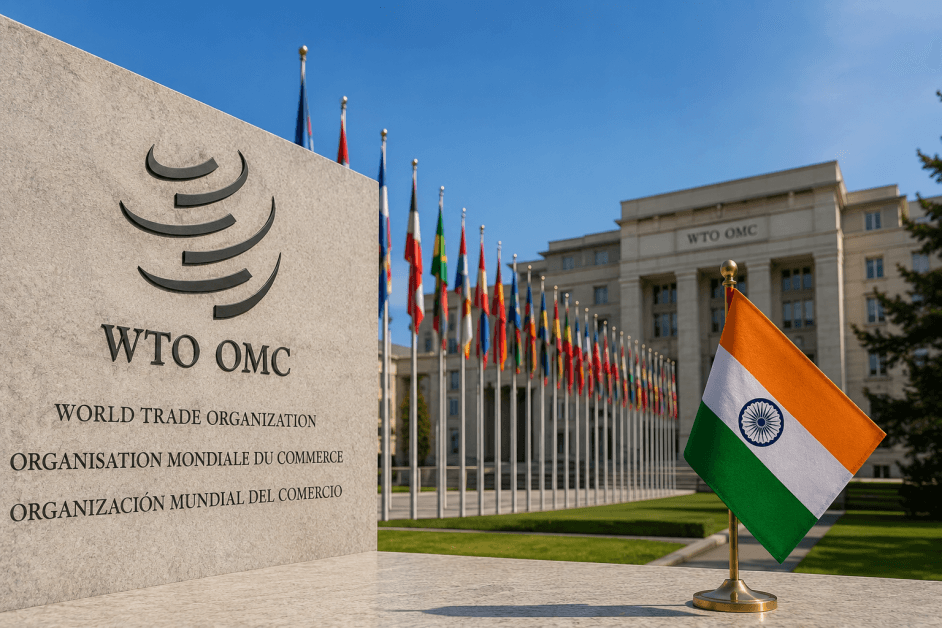
India's WTO Trade Policy Review Continues in Geneva This Week
India's Trade Policy Review (TPR) at the World Trade Organization (WTO) continues in Geneva this week, drawing attention from governments, businesses, exporters, investors, and policymakers across the world. Conducted under the WTO's Trade Policy Review Mechanism (TPRM), the exercise provides member nations with an opportunity to assess India's trade policies, regulatory framework, economic reforms, and integration with the global trading system.
The review is a regular and transparent process carried out for all WTO members to improve understanding of national trade policies and encourage constructive dialogue. For India, the review comes at a time when the country is strengthening its position as one of the world's fastest-growing major economies while expanding its role in global manufacturing, services exports, digital trade, and international supply chains.
As businesses continue to diversify supply chains and global trade patterns evolve, India's trade policies are being closely watched for their potential impact on international commerce, investment flows, and export competitiveness.
WTO Trade Policy Review Enhances Transparency
The Trade Policy Review Mechanism is one of the WTO's important transparency initiatives. Rather than serving as a dispute settlement process, the review enables member countries to understand each other's trade policies and exchange views on policy developments.
During the review, discussions generally focus on:
-
Trade policy framework
-
Tariff structures
-
Customs regulations
-
Import and export procedures
-
Investment policies
-
Services trade
-
Industrial development
-
Trade facilitation measures
The review promotes greater transparency, predictability, and confidence within the global trading system while encouraging policy dialogue among member economies.
India's Expanding Role in Global Commerce
India has steadily increased its presence in international trade through manufacturing growth, expanding services exports, digital innovation, and stronger participation in global value chains.
Several factors have supported India's growing trade profile, including:
-
Expansion of manufacturing capacity
-
Growth in engineering exports
-
Strong pharmaceutical industry
-
Information technology services
-
Business process outsourcing
-
Agricultural exports
-
Chemicals and specialty products
-
Electronics manufacturing
These sectors continue to strengthen India's competitiveness across international markets while supporting employment, investment, and industrial development.
Manufacturing and Exports Continue to Drive Growth
India's manufacturing sector remains an important pillar of its trade strategy. Government initiatives aimed at boosting industrial production, improving infrastructure, and attracting investment have encouraged businesses to expand export-oriented manufacturing.
Industries contributing significantly to export growth include:
-
Automobiles and auto components
-
Pharmaceuticals
-
Engineering goods
-
Chemicals
-
Electronics
-
Textiles
-
Machinery
-
Food processing
Growing manufacturing capacity has enhanced India's ability to supply products to diverse global markets while reducing dependence on imports in several strategic sectors.
Services Sector Remains a Global Strength
India continues to be one of the world's leading exporters of services, with strong performance across technology-driven industries.
Major service export categories include:
-
Information technology services
-
Software development
-
Financial services
-
Professional consulting
-
Engineering services
-
Healthcare services
-
Educational services
-
Research and development
The services sector plays a critical role in generating foreign exchange earnings and reinforcing India's reputation as a global knowledge economy.
Investment Climate Continues to Improve
The WTO review also considers developments affecting the country's investment environment.
Areas attracting attention include:
-
Infrastructure expansion
-
Logistics improvements
-
Digital governance
-
Manufacturing incentives
-
Industrial corridors
-
Innovation ecosystem
-
Ease of doing business initiatives
-
Regulatory modernisation
These measures are designed to improve competitiveness, encourage foreign investment, and strengthen India's long-term economic growth.
Trade Facilitation Supports Export Competitiveness
Efficient logistics and customs procedures are becoming increasingly important for international trade.
Key improvements include:
-
Digital customs processing
-
Electronic documentation
-
Faster cargo clearance
-
Port modernisation
-
Integrated logistics infrastructure
-
Risk-based inspections
-
Better supply chain connectivity
-
Improved trade documentation systems
Enhanced trade facilitation helps reduce transaction costs, improve delivery timelines, and strengthen India's competitiveness in global markets.
Global Economic Environment Influences Trade
International trade continues to be shaped by multiple global developments that influence business activity and investment decisions.
Important external factors include:
-
Global economic growth
-
Commodity price movements
-
Shipping and logistics costs
-
Supply chain diversification
-
Geopolitical developments
-
Currency market volatility
-
Technology adoption
-
Regional trade cooperation
Businesses are increasingly adapting their strategies to improve resilience while expanding into new export markets.
Opportunities for Indian Businesses
India's growing integration with global trade presents several opportunities for businesses across industries.
Potential growth areas include:
-
Export diversification
-
Digital commerce
-
Advanced manufacturing
-
Renewable energy technologies
-
Semiconductor ecosystem
-
Healthcare exports
-
Defence manufacturing
-
Agricultural value-added products
Companies investing in technology, innovation, and quality improvements are expected to strengthen their international competitiveness over the long term.
Challenges Remain
Despite positive long-term prospects, businesses and policymakers continue to face several challenges.
Global Economic Uncertainty
Changing economic conditions in major markets can influence international demand and trade flows.
Supply Chain Disruptions
Businesses continue investing in diversified sourcing and resilient logistics networks.
Regulatory Compliance
Companies exporting to multiple markets must adapt to evolving international standards and regulations.
Trade Costs
Shipping expenses, logistics infrastructure, and customs efficiency remain important competitiveness factors.
Geopolitical Developments
International policy changes and regional conflicts can influence global commerce and investment sentiment.
Future Outlook
India is expected to continue strengthening its position within the global trading system through policy reforms, manufacturing expansion, digital transformation, and growing services exports. Continued investment in infrastructure, logistics, innovation, and trade facilitation is likely to support higher export competitiveness over the coming years.
Key trends expected to shape India's future trade outlook include:
-
Expansion of manufacturing exports
-
Growth in technology-driven services
-
Supply chain diversification
-
Increased digital trade
-
Infrastructure investment
-
Improved logistics efficiency
-
Higher foreign direct investment
-
Export market diversification
-
Greater integration into global value chains
-
Continued policy reforms supporting trade
These developments are expected to reinforce India's ambition of becoming one of the world's leading trading economies while supporting sustainable economic growth and employment generation.
Conclusion
India's WTO Trade Policy Review in Geneva highlights the country's expanding role in global trade and provides an important platform for discussing policy developments, economic reforms, and international cooperation. The review reflects India's continued efforts to improve trade competitiveness, strengthen manufacturing, expand services exports, and enhance transparency within the global trading system.
As international trade continues to evolve, India's focus on infrastructure development, export competitiveness, digital transformation, and investment-friendly policies is expected to support long-term economic growth. With businesses increasingly seeking diversified supply chains and new market opportunities, India remains well positioned to strengthen its role as a major global trading partner in the years ahead.
 India's WTO Trade Policy Review Continues in Geneva This Week FAQs
POST A COMMENT (0)
All Comments (0)
Replies (0)