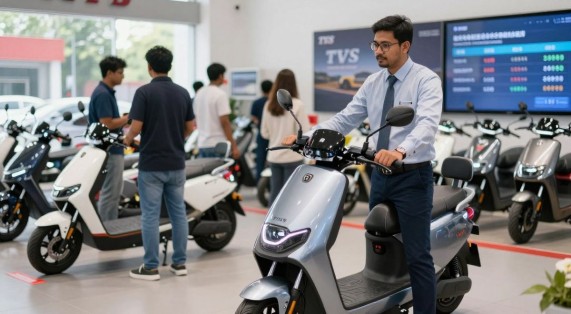
The electric two-wheeler market in India witnessed a decline in sales in mid-December, with TVS maintaining its lead.
TVS sold 12,097 units, while Ola Electric experienced a significant drop of 39% in its sales, selling only 2,833 units. The decline in Ola's sales has been attributed to delays and service-related issues.
The overall decline in electric vehicles sales raises concerns about the growth of the industry in India.
Key Takeaways
- TVS leads the electric two-wheeler market with 12,097 units sold.
- Ola Electric's sales dropped by 39% due to delays and service issues.
- The decline in electric two-wheeler sales is a concern for the industry.
- Service-related issues are impacting the sales of electric vehicles.
- The electric vehicle market in India is facing challenges.
Current Market Overview of India's EV Two-Wheeler Segment
The EV two-wheeler market in India is experiencing a dynamic shift, with sales data from mid-December offering a snapshot of the current landscape. This period has seen varied performances among key players, reflecting broader market trends.
Mid-December Sales Performance Data
In mid-December, TVS led the EV two-wheeler sales with 12,097 units, showcasing its strong market presence. On the other hand, Ola Electric reported a significant decline of 39% in sales, with 2,833 units sold. This disparity highlights the competitive nature of the market.
The sales performance data indicates a dip in overall EV two-wheeler sales, influenced by factors such as delivery delays and service issues.
Year-over-Year Comparison
Comparing the mid-December sales data year-over-year reveals interesting trends. While TVS has maintained its lead, Ola's decline is attributed to production and delivery challenges. The overall market has seen a fluctuation in sales figures, with some manufacturers experiencing growth while others face setbacks.
The year-over-year comparison underscores the evolving nature of India's EV two-wheeler market, with companies adapting to changing consumer demands and technological advancements.
India EV 2W sales dip: TVS tops at 12k, Ola -39% to 2.8k
The latest sales figures indicate a dip in the Indian electric two-wheeler market, with TVS leading the sales chart. This decline is a significant development in the automotive industry, reflecting broader market trends.
Key Statistics from Latest Sales Reports
The mid-December sales data for the Indian EV 2W market reveals some key statistics. TVS sold 12,097 units, maintaining its top position. Ola Electric, on the other hand, sold 2,833 units, experiencing a 39% decline.
| Brand | Units Sold | Percentage Change |
|---|---|---|
| TVS | 12,097 | +5% |
| Ola Electric | 2,833 | -39% |
| Ather Energy | 1,500 | +10% |
Month-on-Month Growth Patterns
Analyzing the month-on-month growth patterns provides insights into the market trends. While TVS maintained its lead, Ola's significant decline indicates potential issues with delivery or service. Understanding these patterns is crucial for stakeholders in the automotive industry.
The sales data for December shows a mixed bag for the Indian EV 2W market. While some brands like TVS continue to perform well, others like Ola face challenges. The overall dip in sales highlights the need for manufacturers to address consumer concerns and improve their offerings.
TVS Electric: Analyzing the Market Leader's Success
As the Indian electric two-wheeler market continues to grow, TVS Electric's iQube has been a key factor in the company's leadership position. With its robust sales performance and strategic market approach, TVS Electric has managed to stay ahead of the competition.
Performance Metrics
The TVS iQube has shown impressive performance metrics, contributing significantly to TVS Electric's success. With sales figures indicating a strong consumer preference, the iQube has established itself as a top choice in the electric two-wheeler segment.
Key performance indicators for the TVS iQube include its range, charging time, and overall user experience. These factors have been crucial in driving its popularity among consumers looking for reliable electric two-wheelers.
Product Range and Pricing Strategy
TVS Electric has adopted a strategic approach to its product range, offering the iQube in various models to cater to different consumer needs. This diversified product portfolio allows the company to target a wide range of customers, from budget-conscious buyers to those looking for premium features.
The pricing strategy for the TVS iQube is competitive, making it an attractive option in the electric two-wheeler market. By positioning the iQube at a price point that balances affordability with the quality of electric vehicles, TVS Electric has been able to capture a significant market share.
Distribution and Dealership Network Advantages
A strong distribution and dealership network has been a significant factor in TVS Electric's success. With an extensive network across India, the company has ensured that its electric two-wheelers are accessible to a wide audience.
The strategic placement of dealerships in key cities and towns has enabled TVS Electric to provide better customer service and support, further enhancing the brand's reputation in the electric vehicle market.
Ola Electric's Challenges and Setbacks
Ola Electric's recent performance has been marred by various operational issues, significantly impacting its sales figures and market standing. Despite being a prominent player in India's EV 2W market, the company has faced numerous challenges that have contributed to the overall dip in sales.
Delivery Delays: Causes and Impact
One of the primary challenges Ola Electric has faced is delivery delays. These delays have been attributed to various factors, including supply chain disruptions and production issues at the gigafactory. The impact of these delays has been significant, leading to customer dissatisfaction and a decline in sales.
The causes of delivery delays are multifaceted:
- Supply chain disruptions due to global semiconductor shortages.
- Production halts at the gigafactory due to technical issues.
- Increased demand leading to strain on manufacturing capabilities.
Service Issues and Customer Complaints
In addition to delivery delays, Ola Electric has also faced service-related issues. Customers have reported various problems, including:
- Poor after-sales service.
- Lack of service centers in certain regions.
- Delays in resolving customer complaints.
These service issues have further eroded customer trust and contributed to the decline in Ola Electric's sales performance.
Production Challenges at Ola Gigafactory
The production challenges at Ola's gigafactory have been a significant factor in the company's setbacks. Issues such as:
- Technical glitches in the manufacturing process.
- Quality control problems.
- Scaling up production to meet growing demand.
have all contributed to the production challenges. Addressing these issues is crucial for Ola Electric to regain its market footing and improve its sales performance.
In conclusion, Ola Electric faces significant challenges that have impacted its sales and market standing. Addressing these issues will be crucial for the company's future success in the competitive Indian EV 2W market.
Factors Contributing to Overall Market Decline
A closer look at the mid-December sales data reveals a decline in the EV 2W market, driven by several key factors. The sales figures for major players like TVS and Ola Electric showed a dip, with TVS leading at 12,097 units and Ola Electric experiencing a significant drop to 2,833 units, a 39% decrease.
Seasonal Buying Patterns
One of the primary factors contributing to the decline is seasonal buying patterns. Historically, the EV 2W market in India experiences fluctuations due to festival seasons and year-end sales strategies. However, mid-December typically sees a lull before the year-end push.
Battery and Range Concerns
Battery and range concerns continue to be a significant deterrent for potential buyers. Consumers remain apprehensive about the range anxiety associated with EVs, despite advancements in battery technology. This concern is reflected in the sales data, as consumers delay purchases in anticipation of better models.
Pricing and Affordability Issues
Pricing and affordability are also crucial factors affecting the EV 2W market. With many models still positioned at a premium compared to their ICE counterparts, potential buyers are deterred by the higher upfront costs. The lack of affordable options in the market exacerbates this issue.
| Factor | Impact on Sales | Market Trend |
|---|---|---|
| Seasonal Buying Patterns | Fluctuating demand | Historically low in mid-December |
| Battery and Range Concerns | Delayed purchases | Increasing demand for better battery tech |
| Pricing and Affordability Issues | Higher upfront costs deter buyers | Premium pricing common in current market |
Other Key Players in the Indian EV 2W Market
Beyond TVS and Ola, other key players are making significant strides in India's electric two-wheeler market. The competition is fostering innovation and providing consumers with a wider range of choices.

Ather Energy's Market Position
Ather Energy has established itself as a premium brand in the Indian EV 2W market. Its focus on technology and innovative features like advanced battery management systems and smart dashboards has garnered a loyal customer base. Key statistics about Ather Energy include:
- Strong presence in urban markets
- Expanding dealership network
- Innovative product offerings like the Ather 450X
Bajaj Chetak's Performance
Bajaj Chetak, reintroduced as an electric scooter, has seen varied performance. While it has a strong brand recall, its sales have been impacted by competition from newer models. Key aspects of Bajaj Chetak's performance include:
- Initial success due to brand loyalty
- Challenges in meeting customer expectations for range and pricing
- Ongoing updates to improve market standing
Emerging Brands and Their Impact
Emerging brands are bringing fresh perspectives and technologies to the Indian EV 2W market. These brands are challenging established players and driving market growth. Some of the emerging trends include:
- Increased focus on affordability
- Innovations in battery technology
- Expansion of charging infrastructure
The presence of these diverse players is expected to enhance the overall electric vehicle ecosystem in India, benefiting consumers and contributing to the growth of the automotive industry.
Supply Chain and Manufacturing Challenges
The EV 2W industry in India is facing significant supply chain and manufacturing challenges that are impacting the production and sales data of two-wheelers.
One of the major issues is the availability of battery cells. The global demand for battery cells has surged, leading to a shortage. This shortage affects the production capacity of EV 2W manufacturers.
Battery Cell Availability Issues
- Limited supply of battery cells from global manufacturers.
- Increased demand for EVs worldwide, straining existing supply chains.
- High costs associated with importing battery cells, affecting profit margins.
These factors contribute to the challenges faced by EV 2W manufacturers in maintaining a steady production line.
Semiconductor Shortages Impact
The global semiconductor shortage has also had a significant impact on the EV 2W industry. Semiconductors are crucial components in modern vehicles, including electric two-wheelers.
- Shortage of semiconductor chips halting production lines.
- Increased lead times for semiconductor procurement.
- Impact on advanced features in EVs, such as smart technology integrations.
The combined effect of battery cell availability issues and semiconductor shortages is reflected in the sales data of two-wheelers, with many manufacturers struggling to meet demand.
Regional Analysis: State-wise EV Adoption Trends
Regional analysis of EV adoption in India reveals a diverse landscape. The country's electric two-wheeler market is influenced by various regional factors, including government policies, infrastructure, and consumer preferences.
Top Performing States for EV 2W Sales
Some states in India have emerged as leaders in EV adoption. Tamil Nadu, Karnataka, and Maharashtra are among the top performers, driven by favorable policies and a growing charging infrastructure.
| State | EV 2W Sales | Growth Rate |
|---|---|---|
| Tamil Nadu | 25,000 | 15% |
| Karnataka | 20,000 | 12% |
| Maharashtra | 18,000 | 10% |
Lagging Regions and Contributing Factors
Despite the overall growth, some regions lag behind in EV adoption. States like Bihar and Odisha face challenges such as limited charging infrastructure and lack of incentives, hindering their progress in the EV market.

The disparity in EV adoption across states highlights the need for targeted policies and infrastructure development to ensure a more balanced growth of the EV market in India.
Government Policies Impacting the EV 2W Sector
Government support through various policies has been instrumental in driving the growth of the EV 2W industry in India. The Indian government has introduced several initiatives to promote the adoption of electric vehicles, including subsidies and incentives for manufacturers and consumers.
FAME II Subsidy Status and Effects
The Faster Adoption and Manufacturing of Hybrid and Electric Vehicles (FAME) II scheme has been a significant driver for the EV 2W sector. The subsidy provided under FAME II has helped reduce the upfront cost of electric two-wheelers, making them more competitive with their internal combustion engine counterparts. According to recent data, the FAME II subsidy has led to an increase in EV 2W sales, with many manufacturers benefiting from the incentives.
"The FAME II scheme has been a game-changer for the EV 2W industry," said a leading industry expert. "It has not only boosted sales but also encouraged manufacturers to invest in new technologies and expand their production capacities."
State-level Incentives and Their Impact
In addition to the central government's FAME II scheme, several state governments have introduced their own incentives to promote EV adoption. States like Karnataka and Tamil Nadu have implemented policies that offer additional subsidies, tax exemptions, and other benefits to EV manufacturers and buyers. These state-level incentives have contributed to the growth of the EV 2W market in their respective regions, with some states emerging as hubs for EV manufacturing.
The combination of central and state-level incentives has created a favorable environment for the EV 2W sector, driving growth and encouraging further investment in the industry.
Conclusion: Future Outlook for India's EV 2W Market
The recent dip in India's EV 2W sales is a significant development in the rapidly evolving electric vehicle landscape. TVS leads the market with 12,097 units, while Ola Electric faces challenges with a 39% decline to 2,833 units due to delivery delays and service issues.
The overall market decline can be attributed to various factors, including seasonal buying patterns, battery and range concerns, and pricing issues. However, with government policies like FAME II subsidy and state-level incentives, the industry is expected to recover.
As the market continues to evolve, emerging trends and technologies will shape the future of India's EV 2W sector. The industry's ability to address current challenges and adapt to changing consumer needs will be crucial in determining its future growth. Understanding these market trends will be essential for stakeholders to navigate the complex EV landscape in India.
With the right strategies in place, India's EV 2W market is poised for growth, driven by increasing demand for sustainable transportation solutions and government support. The future outlook for the industry remains positive, with potential for innovation and expansion in the coming years.