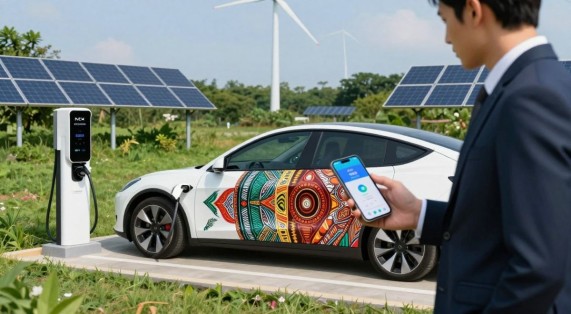
India's electric vehicle sector is gaining momentum, driven by homegrown technology that is on par with global standards. The focus on clean mobility is propelling the industry forward, positioning it as a significant growth engine for the country's economy.
The development of indigenous tech in the EV sector is crucial, as it not only reduces reliance on foreign technology but also fosters innovation and competitiveness. By achieving global standards, Indian EV manufacturers are poised to make a mark in the international market.
Key Takeaways
- Homegrown technology is driving the growth of India's EV sector.
- Clean mobility is a key focus area for the industry.
- Indigenous tech development is crucial for reducing reliance on foreign technology.
- Indian EV manufacturers are achieving global standards.
- The EV sector is positioned as a significant growth engine for India's economy.
The Rise of India's EV Sector: Current State and Recent Developments
India's electric vehicle (EV) sector is experiencing a significant transformation, driven by technological advancements and supportive government policies. This shift is crucial as the world moves towards sustainable transportation and clean energy solutions.
Key Statistics and Market Growth in 2023
The Indian EV market has shown remarkable growth in 2023. Some key statistics include:
- A 40% increase in EV sales
- A 30% rise in the number of EV models available
- Over 1 million EVs sold in the Indian market
These figures indicate a growing consumer acceptance and a significant expansion of the EV ecosystem in India.
Recent Breakthroughs in Indian EV Technology
Indian companies are making significant strides in EV technology, with innovations in battery management systems, electric drivetrains, and charging infrastructure. Some recent breakthroughs include:
- Advanced battery technologies that offer longer ranges and faster charging times
- Indigenous EV platforms designed to cater to the specific needs of the Indian market
- Integration of IoT and AI in EVs for enhanced performance and user experience
These advancements are positioning India as a competitive player in the global EV market.
EVs as Growth Engine with Indigenous Tech Matching Global Standards; Policy Aids
India's electric vehicle (EV) sector is gaining momentum, driven by indigenous technology that is increasingly competitive with global standards. The growth of the EV industry is not only a result of technological advancements but also of supportive policies that have created a conducive environment for innovation and manufacturing.
How Domestic Technology is Competing Internationally
Indian companies are making significant strides in EV technology, developing products that are on par with international standards. Indigenous innovations in battery management systems, electric drivetrains, and vehicle design are enabling Indian EVs to compete effectively in both domestic and international markets.
As noted by Nitin Gadkari, Minister of Road Transport and Highways, "The government's push for indigenous technology in EVs is aimed at reducing our dependence on foreign technologies and making India a global hub for EV manufacturing." This vision is being realized through various initiatives and investments in research and development.
Economic Impact of EV Manufacturing on India's Growth
The economic benefits of EV manufacturing in India are multifaceted. The sector is creating new job opportunities, both directly in manufacturing and indirectly in supporting industries. Moreover, the growth of the EV industry is contributing to India's GDP, making it a significant component of the country's economic strategy.
A report highlighted that the EV industry could potentially add billions to India's economy in the coming years, driven by increased demand, government incentives, and the competitive edge provided by indigenous technology. As Arvind Saxena, Chairman of the Automotive Component Manufacturers Association of India (ACMA), noted, "The EV revolution is not just about environmental benefits; it's also a significant economic opportunity for India."
The combination of indigenous tech, government support, and economic benefits positions India's EV sector for sustained growth, aligning with global standards while contributing to the country's development.
India's Indigenous EV Technology: A Closer Look
The Indian EV industry is making strides in developing homegrown technology that rivals global standards. This advancement is crucial for India's transition to cleaner mobility solutions, reducing dependence on foreign technology, and fostering a sustainable automotive sector.
Battery Technology Innovations by Indian Companies
Indian companies are pioneering significant advancements in battery technology, a critical component of EVs. These innovations are not only enhancing the performance and range of EVs but also making them more cost-effective.
Solid-State Battery Research and Development
One of the most promising areas of research is in solid-state batteries, which offer higher energy density and safety compared to traditional lithium-ion batteries. Indian startups and research institutions are actively involved in developing this technology.
Battery Management Systems and Thermal Solutions
In addition to solid-state batteries, Indian companies are also focusing on improving battery management systems (BMS) and thermal solutions. These advancements are crucial for optimizing battery performance, ensuring safety, and prolonging battery life.
Electric Drivetrain and Motor Developments
The electric drivetrain and motor are other critical components where Indian companies are making significant strides. Innovations in motor design and drivetrain technology are enhancing the efficiency, performance, and reliability of EVs.
For instance, companies are developing more efficient electric motors that provide higher torque and better performance. Additionally, advancements in drivetrain technology are enabling smoother and more efficient power delivery to the wheels.
| Component | Traditional Technology | Indigenous Innovation |
|---|---|---|
| Battery | Lithium-ion | Solid-State Batteries |
| Motor | Standard Efficiency | High-Efficiency Motors |
| Drivetrain | Conventional Gearboxes | Advanced Drivetrain Systems |
Software and IoT Integration in Indian EVs
Software and IoT integration are becoming increasingly important in the EV ecosystem. Indian companies are developing sophisticated software solutions that enable real-time monitoring, predictive maintenance, and enhanced user experience.
"The integration of IoT and advanced software in EVs is revolutionizing the way we interact with our vehicles, making them smarter and more connected than ever before."
These advancements are not only improving the functionality of EVs but also paving the way for future innovations such as autonomous driving and vehicle-to-grid (V2G) technology.
Leading Indian EV Manufacturers and Their Technological Achievements
India's journey towards becoming a global EV powerhouse is being driven by its leading manufacturers, who are achieving remarkable technological milestones. These companies are not only adopting global best practices but are also innovating and developing indigenous technologies that are competitive on a global scale.
Tata Motors: Pioneering Mass-Market EVs
Tata Motors has been a pioneer in India's EV sector, particularly with its Tigor EV and more recently, the Nexon EV. These models have been well-received in the market, thanks to their competitive pricing and robust performance. Tata Motors has also been investing in battery technology and charging infrastructure, further solidifying its position in the EV market.

Mahindra Electric: Advancing Commercial EV Solutions
Mahindra Electric has been a significant player in the commercial EV segment, offering a range of electric vehicles for fleet and commercial use. Their Treo series has gained popularity for its efficiency and reliability. Mahindra Electric is also focusing on telematics and connected vehicle technology to enhance the user experience and operational efficiency.
Emerging Startups Driving Innovation
Emerging startups are playing a crucial role in driving innovation in India's EV sector. Companies like Ather Energy and Ola Electric are not only developing cutting-edge EV technology but are also creating sustainable business models. These startups are contributing to the ecosystem by developing charging infrastructure and advanced battery technologies, thereby accelerating the adoption of EVs in India.
Comparing Indian and Global EV Standards
With the Indian government pushing for cleaner mobility, understanding how domestic EV standards stack up globally is crucial. The comparison not only highlights areas of excellence but also identifies opportunities for improvement in India's EV sector.
Performance Benchmarks: India vs International Markets
Indian EVs have made significant strides in performance, with many models offering competitive range and acceleration. For instance, the Tata Nexon EV provides a range of over 300 kilometers on a single charge, comparable to some international models. However, when it comes to high-performance EVs, global brands still lead in terms of advanced technology and brand recognition.
A comparison of key performance indicators (KPIs) such as acceleration, top speed, and charging time reveals that Indian EVs are competitive but not yet at par with global leaders. For example, while the MG ZS EV offers a fast charging capability, it still lags behind some international brands in terms of overall performance and luxury features.
Safety and Quality Standards Alignment
Safety and quality are paramount in the EV industry. Indian manufacturers have made significant efforts to align with global safety standards, with many models achieving high safety ratings in crash tests. The Ayota LSV and Tata Nexon EV are examples of Indian EVs that have received high safety accolades.
However, there's still a need for further alignment with global quality standards, particularly in areas such as durability and reliability over long periods. Indian manufacturers must continue to invest in R&D to match international quality benchmarks, ensuring their EVs are not only safe but also durable and reliable.
Government Policies Propelling the EV Revolution
The Indian government's proactive approach to promoting electric vehicles (EVs) has been instrumental in driving the country's EV revolution. By implementing supportive policies and initiatives, the government aims to create a conducive environment for the growth of the EV industry.
Government Support for EVs has been a key factor in the sector's growth. The government has introduced various schemes to encourage the adoption of EVs, including financial incentives and infrastructure development.
FAME II and PLI Schemes: Impact and Implementation
The Faster Adoption and Manufacturing of Hybrid and Electric Vehicles (FAME) II scheme has been a significant driver of EV adoption in India. By providing subsidies and incentives, FAME II has encouraged consumers to switch to EVs. The scheme has also supported the development of EV manufacturing infrastructure.
The Production Linked Incentive (PLI) scheme has further boosted the EV industry by encouraging domestic manufacturing. By offering incentives to manufacturers, the PLI scheme has helped reduce production costs and increase the competitiveness of Indian EVs in the global market.
State-Level Initiatives Supporting EV Adoption
Several state governments in India have launched their own initiatives to promote EV adoption. These initiatives include providing additional incentives, developing EV charging infrastructure, and implementing policies to support EV manufacturing.
For instance, states like Maharashtra and Karnataka have introduced EV-friendly policies, such as tax exemptions and subsidies, to encourage the adoption of EVs. These state-level initiatives have complemented the central government's efforts, creating a robust ecosystem for the EV industry.
The combined efforts of the central and state governments have created a supportive environment for the EV industry, driving growth and innovation. As the demand for EVs continues to rise, the government's proactive policies are expected to play a crucial role in shaping the future of the industry.
Clean Mobility: Environmental Benefits of India's EV Push
The electric vehicle revolution in India is not just about technological advancement; it's also about creating a cleaner, healthier environment. As the country accelerates its adoption of EVs, it is poised to reap significant environmental benefits, ranging from reduced carbon emissions to improved air quality.
Reduction in Carbon Emissions and Air Pollution
One of the most significant environmental benefits of India's EV push is the reduction in carbon emissions and air pollution. EVs produce zero tailpipe emissions, directly reducing the amount of greenhouse gases and pollutants released into the atmosphere. Key advantages include:
- Lower Emissions: EVs contribute to a decrease in CO2 emissions, helping India meet its climate goals.
- Improved Air Quality: By reducing the number of internal combustion engine vehicles on the road, EVs help decrease air pollutants, improving public health.
Sustainable Manufacturing Practices in the EV Industry
The environmental benefits of EVs are further enhanced by the adoption of sustainable manufacturing practices within the industry. Manufacturers are increasingly focusing on reducing their environmental footprint through:
- Renewable Energy Use: Utilizing renewable energy sources in manufacturing processes.
- Recycling Initiatives: Implementing battery recycling programs to minimize waste.
By embracing clean energy and sustainable transportation practices, India is not only reducing its environmental impact but also setting a precedent for other nations to follow.
Challenges and Roadblocks in India's EV Journey
India's electric vehicle (EV) journey is gaining momentum, but several challenges need to be addressed. Despite the government's efforts to promote clean mobility and indigenous technology, the EV sector faces significant hurdles.
Infrastructure Gaps: Charging Networks and Grid Capacity
The lack of comprehensive charging infrastructure is a major obstacle to EV adoption in India. Key challenges include:
- Insufficient public charging stations
- Limited grid capacity to support widespread EV charging
- High costs associated with establishing charging networks

Raw Material Dependencies and Supply Chain Issues
India's EV industry is heavily reliant on imported raw materials, such as lithium and cobalt, which can lead to supply chain disruptions. Key concerns include:
- Dependence on international markets for critical materials
- Fluctuations in global commodity prices
- Need for diversification of supply sources
Consumer Adoption Barriers
Several factors hinder consumer adoption of EVs in India, including high upfront costs, range anxiety, and limited model options. Key strategies to address these barriers include:
- Government incentives to reduce purchase prices
- Education campaigns to raise awareness about EV benefits
- Increased model variety to cater to different consumer needs
Conclusion: India's Path to Becoming a Global EV Powerhouse
India's electric vehicle (EV) sector is poised for significant growth, driven by indigenous technology that matches global standards. The country's focus on clean energy and reducing carbon emissions has positioned EVs as a growth engine, propelling the nation towards a more sustainable future.
With government initiatives such as FAME II and PLI schemes, the EV industry has received a significant boost. These policies have encouraged the adoption of EVs, driven innovation, and attracted investments. As a result, Indian EV manufacturers are now competing with global players, offering high-quality products that meet international standards.
The emphasis on clean mobility has not only reduced carbon emissions but also created new opportunities for sustainable manufacturing practices. As India continues to develop its EV ecosystem, the country is likely to become a global EV powerhouse, driving growth and innovation in the sector.
With a strong foundation in place, India's EV sector is set to play a vital role in the country's economic growth, while contributing to a cleaner and more sustainable environment. The future of EVs in India looks promising, with the potential to become a leader in the global EV market, driven by evs as a growth engine, adherence to global standards, and a commitment to clean energy.