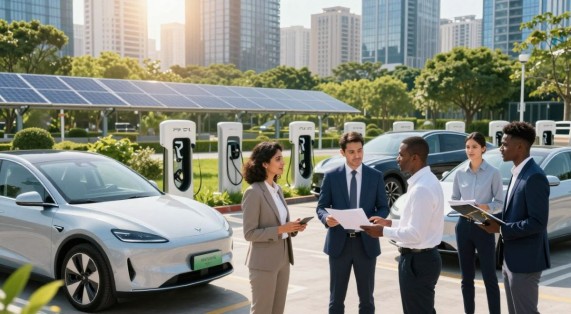
The rise of electric vehicles is transforming the job market, creating new opportunities in the clean energy sector. As the world shifts towards sustainable transportation, the demand for skilled workers in the EV industry is increasing.
The SHANTI Bill 2025 is set to revolutionize the energy landscape by encouraging private nuclear participation. This move is expected to create a ripple effect, driving growth in related industries and opening up new avenues for employment.
Key Takeaways
- The EV industry is creating new job opportunities in the clean energy sector.
- The SHANTI Bill 2025 aims to encourage private nuclear participation.
- This move is expected to drive growth in related industries.
- New avenues for employment are emerging in the energy sector.
- The shift towards sustainable transportation is transforming the job market.
The Current Landscape of Clean Energy in India
As India continues its journey towards a more sustainable energy mix, the focus on clean energy is becoming increasingly prominent. The country is actively working towards reducing its carbon footprint and achieving its energy transition goals.
India's Energy Transition Goals
India has set ambitious targets for its energy transition, aiming to increase the share of renewable energy in its energy mix. This transition is expected to create numerous renewable energy jobs and stimulate economic growth.
Recent Policy Developments
Recent policy initiatives have played a crucial role in promoting clean energy in India. Two significant developments are the National Green Hydrogen Mission and the Electric Vehicle Policy Framework.
National Green Hydrogen Mission
The National Green Hydrogen Mission aims to promote the production and use of green hydrogen, a clean and sustainable energy source. This mission is expected to create new opportunities in the renewable energy sector.
Electric Vehicle Policy Framework
The Electric Vehicle Policy Framework is designed to promote the adoption of electric vehicles, thereby reducing dependence on fossil fuels and decreasing emissions. This policy is expected to boost sustainable transportation employment opportunities.
Understanding the SHANTI Bill 2025
The SHANTI Bill 2025 represents a significant shift in India's energy policy, aiming to boost private sector participation in nuclear energy. This legislation is designed to modernize India's nuclear energy framework, making it more conducive to private investment.
Key Provisions and Objectives
The SHANTI Bill 2025 includes several key provisions aimed at encouraging private sector participation. These provisions focus on simplifying regulatory processes, offering tax incentives, and establishing clear guidelines for private companies looking to invest in nuclear energy.
Private Sector Participation Framework
A robust framework for private sector participation is central to the SHANTI Bill 2025. This framework outlines the roles and responsibilities of both government agencies and private entities, ensuring a collaborative approach to nuclear energy development.
Timeline for Implementation
The implementation of the SHANTI Bill 2025 is expected to be rolled out in phases over the next five years. A detailed timeline will be released by the government, outlining specific milestones and deadlines for both government agencies and private sector participants.
Regulatory Changes and Compliance Requirements
To facilitate smooth implementation, the government will introduce new regulatory changes. A summary of these changes is provided in the table below:
| Regulatory Change | Description | Compliance Requirement |
|---|---|---|
| Simplified Licensing | Streamlined process for private companies to obtain necessary licenses | Submission of detailed project plans |
| Tax Incentives | Reduced tax rates for private companies investing in nuclear energy | Meeting specific investment thresholds |
| Safety Protocols | Enhanced safety measures for nuclear facilities | Regular safety audits and compliance with international standards |
EVs boost clean mobility jobs; SHANTI Bill 2025 aids private nuclear
The growth of electric vehicles (EVs) and the implementation of the SHANTI Bill 2025 are set to revolutionize India's clean energy landscape. This dual approach is expected to drive significant job creation and economic benefits across various sectors.
Interconnected Growth of Clean Energy Sectors
The rise of EVs is closely linked to the development of clean energy sources, including nuclear power, which is expected to receive a boost from the SHANTI Bill 2025. This interconnected growth will create a robust clean energy ecosystem, driving innovation and job creation. As EVs become more prevalent, the demand for clean energy to power them will increase, thereby supporting the growth of the nuclear energy sector.
Employment Multiplier Effects
The employment multiplier effects of this dual clean energy approach will be significant. The EV sector is creating jobs in manufacturing, sales, and maintenance, while the nuclear energy sector will generate employment opportunities in construction, operation, and maintenance. According to recent studies, the clean energy sector has the potential to create millions of jobs globally.
| Sector | Job Creation Areas | Potential Jobs |
|---|---|---|
| EV Sector | Manufacturing, Sales, Maintenance | 500,000+ |
| Nuclear Energy Sector | Construction, Operation, Maintenance | 200,000+ |
Economic Benefits of Dual Clean Energy Approach
The economic benefits of adopting a dual clean energy approach will be substantial. The growth of the EV sector will reduce dependence on fossil fuels, while the nuclear energy sector will provide a reliable source of clean energy. This will not only reduce carbon emissions but also create new economic opportunities in the clean energy sector.
The combined effect of these two sectors will be a significant boost to India's clean energy workforce and job growth in clean technology. As the country continues to transition towards a cleaner energy mix, the economic benefits are expected to be substantial.
India's EV Manufacturing Ecosystem
As India pushes towards a cleaner transportation future, its EV manufacturing ecosystem is becoming increasingly crucial. The country's electric vehicle market is witnessing rapid growth, driven by government initiatives, private sector investments, and a growing demand for sustainable transportation solutions.
Major Players and Production Capacity
Several major players have entered India's EV manufacturing landscape, significantly boosting production capacity. Companies like Tata Motors, Hyundai, and Ather Energy have established manufacturing facilities across the country. For instance, Tata Motors has announced plans to invest ₹8,000 crores in its EV manufacturing facility in Gujarat, enhancing production capacity.
Supply Chain Development
The development of a robust supply chain is critical for the growth of India's EV manufacturing ecosystem. Efforts are being made to localize the production of EV components, reducing dependence on imports.
Battery Manufacturing Initiatives
Battery manufacturing is a key aspect of the EV supply chain. Initiatives by companies like Tata Chemicals and Exide Industries to set up battery manufacturing facilities in India are expected to boost the local production of EV batteries, creating new sustainable transportation employment opportunities.
Component Localization Efforts
Component localization is another crucial aspect of developing a self-sufficient EV manufacturing ecosystem. Manufacturers are focusing on localizing critical components such as electric motors, power electronics, and charging infrastructure. This not only reduces costs but also creates new opportunities for electric vehicle opportunities in the country.
Job Creation in the EV Value Chain
The electric vehicle (EV) industry is rapidly expanding, creating numerous job opportunities across various sectors of the EV value chain. As the demand for EVs continues to rise, driven by government incentives and declining battery costs, the industry is poised to become a significant source of employment in India.
Manufacturing Employment Statistics
The manufacturing segment of the EV industry is expected to drive a substantial portion of job creation. According to recent estimates, the EV manufacturing sector could generate over 50,000 direct jobs by 2025. This growth is driven by investments in new manufacturing facilities and the expansion of existing production lines.
Sales, Service, and Support Roles
Beyond manufacturing, the EV industry is also creating jobs in sales, service, and support. As the number of EVs on the road increases, there is a growing need for skilled professionals to manage sales, after-sales service, and customer support. This includes roles such as sales executives, service technicians, and customer service representatives.
Research and Development Opportunities
The EV sector is also driving innovation, with significant investments in research and development (R&D). R&D roles in areas such as battery technology, charging infrastructure, and vehicle design are becoming increasingly important. These positions require specialized skills and offer opportunities for professionals to contribute to the advancement of EV technology.
Specialized Skill Requirements
As the EV industry continues to evolve, there is a growing demand for professionals with specialized skills. These include expertise in areas such as battery management, power electronics, and automotive engineering. To meet this demand, educational institutions and training programs are developing curricula focused on EV technology and related fields.
EV Charging Infrastructure: Development and Workforce
As India accelerates its transition to electric vehicles (EVs), the development of EV charging infrastructure is becoming increasingly crucial. The growth of EV charging infrastructure is not only essential for supporting the adoption of EVs but also creates new job opportunities in the clean energy sector.
Current Infrastructure Status and Expansion Plans
India's EV charging infrastructure is still in its nascent stages, with a limited number of public charging stations available. However, the government has announced plans to expand the network, with a focus on installing charging stations along highways and in urban areas.

Installation and Maintenance Employment
The installation and maintenance of EV charging infrastructure require skilled workers. The growth of the EV charging network is expected to create new job opportunities in this area, with a focus on electricians, technicians, and engineers.
Smart Grid Integration Jobs
The integration of EV charging infrastructure with the smart grid is a critical aspect of India's clean energy strategy. This integration requires specialized skills, including data analytics, software development, and grid management.
| Job Category | Skills Required | Employment Opportunities |
|---|---|---|
| Installation and Maintenance | Electricians, Technicians, Engineers | High |
| Smart Grid Integration | Data Analytics, Software Development, Grid Management | Medium |
The development of EV charging infrastructure is a critical component of India's clean mobility strategy, and it is expected to create new job opportunities in the clean energy sector.
Private Sector Opportunities in Nuclear Energy
The SHANTI Bill 2025 is set to revolutionize India's nuclear energy landscape by opening up new avenues for private sector participation. This significant development is expected to bring about a paradigm shift in the way nuclear energy is produced and managed in the country.
Historical Context of Nuclear Energy in India
India's nuclear energy program has been primarily state-driven since its inception. However, with the SHANTI Bill 2025, the government aims to encourage private sector participation, thereby enhancing efficiency and productivity in the nuclear power sector.
New Business Models Under SHANTI Bill
The SHANTI Bill 2025 is expected to introduce new business models that will facilitate private sector involvement in nuclear energy. Some of these models include:
- Public-Private Partnerships (PPPs) in nuclear power plant operations
- Private investment in nuclear fuel cycle services
- Contracting out of nuclear waste management services
Safety and Regulatory Compliance Jobs
With the influx of private players in the nuclear energy sector, there will be a growing demand for professionals skilled in safety and regulatory compliance. These roles will be crucial in ensuring that nuclear power plants operate safely and in accordance with international standards.
International Collaboration Possibilities
The SHANTI Bill 2025 also opens up possibilities for international collaboration in the nuclear energy sector. Private Indian companies can now partner with global nuclear energy leaders to adopt best practices and leverage advanced technologies.
The involvement of the private sector is expected to bring in not only financial resources but also expertise and innovation, thereby enhancing the overall efficiency of India's nuclear energy program. As the sector evolves, it is likely to create new employment opportunities, particularly in the areas of safety, regulatory compliance, and international collaboration.
Environmental and Sustainability Benefits
The integration of electric vehicles and nuclear power into India's energy mix is a crucial step towards achieving environmental sustainability. As the country continues to grow economically, the need to reduce its environmental footprint becomes increasingly important.
Carbon Emission Reduction Potential
The adoption of EVs is expected to significantly reduce carbon emissions from the transportation sector. With the SHANTI Bill 2025 promoting private participation in nuclear energy, India is also poised to decrease its reliance on fossil fuels for electricity generation. This dual approach can lead to a substantial reduction in the country's overall carbon emissions.
Air Quality Improvements in Urban Centers
EVs, being emission-free, will contribute to improved air quality in urban centers, reducing the negative health impacts associated with air pollution. Cleaner air quality enhances the quality of life for urban residents and reduces healthcare costs.
Contribution to India's Climate Commitments
By transitioning to cleaner energy sources, India is better positioned to meet its climate commitments under international agreements. The role of the clean energy workforce will be pivotal in driving this transition, creating renewable energy jobs that are sustainable and beneficial for the environment.
The combined efforts in promoting EVs and nuclear energy underscore India's commitment to a sustainable future, aligning with global efforts to combat climate change.
Skill Development for the Clean Energy Workforce
The clean energy transition in India, driven by the SHANTI Bill 2025, necessitates a robust skill development framework. As the country shifts towards electric vehicles and private nuclear participation, the demand for a skilled workforce is on the rise.
Government Training Initiatives
The government has launched various training initiatives to equip the workforce with the necessary skills. These programs focus on emerging technologies in the clean energy sector, including electric vehicle manufacturing and nuclear energy.
Industry-Academia Partnerships
Collaboration between industry and academia is crucial for developing a skilled workforce. Such partnerships enable the creation of tailored training programs that meet the specific needs of the clean energy sector.
Reskilling Programs for Traditional Energy Workers
Reskilling programs are being implemented to help workers from traditional energy sectors transition to clean energy jobs. This includes training in new technologies and practices relevant to electric vehicles and nuclear energy.
Certification and Standardization Efforts
Certification and standardization efforts are underway to ensure that the skills acquired through these programs meet industry standards. This enhances the employability of the workforce in the clean energy sector.

Challenges and Barriers to Implementation
The implementation of the SHANTI Bill 2025 and the clean energy transition in India faces several challenges. Despite the promising outlook, various obstacles need to be addressed to ensure a smooth transition.
Infrastructure and Investment Gaps
One of the significant challenges is the existing infrastructure and investment gaps. India's clean energy sector requires substantial investment to develop the necessary infrastructure, including EV charging stations and nuclear power plants.
| Infrastructure | Current Status | Required Investment |
|---|---|---|
| EV Charging Stations | 10,000 | $1 billion |
| Nuclear Power Plants | 23 | $5 billion |
Regulatory Hurdles
Regulatory hurdles pose another significant challenge. The existing regulatory framework needs to be adapted to accommodate the new clean energy technologies and initiatives.
"The regulatory framework must be flexible enough to accommodate new technologies and business models in the clean energy sector."
Public Perception and Adoption Concerns
Public perception and adoption concerns also play a crucial role. There is a need to educate the public about the benefits of clean energy and address any concerns they may have.
Regional Disparities in Development
Regional disparities in development further complicate the implementation of clean energy initiatives. Different regions have varying levels of infrastructure, investment, and public awareness.
International Best Practices and Lessons
As India aims to boost its clean energy sector, examining international best practices can provide valuable insights. Countries leading in clean energy adoption have implemented various strategies that can be adapted to India's context.
Case Studies from Leading Clean Energy Nations
Nations like Denmark and Germany have made significant strides in integrating renewable energy into their grids. For instance, Denmark's wind power generation has been successfully integrated into its energy mix, providing a model for other countries.
| Country | Clean Energy Source | Key Strategy |
|---|---|---|
| Denmark | Wind Power | Grid Integration |
| Germany | Solar and Wind | Energiewende Policy |
| France | Nuclear Energy | Private Sector Participation |
Adaptation Strategies for Indian Context
India can adapt these international best practices by focusing on its own strengths, such as the growing clean energy workforce. By investing in skill development programs and promoting private nuclear participation, India can accelerate its clean energy transition.
Global Collaboration Opportunities
Collaboration with leading clean energy nations can provide India with access to advanced technologies and best practices. International partnerships can also attract foreign investment in the clean energy sector.
Conclusion: Shaping India's Clean Energy Future
India's transition to clean energy is gaining momentum, driven by the growth of electric vehicles (EVs) and the potential of private nuclear participation through the SHANTI Bill 2025. EVs boost clean mobility jobs, creating new opportunities in manufacturing, sales, and service sectors.
The SHANTI Bill 2025 is set to revolutionize India's nuclear energy landscape by encouraging private sector participation. This move is expected to create renewable energy jobs and stimulate economic growth.
As India continues to push towards its clean energy goals, the combined effect of EV adoption and private nuclear energy participation will be crucial. The creation of new job opportunities in these sectors will not only drive economic benefits but also contribute to a sustainable future.
With the right policies and investments in place, India is poised to become a leader in the clean energy transition, reaping the benefits of a greener and more sustainable economy.