





Introduction: The Age of Digital Communication and Rising Privacy Concerns
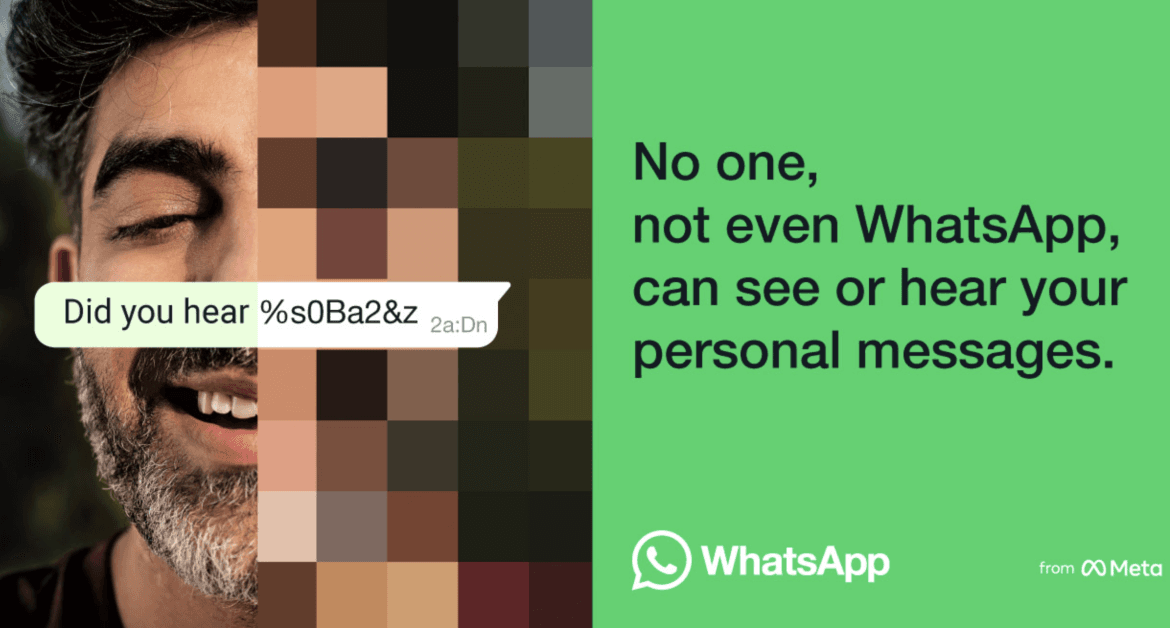
In the digital era, where billions of messages are exchanged every day, privacy has become a critical concern. Platforms like WhatsApp, which boast over 2 billion users globally, are at the center of discussions on data security and digital privacy. One of the most significant claims made by WhatsApp is:
“No one, not even WhatsApp, can see or hear your personal messages.”
This statement hinges on the concept of end-to-end encryption (E2EE) – a technology designed to keep communications private between the sender and recipient. But what does this actually mean? Is it truly secure? What about governments or hackers? And how does this impact broader issues like national security and online safety?
This article aims to unpack these questions through an in-depth exploration of WhatsApp’s privacy architecture, end-to-end encryption technology, challenges, controversies, and future prospects.
1. The Foundation: What Is End-to-End Encryption (E2EE)?
End-to-end encryption is a method of securing data so that only the communicating users can read it. Here's how it works:
-
When you send a message, it is encrypted on your device using a unique key.
-
The message travels in encrypted form and can only be decrypted on the recipient’s device.
-
No third party – not even WhatsApp, internet service providers, or governments – can access the contents in transit.
Key Features of E2EE:
-
Data Confidentiality: Only sender and receiver can read the message.
-
Data Integrity: Message content cannot be tampered with.
-
Authentication: Ensures the message is from the intended sender.
2. How WhatsApp Implements E2EE: The Signal Protocol
WhatsApp uses the Signal Protocol, developed by Open Whisper Systems, to implement its encryption. It is widely regarded as one of the most secure messaging protocols.
Key Components of WhatsApp’s Encryption:
-
Double Ratchet Algorithm: Updates encryption keys for every message.
-
Prekeys: Used for setting up secure sessions even if the recipient is offline.
-
Forward Secrecy: Even if a key is compromised, past messages remain secure.
-
Post-Quantum Resistance (in future updates): Working to ensure future-proofing against quantum computers.
Technical Deep Dive:
-
Every user has a unique identity key pair.
-
For each chat, a session key is established.
-
Message keys are derived from the session key and change with every message.
3. WhatsApp’s Privacy Features Beyond E2EE
WhatsApp has also integrated several additional privacy protections:
-
Two-Step Verification: Adds a PIN for account access.
-
Disappearing Messages: Messages that vanish after a set time.
-
View Once Media: Photos/videos that disappear after being viewed.
-
Encrypted Backups: Optional E2EE for cloud backups on iCloud/Google Drive.
-
Privacy Settings: Control who sees your profile photo, last seen, online status.
4. Common Misconceptions and Clarifications
Misconception 1: WhatsApp can read messages for ads or analytics.
-
Truth: Due to E2EE, WhatsApp cannot read message content. It uses metadata (who, when, how long) for analytics but not for targeted ads.
Misconception 2: Backups are not encrypted.
-
Truth: Users can enable end-to-end encrypted backups.
Misconception 3: Group chats are not secure.
-
Truth: WhatsApp uses E2EE even in group chats, with shared keys for encryption.
5. Legal and Ethical Debates: Privacy vs. National Security
Governments Want Access – The “Backdoor” Debate:
Many governments argue that E2EE hampers investigations into criminal activities, including terrorism, child exploitation, and cybercrime. They demand "lawful access" or encryption backdoors.
WhatsApp’s Response:
WhatsApp has repeatedly refused to weaken its encryption, citing:
-
Risks of abuse if backdoors exist.
-
Security vulnerabilities that affect all users, not just criminals.
Real Cases:
-
India: Government pushed WhatsApp to trace “originators” of messages. WhatsApp argued this breaks encryption.
-
UK/Australia/US: Advocacy for “exceptional access.” WhatsApp maintains no exceptions.
6. Metadata – The Untold Story
While message content is encrypted, WhatsApp does collect metadata, such as:
-
Phone numbers involved.
-
Time and duration of messages.
-
Device information.
Is Metadata Dangerous?
Critics argue that metadata can reveal patterns, potentially used for surveillance. WhatsApp counters that it minimizes data collection and does not store messages on its servers.
7. WhatsApp vs. Other Messaging Apps: How Does It Compare?
| App | Encryption Protocol | E2EE by Default | Metadata Handling |
|---|---|---|---|
| Signal Protocol | Yes | Moderate | |
| Signal | Signal Protocol | Yes | Minimal (privacy-focused) |
| Telegram | MTProto | No (Secret Chat only) | High |
| iMessage | Apple Proprietary | Yes | Moderate (Apple ecosystem) |
Verdict:
WhatsApp offers strong E2EE, but apps like Signal offer more privacy by minimizing metadata.
8. Security Threats and Challenges
Threats:
-
Device-level attacks (malware, spyware like Pegasus).
-
Phishing attacks.
-
SIM swap fraud.
-
Social engineering to access messages.
WhatsApp’s Countermeasures:
-
Regular updates with security patches.
-
Security notifications for new logins.
-
Biometric lock and App lock features.
9. The Role of Transparency Reports
WhatsApp publishes transparency reports detailing:
-
Government data requests.
-
Content removal requests.
-
Enforcement actions.
These reports aim to build trust and ensure accountability.
10. The Future of Encrypted Messaging
Innovations:
-
Post-Quantum Encryption: Preparing for future quantum threats.
-
Decentralized Networks: Explore less centralized control of data.
-
AI-Powered Moderation without Breaking E2EE: WhatsApp is researching on-device moderation for harmful content.
Challenges Ahead:
-
Balancing safety and privacy.
-
Regulatory pressures globally.
-
User education on security hygiene.
Conclusion: Why E2EE and User Privacy Matter
In an age of mass surveillance, cybercrime, and data exploitation, end-to-end encryption is vital for digital freedom and security. WhatsApp’s claim that it cannot read your messages is technically accurate, thanks to the Signal Protocol and strong security architecture.
However, privacy is a shared responsibility. Users must:
-
Use strong passwords and 2FA.
-
Enable encrypted backups.
-
Stay alert against scams.
Ultimately, the battle for privacy will continue between users, tech companies, governments, and regulators. WhatsApp’s stance is a defense of individual rights in the face of growing digital surveillance.
 Related News
POST A COMMENT (0)
All Comments (0)
Replies (0)