




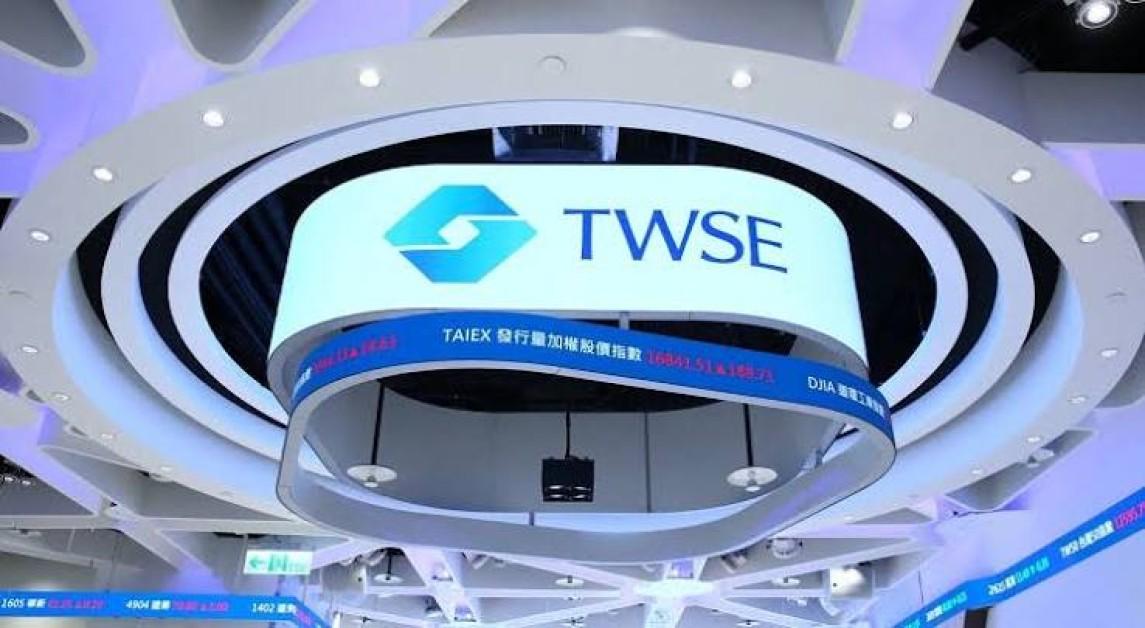
Taiwan Stock Exchange Promises Stable Market Operations After Historic Equity Selloff
Taipei, November 21, 2026: The Taiwan Stock Exchange has pledged to maintain stable capital market operations and strengthen market monitoring after Taiwanese equities recorded their steepest weekly decline since 1990, as a global selloff in artificial intelligence and semiconductor stocks triggered widespread investor withdrawals.
Taiwan's benchmark TAIEX index plunged 17.5% during the week ended November 20, marking its worst five-day performance in approximately 36 years.
The index fell another 6.23% on Friday, closing at 36,033.29 points after losing 2,393.60 points in a single trading session.
The sharp decline came despite regulatory measures introduced earlier in November to restrict short selling and stabilise trading conditions.
Taiwan Stock Exchange Chairman Sherman Lin said the exchange would work to ensure orderly market operations and encouraged investors to maintain confidence in the underlying fundamentals of Taiwanese companies.
The market decline has been driven by concerns about elevated AI valuations, the sustainability of technology investment, tighter US semiconductor export restrictions and increasing financial risks associated with AI infrastructure expansion.
Taiwan's heavy exposure to semiconductor manufacturing has made its equity market particularly vulnerable to changes in global technology investment sentiment.
Key Highlights of Taiwan's Stock Market Selloff

|
Market Indicator |
Latest Development |
|---|---|
|
Benchmark index |
Taiwan Capitalization Weighted Stock Index (TAIEX) |
|
November 20 closing level |
36,033.29 points |
|
Daily index decline |
2,393.60 points |
|
Daily percentage loss |
6.23% |
|
Weekly decline |
17.5% |
|
Historical comparison |
Worst week since 1990 |
|
Decline from October 6 peak |
Nearly 28% |
|
Market value erased since peak |
Approximately $1.12 trillion |
|
Technology sector weighting |
More than 70% |
|
Friday trading turnover |
NT$877.35 billion |
|
Regulatory response |
Tighter short-selling restrictions |
|
Stabilisation mechanism |
National Financial Stabilization Fund |
|
Exchange chairman |
Sherman Lin |
The figures reflect trading through November 20, 2026.
TAIEX Plunges 17.5% in Worst Week Since 1990
Taiwan's equity market experienced an extraordinary week of selling pressure.
The TAIEX lost 7,641.83 points during the five trading sessions, equivalent to a decline of 17.5%.
Friday's fall of 2,393.60 points was the third-largest single-day point decline in the index's history.
The benchmark closed at its lowest level in approximately seven months.
Taiwan benchmark index — weekly performance
−17.5%
Weekly decline

The magnitude of the fall highlights the speed at which investor sentiment has deteriorated.
Taiwan's market had previously benefited from strong international demand for advanced semiconductors and AI-related computing equipment.
However, the same concentration in technology shares has intensified losses during the global sector correction.
Taiwan Stock Exchange Chairman Sherman Lin Calls for Investor Confidence
Sherman Lin, chairman of the Taiwan Stock Exchange, addressed market concerns on November 20.
He acknowledged that Taiwan's capital markets are closely connected to international financial conditions and cannot avoid short-term effects from global economic developments and investor sentiment.
Nevertheless, Lin emphasised the underlying strength of Taiwan's economy and corporate sector.
He highlighted Taiwan's established technology supply chain, which includes semiconductor manufacturing, advanced packaging, AI servers and system integration.
The exchange said it would continue monitoring market conditions and reviewing appropriate measures to support stable operations.
The statement was intended to reassure investors amid unusually severe market volatility.
However, the exchange did not announce a guaranteed market floor or a commitment to prevent further share-price declines.
Its responsibility is to support orderly trading and market integrity rather than determine equity valuations.
Taiwan's Financial Regulator Tightens Short-Selling Restrictions
The Financial Supervisory Commission has introduced additional restrictions on short selling in response to the market decline.
The latest measures took effect on November 20.
Under the revised rules, the volume of intraday short-sale orders involving borrowed securities is capped at 1% of a stock's average daily trading volume over the preceding 30 trading days.
The previous limit was 3%.
This represents a significant tightening of the permitted volume.
The regulator has also restricted short selling in securities that experienced substantial price declines during the previous trading session.
Certain hedging and market-making activities remain exempt from the restrictions.
How the Short-Selling Rules Changed
|
Regulatory Measure |
Earlier Position |
Latest Position |
|---|---|---|
|
Intraday borrowed-share short-sale limit |
3% of average daily volume |
1% |
|
Reference period |
Previous 30 trading days |
Previous 30 trading days |
|
Effective date of latest change |
— |
November 20, 2026 |
|
Restrictions after steep share-price declines |
Existing measures |
Additional restrictions |
|
Selected hedging activities |
Exemptions available |
Exemptions retained |
The measures are intended to reduce the possibility that aggressive short selling amplifies already substantial downward price movements.
However, restricting short selling does not eliminate selling by investors who already own shares.
It also does not prevent institutional investors from reducing their exposure to technology companies.
Taiwan Activates National Financial Stabilization Fund
Taiwan's government has also activated its National Financial Stabilization Fund.
The fund's management committee authorised stabilisation operations on November 6 after a period of severe market volatility and foreign investor withdrawals.
The mechanism allows authorities to deploy resources when exceptional domestic or international developments threaten market confidence and financial stability.
The fund has access to approximately $15 billion in potential stabilisation resources.
Its activation provides authorities with an additional mechanism for responding to disorderly market conditions.
However, the decision to activate the fund does not mean that its entire available capacity has been invested in equities.
The timing and scale of any market intervention depend on decisions by the relevant authorities.
The fund's effectiveness will also depend on broader market conditions and investor behaviour.
Nearly $1.12 Trillion Erased From Taiwan Stock Market Since October Peak
The current selloff follows a substantial rally earlier in the year.
Taiwanese equities reached an all-time high on October 6, supported by expectations of continued growth in AI-related semiconductor demand.
Since that peak, the market has lost nearly 28% of its value.
According to market data, approximately $1.12 trillion in market capitalisation has been erased.
Market decline from October peak
~28%
Market value erased
$1.12T
The decline represents a substantial reversal in investor expectations.
However, the benchmark remains approximately 24% higher for the year despite the recent losses.
This reflects the strength of the rally before the correction.
The market's future direction will depend on whether semiconductor earnings and AI investment demand continue supporting corporate valuations.
Technology Stocks Account for More Than 70% of Taiwan's Benchmark
Taiwan's stock market is particularly sensitive to global technology trends because of its sector composition.
Technology companies account for more than 70% of the TAIEX.
The index includes major semiconductor manufacturers, electronics suppliers and companies serving international technology markets.
Taiwan Semiconductor Manufacturing Company (TSMC) is one of the market's most influential constituents.
Other businesses include semiconductor packaging companies, chip designers and electronics manufacturers.
When investor sentiment toward artificial intelligence weakens, these companies can experience simultaneous selling pressure.
Their substantial weighting means that even relatively modest declines in major constituents can significantly affect the benchmark.
The recent downturn has demonstrated the risks associated with concentrated market leadership.
TSMC and Other Semiconductor Companies Face Heavy Selling
Taiwan's semiconductor industry has been at the centre of the market correction.
TSMC shares declined approximately 4.8% on November 20 and nearly 15.8% during the week.
Other semiconductor-related companies also experienced substantial losses.
ASE Technology, which provides semiconductor packaging and testing services, fell approximately 9.3% during Friday's trading.
United Microelectronics declined around 9%, while MediaTek also experienced heavy selling.
These companies occupy different positions within the semiconductor supply chain.
However, their financial outlooks are influenced by global electronics demand, technology investment and customer production plans.
The widespread declines indicate that investors are reducing exposure across the industry rather than selling only a single company.
Global AI Investment Concerns Trigger Semiconductor Selloff
The broader market decline reflects growing uncertainty surrounding the artificial intelligence investment cycle.
Technology companies have committed substantial capital to data centres, advanced processors and computing infrastructure.
These investments have supported strong demand for semiconductor products.
However, investors are increasingly questioning whether future revenue and profitability will justify the scale of spending.
Higher borrowing costs add to these concerns.
Companies financing large infrastructure projects through debt may face greater interest expenses.
Investors are also examining whether AI services can generate sufficient commercial returns.
These concerns have affected semiconductor stocks because chip manufacturers are closely linked to AI infrastructure investment.
The market reaction illustrates how changes in expectations can influence valuations even before a sustained deterioration in underlying demand becomes evident.
US Semiconductor Export Restrictions Add Pressure
Changes in US technology export controls have added another source of uncertainty.
Washington has tightened restrictions affecting the supply of advanced semiconductor technology and certain AI computing arrangements involving China.
The measures have implications for companies operating in global semiconductor supply chains.
Taiwanese manufacturers supply chips and related services to customers across international markets.
Additional export restrictions can increase compliance requirements and affect commercial relationships.
The extent of the impact depends on the products involved, customer locations and applicable licensing requirements.
The latest restrictions have contributed to investor concerns about future demand and business flexibility.
However, the actual financial impact will vary across individual semiconductor companies.
Foreign Investors Withdraw Capital From Taiwan Equities
Foreign investor selling has intensified the market downturn.
Global funds have sold more than $56 billion of Taiwanese equities on a net basis during the current quarter, according to market data.
Foreign capital movements can have a significant influence on Taiwan's stock market because international institutional investors hold substantial positions in major technology companies.
Large withdrawals may create additional selling pressure, particularly when market liquidity becomes strained.
The outflows also reflect broader changes in global portfolio allocation.
Investors are reassessing exposure to technology-heavy Asian markets as AI valuations come under pressure.
The scale of foreign selling has become an important indicator of market sentiment.
Margin Calls and Forced Selling Intensify Market Volatility
Another factor contributing to the selloff is the use of margin financing.
Margin trading allows investors to purchase securities using borrowed funds.
When share prices decline, investors may be required to provide additional collateral or repay part of their borrowing.
These requirements are known as margin calls.
If investors cannot meet them, brokers may sell securities to reduce the outstanding exposure.
Such forced selling can intensify market declines.
Analysts have identified margin-related liquidation as one of the factors behind Taiwan's recent volatility.
The process can create a feedback loop in which falling prices trigger further selling, placing additional pressure on the market.
Short-selling restrictions alone cannot eliminate this type of selling because it arises from existing long positions financed through borrowing.
Taiwan Government Reviews Additional Market Stability Measures
Taiwan's government has also increased its oversight of the financial market situation.
Premier Cho Jung-tai convened senior economic and financial officials to assess market developments.
A follow-up meeting was scheduled for November 21 to discuss financial stability and possible responses.
The discussions reflect the importance of Taiwan's equity market to domestic investor confidence and the broader economy.
Government authorities are monitoring international developments alongside domestic financial conditions.
However, any additional measures will depend on official decisions.
The announcement of discussions should not be interpreted as confirmation that new intervention policies have already been adopted.
Strong Export Orders Contrast With Weak Equity Performance
The stock market decline has occurred despite positive developments in Taiwan's export sector.
October export orders recorded their fastest growth on record, supported by international demand for AI-related chips and technology products.
The contrast highlights the difference between current economic performance and financial market expectations.
Equity prices reflect expectations about future earnings and risks rather than only recent business results.
Investors may sell shares even when companies report strong revenue if they believe valuations are excessive or future growth may slow.
Taiwan's technology companies continue to occupy important positions in global supply chains.
However, their market valuations remain sensitive to expectations for future investment and profitability.
South Korea and Other Asian Markets Also Experience Sharp Declines
Taiwan's selloff has coincided with significant weakness across Asian equity markets.
South Korean stocks declined more than 5% on November 20.
Major semiconductor companies, including Samsung Electronics and SK Hynix, experienced heavy selling.
Japan's Nikkei 225 also recorded a decline of more than 5%.
The MSCI Emerging Markets Asia Index fell sharply as investors reduced exposure to technology-related assets.
The regional weakness demonstrates the interconnected nature of semiconductor supply chains and international investment flows.
Taiwan and South Korea are particularly exposed because their equity markets include large semiconductor companies.
The correction has therefore spread across multiple markets with significant technology-sector exposure.
What the Selloff Means for Global Semiconductor Supply Chains
Taiwan plays a central role in global semiconductor manufacturing.
Its companies produce advanced chips used in smartphones, servers, data centres, industrial systems and artificial intelligence applications.
The country's semiconductor industry also supports advanced packaging and related manufacturing services.
A decline in share prices does not automatically mean that factories are reducing production or that supply chains are disrupted.
However, prolonged financial market weakness can affect business confidence and financing conditions.
Companies may reassess expansion plans if future demand becomes uncertain.
International customers may also review their procurement and investment strategies.
The long-term implications will depend on whether the market correction is primarily valuation-driven or accompanied by weaker commercial demand.
Can Short-Selling Restrictions Stop the Taiwan Market Decline?
Short-selling restrictions can reduce certain forms of speculative selling pressure.
They may also provide authorities with time to assess market conditions during periods of extreme volatility.
However, they cannot guarantee a market recovery.
Investors who already hold shares remain able to sell their positions.
Foreign institutions can also reduce portfolio allocations for reasons unrelated to short selling.
Market valuations are influenced by corporate earnings, economic conditions, interest rates and investor expectations.
Consequently, regulatory restrictions may support orderly trading without reversing the underlying reasons for a market decline.
The effectiveness of Taiwan's measures will depend partly on whether investor confidence stabilises.
Key Developments Investors Will Monitor
The next important indicators will include foreign investment flows, semiconductor stock performance and changes in margin financing.
Investors will also monitor any additional announcements from Taiwan's Financial Supervisory Commission and the Taiwan Stock Exchange.
Government decisions concerning the National Financial Stabilization Fund will remain relevant.
International developments, including US technology export regulations and monetary policy, could influence market sentiment.
Corporate earnings and AI infrastructure spending forecasts will provide information about the underlying demand outlook.
The market's ability to stabilise will depend on a combination of domestic policy responses and global financial conditions.
Conclusion
Taiwan's stock market has recorded its worst weekly performance in approximately 36 years, with the TAIEX plunging 17.5% during the week ended November 20, 2026.
The benchmark closed at 36,033.29 points after a 6.23% decline on Friday, extending its losses from the October record high to nearly 28%.
Approximately $1.12 trillion in market capitalisation has been erased during the correction.
The Taiwan Stock Exchange has pledged to maintain stable market operations, while the Financial Supervisory Commission has tightened short-selling restrictions.
Authorities have also activated the National Financial Stabilization Fund and are reviewing market conditions.
The selloff reflects concerns about AI valuations, semiconductor demand, export restrictions and the financial sustainability of technology infrastructure investment.
Although Taiwan's economic fundamentals and technology supply chain remain significant strengths, the immediate outlook will depend on investor confidence, international market conditions and the effectiveness of stabilisation measures.
 Taiwan Stock Exchange Vows Market Stability as TAIEX Plunge 17.5% in Worst Weekly Selloff Since 1990 FAQs

POST A COMMENT (0)
All Comments (0)
Replies (0)