




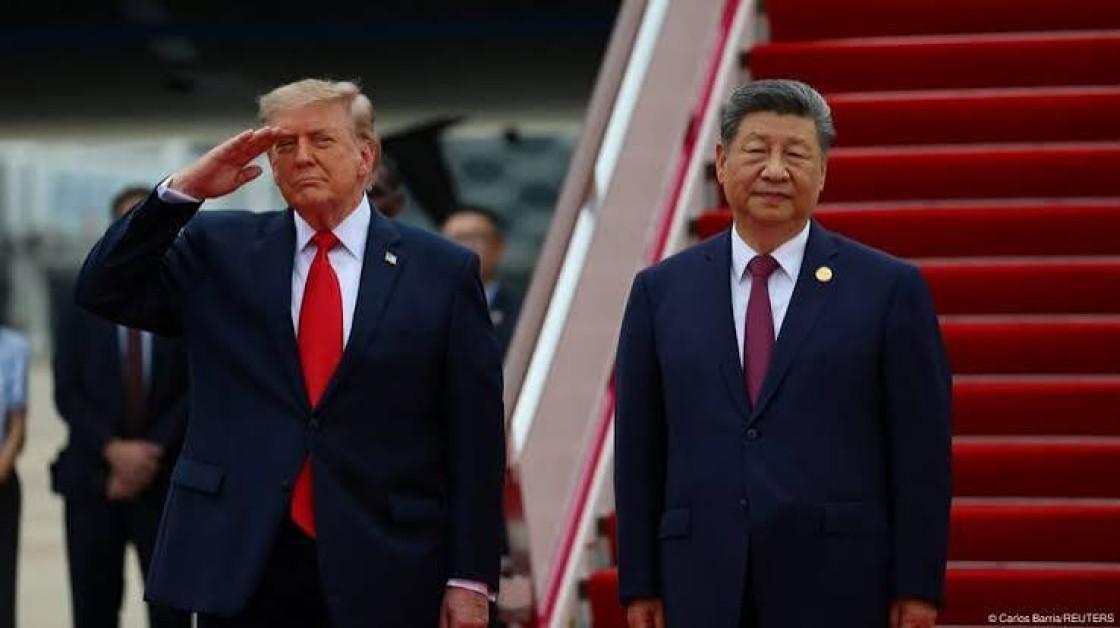
Chinese and American Corporate Leaders Convene at Shenzhen APEC Summit
Senior executives from major Chinese and American corporations have gathered in Shenzhen for the 2026 Asia-Pacific Economic Cooperation (APEC) meetings, placing international trade, investment opportunities, technological innovation and supply-chain cooperation at the centre of discussions.
The gathering, taking place from November 17 to 19, 2026, brings together corporate executives, government representatives and political leaders from across the Asia-Pacific region and beyond.
Chinese companies including BYD, Baidu, Xiaomi, CATL and major state-owned banks are represented alongside American businesses such as Boeing, Google, Visa, Mastercard and UPS.
The APEC CEO Summit, held on November 17–18, attracted more than 2,000 participants from 21 APEC economies and 13 economies outside the grouping.
Representatives from 115 Fortune Global 500 companies are participating, reflecting the importance of the event for international business.
The corporate gathering takes place alongside the 33rd APEC Economic Leaders' Meeting on November 18–19, where leaders are discussing regional economic integration and cooperation.
Chinese President Xi Jinping addressed the business summit on November 18, calling for open trade, investment cooperation and stronger partnerships in emerging technologies.
The meetings come amid continuing trade tensions between the United States and China, restrictions on advanced technology exports and concerns about the resilience of international supply chains.
Key Highlights of the Shenzhen APEC Summit 2026

|
Particulars |
Details |
|---|---|
|
Event |
APEC CEO Summit and Economic Leaders' Meeting |
|
Host city |
Shenzhen, Guangdong, China |
|
CEO Summit dates |
November 17–18, 2026 |
|
Economic Leaders' Meeting |
November 18–19, 2026 |
|
APEC member economies |
21 |
|
CEO Summit participants |
More than 2,000 |
|
Non-APEC economies represented |
13 |
|
Fortune Global 500 companies represented |
115 |
|
Share of global GDP represented by APEC |
Approximately 62% |
|
Share of global trade |
Approximately 50% |
|
Main business summit theme |
To Prosper and Win the Future Together |
|
Principal priorities |
Openness, innovation and cooperation |
The participation of major Chinese and American corporations demonstrates the continuing commercial importance of the relationship between the world's two largest economies.
Leading Chinese Companies Participate in APEC Business Discussions
China's corporate delegation includes executives from banking, electric vehicles, battery manufacturing, technology and digital services.
Several of the country's most influential business leaders were listed on the summit agenda.
|
Company |
Executive |
Industry |
|---|---|---|
|
BYD |
Wang Chuanfu, Chairman |
Electric vehicles and batteries |
|
CATL |
Zeng Yuqun, Chairman and CEO |
Battery manufacturing |
|
Baidu |
Robin Li, CEO |
Internet services and artificial intelligence |
|
Xiaomi |
Lei Jun, CEO |
Consumer electronics and electric vehicles |
|
ICBC |
Liao Lin, Chairman |
Banking |
|
Bank of China |
Ge Haijiao, Chairman |
Banking |
|
Agricultural Bank of China |
Gu Shu, Chairman |
Banking |
The companies represent industries central to China's economic development strategy.
Electric vehicles, batteries and artificial intelligence are particularly important because of their growing role in international trade and industrial investment.
Chinese financial institutions also play a major role in supporting infrastructure development, corporate financing and cross-border investment.
Their participation creates opportunities for discussions about financial connectivity and regional capital flows.
However, participation in the summit does not necessarily indicate that individual companies have entered into new commercial agreements.
American Business Leaders Represent Technology, Finance and Manufacturing
Major American companies are also represented at the Shenzhen summit.
The United States accounts for the largest group of participating companies from economies outside China, representing nearly 20% of the total.
The American corporate delegation includes senior executives from several globally important businesses.
|
Company |
Executive |
Industry |
|---|---|---|
|
Visa |
Ryan McInerney, CEO |
Digital payments |
|
Mastercard |
Michael Miebach, CEO |
Payment technology |
|
UPS |
Carol Tomé, CEO |
Logistics |
|
PwC |
Mohamed Kande, Global Chairman |
Professional services |
|
Deloitte |
Joe Ucuzoglu, CEO |
Consulting and professional services |
|
Boeing |
Brendan Nelson, Global President |
Aerospace |
|
|
Karan Bhatia, Global Government Affairs and Public Policy |
Technology |
The participation of American companies highlights the importance of the Asia-Pacific region for global business operations.
US technology companies have significant interests in digital infrastructure, cloud computing, artificial intelligence and international regulatory frameworks.
Financial services companies are focused on payment systems, cross-border transactions and the development of digital commerce.
Manufacturing and logistics companies have an interest in trade facilitation and reliable international supply chains.
The summit provides a platform for discussing these issues with policymakers and corporate leaders from across the region.
Xi Jinping Calls for Open Trade and Stronger Economic Cooperation
Chinese President Xi Jinping delivered a keynote address at the APEC CEO Summit on November 18.
Xi called for greater economic cooperation among Asia-Pacific economies and emphasised the importance of maintaining open international markets.
He urged participating economies to support the multilateral trading system centred on the World Trade Organization.
His proposals focused on maintaining regional stability, reducing trade barriers, strengthening innovation and ensuring that economic development benefits a wider range of countries and communities.
Xi also called for progress toward a Free Trade Area of the Asia-Pacific.
The proposed arrangement is intended to promote greater regional economic integration.
However, establishing such an agreement would require extensive negotiations among participating economies.
Xi's remarks reflected China's stated intention to strengthen international economic engagement as it begins implementing its 15th Five-Year Plan for 2026–2030.
He presented China's domestic development priorities as potential opportunities for foreign businesses seeking investment and commercial partnerships.
US-China Trade Relations Remain a Major Focus
The summit takes place against the backdrop of continuing economic tensions between Washington and Beijing.
The United States and China remain deeply connected through trade, investment, manufacturing and technology supply chains.
However, disagreements over tariffs, export controls, industrial subsidies and access to advanced technologies have complicated bilateral commercial relations.
Restrictions on semiconductor technology and other sensitive products have become particularly important for companies operating in artificial intelligence and advanced manufacturing.
At the same time, businesses in both countries continue relying on international customers, suppliers and investment partners.
The presence of major corporate executives at APEC illustrates the commercial incentives for maintaining economic engagement.
For companies operating across borders, uncertainty over trade policy can affect production decisions, capital expenditure and long-term investment planning.
Business leaders are therefore closely monitoring discussions between government representatives.
Trump, Xi and Putin Meetings Draw International Attention
The APEC Economic Leaders' Meeting has attracted additional attention because of the participation of US President Donald Trump, Chinese President Xi Jinping and Russian President Vladimir Putin.
The three leaders are expected to hold a trilateral meeting during the Shenzhen gathering.
China's Foreign Ministry described the planned engagement as significant for international diplomacy.
The White House has indicated that Trump intends to raise nuclear arms reduction.
However, China has previously resisted proposals for trilateral nuclear arms discussions with the United States and Russia.
The potential meeting comes amid disagreements over trade restrictions, economic sanctions and international security.
For business leaders, diplomatic developments are relevant because they can influence sanctions, export controls and investment conditions.
Nevertheless, political discussions do not automatically translate into changes in trade policy.
Companies will be watching for specific announcements rather than relying solely on diplomatic statements.
APEC Represents Approximately 62% of Global Economic Output
APEC is one of the world's most important regional economic cooperation forums.
Established in 1989, the organisation brings together 21 economies from the Asia-Pacific region.
Its members include the United States, China, Japan, South Korea, Australia, Canada, Mexico, Indonesia, Singapore and several other economies.
Together, APEC members account for approximately 62% of global gross domestic product and about half of international trade.
This economic scale makes developments within the grouping important for global markets.
APEC differs from conventional trade agreements because its commitments are generally voluntary and non-binding.
Decisions are reached through consensus.
The organisation focuses on improving economic cooperation, reducing barriers to trade and investment, and supporting sustainable growth.
It also provides a forum for governments and businesses to exchange views on emerging economic challenges.
Shenzhen Highlights China's Technology and Manufacturing Strength
The selection of Shenzhen as the host city reflects its importance within China's technology and manufacturing economy.
Located in Guangdong province, Shenzhen is a major centre for electronics, telecommunications, electric vehicles and advanced manufacturing.
The city is home to several internationally recognised technology companies.
It forms part of the Guangdong-Hong Kong-Macao Greater Bay Area, one of China's most important economic regions.
The area connects manufacturing centres, financial markets, logistics infrastructure and technology businesses.
Shenzhen's development from a relatively small city into a major international technology hub has been closely associated with China's economic reforms and international trade expansion.
The summit provides an opportunity for visiting executives to engage with businesses operating in this industrial ecosystem.
It also allows China to present its technology capabilities and investment opportunities to international companies.
Artificial Intelligence Emerges as a Major Area for Cooperation
Artificial intelligence is among the central subjects being discussed at the APEC CEO Summit.
The technology has become an important area of investment for businesses across the region.
Companies are developing AI systems for manufacturing, logistics, financial services, healthcare and consumer applications.
However, international cooperation faces challenges because countries have adopted different approaches to technology regulation and governance.
These differences can complicate cross-border deployment of AI systems.
Business representatives have emphasised the need for greater alignment on technical standards and safety requirements.
Common approaches could make it easier for companies to develop products and services across multiple markets.
However, national security concerns and restrictions on advanced computing technology remain significant obstacles.
The summit provides a platform for discussing cooperation without resolving all of these differences.
Electric Vehicles and Battery Technology Feature in Regional Investment Discussions
The participation of BYD and CATL highlights the growing importance of electric vehicles and battery manufacturing in Asia-Pacific trade.
China has developed substantial production capacity in electric vehicles, batteries and related components.
These industries are increasingly important to international manufacturing supply chains.
Demand for batteries is linked to electric vehicles, energy storage systems and renewable energy infrastructure.
However, the sector also faces trade restrictions, tariffs and concerns about industrial competition.
Several economies are seeking to develop domestic battery manufacturing capacity.
This creates opportunities for investment partnerships but also increases competition for market share.
APEC discussions about industrial cooperation and trade barriers are therefore relevant to companies operating in these sectors.
The summit may help businesses identify potential partnerships, although no specific investment commitments can be assumed from attendance alone.
Financial Services Companies Seek Greater Cross-Border Connectivity
The participation of Visa, Mastercard and major Chinese banks highlights the importance of financial services in regional economic integration.
Cross-border payments are essential for international trade, tourism, investment and digital commerce.
Businesses increasingly require payment systems that are secure, efficient and compatible across different markets.
Digital payment technologies can help reduce transaction costs and support international business activity.
However, differences in financial regulation, data protection requirements and payment infrastructure can create barriers.
APEC discussions provide an opportunity to examine how economies can improve financial connectivity.
The involvement of large financial institutions also reflects the importance of financing infrastructure and corporate investment.
Greater cooperation could support trade and investment flows, although implementation would depend on national regulatory decisions.
Supply-Chain Resilience Becomes a Priority for Global Companies
International supply chains remain an important concern for business leaders attending the summit.
Recent years have exposed companies to disruptions involving trade restrictions, transportation bottlenecks and geopolitical tensions.
Businesses have responded by reviewing sourcing strategies and considering alternative production locations.
However, diversifying supply chains can require significant investment.
Manufacturers must evaluate labour availability, infrastructure, logistics costs and regulatory conditions.
The Asia-Pacific region remains central to global production because of its extensive industrial networks.
China continues to play an important role in manufacturing, while other regional economies are expanding their capabilities.
APEC discussions on trade facilitation and connectivity could help businesses manage cross-border operations more efficiently.
The practical impact will depend on whether governments implement measures that reduce administrative barriers and improve predictability.
APEC Summit Seeks Progress on Regional Free Trade
One of the longer-term objectives discussed at the summit is the development of a Free Trade Area of the Asia-Pacific.
The proposal aims to improve economic integration among participating economies.
Potential benefits include lower trade barriers, simpler customs procedures and more consistent rules for businesses.
However, the region contains economies with different development levels, industrial priorities and regulatory systems.
These differences complicate efforts to establish a comprehensive agreement.
Existing trade arrangements also overlap across the region.
APEC's role is to encourage dialogue and cooperation rather than impose binding trade commitments.
Progress toward a broader regional framework would therefore require sustained negotiations and political agreement.
For businesses, even incremental improvements in customs procedures and trade documentation could reduce operating costs.
APEC CEO Summit Introduces Shenzhen Initiative
The 2026 APEC CEO Summit is expected to introduce a Shenzhen initiative focused on regional economic cooperation.
The planned document represents a notable development because it would be the first outcome issued in the form of an initiative during the CEO Summit's approximately 30-year history.
The initiative is intended to reflect business priorities and encourage cooperation across the Asia-Pacific.
Its expected themes include openness, innovation and sustainable development.
However, the commercial significance of the document will depend on its final provisions and subsequent implementation.
Business-led initiatives can help identify common priorities and provide recommendations to policymakers.
They do not necessarily create legally binding obligations for participating governments.
The initiative nevertheless reflects an effort to give the business community a more visible role in regional economic discussions.
China Seeks to Attract International Investment Under Its New Five-Year Plan
China's 15th Five-Year Plan covers the period from 2026 to 2030.
The plan places emphasis on technological innovation, industrial modernisation and economic development.
At the APEC summit, Xi Jinping presented China's domestic market and industrial development strategy as opportunities for foreign companies.
China's economy grew 4.6% during the first three quarters of 2026, according to figures cited in his address.
The government is seeking to encourage investment in technology, advanced manufacturing and other strategic industries.
However, foreign companies continue evaluating China's economic environment alongside regulatory requirements and geopolitical risks.
The country's large consumer market and manufacturing capabilities remain important attractions.
At the same time, international businesses are monitoring domestic demand, competition and trade policy.
The summit provides an opportunity for China to communicate its investment priorities directly to global corporate leaders.
Business Leaders Emphasise Predictable Trade Rules
Business representatives attending the summit have highlighted the importance of transparent and predictable international trade rules.
Sean Stein, president of the US-China Business Council, said businesses are looking for practical improvements that make cross-border commercial activity easier.
Even relatively small changes in trade procedures can have significant effects when applied across millions of international transactions.
Companies are particularly interested in reducing administrative complexity and improving regulatory coordination.
Predictability is important because businesses make investment decisions over long periods.
Changes in tariffs, customs requirements or technology restrictions can alter the economics of manufacturing and distribution.
Greater clarity can help companies manage risks and allocate capital more effectively.
However, business recommendations must be considered alongside governments' economic and security priorities.
The summit provides a forum for discussing these competing considerations.
What the APEC Summit Means for Global Investors
The Shenzhen gathering is relevant to investors because it brings together policymakers and corporate leaders from economies representing a substantial share of global economic activity.
Developments in trade policy can influence company earnings, supply-chain costs and investment decisions.
Technology restrictions can affect semiconductor manufacturers, cloud computing providers and artificial intelligence companies.
Changes in tariff arrangements may influence manufacturers, exporters and logistics businesses.
Investment cooperation could create opportunities in infrastructure, renewable energy and digital services.
However, investors must distinguish between policy statements and concrete agreements.
A summit declaration does not necessarily result in immediate regulatory changes.
The commercial impact of APEC discussions will depend on subsequent decisions by participating governments and businesses.
Implications for India and Other Asian Economies
India is not a member of APEC, but developments within the grouping can still influence its economic environment.
APEC economies account for a substantial share of global trade and investment.
Changes in their trade relationships may affect international supply chains, commodity demand and manufacturing investment.
Indian companies participate in many of the same global markets as businesses represented at the summit.
For example, developments in electronics manufacturing, artificial intelligence and electric vehicles can influence competition and investment opportunities.
India also maintains significant trade relationships with several APEC members, including the United States, China, Japan, South Korea and Australia.
Greater regional economic integration could therefore have indirect implications for Indian exporters and manufacturers.
However, India does not participate in APEC's internal decision-making process.
Its trade policies and international agreements remain separate from the forum's voluntary commitments.
What Happens Next After the Shenzhen APEC Summit?
The APEC Economic Leaders' Meeting continues through November 19, 2026.
Participants are expected to discuss regional cooperation, economic integration and the challenges facing international trade.
Business leaders will be monitoring whether governments announce specific measures concerning market access, investment and supply-chain connectivity.
The planned Shenzhen initiative may provide additional insight into the priorities identified by corporate participants.
Attention will also remain focused on diplomatic discussions involving the United States, China and Russia.
However, the economic impact of the summit will depend on actions taken after the meetings conclude.
Businesses will assess whether policy commitments translate into lower trade barriers, more predictable regulations and new investment opportunities.
The summit's longer-term significance will be determined by the extent to which participating economies implement practical cooperation measures.
Conclusion
The 2026 APEC Summit in Shenzhen has brought together leading Chinese and American corporations at a time when global trade, investment and technology cooperation face significant challenges.
Executives from BYD, CATL, Baidu, Xiaomi, Boeing, Google, Visa, Mastercard and other major companies are participating in discussions involving economic integration, artificial intelligence, financial connectivity and supply-chain resilience.
More than 2,000 representatives attended the APEC CEO Summit, demonstrating the importance of the Asia-Pacific region to international business.
Chinese President Xi Jinping has called for greater openness, reduced trade barriers and stronger cooperation in emerging technologies.
The gathering also provides an important diplomatic platform as the United States, China and Russia engage on broader international issues.
For global businesses, the central objective is greater certainty in trade and investment conditions.
Although APEC commitments are generally voluntary, the forum remains influential because its 21 member economies account for approximately 62% of global GDP and half of international trade.
The lasting impact of the Shenzhen summit will depend on whether discussions produce practical improvements in market access, regulatory coordination and economic cooperation.
 China and US Business Leaders Meet at Shenzhen APEC Summit 2026 to Discuss Global Trade & Investment FAQs

POST A COMMENT (0)
All Comments (0)
Replies (0)