




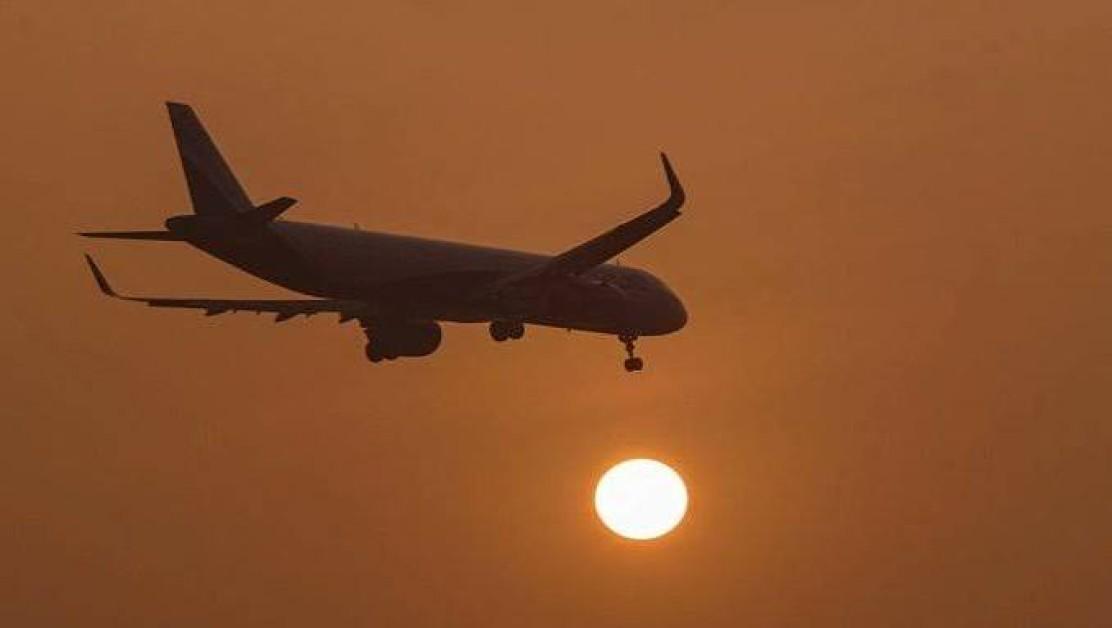
US Aviation Operations Resume After Nationwide Air Traffic Control Network Failure Disrupts Thousands of Flights
Washington, November 14, 2026: The United States Federal Aviation Administration (FAA) has lifted a nationwide ground stop and authorised aircraft departures to resume after a major telecommunications failure disrupted air traffic control operations across the country on Friday, November 13.
The outage affected communications at all 22 regional Air Route Traffic Control Centers, prompting aviation authorities to temporarily suspend departures nationwide over safety concerns.
The disruption lasted more than four hours, creating widespread delays, cancellations and diversions across the world's largest aviation market.
More than 4,700 flights were cancelled and approximately 10,000 delayed on Friday, according to flight-tracking figures reported during the disruption. Hundreds of additional cancellations were recorded for Saturday as airlines worked to restore schedules.
US Transportation Secretary Sean Duffy said the problem involved ageing communications infrastructure, while Homeland Security officials reported no indication that the incident resulted from a cyberattack.
Although the FAA cleared flights to resume, airlines warned that normal operations would take time to restore because aircraft and crews had been displaced across the network.
The incident has intensified scrutiny of America's ageing air traffic control infrastructure and renewed calls for additional federal investment in aviation technology.
US Aviation Network Failure: Key Highlights

| Indicator | Details |
|---|---|
| Incident | Nationwide air traffic control communications failure |
| Date | November 13, 2026 |
| Regulator | Federal Aviation Administration |
| Affected facilities | 22 regional air traffic control centers |
| Main operational response | Nationwide departure ground stop |
| Duration | More than four hours |
| Friday flight cancellations | More than 4,700 |
| Friday flight delays | Approximately 10,000 |
| Saturday cancellations initially reported | Approximately 700 |
| Aircraft diversions | At least 600 |
| Preliminary cause | Failure involving ageing telecommunications infrastructure |
| Cyberattack indication | None reported by US officials |
| Current operational status | Departures resumed; recovery continuing |
FAA Lifts Nationwide Ground Stop After Communications Failure
The FAA ordered a nationwide suspension of departures on Friday afternoon after telecommunications problems affected regional air traffic control facilities.
The agency described the situation as an extraordinary safety concern requiring immediate restrictions.
Air traffic control centers coordinate aircraft movements across large sections of US airspace, particularly flights travelling between airports.
A communications failure affecting these facilities can significantly reduce the ability of controllers to manage traffic safely.
The FAA therefore instructed airports to hold departing aircraft on the ground while technicians investigated the disruption.
Aircraft already airborne were generally permitted to continue toward their destinations under the available air traffic control arrangements.
International flights were initially handled on a case-by-case basis.
After technical checks and coordination across the system, the FAA lifted the nationwide restriction on Friday evening.
However, reopening the airspace did not immediately restore normal airline schedules.
What Caused the Nationwide Air Traffic Control Failure?
US officials attributed the disruption to a telecommunications failure affecting the country's air traffic control network.
Transportation Secretary Sean Duffy identified ageing equipment as a central concern.
The preliminary assessment pointed toward older communications infrastructure rather than deliberate interference.
The air traffic control system relies on interconnected communications, surveillance and navigation technologies to coordinate aircraft movements.
Some components have remained in operation for decades and require continuing maintenance or replacement.
Failures involving essential communications equipment can affect multiple control facilities simultaneously.
The nationwide scale of Friday's outage demonstrated how problems within interconnected infrastructure can rapidly disrupt the broader aviation network.
Although officials identified ageing hardware as a likely factor, the detailed technical sequence behind the failure remained subject to investigation.
All 22 Regional Air Traffic Control Centers Affected
The disruption involved communications across 22 Air Route Traffic Control Centers.
These facilities manage aircraft travelling through large geographic regions, including flights operating between major metropolitan airports.
They perform functions that differ from those of airport control towers.
Airport towers primarily coordinate aircraft movements near runways and surrounding airport airspace.
Regional centers manage aircraft over much larger distances.
Controllers depend on reliable communications to issue instructions, coordinate routes and maintain safe separation between aircraft.
When those systems become unavailable or unreliable, continuing normal departures can create unacceptable operational risks.
The FAA's nationwide ground stop was intended to prevent additional aircraft from entering an already constrained network.
More Than 4,700 Flights Cancelled Across the United States
The telecommunications failure triggered extensive flight cancellations across US airports.
Flight-tracking figures indicated that more than 4,700 flights were cancelled on Friday.
Approximately 10,000 additional flights experienced delays.
The disruption affected domestic and international services.
Major airline hubs experienced significant scheduling problems as aircraft departures were suspended and arriving flights faced congestion.
Passengers encountered lengthy waits at terminals, delayed boarding procedures and unexpected changes to travel plans.
Some aircraft remained on the ground after passengers had boarded.
Others were diverted to alternative airports.
The number of affected flights continued changing as airlines adjusted their operations.
The disruption also extended into Saturday, when hundreds of additional cancellations were recorded.
Hundreds of Aircraft Diverted During Ground Stop
At least 600 flights were diverted as aviation authorities managed the disruption.
Diversions occur when aircraft land at airports other than their originally scheduled destinations.
They may be necessary because of air traffic restrictions, congestion, weather conditions or operational safety requirements.
During a nationwide network failure, diversions create additional logistical challenges.
Airlines must arrange ground services, passenger assistance and revised flight schedules.
Aircraft may also require refuelling or maintenance before continuing.
Crew duty-time restrictions can complicate recovery when pilots and cabin crew exceed their permitted working periods.
These operational effects can continue after the original technical problem has been resolved.
Major US Airlines Begin Restoring Operations
Major carriers, including United Airlines and Delta Air Lines, began restoring flight operations after the FAA lifted the nationwide ground stop.
However, airlines warned that passengers could continue experiencing disruptions.
Aircraft and crews were no longer positioned according to their original schedules.
Some planes had been diverted, while others remained at airports where they were not scheduled to operate.
Airlines needed to reorganise aircraft assignments and crew availability before returning to normal service.
This process can require several scheduling cycles.
Consequently, a nationwide aviation disruption lasting several hours can produce delays extending into the following day or longer.
Passengers were advised to check flight status directly with their airlines before travelling to airports.
Why Flight Delays Continue After Airspace Reopens
Lifting a ground stop allows aircraft to begin departing again, but it does not immediately restore the aviation system to normal.
Commercial airline operations depend on carefully coordinated schedules.
Aircraft must arrive at designated airports before operating their next flights.
Pilots and cabin crew must also be available and comply with safety regulations governing working hours.
A prolonged interruption can disrupt these arrangements across multiple cities.
Airlines may need to cancel some services to restore the overall schedule.
Airport congestion can create additional delays as accumulated departures are gradually processed.
Air traffic controllers must also manage the increased demand while maintaining safe aircraft separation.
For these reasons, recovery from a nationwide ground stop can take substantially longer than the original interruption.
International Flights Also Face Disruptions
The communications failure affected international aviation operations as well as domestic US flights.
European air traffic authorities temporarily restricted US-bound services during the disruption.
Eurocontrol, which coordinates air traffic management across much of Europe, reported restrictions affecting flights travelling toward the United States.
Canadian aviation operations were also affected.
Air Canada cancelled remaining US services for Friday and warned that disruptions could extend to other routes.
International airlines faced uncertainty about departure permissions, arrival slots and aircraft availability.
Long-haul flights are particularly difficult to reschedule because they involve complex crew arrangements, airport permissions and aircraft utilisation plans.
The international impact demonstrated the importance of US airspace to global aviation networks.
Air India and Other International Carriers Monitor US Flight Schedules
The disruption also created challenges for airlines operating long-haul services between the United States and international destinations.
Carriers serving the US market needed to monitor FAA restrictions and coordinate revised departure schedules.
For Indian aviation, the incident was relevant to airlines operating services connecting India with major American cities.
Long-distance flights require advance coordination involving airport slots, crew schedules and airspace permissions.
Unexpected restrictions can therefore affect connecting passengers and onward services.
The extent of disruption to individual routes depends on flight timing and the operational decisions of each airline.
Passengers travelling between India and the United States were advised to verify flight schedules with their carriers.
US Government Rules Out Immediate Evidence of Cyberattack
US Homeland Security Secretary Markwayne Mullin said officials had found no indication that the communications failure resulted from a cyberattack.
The preliminary assessment pointed toward a telecommunications problem.
Officials nevertheless continued examining the circumstances surrounding the disruption.
The distinction is important because a technical infrastructure failure and a deliberate cyberattack require different investigative and security responses.
A cyberattack could involve unauthorised interference with digital systems.
A telecommunications failure may instead arise from equipment problems, network faults or other operational issues.
Authorities did not identify evidence of malicious activity in their initial public statements.
However, the final determination of the technical cause depends on the investigation.
FAA's New AI System Not Identified as Cause
The disruption occurred during a period when the FAA has been introducing new technologies to improve air traffic management.
Officials considered whether the incident might be connected to the rollout of an artificial intelligence-supported system designed to help identify operational problems and recommend alternative routes.
However, subsequent reporting indicated that the outage was associated with ageing communications hardware.
Authorities did not establish that the new AI system caused the failure.
The distinction matters because modernisation projects often operate alongside older infrastructure during transitional periods.
A failure in legacy communications equipment does not necessarily indicate a problem with newer software systems.
The investigation will be important in identifying which components failed and what changes are needed to prevent a recurrence.
Nationwide Shutdown Among Rarest Events in US Aviation
Friday's ground stop was an exceptionally rare event in American aviation.
It was only the second nationwide departure halt since the September 11, 2001, terrorist attacks.
The previous nationwide ground stop occurred in January 2023.
That incident followed a failure involving the FAA's Notice to Air Missions system, commonly known as NOTAM.
The 2023 interruption lasted approximately 90 minutes.
The November 2026 ground stop lasted more than four hours, making it substantially longer.
The comparison illustrates the seriousness of the latest disruption.
However, the underlying technical problems differed.
The 2023 incident involved a system used to communicate important aviation notices, while the November 2026 event affected air traffic control communications.
Ageing Air Traffic Control Infrastructure Comes Under Scrutiny
The nationwide failure has renewed attention on the condition of America's air traffic control infrastructure.
The FAA operates a complex network of communications, surveillance and navigation systems.
Some facilities continue using equipment and technologies developed decades ago.
Maintaining these systems can become increasingly difficult as components age and replacement parts become harder to obtain.
Older infrastructure may also be less adaptable to growing aviation demand.
Modernisation requires extensive planning because new equipment must be introduced without compromising operational safety.
The latest incident demonstrates the consequences when essential communications systems fail across interconnected facilities.
It also strengthens arguments for accelerated infrastructure investment.
US Government Seeks Additional Aviation Modernisation Funding
The federal government has been pursuing a major programme to modernise the air traffic control system.
Congress previously approved approximately $12.5 billion for the initiative.
The programme includes replacing older copper communications lines with fibre-optic infrastructure and upgrading radio systems.
However, significant work remains.
Transportation Secretary Sean Duffy has indicated that approximately $30 billion in additional funding may be required to complete the modernisation effort.
The November outage has increased pressure on lawmakers to address those requirements.
Modernising aviation infrastructure involves more than replacing individual pieces of equipment.
It requires coordinated upgrades to communications networks, control facilities, surveillance systems and supporting technology.
The funding debate will therefore have implications for long-term aviation safety and operational reliability.
Airlines Face Financial Costs From Nationwide Disruption
Large-scale flight interruptions can create substantial costs for airlines.
Cancelled flights reduce operating revenue and may require refunds.
Carriers can also incur additional expenses from aircraft repositioning, crew scheduling and passenger assistance.
Diversions may increase fuel consumption and airport handling costs.
Airlines may need to arrange accommodation or alternative travel for affected passengers, depending on applicable policies and legal requirements.
Operational disruption can also affect aircraft utilisation.
Commercial airlines depend on maintaining high levels of aircraft productivity to manage costs.
When planes remain grounded unexpectedly, subsequent flights may also be affected.
The total financial impact of the November outage will depend on the number of cancellations, the duration of recovery and individual airline operations.
Airport Businesses and Cargo Operations Also Affected
The disruption extended beyond passenger airlines.
Airports depend on scheduled aircraft movements to support ground handling, catering, retail and other services.
Unexpected cancellations can reduce activity across these businesses.
Air cargo operators also rely on predictable flight schedules.
Delays can affect shipments of time-sensitive goods, including pharmaceuticals, electronic components and perishable products.
International supply chains may experience additional complications when cargo aircraft are diverted or delayed.
However, the impact varies according to the type of shipment and available alternative transport arrangements.
The incident highlights the wider economic importance of reliable aviation infrastructure.
What Passengers Should Know About Refunds and Rebooking
Passengers whose flights were cancelled may be entitled to refunds under applicable US Department of Transportation rules.
For flights covered by those requirements, travellers who decline alternative transportation are generally entitled to a refund when the airline cancels their flight.
Airlines may also offer rebooking on later services.
However, additional compensation for delays caused by air traffic control failures is not automatically required under US federal rules.
Airline policies and international passenger protection regulations may provide different forms of assistance depending on the itinerary.
Passengers should check their airline's current policies and the rules applicable to their booking.
Those with onward connections should also confirm revised schedules before travelling.
Aviation Safety Remains Central to FAA Response
The FAA's decision to suspend departures reflected the importance of maintaining safe air traffic control operations.
Aviation safety depends on reliable communication between pilots and controllers.
Controllers use communications systems to issue clearances, provide route instructions and maintain separation between aircraft.
When essential systems become unreliable, reducing traffic can help manage operational risks.
A ground stop is therefore a precautionary measure rather than evidence that aircraft already in flight are necessarily unsafe.
The FAA allowed operations to resume after completing technical checks.
The incident demonstrates the role of conservative safety decisions in managing large-scale infrastructure failures.
What Happens Next in the FAA Investigation?
The FAA and other federal authorities are expected to continue examining the technical causes of the outage.
Investigators will need to determine which communications components failed and how the problem affected multiple regional facilities.
They may also examine system redundancy and the effectiveness of backup arrangements.
Understanding the sequence of failures will be important for identifying preventive measures.
The investigation could influence infrastructure investment priorities and operational procedures.
Lawmakers may also seek additional information about the reliability of existing systems.
The findings will be significant for determining whether similar nationwide disruptions can be prevented.
US Aviation Recovery Outlook
US aviation operations have resumed, but restoring normal schedules remains a gradual process.
Airlines must reposition aircraft, reorganise crews and accommodate passengers affected by cancellations.
Some delays may continue as carriers work through the backlog.
The pace of recovery will depend on airport capacity, aircraft availability and the ability of airlines to rebuild their schedules.
Passengers should continue checking flight information directly with carriers.
Beyond the immediate disruption, the incident is likely to influence discussions about aviation infrastructure investment.
The failure has demonstrated the risks associated with ageing communications systems and the importance of modernisation.
Conclusion
US aviation operations resumed after the FAA lifted a nationwide ground stop triggered by a major telecommunications failure on November 13, 2026.
The outage affected all 22 regional air traffic control centers and interrupted departures for more than four hours.
More than 4,700 flights were cancelled and approximately 10,000 delayed on Friday, with additional disruptions extending into Saturday.
US officials identified ageing communications infrastructure as a likely factor and reported no evidence of a cyberattack.
Although flights were authorised to resume, airlines warned that displaced aircraft and crews would delay the restoration of normal schedules.
The incident has renewed attention on the need to modernise America's air traffic control network.
With billions of dollars in additional investment under discussion, the outage may become an important catalyst for infrastructure reform.
For airlines, passengers and businesses dependent on air transportation, the immediate priority remains restoring reliable operations.
The longer-term challenge is ensuring that essential aviation communications systems can support safe and efficient travel without another nationwide interruption.
 US Flights Resume After Nationwide FAA Air Traffic Control Network Failure Disrupts Thousands FAQs

POST A COMMENT (0)
All Comments (0)
Replies (0)