




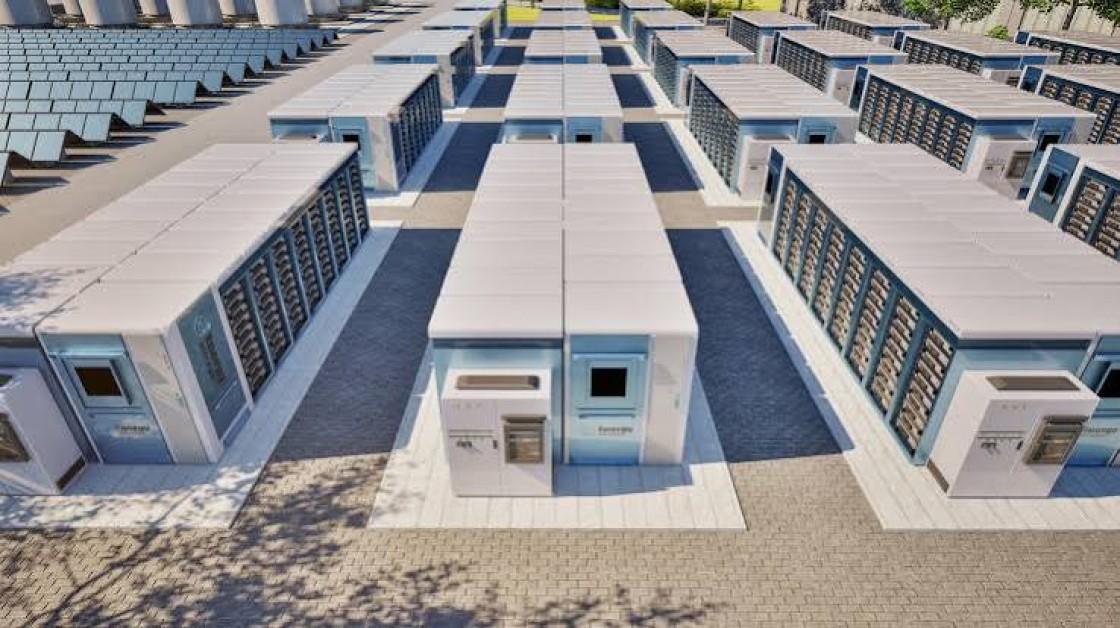
Waaree Energies Expands Battery Manufacturing Capacity in Gujarat
Waaree Energies Limited has announced the commissioning of a new battery pack manufacturing line with an annual installed capacity of 5.15 gigawatt-hours (GWh) at its subsidiary's facility in Rola, Valsad district, Gujarat.
The manufacturing line was commissioned by Waaree Energy Storage Solutions Private Limited on November 14, 2026, at 10:00 a.m., according to the company's regulatory disclosure to the National Stock Exchange and BSE.
The development marks another milestone in Waaree Energies' expansion beyond solar photovoltaic manufacturing into battery energy storage technologies.
The newly operational line strengthens the group's domestic battery pack production capabilities as demand for energy storage solutions increases across India's renewable energy, industrial and electricity infrastructure sectors.
The commissioning follows the earlier establishment of battery energy storage system manufacturing capacity at the same Gujarat location.
Waaree Energies is developing a broader energy storage manufacturing ecosystem that includes battery packs, lithium-ion cells and containerised battery energy storage systems.
The latest capacity addition is expected to support this strategy by expanding the company's ability to manufacture components used in large-scale energy storage applications.
Waaree Energies Battery Pack Manufacturing Line: Key Details

The company disclosed the commissioning under Regulation 30 of the SEBI Listing Obligations and Disclosure Requirements Regulations, 2015.
|
Particulars |
Details |
|---|---|
|
Parent company |
Waaree Energies Limited |
|
Subsidiary |
Waaree Energy Storage Solutions Private Limited |
|
Facility location |
Rola, Valsad, Gujarat |
|
Manufacturing activity |
Battery pack production |
|
Annual installed capacity |
5.15 GWh |
|
Commissioning date |
November 14, 2026 |
|
Commissioning time |
10:00 a.m. |
|
Business segment |
Battery energy storage |
|
Stock exchange |
NSE and BSE |
|
NSE symbol |
WAAREEENER |
|
BSE code |
544277 |
|
Operational status |
Commissioned |
The company has confirmed that the new manufacturing line has commenced operations.
However, the regulatory announcement does not specify the investment amount, production utilisation, expected revenue contribution or customer orders associated with the facility.
These details will be important for evaluating the commercial impact of the new manufacturing capacity.
What Does 5.15 GWh Battery Manufacturing Capacity Mean?
The new line has an annual installed manufacturing capacity of 5.15 gigawatt-hours.
A gigawatt-hour is a unit of energy equal to one billion watt-hours.
In battery manufacturing, GWh capacity indicates the total energy storage capacity of battery packs that a facility is designed to produce over a specified period.
Waaree Energies' 5.15 GWh annual capacity is equivalent to 5.15 million kilowatt-hours of battery storage capacity.
This is a measure of manufacturing output rather than the amount of electricity the factory itself consumes or generates.
Understanding the Scale
The capacity could theoretically correspond to:
-
Approximately 5.15 million battery units of 1 kWh each.
-
Approximately 51,500 battery packs of 100 kWh each.
-
Approximately 5,150 battery storage systems of 1 MWh each.
-
Approximately 515 battery storage systems of 10 MWh each.
These figures are mathematical illustrations of equivalent energy capacity, not actual production targets announced by Waaree Energies.
Actual output will depend on the battery pack configurations, product specifications, manufacturing utilisation and customer requirements.
The company has not disclosed the specific mix of battery pack sizes that the new line will manufacture.
Waaree Energy Storage Solutions Strengthens Domestic Manufacturing
Waaree Energy Storage Solutions Private Limited is part of Waaree Energies' broader expansion into energy storage manufacturing.
The subsidiary is developing manufacturing capabilities for lithium-ion batteries and associated storage systems.
Battery packs are a critical component of modern energy storage infrastructure because they combine multiple battery cells into integrated units that can store and deliver electrical energy.
The manufacturing process typically involves cell integration, electrical connections, battery management systems, thermal management and safety testing.
How Battery Pack Manufacturing Works
Battery pack production generally involves several stages.
Battery cell integration
Individual battery cells are arranged into modules or assemblies according to the required energy capacity and electrical configuration.
Electrical interconnection
Cells and modules are connected using conductors and other components that enable controlled charging and discharging.
Battery management systems
Electronic monitoring systems help manage battery voltage, temperature, charging conditions and safety functions.
Thermal management
Cooling and temperature-control systems help maintain appropriate operating conditions.
Testing and quality assurance
Manufactured packs undergo electrical and safety testing before being integrated into larger energy storage products.
These processes are important for producing reliable battery systems suitable for industrial and utility-scale applications.
The exact manufacturing technologies and battery chemistry used in Waaree's newly commissioned line were not specified in the November 14 disclosure.
New Battery Pack Line Complements Existing BESS Manufacturing Capacity
The latest commissioning follows Waaree Energies' earlier expansion into containerised battery energy storage system manufacturing.
In July 2026, Waaree Energy Storage Solutions commissioned a battery energy storage system container manufacturing facility at Rola with an annual installed capacity of 5.15 GWh.
The container facility represented an initial operational phase of the company's broader energy storage manufacturing programme.
The November commissioning adds battery pack manufacturing capacity at the same location.
Difference Between Battery Packs and BESS Containers
Battery packs and complete battery energy storage systems perform different functions within the energy storage supply chain.
|
Component |
Function |
|---|---|
|
Battery cells |
Store electrical energy through electrochemical reactions |
|
Battery modules |
Combine multiple cells into manageable assemblies |
|
Battery packs |
Integrate cells or modules with electrical and safety systems |
|
BESS containers |
House battery assemblies and supporting systems for large-scale energy storage |
|
Power conversion systems |
Convert electricity between direct current and alternating current |
|
Energy management systems |
Monitor and control energy storage operations |
The newly commissioned battery pack line therefore supports a different manufacturing stage from the previously operational BESS container facility.
The two capacities should not simply be added together to claim 10.3 GWh of independent battery production.
Instead, they represent different stages of a potentially integrated manufacturing process.
This distinction is important when evaluating the company's actual production capabilities.
Waaree Energies' 20 GWh Energy Storage Manufacturing Roadmap
The new battery pack manufacturing line forms part of Waaree Energies' broader ambition to establish a substantial domestic energy storage manufacturing business.
The company has outlined a long-term roadmap involving approximately 20 GWh of energy storage manufacturing capacity.
Its strategy includes the development of battery cells, battery packs and complete energy storage systems.
The objective is to establish manufacturing capabilities across multiple stages of the battery value chain.
Key Manufacturing Developments
|
Manufacturing segment |
Reported capacity or plan |
|---|---|
|
BESS container manufacturing |
5.15 GWh commissioned in July 2026 |
|
Battery pack manufacturing |
5.15 GWh commissioned in November 2026 |
|
Lithium-ion cell manufacturing |
Additional capacity under development |
|
Long-term energy storage roadmap |
Approximately 20 GWh |
Earlier company plans included the development of 3.5 GWh of lithium-ion cell manufacturing capacity during FY27.
Subsequent industry assessments have referred to a planned 4 GWh cell manufacturing unit, with operations targeted for December 2026.
However, the November 14 regulatory filing does not confirm the commissioning of battery cell manufacturing capacity.
The distinction between commissioned facilities and future planned capacity remains important for investors.
Why Waaree Energies Is Expanding Into Battery Energy Storage
Waaree Energies is widely recognised for its solar photovoltaic manufacturing business.
The company has developed a substantial presence in solar module manufacturing and has expanded into related clean energy technologies.
Battery storage represents a complementary business because renewable electricity generation does not always coincide with electricity demand.
Solar power generation is concentrated during daylight hours, while electricity demand can remain high during evenings and other periods.
Battery energy storage systems can store electricity when it is available and release it when required.
This makes energy storage increasingly important as the share of variable renewable energy grows.
Strategic Advantages of Battery Storage Expansion
Broader clean energy product portfolio
Battery manufacturing allows Waaree Energies to expand beyond solar modules into products used for storing and managing electricity.
Participation in energy infrastructure projects
Battery energy storage systems are used in utility-scale renewable energy projects, electricity networks and commercial installations.
Domestic manufacturing opportunities
India's battery supply chain remains dependent on imported components and materials in several areas.
Local manufacturing can create opportunities to increase domestic value addition.
Long-term demand potential
Growing renewable energy capacity and electricity system flexibility requirements are expected to support demand for energy storage technologies.
Manufacturing integration
Developing battery pack and container manufacturing capabilities can help the company participate in multiple stages of energy storage system production.
However, the commercial benefits will depend on customer demand, pricing, production efficiency and the ability to compete with established international manufacturers.
India's Battery Energy Storage Market Gains Importance
India's electricity system is undergoing significant changes as renewable energy capacity expands.
Solar and wind power are becoming increasingly important components of electricity generation.
Unlike conventional power plants that can often adjust output according to demand, solar and wind generation depend on weather conditions and resource availability.
Energy storage systems can help manage these variations.
Major Applications of Battery Energy Storage
Renewable energy integration
Battery systems can store surplus renewable electricity and release it when generation declines.
Peak demand management
Stored electricity can be supplied during periods of high demand, potentially reducing the need for more expensive generation sources.
Grid stability
Battery systems can provide services that help maintain electricity network stability and respond to changes in supply and demand.
Commercial and industrial applications
Factories, commercial buildings and industrial facilities can use battery storage for energy management and backup requirements.
Hybrid renewable projects
Solar and wind facilities can be combined with battery storage to improve the timing and availability of electricity supply.
These applications create opportunities for companies manufacturing battery packs, power electronics and complete energy storage systems.
The pace of market development will depend on project economics, electricity tariffs, regulatory frameworks and battery technology costs.
Government Policies Support India's Energy Storage Industry
India has introduced policy measures intended to encourage battery manufacturing and energy storage deployment.
These include initiatives supporting advanced battery technologies, domestic manufacturing and grid-scale storage infrastructure.
Production Linked Incentive Scheme for Advanced Chemistry Cells
The government's Production Linked Incentive programme for Advanced Chemistry Cell battery storage is designed to encourage domestic manufacturing of advanced battery cells.
The programme seeks to support investment in manufacturing capacity and reduce dependence on imported battery technologies.
However, battery pack assembly and advanced chemistry cell manufacturing are distinct activities.
The commissioning of a battery pack manufacturing line does not automatically establish eligibility for cell-manufacturing incentives.
Viability Gap Funding for Battery Storage
Government-supported viability gap funding mechanisms have been introduced to improve the commercial feasibility of selected battery energy storage projects.
Such measures can help address the upfront capital costs associated with large storage installations.
Renewable Energy Expansion
India's broader non-fossil energy capacity targets create a structural need for electricity storage, grid infrastructure and flexible power resources.
The combination of renewable generation growth and energy storage deployment could create opportunities for domestic manufacturers.
Nevertheless, policy support does not guarantee commercial success for individual companies or projects.
Waaree Energies Expands Beyond Solar Module Manufacturing
The battery pack commissioning is part of Waaree Energies' broader development as a diversified clean energy manufacturing company.
In addition to solar photovoltaic modules, the group has been expanding into solar cells, inverters and energy storage systems.
These products serve different stages of renewable energy generation and electricity management.
Solar Module Manufacturing
Solar modules convert sunlight into electricity and remain a major component of Waaree Energies' business.
The company has expanded domestic manufacturing capacity through facilities in Gujarat and other locations.
Solar Cell Manufacturing
Solar cells are the fundamental electricity-generating components used within photovoltaic modules.
Domestic cell manufacturing can support greater integration within the solar supply chain.
Solar Inverters
Inverters convert direct-current electricity generated by solar modules into alternating-current electricity suitable for use in electrical networks and appliances.
Waaree's inverter business has expanded manufacturing capacity in Gujarat.
Battery Energy Storage
Battery packs and BESS containers allow the company to participate in electricity storage applications alongside solar generation.
The development of these businesses could create opportunities to supply a wider range of products to renewable energy developers and industrial customers.
However, each manufacturing segment has different technologies, competitive conditions and capital requirements.
Financial Implications of the New Manufacturing Line
The commissioning of the 5.15 GWh battery pack line adds operational manufacturing capacity to Waaree Energies' energy storage business.
However, installed capacity alone does not determine financial performance.
The company's ability to generate revenue will depend on actual production volumes, customer contracts and selling prices.
Revenue Potential
The facility could generate revenue through the sale of battery packs or their integration into complete energy storage systems.
The company has not disclosed the expected annual revenue contribution of the new line.
It has also not provided information about contracted customers, selling prices or production utilisation.
Consequently, a reliable revenue estimate cannot be calculated from the announced capacity alone.
Operating Costs
Battery pack manufacturing involves expenses associated with battery cells, electrical components, manufacturing equipment, labour and quality assurance.
Battery cells can represent a substantial portion of the cost of a finished battery pack.
Profitability therefore depends partly on procurement arrangements and the cost of battery components.
Capital Expenditure
The November 14 announcement does not specify the investment associated with the newly commissioned line.
The financial impact will become clearer as the company reports operating performance and capital expenditure across its energy storage business.
Waaree Energies Share Price in Focus After Battery Manufacturing Expansion
Waaree Energies shares may attract investor attention following the announcement of the new battery pack manufacturing capacity.
The company disclosed the commissioning on Saturday, November 14, 2026.
The subsequent trading session provides an opportunity for investors to assess the development alongside the company's financial performance and broader clean energy manufacturing strategy.
However, the commissioning announcement does not establish a specific near-term earnings contribution.
Key Factors Investors Will Monitor
Investors are likely to focus on several developments.
Manufacturing utilisation
The rate at which the facility increases production will influence its commercial contribution.
Customer orders
Confirmed battery pack and BESS orders will provide greater visibility into future revenue.
Battery cell manufacturing
Progress toward domestic cell production could affect the company's level of manufacturing integration.
Operating margins
Battery component costs, manufacturing efficiency and product pricing will influence profitability.
Capital expenditure
Future investments in energy storage manufacturing will affect cash requirements and financial returns.
Competition
Domestic and international battery manufacturers compete on technology, cost, reliability and production scale.
The company's ability to translate manufacturing capacity into profitable sales will remain central to evaluating the expansion.
Challenges Facing India's Battery Manufacturing Industry
Although energy storage demand is expected to increase, battery manufacturing involves significant operational and commercial challenges.
Dependence on Imported Battery Cells
Domestic battery pack manufacturers may depend on imported cells until local cell manufacturing capacity becomes commercially available.
This can create exposure to international prices, supply disruptions and currency movements.
Technology Development
Battery technologies continue to evolve, requiring manufacturers to maintain appropriate product designs, safety standards and manufacturing capabilities.
Price Competition
Global battery manufacturers operate at substantial scale, creating competitive pressure on pricing.
Indian manufacturers must manage production costs while meeting customer quality requirements.
Safety and Quality Requirements
Battery systems require careful management of electrical, thermal and mechanical risks.
Manufacturing quality and testing are important for maintaining product reliability.
Capacity Utilisation
Large installed manufacturing capacity does not guarantee equivalent production or sales.
Companies must secure sufficient demand to achieve efficient utilisation.
Capital Requirements
Battery manufacturing can require significant investment in equipment, facilities, testing infrastructure and technology.
These factors will influence the long-term economics of Waaree Energies' energy storage operations.
What Happens Next for Waaree Energy Storage Solutions?
Following the commissioning of the battery pack manufacturing line, attention will shift toward production ramp-up and commercial execution.
The company has not disclosed a detailed schedule for reaching full manufacturing utilisation.
Further developments may include customer orders, additional manufacturing investments and progress toward battery cell production.
The integration of battery packs with existing BESS container manufacturing capacity will also be important.
A more integrated manufacturing structure could allow Waaree Energies to participate in a greater portion of the energy storage value chain.
However, the financial benefits will depend on actual production, product demand and operational efficiency.
The company's future disclosures will provide a clearer picture of the scale and profitability of its energy storage business.
Conclusion
Waaree Energies' commissioning of a 5.15 GWh battery pack manufacturing line in Gujarat marks an important milestone in its expansion into India's energy storage industry.
The facility, operated by Waaree Energy Storage Solutions Private Limited at Rola in Valsad district, commenced operations on November 14, 2026.
The new manufacturing line complements the company's previously commissioned BESS container manufacturing capacity at the same location.
Together, these developments strengthen Waaree Energies' capabilities across different stages of battery energy storage system production.
The expansion also supports the company's broader strategy of developing a diversified clean energy manufacturing portfolio spanning solar modules, solar cells, inverters and battery storage.
India's increasing renewable energy capacity and growing need for electricity storage provide a potential long-term market for these products.
However, the financial contribution of the newly commissioned line will depend on customer demand, manufacturing utilisation, battery component costs and successful commercial execution.
For investors, the key developments to monitor will be production ramp-up, new storage orders, progress toward battery cell manufacturing and the profitability of the energy storage business.
The commissioning represents a tangible increase in domestic battery pack manufacturing capacity and another step in Waaree Energies' transition toward a broader renewable energy technology business.
 Waaree Energies Commissions 5.15 GWh Battery Pack Manufacturing Line in Gujarat FAQs

POST A COMMENT (0)
All Comments (0)
Replies (0)