





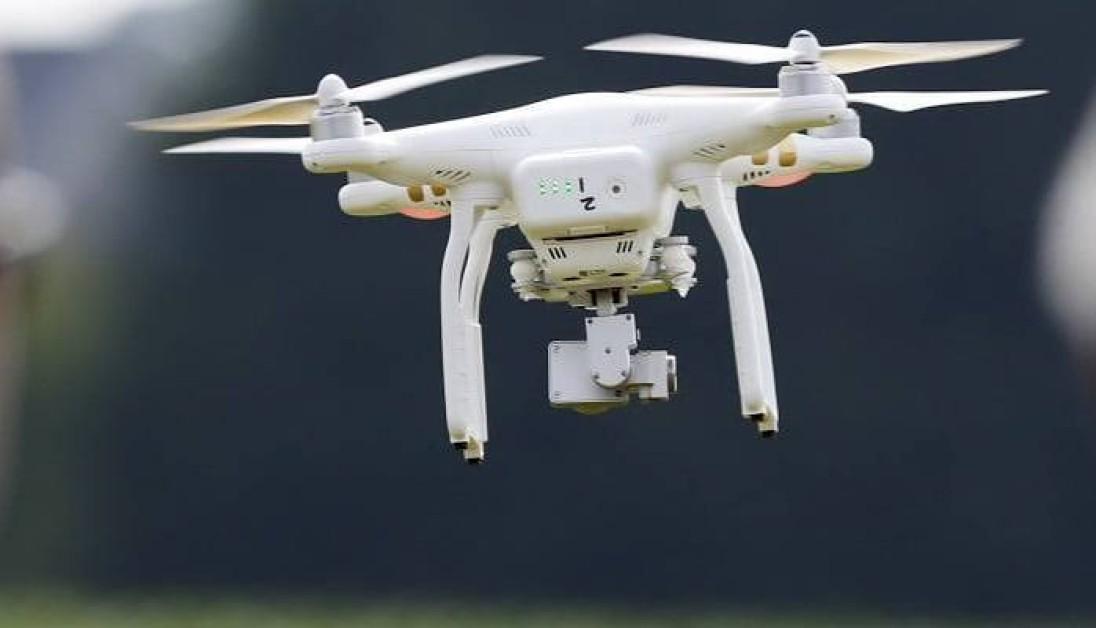
Targeted US Tariffs on Drones Signal New Phase in Global Trade Policy
The United States is moving toward targeted tariffs on imported drones and related components, highlighting a broader shift in trade policy from economy-wide measures toward strategic sector-specific protection. The approach places unmanned aircraft systems alongside semiconductors, batteries and other technologies increasingly viewed through the combined lenses of industrial competitiveness and national security. For the global drone industry, targeted tariffs could reshape manufacturing economics, procurement decisions and supply chains while creating opportunities for producers outside the dominant Chinese manufacturing ecosystem.
US Drone Tariffs Reflect a More Targeted Trade Strategy

Trade policy is increasingly being used not simply to address import competition but to influence the development of strategically important domestic industries.
Drones Are Becoming a Strategic Technology Category
Commercial drones have expanded far beyond recreational photography.
Unmanned aircraft are now used in agriculture, infrastructure inspection, surveying, logistics, emergency response, filmmaking and public safety.
Their growing importance has also created national-security concerns because many drone systems incorporate cameras, sensors, communications equipment, navigation technology and large amounts of operational data.
Governments are consequently examining where these systems are manufactured and how their supply chains are controlled.
The United States has increasingly treated drones as part of a broader strategic technology ecosystem rather than an ordinary consumer electronics category.
Targeted tariffs reinforce that shift by using trade measures to encourage alternative supply chains and domestic production capacity.
Sector-Specific Measures Can Target Strategic Dependencies
Broad tariffs affect large categories of imports and can increase costs across many industries.
Sector-specific tariffs allow governments to focus intervention on products considered strategically important.
This approach can potentially reduce some of the economic disruption associated with blanket trade measures while directing protection toward selected industries.
Drones fit this strategy because the global supply chain remains concentrated among a relatively small number of manufacturers and component suppliers.
By adjusting import costs, Washington can influence procurement decisions and potentially improve the competitiveness of US-produced alternatives.
However, tariffs alone cannot create a complete domestic manufacturing ecosystem.
Companies also need access to components, engineering expertise, investment capital and large customers.
Chinese Manufacturers Dominate Parts of the Drone Market
Any major change in US drone trade policy has significant implications for Chinese manufacturers because of their strong position in the global commercial market.
China Built a Powerful Drone Manufacturing Ecosystem
Chinese companies established a significant competitive advantage in consumer and commercial drones by combining manufacturing scale, sophisticated hardware and competitive pricing.
The ecosystem extends beyond final assembly.
It includes batteries, motors, cameras, flight controllers, sensors and other components required to manufacture complete drone systems.
This supply-chain depth makes it difficult for competitors to replicate Chinese manufacturing economics quickly.
US companies attempting to expand domestic production may still depend on imported components even when final assembly takes place domestically.
Trade policy therefore increasingly focuses not only on finished drones but also on the components required to manufacture them.
Building alternative supply chains could take several years.
Procurement Restrictions Have Already Changed the Market
Tariffs are not the first policy mechanism affecting Chinese drone suppliers in the United States.
Federal agencies and other government-linked organisations have increasingly faced restrictions involving the procurement or use of certain foreign-manufactured drone systems.
Security concerns have encouraged demand for approved alternatives from domestic and allied-country suppliers.
These policies have already created a distinct government and defence-oriented market where supplier nationality can influence purchasing decisions.
Tariffs could extend some of this economic pressure into broader commercial segments.
Companies that previously selected drones primarily according to price and technical capability may need to consider import costs and supply-chain origin more carefully.
Tariffs Could Raise Costs for US Drone Users
Trade restrictions can support domestic manufacturing, but they can also increase costs for businesses that depend on imported equipment.
Commercial Operators May Face Higher Equipment Prices
US companies use drones across a wide range of industries.
Farmers deploy them for crop monitoring and precision agriculture.
Construction companies use aerial systems to survey sites and monitor projects.
Energy companies inspect pipelines, power lines and renewable energy infrastructure.
Media organisations and filmmakers use drones for aerial photography.
If tariffs increase the price of imported equipment, these businesses may face higher capital costs.
Some users could switch to domestically manufactured alternatives, while others may delay equipment upgrades.
The impact will depend on tariff rates, available substitutes and how much of the additional cost manufacturers pass through to customers.
Component Tariffs Could Affect Domestic Manufacturers Too
Trade measures covering drone components create a more complicated economic effect.
US manufacturers may assemble drones domestically while sourcing motors, batteries, cameras or electronics internationally.
Tariffs on these components can increase production costs for the same domestic companies policymakers are seeking to support.
This creates a difficult policy balance.
Tariffs need to be structured strongly enough to encourage supply-chain diversification without making domestic production uncompetitive.
Manufacturers may respond by increasing sourcing from countries outside China or investing in local component production.
Over time, this could produce more geographically diversified supply chains.
In the short term, however, replacing established suppliers can be expensive.
Domestic Drone Manufacturing Could Receive a Boost
The most direct beneficiaries of targeted tariffs could be US drone manufacturers competing against lower-cost imports.
Higher Import Costs Can Narrow the Price Gap
Domestic manufacturers frequently face higher labour, compliance and production costs than large Asian competitors.
Tariffs can reduce this disadvantage by increasing the landed cost of imported products.
This may allow US companies to compete more effectively for commercial customers that previously prioritised price.
Greater domestic demand could also encourage manufacturers to increase production volumes.
Higher volumes can reduce per-unit costs and support investment in automation, product development and supply-chain capacity.
The long-term objective of industrial policy is often to create this type of scale.
However, protection from imports does not guarantee commercial success.
Domestic manufacturers must still deliver competitive products in areas including flight performance, reliability, software, sensors and ease of use.
Investment Could Flow Into Drone Supply Chains
A more protected domestic market could attract additional investment into drone manufacturing and components.
Venture capital firms, private equity investors and industrial companies may see greater opportunity if government policy creates stronger demand for US-made systems.
Investment could extend beyond final drone manufacturers.
Battery systems, motors, navigation technology, communications equipment and specialised sensors all represent potential areas for supply-chain development.
Defence technology investment could further accelerate this process because commercial and military drone technologies increasingly overlap.
Companies capable of serving both markets may gain scale faster than businesses dependent entirely on consumer demand.
India Could Gain From Drone Supply-Chain Diversification
The restructuring of global drone manufacturing could create opportunities for countries seeking to develop their own unmanned aircraft industries.
India Is Building Domestic Drone Manufacturing Capabilities
India has introduced policies intended to encourage domestic drone production and reduce reliance on imported finished systems.
The country has developed a growing ecosystem of drone manufacturers serving agriculture, mapping, infrastructure, defence and surveillance applications.
Indian companies are also developing software, navigation systems and specialised payloads.
A global shift toward diversified drone supply chains could create opportunities for these manufacturers to expand internationally.
US buyers seeking alternatives to Chinese supply chains may increasingly evaluate suppliers from trusted partner countries.
However, accessing the US market requires compliance with demanding security, performance and certification requirements.
Indian manufacturers would need to demonstrate both technological capability and supply-chain transparency.
Component Manufacturing Offers a Larger Opportunity
The opportunity extends beyond complete drones.
Global manufacturers need reliable suppliers of electronics, batteries, motors, airframes, sensors and communications systems.
India's expanding electronics and defence manufacturing sectors could support development of these components.
Producing globally competitive parts could allow Indian companies to participate in drone supply chains even without building complete aircraft.
This approach mirrors broader manufacturing strategies where countries capture value through specialised components rather than dominating final products.
Trade diversification could therefore support India's ambitions to become a larger electronics and advanced manufacturing hub.
Drone Tariffs Connect Trade Policy With National Security
The policy debate surrounding drones demonstrates how economic and security considerations are becoming increasingly interconnected.
Supply-Chain Origin Matters for Connected Devices
Modern drones are connected computing systems capable of collecting and transmitting significant amounts of information.
Depending on their use, this data can include high-resolution imagery, infrastructure locations and operational details.
Governments are therefore concerned about who controls the hardware, software and communications infrastructure behind these systems.
Supply-chain security becomes particularly important when drones are used around sensitive facilities or government operations.
Trade restrictions can consequently serve two objectives simultaneously: supporting domestic manufacturers and reducing dependence on suppliers considered potential security risks.
This combination is becoming increasingly common across strategic technology sectors.
Similar Policies Are Emerging Across Advanced Technologies
Drones are part of a much broader industrial-policy shift.
Semiconductors, electric vehicle batteries, solar equipment, telecommunications infrastructure and critical minerals have all become subjects of trade and investment intervention.
Governments increasingly view these sectors as strategically important rather than relying entirely on global markets to determine where production occurs.
The result is a more fragmented international trading system.
Companies must now evaluate geopolitical alignment alongside traditional considerations such as price, quality and logistics.
Supply-chain strategy is consequently becoming a board-level issue for businesses operating in sensitive technology industries.
Global Drone Supply Chains Could Become More Regional
Targeted trade measures may accelerate the movement away from highly concentrated global production networks.
Manufacturers Could Adopt Multi-Country Sourcing
Drone manufacturers seeking access to the US market may redesign their supply chains to reduce dependence on restricted countries.
This could involve sourcing components from several regions rather than relying heavily on one manufacturing ecosystem.
Such diversification can improve resilience but may increase costs.
Suppliers need to be qualified, production processes adjusted and quality standards maintained across multiple locations.
Companies may also need stronger systems for tracking component origin.
As governments introduce more country-specific trade rules, supply-chain traceability becomes increasingly important.
Manufacturers capable of documenting where components originate could gain an advantage when selling to government and regulated customers.
Allied Countries Could Gain Manufacturing Investment
Countries with strong political and trade relationships with the United States could benefit from supply-chain diversification.
Manufacturers may establish production facilities in these markets or form partnerships with local suppliers.
Mexico, India, Japan, South Korea and several European economies have capabilities relevant to advanced electronics and manufacturing.
The precise distribution of investment will depend on labour costs, technical expertise, trade agreements and government incentives.
The result may be a drone industry organised around multiple regional manufacturing hubs rather than a single dominant supply base.
Targeted Tariffs Could Become a Model for Future Trade Policy
The significance of drone tariffs extends beyond the unmanned aircraft industry.
Strategic Industries May Face More Tailored Measures
Governments increasingly have the ability to target trade policy at narrow technology categories.
Instead of imposing identical tariffs across thousands of products, policymakers can identify specific supply chains considered economically or strategically important.
This approach can be combined with domestic subsidies, procurement rules and investment restrictions.
The objective is not necessarily to reduce overall international trade.
Instead, governments may attempt to redirect production toward domestic or politically aligned suppliers.
Businesses operating in advanced technology sectors should therefore expect trade rules to become more closely connected with industrial strategy.
Companies Need to Plan for Policy-Driven Supply Chains
Traditional supply-chain decisions focused heavily on efficiency and cost.
The next phase of global manufacturing requires companies to account for tariffs, export controls, security requirements and political risk.
A supplier that appears economically attractive today could become significantly more expensive if trade rules change.
Companies may therefore accept somewhat higher costs in exchange for greater geographic diversification.
This represents a fundamental change in globalisation.
Efficiency remains important, but resilience and strategic alignment are becoming increasingly valuable.
Drone manufacturers are experiencing this transition particularly clearly because their products sit at the intersection of consumer technology, industrial applications and national security.
Conclusion
Targeted US tariffs on drones illustrate a new phase in global trade policy in which governments are increasingly using sector-specific measures to reshape strategically important supply chains. The policy could support American drone manufacturers and reduce dependence on Chinese suppliers, but it may also increase costs for commercial users and domestic companies that continue to rely on imported components.
The implications extend beyond the United States and China. Countries including India could gain opportunities as manufacturers search for alternative production and component suppliers.
More broadly, the drone industry demonstrates how trade, industrial policy and national security are becoming increasingly interconnected. Companies operating in strategic technology sectors will need to build supply chains capable of adapting not only to market conditions but also to rapidly changing geopolitical and trade policies.
 Targeted US Drone Tariffs Reshape Global Trade Policy FAQs
POST A COMMENT (0)
All Comments (0)
Replies (0)