




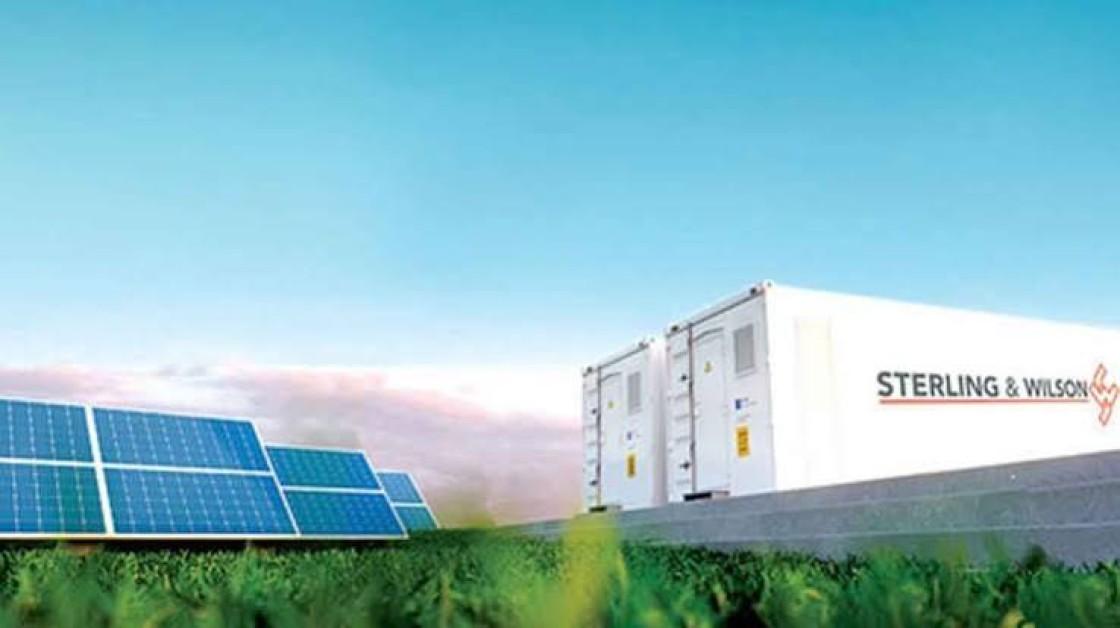
Sterling and Wilson Renewable Energy Reports Return to Profitability
Sterling and Wilson Renewable Energy Limited (SWREL) reported a consolidated net profit of approximately ₹19.23 crore for the second quarter of FY2026-27, reversing a substantial loss in the corresponding period of the previous financial year despite a decline in revenue.
The Mumbai-headquartered renewable energy engineering, procurement and construction (EPC) company announced its financial results on October 15, 2026, for the quarter ended September 30.
Revenue from operations declined 12.64% year-on-year to ₹1,527.50 crore, compared with ₹1,748.60 crore in the September 2025 quarter.
However, the company returned to profitability after reporting a consolidated net loss of ₹473.20 crore in the year-earlier period.
Operating profitability also improved significantly, with EBITDA increasing to approximately ₹56 crore from ₹4 crore a year earlier.
The results reflect an improvement in operating performance despite slower revenue recognition from project execution.
For investors, the financial performance highlights the company's progress in restoring profitability while also raising questions about the pace of revenue growth and the conversion of its substantial project pipeline into earnings.
Q2 FY27 Financial Performance Shows Strong Profit Recovery
Sterling and Wilson Renewable Energy's quarterly financial results present a mixed picture of lower revenue and improved profitability.
|
Financial Metric |
Q2 FY27 |
Q2 FY26 |
|---|---|---|
|
Revenue from operations |
₹1,527.50 crore |
₹1,748.60 crore |
|
Consolidated net profit/loss |
₹19.23 crore |
-₹473.20 crore |
|
EBITDA |
Approximately ₹56 crore |
Approximately ₹4 crore |
|
EBITDA margin |
3.7% |
0.2% |
|
Revenue growth |
-12.64% |
— |
The company reported a year-on-year revenue decline of approximately ₹221 crore.
Nevertheless, EBITDA improved substantially, indicating that operating profitability strengthened despite the reduction in business volume.
The EBITDA margin increased to approximately 3.7% from 0.2%, representing an improvement of around 350 basis points.
The return to net profitability also reflects the absence of the exceptional losses that affected the comparable quarter of the previous financial year.
However, the quarterly profit remained relatively modest compared with the company's revenue base, indicating that maintaining financial discipline will remain important.
Revenue Declines as Project Execution Moderates

The decline in quarterly revenue reflects the timing and pace of execution across Sterling and Wilson Renewable Energy's EPC portfolio.
The company provides engineering, procurement and construction services for large-scale solar power projects and associated renewable energy infrastructure.
Revenue recognition in this business is closely linked to project milestones, equipment procurement, construction progress and customer approvals.
Consequently, quarterly revenue can fluctuate depending on the execution schedules of individual projects.
The September quarter witnessed a moderation in execution-related revenue, contributing to the 12.64% year-on-year decline.
Revenue also fell sequentially from approximately ₹1,590 crore in the June 2026 quarter.
The sequential reduction indicates that the slowdown was not limited to the comparison with the previous financial year.
However, the company's substantial unexecuted order book provides visibility into potential future revenue.
The timing of project execution and the conversion of outstanding orders into recognised revenue will remain important indicators of future performance.
EBITDA Margin Expands to 3.7%
One of the most significant developments in Sterling and Wilson Renewable Energy's quarterly performance was the improvement in operating profitability.
EBITDA increased to approximately ₹56 crore from around ₹4 crore in the corresponding period of the previous year.
The EBITDA margin expanded from 0.2% to approximately 3.7%.
This improvement indicates stronger operating earnings relative to revenue, although the margin remains modest in absolute terms.
EPC businesses typically operate with relatively narrow margins because of competitive bidding, project execution costs, procurement expenses and working capital requirements.
Profitability can also be affected by changes in commodity prices, equipment costs, project delays and contractual obligations.
For Sterling and Wilson Renewable Energy, sustaining the improved margin will depend on disciplined project selection, execution efficiency and effective management of costs.
The company will also need to ensure that new projects contribute positively to profitability as its order book expands.
Net Profit Falls Sequentially Despite Annual Turnaround
Although Sterling and Wilson Renewable Energy returned to profitability compared with the September 2025 quarter, its earnings declined from the preceding quarter.
The company had reported a consolidated net profit of approximately ₹54 crore in Q1 FY27.
The September-quarter profit of ₹19.23 crore therefore represented a sequential decline of approximately 65%.
Revenue also decreased by nearly 4% quarter-on-quarter.
This indicates that the company's earnings recovery remains sensitive to fluctuations in project execution and operating performance.
The sequential reduction does not negate the year-on-year turnaround, but it highlights the importance of evaluating profitability over multiple quarters.
Investors will be monitoring whether the company can maintain positive earnings while accelerating execution of its renewable energy project portfolio.
First-Half Profit Reaches ₹70 Crore
Sterling and Wilson Renewable Energy's financial performance for the first six months of FY2026-27 demonstrated a substantial improvement compared with the corresponding period of the previous financial year.
The company reported consolidated profit after tax of approximately ₹70 crore for the half year ended September 30, 2026.
This compared with a loss of approximately ₹439 crore in the first half of FY2025-26.
Revenue for the six-month period stood at approximately ₹3,118 crore, compared with ₹3,510 crore a year earlier.
The figures indicate that profitability improved even as revenue declined.
The half-year results also demonstrate that the company has maintained positive earnings across the first two quarters of the financial year.
However, the reduction in revenue reinforces the need to accelerate project execution and improve the conversion of new orders into recognised sales.
Order Book Stands at ₹12,481 Crore
Sterling and Wilson Renewable Energy reported an unexecuted order value of approximately ₹12,481 crore as of September 30, 2026.
The order book provides visibility into future business activity and represents a substantial pipeline of projects awaiting execution.
During the first half of FY27, the company secured new orders worth approximately ₹3,626 crore.
Its order book increased by approximately 34% year-on-year during the period.
A strong order pipeline is important for renewable energy EPC companies because project execution typically extends across multiple quarters.
However, an order book does not represent immediately available revenue.
The timing of revenue recognition depends on project commencement, construction progress, equipment delivery and contractual milestones.
The company's ability to execute its outstanding orders efficiently will therefore determine how much of the pipeline translates into revenue and profitability.
For investors, the relationship between order inflows, execution schedules and operating margins will remain central to evaluating future performance.
Rajasthan Solar Project Strengthens Domestic Portfolio
Sterling and Wilson Renewable Energy recently secured a domestic EPC balance-of-system order for a solar power project in Rajasthan with a capacity of approximately 534 megawatts.
Balance-of-system work covers important infrastructure and construction components required to develop a functioning solar power installation.
Depending on the contractual scope, these activities can include electrical systems, mounting structures, cabling, civil construction and related infrastructure.
The Rajasthan project strengthens the company's domestic renewable energy portfolio.
India continues to expand solar power capacity as part of its broader energy transition and electricity generation diversification strategy.
Large utility-scale solar projects require extensive engineering and construction capabilities, creating opportunities for established EPC contractors.
For Sterling and Wilson Renewable Energy, domestic project execution remains an important source of business activity and potential revenue growth.
However, project profitability will depend on procurement costs, execution timelines and contractual terms.
South Africa Battery Storage Orders Expand International Business
Sterling and Wilson Renewable Energy has also secured an EPC order involving battery energy storage systems in South Africa.
The project comprises two battery storage installations with a combined capacity of approximately 616 megawatt-hours.
Battery energy storage systems are becoming increasingly important as electricity grids incorporate larger quantities of solar and wind generation.
These systems can store electricity during periods of excess generation and release it when demand increases or renewable output declines.
For EPC companies, battery storage projects represent an opportunity to expand beyond conventional solar construction into integrated energy infrastructure.
The South African order strengthens Sterling and Wilson Renewable Energy's international project portfolio and adds exposure to a growing segment of the renewable energy market.
However, battery storage projects also require specialised engineering, equipment integration and grid connection capabilities.
Successful execution will be important in establishing the company's competitiveness in this segment.
Egypt Solar Project Adds International Growth Opportunity
Sterling and Wilson Renewable Energy has also strengthened its international presence through the West Minya Solar Power Project in Egypt.
The project was secured through a joint venture with Hassan Allam Construction, a major construction company operating in Egypt and the wider Middle East and North Africa region.
The project is valued at approximately $560 million and involves the development of a 1,000-megawatt solar power facility integrated with a 600-megawatt-hour battery energy storage system.
The combination of solar generation and battery storage is designed to support more flexible electricity supply.
The project represents a significant international opportunity for Sterling and Wilson Renewable Energy.
It also demonstrates the company's ability to participate in large renewable energy infrastructure developments outside India.
However, international EPC projects can involve additional risks associated with currency fluctuations, logistics, regulatory requirements and project execution.
The financial contribution from the Egyptian project will depend on its execution schedule and the company's contractual share of the work.
Renewable Energy EPC Industry Faces Execution Challenges
Sterling and Wilson Renewable Energy operates in a sector supported by long-term demand for clean energy infrastructure.
India and several international markets are expanding renewable electricity capacity to diversify energy supplies and reduce dependence on conventional fossil fuels.
Solar power remains an important component of this transition because of its scalability and declining technology costs over the longer term.
At the same time, battery energy storage is emerging as a complementary investment category.
These developments create opportunities for companies involved in engineering, procurement, construction and project management.
However, the EPC business remains operationally demanding.
Contractors must manage equipment procurement, labour availability, construction schedules, working capital and customer payment cycles.
Competitive bidding can also limit operating margins.
For Sterling and Wilson Renewable Energy, the challenge will be to convert industry demand into profitable project execution rather than focusing exclusively on increasing order volumes.
Investors Focus on Revenue Recovery and Profit Sustainability
The company's September-quarter results present investors with several important considerations.
The return to profitability is a positive development, particularly following the substantial losses reported in the corresponding period of the previous year.
The improvement in EBITDA and operating margins also indicates stronger financial performance at the project execution level.
However, revenue declined both year-on-year and sequentially.
Net profit also decreased significantly compared with the June 2026 quarter.
These trends suggest that the earnings recovery remains vulnerable to fluctuations in project execution.
The company's ₹12,481 crore order book provides a foundation for future revenue generation, but successful execution will be essential.
Investors are likely to monitor new order inflows, project completion schedules, operating margins, working capital requirements and cash flow generation.
The performance of international projects will also be important as the company expands its exposure to solar and battery storage opportunities outside India.
Conclusion
Sterling and Wilson Renewable Energy's Q2 FY27 results mark an important improvement in profitability, with the company reporting a consolidated net profit of approximately ₹19 crore compared with a substantial loss in the corresponding quarter of the previous year.
The turnaround was accompanied by stronger EBITDA and an improvement in operating margins.
However, revenue declined nearly 13% year-on-year to ₹1,527.50 crore, reflecting slower project execution and revenue recognition.
The company's first-half profit of approximately ₹70 crore demonstrates a broader improvement in financial performance, while its ₹12,481 crore unexecuted order book provides visibility into future business opportunities.
Recent solar and battery storage orders in India, South Africa and Egypt further strengthen its project pipeline.
Nevertheless, maintaining profitability will require disciplined execution, cost management and efficient conversion of outstanding orders into revenue.
The coming quarters will be important in determining whether Sterling and Wilson Renewable Energy can translate its improved financial position and substantial project portfolio into sustained earnings growth.ts strengthen its presence in utility-scale solar engineering and energy storage infrastructure.
 Sterling and Wilson Renewable Energy Q2 FY27 Profit Reaches ₹19 Crore Despite Revenue Decline FAQs

POST A COMMENT (0)
All Comments (0)
Replies (0)