




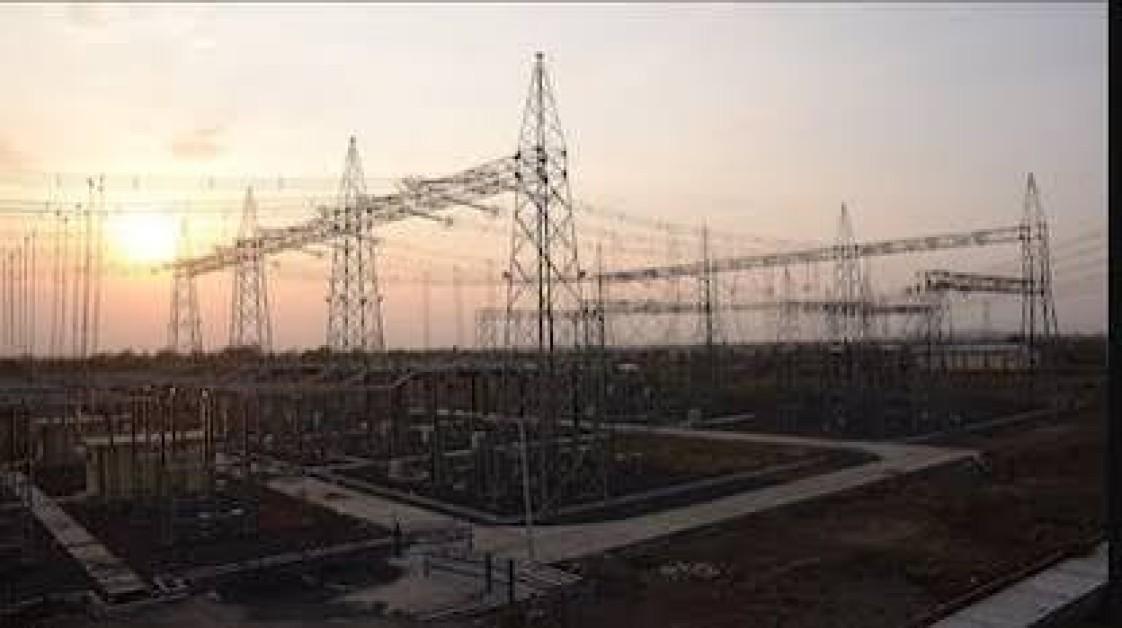
POWERGRID Approves ₹220.09 Crore Investment for Transmission Infrastructure Upgrade
Power Grid Corporation of India Limited (POWERGRID), a Maharatna public sector enterprise under the Ministry of Power, has approved an investment of ₹220.09 crore for upgrading the Gooty–Tumkur (Pavagada) 400 kilovolt double-circuit transmission line connecting Andhra Pradesh and Karnataka.
The investment was approved by the company's Committee of Directors on Investment on Projects during its meeting held on November 16, 2026.
The project involves replacing the existing transmission conductors with High Temperature Low Sag (HTLS) conductors, which are designed to carry higher electrical loads while maintaining appropriate clearance under elevated operating temperatures.
The company has scheduled commissioning of the upgraded transmission line by June 10, 2028.
The approval represents an investment in strengthening existing transmission infrastructure rather than constructing an entirely new transmission corridor.
The project is particularly relevant to electricity transmission in southern India, where renewable energy generation and increasing power flows have created additional demands on existing transmission networks.
By upgrading the conductors on an operational 400 kV line, POWERGRID aims to improve the corridor's electricity-carrying capability while making use of existing transmission infrastructure.
The investment forms part of the company's broader role in developing, operating and modernising India's high-voltage electricity transmission network.
POWERGRID Gooty–Tumkur Project: Key Details

|
Particulars |
Details |
|---|---|
|
Company |
Power Grid Corporation of India Limited |
|
Project |
Gooty–Tumkur (Pavagada) transmission line reconductoring |
|
Investment approved |
₹220.09 crore |
|
Approval date |
November 16, 2026 |
|
Approving authority |
Committee of Directors on Investment on Projects |
|
Transmission voltage |
400 kV |
|
Line configuration |
Double circuit |
|
Technology |
High Temperature Low Sag conductor |
|
Project location |
Andhra Pradesh and Karnataka |
|
Nature of work |
Replacement of existing transmission conductors |
|
Scheduled commissioning |
June 10, 2028 |
|
NSE symbol |
POWERGRID |
|
BSE code |
532898 |
|
Project status |
Investment approved |
The approval establishes an estimated project cost and commissioning target.
The final expenditure and operational benefits will depend on procurement, execution, testing and successful commissioning.
What Is the Gooty–Tumkur 400 kV Transmission Line?
The Gooty–Tumkur (Pavagada) transmission line is part of the high-voltage electricity transmission infrastructure serving southern India.
It connects transmission infrastructure associated with Gooty in Andhra Pradesh and the Tumkur–Pavagada region of Karnataka.
The corridor operates at 400 kilovolts, a voltage level commonly used for transmitting large quantities of electricity over significant distances.
The line uses a double-circuit configuration.
Understanding Double-Circuit Transmission Lines
A double-circuit transmission line carries two separate electrical circuits, typically supported by the same transmission towers.
Each circuit can transmit electricity independently within the network's operating arrangements.
Double-circuit configurations are widely used where high transmission capacity is required.
They can also provide operational flexibility, although the level of redundancy depends on network design and operating conditions.
Importance of the Gooty–Pavagada Corridor
The Gooty–Tumkur corridor supports electricity movement within the southern regional grid.
The Pavagada area is particularly important because of its renewable energy infrastructure.
Large renewable energy installations can create substantial electricity flows during periods of strong solar or wind generation.
Transmission infrastructure must be capable of handling these flows without exceeding equipment ratings.
The reconductoring project is intended to address capacity requirements on the existing corridor.
Why POWERGRID Is Upgrading the Transmission Line
The decision to upgrade the Gooty–Tumkur line is linked to concerns about loading on the existing transmission infrastructure.
Transmission planning assessments have identified situations in which electricity flows on the corridor could exceed its thermal rating under certain network conditions.
The Central Transmission Utility of India has highlighted loading concerns associated with the Gooty–Tumkur 400 kV double-circuit line.
The issue becomes particularly relevant during periods of high renewable energy generation around Pavagada.
Transmission Loading Concerns
The existing line has been identified as having a thermal rating of approximately 850 MVA under relevant planning assessments.
Power flows can exceed this rating during certain contingency scenarios.
A thermal rating represents the level of electrical loading that equipment can safely carry under specified conditions.
Exceeding the rating may create excessive conductor temperatures or clearance concerns.
Renewable Energy Injection
High renewable energy generation can increase the amount of electricity entering the transmission network.
If existing lines cannot accommodate the resulting flows, transmission constraints may emerge.
These constraints can limit the network's ability to move electricity efficiently between locations.
Network Reliability
Upgrading transmission capacity can improve the ability of the grid to accommodate changing electricity flows.
However, the precise increase in transfer capacity will depend on the final conductor specifications and associated network conditions.
POWERGRID has not disclosed a revised megavolt-ampere rating in its November 16 investment approval.
What Is Reconductoring in Power Transmission?
Reconductoring is the process of replacing the electrical conductors on an existing transmission line.
Conductors are the wires that carry electricity between transmission towers.
Over time, changes in electricity demand and generation patterns can increase the loading requirements of transmission corridors.
Instead of constructing a completely new line, a utility may replace existing conductors with higher-capacity alternatives.
How Reconductoring Works
The process generally involves evaluating the existing line's structural and electrical characteristics.
Engineers assess whether the transmission towers, foundations and associated equipment can accommodate the replacement conductors.
The existing conductors are then removed and replaced according to the approved engineering design.
Additional work may be required on insulators, fittings, terminal equipment or substation bays.
Testing and commissioning are performed before the upgraded line enters service.
Advantages of Reconductoring
Reconductoring can provide an opportunity to increase transmission capacity while retaining substantial portions of the existing infrastructure.
It may reduce the need for acquiring an entirely new right-of-way.
It can also allow utilities to address network constraints without constructing a parallel transmission corridor.
However, reconductoring projects still require careful engineering, construction planning and operational coordination.
Understanding High Temperature Low Sag Conductors
High Temperature Low Sag conductors are designed to operate at higher temperatures while limiting the amount by which the conductor hangs between transmission towers.
Electrical conductors heat up when current passes through them.
As temperatures increase, conventional conductors may expand and sag.
Excessive sag can reduce the clearance between the conductor and the ground or other objects.
This can create operational and safety limitations.
How HTLS Technology Works
HTLS conductors use specialised materials and structural designs to manage thermal expansion and mechanical behaviour.
Different HTLS technologies use different conductor constructions.
Some designs incorporate advanced core materials or specialised aluminium alloys.
The objective is to allow higher operating temperatures while maintaining acceptable sag characteristics.
Potential Benefits
Higher current-carrying capability
HTLS conductors can allow greater electrical loading than conventional conductors under suitable conditions.
Reduced sag at elevated temperatures
Their design helps maintain required clearances as operating temperatures rise.
Use of existing towers
Some reconductoring projects can retain existing transmission towers, subject to structural assessment.
Improved network flexibility
Higher conductor ratings can help transmission operators manage changing power flows.
Support for renewable energy
Greater transmission capability can help accommodate electricity generated from renewable sources.
The actual benefits depend on conductor design, installation conditions and the limitations of other network equipment.
Why HTLS Conductors Are Important for India's Power Grid
India's electricity transmission system must accommodate increasing electricity demand and changes in generation patterns.
Renewable energy installations are often located away from major consumption centres.
This creates a need for reliable transmission infrastructure connecting generation locations with the wider grid.
Increasing Transmission Requirements
New generation capacity can increase the amount of electricity flowing through existing corridors.
At the same time, electricity demand patterns change with industrial activity, urban development and seasonal conditions.
Transmission utilities must evaluate whether existing infrastructure can accommodate these changes.
Constraints on New Transmission Corridors
Building new transmission lines can require land access, right-of-way arrangements and environmental approvals.
In some locations, obtaining new corridors can be difficult.
Reconductoring provides an alternative where existing infrastructure is suitable for upgrading.
Modernising Existing Assets
Transmission networks contain equipment installed at different times and designed for different operating requirements.
Replacing selected components can extend the useful capability of existing assets.
POWERGRID's Gooty–Tumkur investment illustrates this approach.
Renewable Energy Development Increases Transmission Demand in Southern India
Southern India has substantial renewable energy resources and an expanding electricity transmission network.
Karnataka and Andhra Pradesh are important states for renewable electricity generation.
Large solar and wind installations require transmission infrastructure capable of moving electricity to consumption centres.
The Pavagada region is particularly associated with large-scale solar power development.
Why Renewable Energy Changes Grid Operations
Solar generation varies throughout the day.
Wind generation changes according to weather conditions.
These variations influence the amount and direction of electricity flowing through transmission lines.
During periods of high renewable generation, certain corridors may experience increased loading.
Transmission planners must account for these conditions when designing and upgrading networks.
Importance of Grid Flexibility
A flexible transmission network can accommodate changing generation and demand conditions.
Upgrades such as reconductoring can help address specific constraints.
However, transmission capacity is only one component of grid flexibility.
System operation also depends on generation scheduling, grid controls, energy storage and other infrastructure.
The Project Is Scheduled for Commissioning in June 2028
POWERGRID has established June 10, 2028, as the scheduled commissioning date for the Gooty–Tumkur reconductoring project.
The timeline provides an indication of when the upgraded infrastructure is expected to become operational.
The company has not disclosed a detailed construction schedule in its investment approval announcement.
Major Project Stages
The implementation process is expected to involve engineering, procurement and construction activities.
Equipment specifications must be finalised before procurement and installation.
The company will also need to coordinate work on the existing transmission corridor.
Because the line forms part of an operational electricity network, construction planning may require coordination with grid operators.
Testing and commissioning will be necessary before the upgraded conductors are placed into regular service.
The actual execution sequence will depend on the approved project plan.
POWERGRID's Investment Approval Reflects Infrastructure Modernisation Strategy
Power Grid Corporation of India is a major operator of high-voltage electricity transmission infrastructure.
The company develops, owns and operates transmission systems connecting electricity generation centres with regional and national networks.
Its activities include new transmission projects, substations, network extensions and upgrades to existing infrastructure.
The Gooty–Tumkur investment falls within the network modernisation category.
Why Existing Infrastructure Requires Investment
Transmission assets operate over long periods.
Changes in electricity generation and consumption can create requirements that were not anticipated when the original infrastructure was designed.
Utilities therefore undertake periodic assessments of network capability.
Where necessary, they invest in additional equipment or upgrades.
Capital Expenditure Planning
Infrastructure investments require financial and technical evaluation.
Companies assess project costs, operational requirements and expected benefits before approving expenditure.
POWERGRID's Committee of Directors on Investment on Projects is responsible for approving qualifying investments under the company's governance framework.
The November 16 decision represents the formal investment approval for the proposed reconductoring work.
POWERGRID Secures Another Transmission Project in Karnataka
The Gooty–Tumkur investment approval follows another development in POWERGRID's transmission business.
The company recently emerged as the successful bidder for an intra-state transmission project in Karnataka.
The project involves developing a 400/220 kV substation at Humnabad in Bidar district and associated transmission infrastructure.
The proposed substation will have three 500 MVA transformers.
Karnataka Project Details
|
Particulars |
Details |
|---|---|
|
Project location |
Humnabad, Bidar district, Karnataka |
|
Substation configuration |
400/220 kV |
|
Transformer capacity |
3 × 500 MVA |
|
Procurement method |
Tariff-Based Competitive Bidding |
|
Project model |
Build, Own, Operate and Transfer |
|
Quoted annual transmission charges |
₹243.34 crore |
|
Letter of Intent received |
November 11, 2026 |
The project includes associated 400 kV and 220 kV transmission lines and related infrastructure.
Unlike the Gooty–Tumkur reconductoring investment, the Humnabad project involves new transmission infrastructure awarded through competitive bidding.
The two developments demonstrate POWERGRID's participation in both new network development and upgrades to existing assets.
POWERGRID's Competitive Bidding Portfolio Expands
POWERGRID has secured multiple transmission projects under the Tariff-Based Competitive Bidding framework during FY27.
The company has reported 11 successful transmission project bids during the financial year.
The cumulative annual transmission charges associated with these projects have been reported at ₹8,106.97 crore.
This figure represents the aggregate annual transmission charges associated with the awarded projects, rather than their total construction cost.
Understanding Tariff-Based Competitive Bidding
Under this model, transmission developers compete for projects based on specified commercial requirements.
The selected developer undertakes the responsibility for developing and operating the transmission infrastructure under the applicable project framework.
The process is intended to introduce competition into the development of transmission assets.
Difference Between TBCB and Regulated Tariff Projects
Some transmission projects are developed through competitive bidding.
Others are implemented under regulated tariff arrangements.
The Gooty–Tumkur reconductoring project has been considered under the regulated tariff mechanism.
Its financial treatment therefore differs from that of a competitively awarded project such as Humnabad.
Investors should distinguish these project categories when assessing POWERGRID's investment portfolio.
Financial Implications of the ₹220.09 Crore Investment
The approved expenditure represents a capital investment in transmission infrastructure.
It should not be confused with an order received from a customer or immediate revenue for POWERGRID.
The project will require expenditure before the upgraded infrastructure becomes operational.
Capital Expenditure
The approved project cost is ₹220.09 crore.
The final expenditure may vary depending on procurement costs, execution conditions and other project requirements.
Revenue Implications
The financial treatment of transmission investments depends on the applicable tariff framework.
The investment may contribute to the company's regulated asset base or associated tariff calculations, subject to regulatory requirements.
However, the company has not disclosed a project-specific revenue forecast.
Depreciation and Financing
Transmission assets generally involve long operating lives.
Their financial impact can include depreciation, financing costs and operating expenses.
Cash Flow
The project will require capital expenditure during implementation.
The timing of cash outflows will depend on procurement and construction progress.
Return on Investment
The project's financial return cannot be determined from the investment approval alone.
Applicable regulatory treatment and final project costs will influence the economic outcome.
POWERGRID Share Price in Focus Following Investment Approval
POWERGRID shares may attract investor attention following the November 16 announcement.
The company's stock closed at ₹262 on BSE on November 16, 2026, rising ₹4.35, or approximately 1.69%, during the session.
The investment approval was disclosed after the trading session.
The market's subsequent response will depend on investor expectations and broader conditions.
Factors Investors Will Monitor
Investors may assess the company's overall capital expenditure programme and the pace of project execution.
The financial contribution of new transmission assets will also remain important.
Other considerations include regulated returns, financing costs and the company's competitive bidding portfolio.
The Gooty–Tumkur project represents a relatively focused network upgrade within POWERGRID's wider infrastructure business.
Its significance is primarily operational and strategic rather than an immediate earnings event.
Challenges in Reconductoring an Operational Transmission Line
Replacing conductors on an existing high-voltage transmission line involves several technical and operational challenges.
Managing Grid Operations
Construction work may require planned outages or other operational arrangements.
These activities must be coordinated to maintain system reliability.
Structural Compatibility
Existing towers and foundations must be assessed to ensure they can support the replacement conductors.
Equipment Compatibility
Higher-capacity conductors may require associated equipment to be evaluated for thermal and electrical limitations.
Procurement
Specialised conductor materials and fittings must meet applicable technical requirements.
Construction Safety
Work on high-voltage transmission infrastructure requires strict safety procedures.
Testing and Commissioning
The upgraded line must undergo appropriate testing before being placed into service.
These factors can influence project costs and completion schedules.
What Happens Next for the Gooty–Tumkur Project?
Following the investment approval, POWERGRID can proceed with the necessary implementation activities under its project governance procedures.
The company will need to finalise procurement and construction arrangements.
The work may include conductor replacement and associated upgrades required for the transmission corridor.
The project is scheduled for commissioning by June 10, 2028.
Future developments may include equipment procurement, construction milestones and regulatory updates.
The company has not disclosed a detailed stage-wise implementation schedule in its November 16 announcement.
The main indicators of progress will be project execution, expenditure against the approved budget and achievement of the commissioning target.
Conclusion
Power Grid Corporation of India Limited's approval of ₹220.09 crore for upgrading the Gooty–Tumkur (Pavagada) 400 kV double-circuit transmission line represents an important investment in southern India's electricity transmission infrastructure.
The project will replace existing conductors with High Temperature Low Sag technology, allowing the transmission corridor to accommodate higher electrical loading under suitable operating conditions.
Approved on November 16, 2026, the investment is scheduled for commissioning by June 10, 2028.
The upgrade is particularly relevant to the growing renewable energy generation capacity around the Pavagada region, where changing power flows have created additional demands on transmission infrastructure.
By upgrading an existing corridor, POWERGRID can address capacity requirements without necessarily constructing an entirely new transmission route.
The project also reflects the company's broader strategy of modernising India's electricity grid while developing new transmission infrastructure.
However, the final financial and operational benefits will depend on successful execution, regulatory treatment and the performance of the upgraded line.
For investors, the project represents another component of POWERGRID's long-term infrastructure investment programme.
For India's electricity sector, the development highlights the importance of strengthening existing transmission networks to support renewable energy integration and rising electricity demand.
 Power Grid Corporation Approves ₹220 Crore Gooty–Tumkur Transmission Upgrade FAQs

POST A COMMENT (0)
All Comments (0)
Replies (0)