




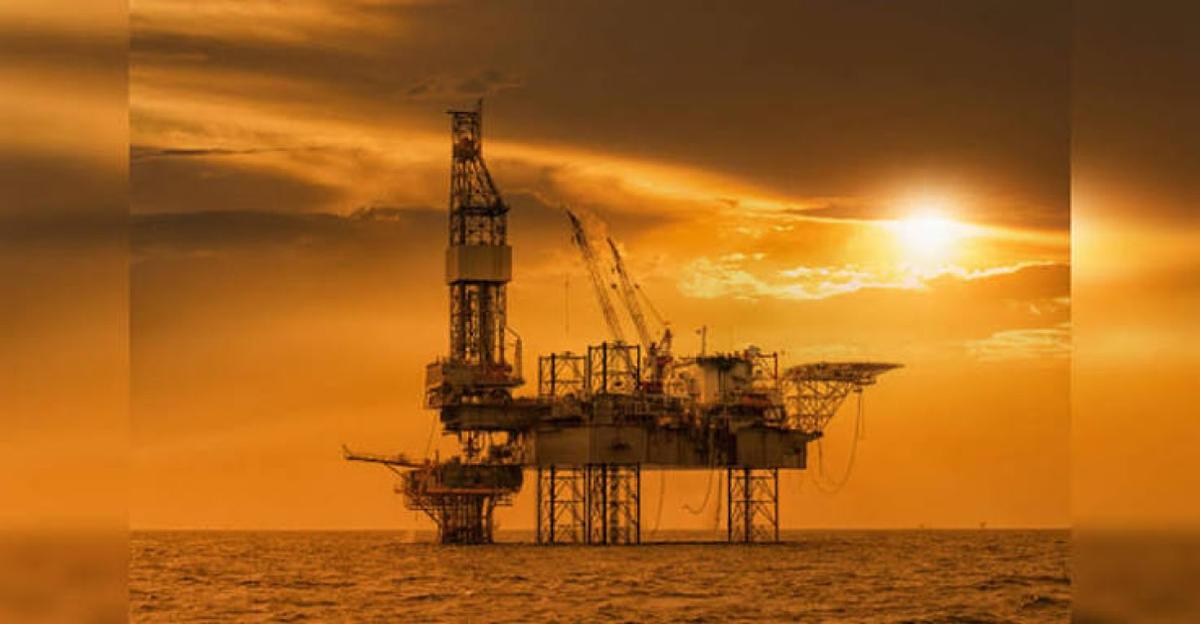
Oil India Q2 FY27 Results on November 12 Put Crude Production, Oil Prices and Exploration Growth in Focus
New Delhi, November 12, 2026: Oil India Limited is scheduled to review its financial results for the quarter and half-year ended September 30, 2026, with investors focusing on crude oil production, natural gas output, price realisations, exploration activity and operating profitability.
The state-owned energy company has scheduled a meeting of its board of directors for Thursday, November 12, to consider and approve its unaudited standalone and consolidated financial results.
The board will also consider declaring an interim dividend for FY2026–27, subject to approval.
The earnings announcement comes as investors assess how upstream oil and gas producers are benefiting from crude price movements while managing production costs and long-term exploration requirements.
Oil India's financial performance is influenced by both the quantity of hydrocarbons produced and the prices realised from their sale.
The company's exploration activities, including a recently announced natural gas discovery in the Krishna Godavari basin, have also attracted attention.
For investors, the September-quarter results will provide an opportunity to evaluate near-term profitability alongside the company's longer-term production and resource development strategy.
Oil India Board Meeting Scheduled for November 12

Oil India informed the National Stock Exchange and BSE on October 27, 2026, that its board would meet on November 12.
The meeting will consider two principal matters: approval of the company's September-quarter and half-year financial results, and the possible declaration of an interim dividend.
The financial results will cover both standalone and consolidated operations.
Standalone results primarily reflect Oil India's own business activities, while consolidated results incorporate relevant subsidiaries and other entities under applicable accounting rules.
The distinction is important because Oil India's group exposure includes downstream refining and other energy operations.
The company has also notified exchanges about an investor conference call concerning its Q2 FY27 financial results.
The official earnings release will establish the quarter's revenue, profit and other financial figures.
Until that disclosure, the company's September-quarter performance should not be presented as confirmed.
Oil India Q2 FY27: Key Indicators Investors Will Monitor
| Indicator | Why It Matters |
|---|---|
| Crude oil production | Determines the volume of oil available for sale |
| Natural gas production | Measures performance of the gas business |
| Crude oil realisations | Influences revenue earned per barrel |
| Revenue from operations | Reflects production, prices and business activity |
| Operating profit | Indicates profitability before financing and certain other costs |
| Net profit | Measures earnings after expenses and taxes |
| Exploration expenditure | Supports future resource discovery |
| Development projects | Influences future production capacity |
| Consolidated performance | Captures relevant group-level operations |
| Interim dividend | Determines any shareholder distribution approved by the board |
These indicators will help investors distinguish changes driven by commodity prices from changes in production and operating efficiency.
Crude Oil Production Remains a Central Earnings Driver
Crude oil production is one of the most important determinants of Oil India's financial performance.
The company operates upstream assets involved in the exploration, development and production of hydrocarbons.
Its established producing areas include fields in northeastern India.
Oil production depends on reservoir conditions, well performance, drilling activity and field maintenance.
Production volumes can change as mature reservoirs experience natural declines or new wells begin operating.
For Oil India, sustaining output from established fields while developing new resources is a major operational priority.
The September-quarter results will provide updated information on production trends.
Investors will examine whether the company has maintained or increased crude output compared with earlier reporting periods.
Higher production can support revenue, although the financial benefit depends on realised selling prices and production costs.
Crude Oil Realisations Influence Profitability
Oil India's earnings are sensitive to the prices received for crude oil.
Crude oil realisation refers to the average selling price obtained by a producer for its oil.
It may differ from international benchmark prices because of crude quality, contractual arrangements and other commercial factors.
A rise in realisations can increase revenue even when production volumes remain unchanged.
Conversely, lower realisations can reduce earnings despite stable or higher output.
This relationship makes commodity prices particularly important for upstream energy companies.
Investors will assess Oil India's average crude realisation for the September quarter and compare it with the preceding quarter and the corresponding period of FY26.
The results will help determine whether changes in profitability were driven primarily by prices, volumes or costs.
Global Oil Prices Add Earnings Volatility
International crude oil prices are influenced by supply, demand, geopolitical developments and inventory conditions.
Production decisions by major oil-exporting countries can affect global supply.
Economic activity in major consuming markets influences demand for petroleum products.
Geopolitical disruptions may also affect transportation routes and supply expectations.
For Indian upstream producers, changes in international oil prices can influence realised revenue.
However, higher oil prices do not automatically translate into proportionate increases in net profit.
Operating expenses, taxes and other financial factors also affect earnings.
Oil India's September-quarter results will provide a company-specific view of how commodity-market conditions influenced its business.
Natural Gas Production Provides Another Revenue Stream
Natural gas is an important part of Oil India's upstream operations.
The company produces gas from its hydrocarbon assets and supplies it under applicable commercial and regulatory arrangements.
Natural gas is used in electricity generation, fertiliser manufacturing, industrial processes and other applications.
Production performance depends on reservoir characteristics, well availability and infrastructure.
Unlike crude oil, natural gas pricing can be influenced by domestic pricing mechanisms and contractual arrangements.
Investors will examine the company's gas production volumes and average realisations.
Growth in natural gas output could support revenue diversification within Oil India's upstream business.
However, the profitability of gas production depends on prices, costs and the characteristics of individual fields.
Exploration Activity Supports Long-Term Growth
Oil and gas exploration involves identifying and evaluating underground hydrocarbon resources.
Companies use geological surveys, seismic data and exploratory drilling to assess potential reserves.
Exploration is necessary because producing fields eventually decline.
However, exploration projects involve significant uncertainty.
A geological prospect may not contain commercially recoverable hydrocarbons.
Even when oil or gas is discovered, additional appraisal and development work may be required before production can begin.
For Oil India, exploration activity is important to maintaining long-term production potential.
Investors will monitor drilling programmes, discoveries and the company's plans for developing new resources.
Oil India Announces Natural Gas Discovery in Krishna Godavari Basin
Oil India announced a natural gas discovery in the shallow offshore Krishna Godavari basin in October 2026.
The discovery was reported in the KG-DSF/GSKW/2018 block.
The announcement represents an exploration development within the company's broader hydrocarbon portfolio.
However, a discovery does not automatically establish the volume of commercially recoverable reserves.
Further technical evaluation may be required to determine the size of the resource and the feasibility of development.
Commercial production can also depend on infrastructure, regulatory approvals and project economics.
Investors will monitor whether Oil India provides additional information about appraisal work and development plans.
The discovery is relevant to long-term resource potential rather than a confirmed contribution to September-quarter revenue.
Coal-Bed Methane Adds Another Exploration Opportunity
Oil India has also reported developments involving coal-bed methane exploration.
Coal-bed methane is natural gas found in coal seams.
Its extraction requires specialised geological assessment and production techniques.
In October 2026, Oil India announced a milestone involving the signing of a special coal-bed methane block agreement.
The development adds another area of potential resource activity.
However, exploration agreements do not necessarily imply immediate commercial production.
The economic value of such projects depends on recoverable resources, development costs and market conditions.
For Oil India, diversification across hydrocarbon resource types may provide additional long-term opportunities.
Production Growth Depends on Field Development
Oil production cannot be sustained indefinitely through exploration alone.
New discoveries must be appraised and developed before they can contribute to commercial output.
Field development may involve drilling production wells, installing gathering systems and constructing processing facilities.
Projects can require substantial investment and extended implementation periods.
Production from mature fields also requires ongoing technical management.
Enhanced recovery methods may help improve extraction from established reservoirs.
For Oil India, the balance between maintaining mature-field output and developing new projects will influence future production.
Investors will assess management's commentary on drilling activity, project execution and production targets.
Operating Costs Remain Important to Margins
Oil India's profitability depends on the cost of producing and transporting hydrocarbons.
Operating expenses may include drilling, maintenance, labour, energy and field services.
Costs can vary between assets because of geological conditions and infrastructure requirements.
Mature fields may require additional investment to maintain production.
Exploration and development activities can also influence expenditure.
Investors will examine whether production costs increased or declined during the September quarter.
Stable or lower unit costs can support profitability when realised prices remain favourable.
However, higher expenses may offset some of the benefits of stronger crude realisations.
Standalone and Consolidated Results May Differ
Oil India's standalone and consolidated financial results can show different performance trends.
Standalone results focus on the company's own operations.
Consolidated financial statements include relevant subsidiaries and other group entities.
Oil India's wider business exposure includes downstream refining activities through Numaligarh Refinery Limited.
Refining businesses have different earnings drivers from upstream oil production.
Upstream companies generally benefit from higher crude realisations, while refiners are influenced by product demand and refining margins.
Consequently, consolidated profitability may reflect developments beyond Oil India's own crude and natural gas production.
Investors should therefore examine both reporting scopes.
Numaligarh Refinery Remains Important to Group Performance
Numaligarh Refinery Limited is a significant part of Oil India's broader energy business.
The refinery processes crude oil into petroleum products.
Its financial performance is influenced by crude procurement costs, refined-product prices, utilisation and operating efficiency.
Refining margins can fluctuate independently of upstream crude realisations.
The relationship between crude prices and refinery profitability is therefore complex.
Higher crude prices may support upstream earnings but can also increase input costs for refining operations.
Oil India's consolidated results will reflect relevant contributions from its group businesses.
Investors will monitor refining operations alongside the company's upstream performance.
Refinery Expansion Creates Long-Term Investment Requirements
The Numaligarh refinery expansion programme is an important infrastructure initiative associated with Oil India's group operations.
Large refinery projects require investment in processing units, utilities, logistics and supporting infrastructure.
Expansion can increase processing capacity and create opportunities for higher output.
However, the financial benefits depend on project completion, commissioning and future refining margins.
Construction delays or cost increases may affect project economics.
For investors, the refinery expansion represents a long-term capital investment rather than an immediate earnings contribution.
Management updates on implementation progress will remain relevant to the company's consolidated outlook.
Capital Expenditure Supports Future Production
Oil and gas companies require substantial capital expenditure to maintain and expand production.
Investment may include exploration wells, production facilities, pipelines and field-development infrastructure.
Capital expenditure can create future revenue opportunities but also affects cash flow.
Projects must generate sufficient returns to justify the resources invested.
For Oil India, maintaining financial discipline while pursuing exploration and development will remain important.
Investors will assess whether the company's capital spending is aligned with production opportunities and expected returns.
The September-quarter financial statements may also provide updated information on cash flows and investment activity.
Working Capital and Cash Generation Matter
Profitability is an important financial indicator, but investors also assess cash generation.
Oil and gas companies may experience changes in working capital because of receivables, inventories and payment schedules.
Cash generated from operations helps fund capital expenditure and shareholder distributions.
Strong operating cash flow can reduce dependence on external financing.
However, commodity-price volatility may affect cash generation.
Oil India's half-year financial statements will provide updated information on cash flows and financial resources.
Investors will compare reported earnings with the cash generated by the company's operations.
This distinction is important when evaluating the sustainability of dividends and investment programmes.
Interim Dividend Decision Adds Investor Interest
Oil India's board will consider declaring an interim dividend for FY2026–27 at its November 12 meeting.
A dividend represents a distribution of company earnings or available reserves to shareholders.
The amount, if approved, will depend on the board's decision.
The company has not confirmed a dividend amount in its October 27 meeting notice.
Any declaration will be subject to the relevant corporate and regulatory requirements.
Investors will monitor the announcement because dividends are an important component of returns from many public-sector energy companies.
However, a dividend decision should be evaluated alongside the company's capital expenditure needs and financial position.
Oil India Shares Remain Sensitive to Commodity Prices
Oil India is listed on the National Stock Exchange under the symbol OIL and on the BSE under code 533106.
Its share price is influenced by crude oil prices, production performance, earnings expectations and broader market conditions.
Changes in global energy prices can affect expectations for upstream profitability.
New exploration discoveries and production developments may also influence sentiment.
However, share-price movements do not necessarily correspond directly to changes in quarterly earnings.
Valuation also depends on cash generation, investment requirements and long-term growth expectations.
Investors will assess the September-quarter results against these factors.
Comparison With ONGC Highlights Sector Trends
Oil India and Oil and Natural Gas Corporation are major participants in India's upstream energy industry.
Both companies are exposed to crude oil and natural gas production.
Their financial performance can be influenced by similar commodity-market conditions.
However, the companies have different asset portfolios, production volumes and operating costs.
ONGC reported stronger September-quarter profitability in its recently announced results, supported by higher crude oil realisations.
The development provides sector context for Oil India's earnings review.
Nevertheless, Oil India's financial performance must be evaluated independently.
Differences in production trends, realised prices and expenses can lead to different earnings outcomes.
India's Energy Security Supports Exploration Investment
Domestic oil and gas production is important to India's energy security.
India relies significantly on imported crude oil to meet its petroleum requirements.
Increasing domestic production can help reduce exposure to international supply disruptions.
However, domestic exploration and production involve geological, technical and financial challenges.
New discoveries require evaluation before they can contribute to commercial output.
Oil India plays a role in developing India's hydrocarbon resources.
Its exploration and production activities therefore have implications beyond quarterly financial performance.
Long-term investment decisions will depend on resource potential, economic viability and energy demand.
Environmental and Operational Risks Require Management
Oil and gas exploration and production involve operational and environmental risks.
Drilling activities must be conducted under applicable safety and regulatory requirements.
Companies must manage equipment integrity, emissions, waste and the possibility of accidental releases.
Oil India reported a fire incident involving an indirect bath heater at an intermediate tank farm in Tengakhat on November 6, 2026.
The incident was disclosed to stock exchanges.
Operational incidents require assessment based on their actual effects on safety, production and financial performance.
The existence of an incident does not establish a material earnings impact without further information.
Investors will monitor any subsequent company disclosures concerning the event.
Exploration Success Does Not Guarantee Immediate Revenue
Exploration announcements can attract investor attention because they indicate potential future resources.
However, the commercial development of a discovery involves several stages.
These may include appraisal drilling, reserve estimation, project design and regulatory approvals.
Infrastructure must then be constructed before production begins.
The process can take years depending on the location and complexity of the resource.
For Oil India, the Krishna Godavari basin discovery is a positive exploration development.
However, its eventual financial contribution remains subject to further technical and commercial evaluation.
Investors should distinguish resource potential from confirmed production and revenue.
Outlook for Oil India in FY27
Oil India enters its September-quarter earnings review with investor attention focused on production performance and crude oil realisations.
The company's financial outlook will depend on commodity prices, hydrocarbon output and operating costs.
Exploration and field-development activity will remain important to long-term growth.
The company's recent natural gas discovery in the Krishna Godavari basin provides an additional development for investors to monitor.
Consolidated financial performance will also reflect relevant downstream and group operations.
Capital expenditure and cash generation will influence financial flexibility.
The November 12 board meeting will provide updated information on quarterly profitability and any interim dividend decision.
Investors will assess whether the company's operational performance supports sustainable earnings and future investment.
Conclusion
Oil India Limited is scheduled to review its financial results for the quarter and half-year ended September 30, 2026, at a board meeting on November 12.
The announcement will place attention on crude oil production, natural gas output, realised selling prices and operating profitability.
The company will also consider declaring an interim dividend for FY27.
Its exploration activities, including the October natural gas discovery in the Krishna Godavari basin, provide additional context for evaluating long-term growth opportunities.
However, exploration developments must be distinguished from commercially producing assets.
For investors, the September-quarter results will be important in assessing how production volumes, commodity prices and operating costs have influenced earnings.
The company's ability to maintain production, develop new resources and generate sufficient cash flow will remain central to its financial and operational outlook.
 Oil India Q2 FY27 Results: Crude Output, Realisations and Profit in Focus FAQs

POST A COMMENT (0)
All Comments (0)
Replies (0)