




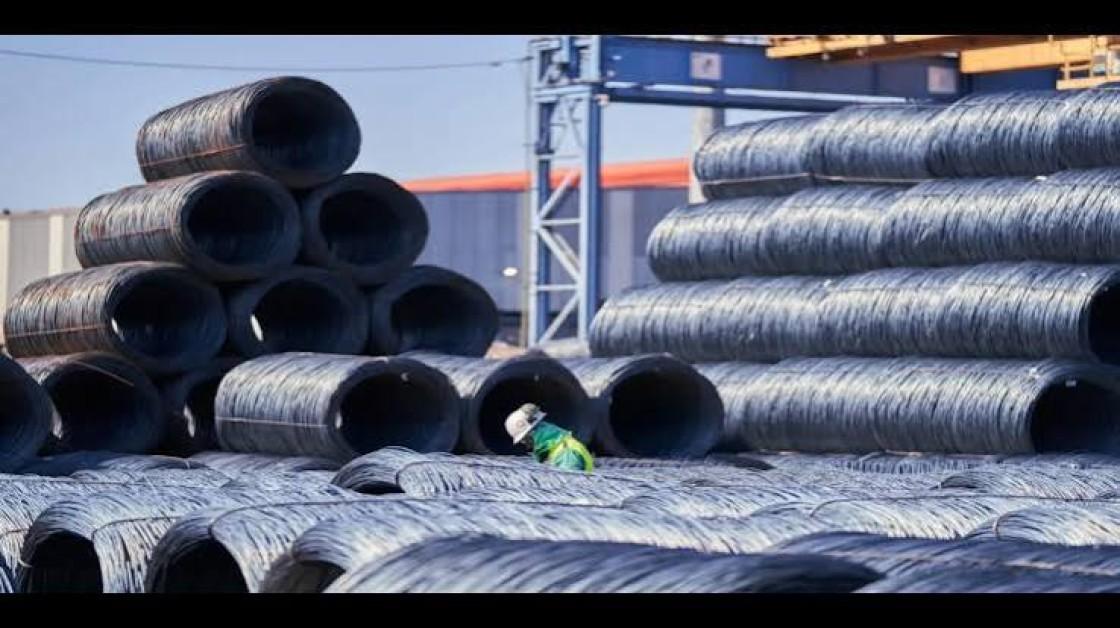
NMDC Q2 FY27 Results on November 12 Put Iron Ore Production, Pricing and Steel Industry Demand in Focus
Hyderabad, November 12, 2026: NMDC Limited is scheduled to review its financial results for the quarter and half-year ended September 30, 2026, with investors focusing on iron ore production, sales volumes, realised selling prices and demand from India's steel industry.
The state-owned mining company has scheduled a board meeting for Thursday, November 12, to consider and approve its unaudited financial results.
The announcement comes as NMDC pursues higher iron ore output while expanding its activities into coal and other minerals.
The company has outlined a production target of approximately 60 million tonnes of iron ore for FY2026–27, supported by mining capacity expansion and improved operational infrastructure.
In the June quarter, NMDC reported revenue of approximately ₹6,795 crore and adjusted net profit of around ₹1,980 crore.
Iron ore production increased approximately 26% year-on-year to 15.1 million tonnes, while sales volumes reached 11.8 million tonnes.
The results demonstrated strong production growth, although the relationship between output, selling prices and operating costs remained important to profitability.
Investors will examine whether the September-quarter results show sustained production momentum and whether domestic steel demand has supported iron ore sales.
The announcement will also provide an opportunity to assess NMDC's operating margins, capital expenditure and progress on its mineral diversification strategy.
NMDC Board Meeting Scheduled for November 12

NMDC informed stock exchanges on November 5, 2026, that its board would meet on November 12 to consider and approve the company's unaudited financial results for the quarter and half-year ended September 30.
The announcement covers the July–September quarter and the first six months of FY27.
The company's financial performance is influenced by iron ore production, sales volumes and commodity pricing.
Unlike manufacturers that generate revenue from finished products, mining companies are directly exposed to the prices realised from extracted minerals.
Production costs, transportation and statutory payments also influence profitability.
The September-quarter financial statements will provide updated information about these factors.
Until the official results are disclosed, the company's Q2 FY27 revenue and profit should not be treated as confirmed.
NMDC Q2 FY27: Key Indicators Investors Will Monitor
| Indicator | Latest Reported Benchmark | Investor Focus |
|---|---|---|
| Revenue from operations | ₹6,795 crore in Q1 FY27 | Growth in iron ore sales |
| Adjusted net profit | Approximately ₹1,980 crore in Q1 FY27 | Earnings performance |
| Iron ore production | 15.1 million tonnes in Q1 FY27 | Production growth |
| Iron ore sales | 11.8 million tonnes in Q1 FY27 | Customer demand and dispatches |
| Blended selling price | ₹5,783 per tonne in Q1 FY27 | Price realisations |
| EBITDA | ₹2,468 crore in Q1 FY27 | Operating profitability |
| EBITDA margin | 36.3% in Q1 FY27 | Margin sustainability |
| FY27 production target | 60 million tonnes | Full-year execution |
| October production | 5.04 million tonnes | Post-quarter operating momentum |
The indicators provide a framework for evaluating the September-quarter results.
Investors will assess whether changes in revenue and earnings are driven by production volumes, selling prices or operating expenses.
Iron Ore Production Remains a Central Growth Driver
Iron ore production is the foundation of NMDC's mining business.
The company operates major iron ore mines in Chhattisgarh and Karnataka.
Its operations supply raw materials used in steel manufacturing.
Production depends on mining capacity, equipment availability, weather conditions and regulatory clearances.
Mining companies must also maintain transportation and dispatch infrastructure to move extracted ore to customers.
Higher production can support revenue growth when accompanied by sufficient sales demand.
However, output growth does not automatically translate into higher profit.
Realised prices, transportation expenses and statutory costs can influence the financial contribution of additional volumes.
For NMDC, increasing production while maintaining cost efficiency will remain important.
June-Quarter Iron Ore Production Increased 26%
NMDC reported iron ore production of approximately 15.1 million tonnes during Q1 FY27.
This represented year-on-year growth of approximately 26%.
The increase demonstrated stronger mining activity during the opening quarter of the financial year.
However, production declined approximately 7% sequentially compared with the March quarter.
Mining output can fluctuate because of operational conditions and seasonal factors.
The September quarter includes the monsoon period in several mining regions.
Heavy rainfall can affect mining activity, transportation and dispatch schedules.
Investors will therefore assess whether NMDC maintained production momentum during July–September.
The comparison with the previous year will be particularly relevant.
Iron Ore Sales Volumes Determine Revenue Conversion
Production and sales are separate operating indicators.
A mining company may produce more ore than it sells during a particular period.
Differences can arise because of inventories, transportation availability and customer demand.
NMDC reported iron ore sales of approximately 11.8 million tonnes during Q1 FY27.
This represented year-on-year growth of approximately 2%.
However, sales declined approximately 23% sequentially.
The difference between production growth and sales growth highlights the importance of monitoring dispatches.
Higher output contributes to revenue only when the ore is sold under the relevant accounting arrangements.
The September-quarter results will indicate whether sales volumes improved.
Iron Ore Pricing Remains Important to Profitability
NMDC's earnings are sensitive to the prices received for iron ore.
The company sells different grades and forms of ore, including lump ore and fines.
Prices can vary depending on product specifications and market conditions.
NMDC periodically announces revisions to its domestic iron ore prices.
During 2026, the company issued price notifications in January, February, March, April, June, July, August and September.
These changes reflect adjustments to its selling-price schedule.
For investors, the average price actually realised during the quarter is more important than any single announced price.
Realised prices depend on the mix of products sold and the timing of transactions.
Average Selling Price Reached ₹5,783 per Tonne in Q1
NMDC's blended average selling price stood at approximately ₹5,783 per tonne during Q1 FY27.
This represented a decline of approximately 1% year-on-year.
However, it was approximately 5% higher than the preceding quarter.
The average selling price for iron ore alone stood at approximately ₹5,790 per tonne.
This represented year-on-year growth of approximately 8% and sequential growth of around 19%.
The difference between blended and iron ore-specific prices reflects the company's product and revenue mix.
Higher realisations helped offset weaker sequential sales volumes during the June quarter.
Investors will examine whether pricing remained supportive during Q2 FY27.
Steel Industry Demand Influences Iron Ore Sales
Iron ore is a principal raw material used in steel production.
Steel manufacturers process iron ore through different production routes to produce steel products.
Demand for iron ore is therefore closely connected to steel output and capacity utilisation.
India's steel industry serves construction, infrastructure, automotive manufacturing, engineering and industrial markets.
Growth in these sectors can support demand for steel.
However, steel demand and iron ore prices do not always move together.
Supply conditions, inventories and imported raw-material costs also influence purchasing decisions.
For NMDC, domestic steel production trends remain an important factor affecting sales volumes and pricing.
Infrastructure Investment Supports Steel Consumption
Infrastructure development is a major source of steel demand in India.
Steel is used in bridges, railway infrastructure, buildings, industrial facilities and other projects.
Public and private investment can influence the pace of steel consumption.
Higher construction activity may support demand for long steel products.
Manufacturing investment can increase demand for flat steel and specialised products.
However, the relationship between infrastructure spending and NMDC's revenue is indirect.
Steel manufacturers must translate demand into production and raw-material purchases.
The company's earnings will depend on actual iron ore sales and realised prices.
Global Iron Ore Markets Add Pricing Pressure
International iron ore prices are influenced by production from major mining countries and demand from steel-producing economies.
China is a particularly important participant in global steel and iron ore markets.
Changes in Chinese steel production can affect international commodity prices.
Supply developments in Australia and Brazil also influence global market conditions.
Although NMDC primarily serves domestic customers, international prices can affect the broader pricing environment.
Imported iron ore and steel-market conditions may influence domestic purchasing decisions.
Investors will monitor whether global commodity trends create pressure on NMDC's selling prices.
However, the company's realised prices also depend on domestic supply and demand.
NMDC Reported Q1 Revenue of ₹6,795 Crore
NMDC reported revenue of approximately ₹6,795 crore during the June 2026 quarter.
This represented growth of approximately 0.8% compared with the corresponding period of FY26.
Revenue declined approximately 19% sequentially.
The performance reflected lower sales volumes, partly offset by stronger realised prices.
The figures demonstrate how commodity pricing and dispatch volumes can influence revenue in different directions.
Higher production alone was insufficient to generate substantial revenue growth.
The September-quarter results will show whether sales conversion improved.
Investors will assess revenue alongside physical production and sales data to understand the underlying business performance.
Adjusted Net Profit Reached Approximately ₹1,980 Crore
NMDC reported adjusted net profit of approximately ₹1,980 crore during Q1 FY27.
The figure was broadly unchanged from the corresponding quarter of the previous financial year.
Adjusted profit increased approximately 1% sequentially.
The stable earnings performance occurred despite lower sequential revenue.
Improved operating profitability helped support earnings.
However, adjusted net profit is not necessarily identical to reported profit after tax.
Investors should distinguish between adjusted and statutory earnings measures when comparing financial periods.
The September-quarter announcement will provide updated reported financial figures.
The sustainability of profit will depend on selling prices, volumes and operating costs.
EBITDA Margin Improved to 36.3%
NMDC reported EBITDA of approximately ₹2,468 crore during Q1 FY27.
The figure was broadly unchanged year-on-year.
The EBITDA margin stood at approximately 36.3%.
This compared with 36.8% in Q1 FY26 and 23.3% in Q4 FY26.
The sharp sequential improvement reflected a change in business mix, stronger iron ore realisations and lower operating expenses.
The absence of low-margin hot-rolled coil trading also influenced the comparison.
Investors will assess whether the September-quarter results show continued margin stability.
Mining margins can fluctuate significantly with commodity prices and costs.
Production Costs Remain Important to Earnings
Mining profitability depends on the cost of extracting, processing and transporting ore.
Operating expenses include labour, equipment maintenance, fuel and other mining-related costs.
NMDC reported a production cost of approximately ₹584 per tonne during Q1 FY27, excluding selling expenses and royalty.
The figure represented a substantial sequential decline.
However, cost comparisons can be affected by accounting classifications and changes in operating activity.
Investors will monitor whether unit production costs remain competitive.
Higher output can improve the absorption of certain fixed costs.
Nevertheless, additional mining activity may also increase equipment, maintenance and transportation expenses.
Royalty and Statutory Payments Affect Margins
Mining companies are required to make royalty and other statutory payments under applicable regulations.
These expenses can represent a significant portion of operating costs.
The amount may depend on mineral values, production and regulatory requirements.
NMDC reported that royalty and cess expenses increased approximately 30% year-on-year during Q1 FY27.
Higher statutory expenses can offset some of the benefits of stronger selling prices.
For investors, these costs are important when assessing operating profitability.
The September-quarter results will indicate whether royalty-related expenses continued increasing.
NMDC Targets 60 Million Tonnes of Production in FY27
NMDC has outlined a target of approximately 60 million tonnes of iron ore production during FY27.
The target reflects management's plans to increase mining output.
Higher environmental clearances and additional mining capacity are expected to support production growth.
However, achieving the target depends on operational execution.
Mining companies must maintain equipment availability, workforce capacity and transportation infrastructure.
Weather conditions and regulatory requirements can also influence production.
Investors will compare actual output with the company's full-year target.
The September-quarter operating performance will provide an important indication of progress.
Long-Term Production Ambition Reaches 100 Million Tonnes
NMDC has also outlined a longer-term ambition to increase iron ore production capacity to approximately 100 million tonnes by FY2030.
The expansion would require investment in mining facilities and supporting infrastructure.
Higher production capacity can support future revenue opportunities.
However, capacity expansion must be matched by customer demand and transportation capability.
The financial returns depend on realised prices and operating costs.
For NMDC, the long-term plan reflects expectations for growth in India's steel industry.
Investors will monitor project execution, capital expenditure and the timing of additional capacity.
October Production Reaches 5.04 Million Tonnes
NMDC reported provisional iron ore production of approximately 5.04 million tonnes during October 2026.
Sales stood at approximately 3.44 million tonnes.
Cumulative production for the financial year through October reached approximately 32.32 million tonnes.
The monthly update provides additional information about operating momentum after the September quarter.
However, monthly production figures do not establish quarterly revenue or profitability.
The relationship between output and earnings depends on sales volumes and realised prices.
Investors will use the October update to assess progress toward the company's annual production target.
Coal Mining Adds a New Business Opportunity
NMDC is expanding beyond iron ore through its entry into commercial coal mining.
The company has been developing the Tokisud North coal mine in Jharkhand.
Management has indicated plans to begin commercial thermal coal production during Q3 FY27.
The company is targeting approximately 1 million tonnes of coal sales during FY27.
Coal mining could provide an additional revenue stream.
However, the financial contribution depends on production readiness, customer demand and operating costs.
The company's diversification strategy is intended to reduce its dependence on iron ore over time.
Critical Minerals Become Part of Diversification Strategy
NMDC is also exploring opportunities in critical minerals and rare earth elements.
These minerals are important for several industrial and technology applications.
Potential uses include electronics, energy systems and advanced manufacturing.
However, critical mineral projects involve geological, technical and commercial uncertainty.
NMDC has established a subsidiary to pursue opportunities involving rare earth and other critical mineral assets.
The company has outlined planned investment of approximately ₹2,000 crore during FY27.
Such investments may support long-term diversification.
However, their financial contribution will depend on successful resource development and commercial operations.
Capital Expenditure Supports Mining Expansion
NMDC expects capital expenditure of approximately ₹6,000 crore during FY27.
Management has indicated that annual spending could increase to approximately ₹7,000–₹10,000 crore over the medium term.
Investment priorities include mining capacity, transportation and supporting infrastructure.
Capital expenditure can improve production capability and operational efficiency.
However, projects require funding before generating additional revenue.
The returns depend on timely completion and sufficient demand for the company's products.
Investors will assess whether NMDC can fund expansion while maintaining financial flexibility.
Transportation Infrastructure Influences Sales
Mining output must be transported from production sites to customers.
Railway infrastructure plays an important role in moving bulk minerals across India.
Transportation capacity can influence the timing of iron ore dispatches.
Even when production increases, inadequate logistics capacity may delay sales.
Mining companies therefore invest in loading facilities, rail connections and other infrastructure.
For NMDC, improving mineral evacuation capacity is important to achieving higher sales volumes.
The company's capital expenditure programme includes infrastructure intended to support future production.
Investors will monitor whether these investments improve the conversion of output into revenue.
NMDC Steel Is a Separate Listed Company
NMDC Steel Limited operates the Nagarnar steel plant and is separately listed following its demerger from NMDC.
The distinction is important when evaluating financial results.
NMDC is primarily an iron ore mining company, while NMDC Steel is engaged in steel manufacturing.
Their revenue and profitability drivers differ.
Iron ore miners are influenced by ore prices and production costs.
Steel manufacturers are influenced by steel selling prices, raw-material costs and plant utilisation.
Investors should therefore avoid combining the financial performance of the two companies.
However, developments in steel manufacturing remain relevant to NMDC because they influence iron ore demand.
NMDC Shares Remain Sensitive to Commodity Prices
NMDC is listed on the National Stock Exchange under the symbol NMDC and on the BSE under code 526371.
Its share price is influenced by iron ore prices, production performance and investor expectations.
Higher sales volumes and stronger realisations can support earnings.
However, changes in global commodity prices or domestic steel demand may affect profitability.
Capital expenditure and diversification plans also influence valuation.
Investors will assess the September-quarter results against the company's production targets and margin expectations.
A single quarter's earnings should be considered alongside longer-term operating performance.
Outlook for NMDC in FY27
NMDC enters the September-quarter earnings review with a production target of 60 million tonnes for FY27.
The company has demonstrated strong output growth during the opening quarter.
However, revenue and profit remain sensitive to realised iron ore prices and sales volumes.
Domestic steel demand will be an important factor affecting the company's business.
Mining costs, royalty payments and transportation infrastructure will also influence profitability.
The company's expansion into coal and critical minerals creates potential long-term opportunities.
However, these projects involve investment and execution risks.
The November 12 financial results will provide updated information about NMDC's progress during the first half of FY27.
Conclusion
NMDC Limited is scheduled to review its financial results for the quarter and half-year ended September 30, 2026, at a board meeting on November 12.
The announcement will place attention on iron ore production, sales volumes, realised selling prices and operating profitability.
The company enters the reporting event after producing approximately 15.1 million tonnes of iron ore during Q1 FY27, representing year-on-year growth of around 26%.
Revenue stood at approximately ₹6,795 crore, while adjusted net profit reached around ₹1,980 crore.
The company's production target of 60 million tonnes for FY27 reflects its ambition to increase mining output.
However, achieving higher earnings will depend on converting production into sales while maintaining competitive costs and favourable realisations.
For investors, the September-quarter results will provide an important indication of how NMDC is responding to steel industry demand and commodity-market conditions while investing in future mining capacity.
 NMDC Q2 FY27 Results: Iron Ore Output, Prices and Steel Demand in Focus FAQs

POST A COMMENT (0)
All Comments (0)
Replies (0)