






Keeping your Aadhaar information up-to-date is crucial for availing various services and benefits in India. The UIDAI recommends that Aadhaar holders update their documents at least once every 10 years to maintain accurate information in the Aadhaar database.
As we approach 2026, it's essential to understand the process of updating your Aadhaar details online. The UIDAI has made it easier to update Aadhaar information online, and this guide will walk you through the step-by-step process.
Updating your Aadhaar details is a straightforward process that can be completed from the comfort of your home. By following this guide, you can ensure that your Aadhaar information is accurate and up-to-date.
Key Takeaways
- Understand the importance of updating Aadhaar information.
- Learn how to update Aadhaar details online.
- Follow a step-by-step guide for the update process.
- Ensure accuracy and validity of Aadhaar information.
- Stay compliant with UIDAI recommendations.
Understanding Aadhaar Card and the Need for Updates
Understanding the Aadhaar card is crucial for navigating government and non-government services in India. The Aadhaar card is a unique 12-digit identity number issued to Indian residents, playing a vital role in various aspects of life, from financial transactions to social welfare benefits.
What is an Aadhaar Card and Its Importance
The Aadhaar card importance cannot be overstated. It serves as a primary proof of identity and residence, making it essential for accessing various services, including government subsidies, bank accounts, and mobile connections. The Aadhaar card is issued by the Unique Identification Authority of India (UIDAI) and contains demographic and biometric information, ensuring a secure and unique identification process.
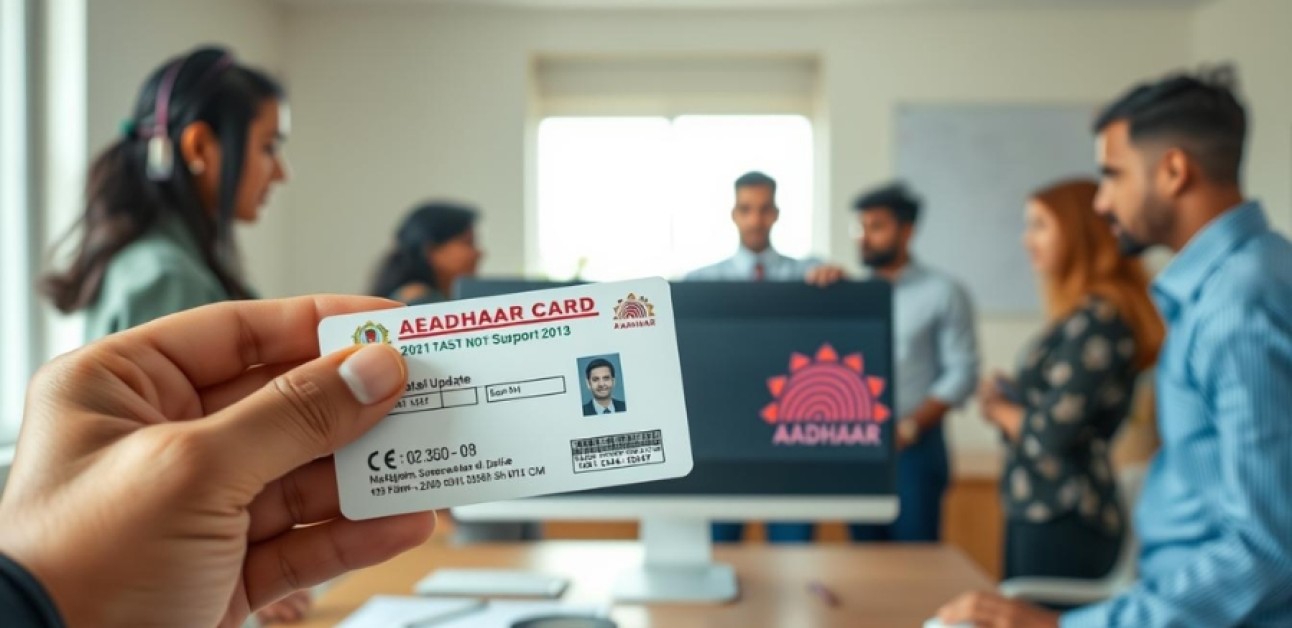
Having an Aadhaar card is crucial for seamless integration into various government schemes and services, thereby enhancing the overall efficiency of public service delivery.
Why Regular Updates Are Necessary
Regular updates to the Aadhaar card are necessary to ensure that the information in the Aadhaar database is accurate and up-to-date. Aadhaar card updates necessity arises from the need to reflect changes in an individual's demographic or biometric information, such as a change in address, name, or date of birth. Keeping the Aadhaar information current is vital for availing benefits and services without any discrepancies or issues.
Moreover, regular updates help in maintaining the integrity of the Aadhaar database, ensuring that the benefits reach the intended beneficiaries. It is also a measure to prevent identity fraud and misuse of Aadhaar information.
What Information Can Be Updated in Your Aadhaar Card
The Unique Identification Authority of India (UIDAI) allows various updates to be made to the Aadhaar card to ensure its accuracy. The Aadhaar card is a crucial identity proof, and updating it is essential to reflect changes in personal details.
Demographic Information Updates
Demographic information includes details such as name, date of birth, gender, and address. Updating these details is crucial when there's a change, such as a name change due to marriage or a change of address. To update demographic information, individuals can visit the UIDAI website and follow the online process, which involves filling out the required form and uploading supporting documents.
Documents required for demographic updates typically include:
- Proof of Identity
- Proof of Address
- Proof of Date of Birth
| Demographic Detail | Required Documents |
|---|---|
| Name | Passport, PAN Card, or other gazette-issued documents |
| Date of Birth | Birth Certificate, School Certificate |
| Address | Passport, Bank Statement, or Utility Bills |
Biometric Information Updates
Biometric information includes fingerprints and iris scans. Updating biometric data is necessary if there's a change or if the existing data is not capturing correctly. The UIDAI provides an online process for updating biometric information, which involves booking an appointment at an enrollment center.

Mobile Number and Email Updates
Updating your mobile number and email address associated with your Aadhaar card is crucial for receiving important notifications and updates. This can be done online through the UIDAI portal by logging into your account and following the update process.
It's essential to keep your contact information up-to-date to ensure you receive all relevant communications from UIDAI.
Aadhaar Card Update 2026: New Features and Changes
As we step into 2026, the UIDAI has rolled out new guidelines for Aadhaar card updates, making the process more efficient and secure. These changes are designed to enhance the overall user experience and provide a more streamlined approach to updating Aadhaar information.
Latest UIDAI Guidelines for 2026
The UIDAI has introduced new guidelines for Aadhaar card updates in 2026, focusing on simplifying the update process and enhancing security measures. Some key aspects of these guidelines include:
- Simplified Update Process: The UIDAI has streamlined the update process, making it easier for residents to update their Aadhaar information online.
- Enhanced Security: New security protocols have been implemented to protect resident data and prevent unauthorized access.
- Digital Innovations: The UIDAI is leveraging digital technologies to make the update process more efficient and user-friendly.
Enhanced Security Measures
The UIDAI has introduced enhanced security measures to protect resident data and prevent fraudulent activities. Some of these measures include:
- Two-Factor Authentication: Residents are required to undergo two-factor authentication to verify their identity before updating their Aadhaar information.
- Encryption: All data transmitted during the update process is encrypted to prevent unauthorized access.
- Regular Security Audits: The UIDAI conducts regular security audits to identify and address potential vulnerabilities.
According to the UIDAI, "The new security measures are designed to provide an additional layer of protection for resident data, ensuring that the Aadhaar ecosystem remains secure and trustworthy."
Digital Update Innovations
The UIDAI is leveraging digital innovations to make the Aadhaar update process more efficient and user-friendly. Some of these innovations include:
- Digital Identity Verification: The UIDAI is using digital identity verification methods to simplify the update process.
- Online Update Portal: The UIDAI has launched an online update portal that allows residents to update their Aadhaar information quickly and easily.
- Mobile App: The mAadhaar mobile app has been updated to provide a seamless update experience for residents.
By embracing digital innovations, the UIDAI aims to make the Aadhaar update process more accessible and convenient for residents.
Documents Required for Aadhaar Card Update
To update your Aadhaar card, you'll need to gather specific documents as per UIDAI guidelines. The type of documents required can vary depending on the information you wish to update.
Proof of Identity Documents
For updating your Aadhaar card, you will need to provide proof of identity. Acceptable documents include your passport, voter ID card, driving license, and Pan card. These documents must be valid and not expired.
Proof of Address Documents
To update your address in the Aadhaar card, you will need to submit proof of address documents. Valid documents include your passport, voter ID card, driving license, and utility bills that are not older than two months. Ensure that the documents clearly show your name and address.
Special Documents for Name or Date of Birth Changes
If you are updating your name or date of birth, you will need to provide additional documents. For a name change, you can submit documents like your marriage certificate or gazette notification. For a date of birth correction, you will need to provide your birth certificate or school leaving certificate. These documents are crucial for verifying the changes.
Aadhaar Card Update Fees Structure for 2026
The Aadhaar card update fees for 2026 are structured to accommodate various needs. Understanding these fees is crucial for a smooth update process.
Standard Update Fees
For most Aadhaar card updates, the standard fees apply. These fees are as follows:
| Update Type | Fee (in ₹) |
|---|---|
| Demographic Update | 50 |
| Biometric Update | 100 |
Additional Charges for Special Services
Some special services, like expedited processing, may incur additional charges. These are typically optional and can be availed based on the user's preference.
Fee Exemptions and Concessions
Certain categories, such as senior citizens and people with disabilities, may be eligible for fee exemptions or concessions. It's advisable to check the UIDAI website for the latest information on eligibility criteria.
By understanding the fee structure, Aadhaar cardholders can plan their updates more effectively.
Online Aadhaar Card Update Process: Step-by-Step Guide
Updating your Aadhaar card online is a straightforward process that can be completed in a few simple steps. The UIDAI has streamlined the process to make it user-friendly and efficient. To begin, you need to have a few essential things ready, such as your Aadhaar number, a valid mobile number, and the necessary documents for the update.
Creating Your UIDAI Online Account
To update your Aadhaar card online, you first need to create a UIDAI online account. This involves visiting the official UIDAI website and registering with your Aadhaar number and mobile number. You will receive an OTP on your registered mobile number to verify your identity.
Steps to create a UIDAI online account:
- Visit the UIDAI official website.
- Click on the 'Create Account' or 'Register' option.
- Enter your Aadhaar number and mobile number.
- Verify your mobile number with the OTP sent by UIDAI.
- Set a password for your account.
Logging into the UIDAI Portal
Once your account is created, you can log in to the UIDAI portal using your Aadhaar number and password. This step is crucial as it gives you access to the update section.
Ensure you keep your login credentials secure to prevent unauthorized access.
Navigating to the Update Section
After logging in, navigate to the 'Update' or 'Services' section on the UIDAI portal. Here, you will find options to update various details in your Aadhaar card, such as demographic information, biometric data, and contact details.
Selecting the Information to Update
Choose the specific information you wish to update. The UIDAI portal allows you to update different types of information, including name, address, date of birth, and mobile number. Select the relevant category and proceed to fill out the update form.
Filling the Update Form Correctly
Filling the update form accurately is crucial. Ensure that all details are correct and match the supporting documents you will upload. Common fields include name, address, and date of birth. Double-check your entries before proceeding.
Document Upload Guidelines and Format Requirements
The UIDAI requires specific documents to support the updates. These documents must be uploaded in the prescribed format (usually PDF or JPEG). Ensure that the documents are clear, legible, and comply with the UIDAI's guidelines.
Required documents may include:
- Proof of Identity
- Proof of Address
- Proof of Date of Birth
Follow the on-screen instructions to upload your documents successfully.
Verifying and Submitting Your Aadhaar Update Request
To ensure a smooth update process, it's essential to carefully verify the information you've entered and then submit your Aadhaar update request. This step is crucial in confirming that all details are accurate and up-to-date.
Review Process Before Submission
Before submitting your update request, it's vital to review all the information you've entered. This includes checking your demographic details, biometric information, and any other data you've updated. Ensuring accuracy at this stage helps prevent delays or rejections.
OTP Verification Process
As part of the verification process, you'll receive a One-Time Password (OTP) on your registered mobile number. This OTP is used to authenticate your identity and confirm that you're the one submitting the update request. Enter the OTP correctly to proceed.
Payment Process for Update Fees
If there are any fees associated with your Aadhaar update, you'll be prompted to make the payment online. The UIDAI portal accepts various payment methods, making it convenient to complete the transaction. Ensure you have a valid payment method ready.
Confirmation and Acknowledgment Receipt
Once you've completed the verification and payment (if applicable), you'll receive a confirmation and acknowledgment receipt. This receipt is your proof that the update request has been successfully submitted. It's advisable to save or print this receipt for your records.
| Step | Description |
|---|---|
| 1. Review | Carefully review the information entered |
| 2. OTP Verification | Enter the OTP sent to your registered mobile number |
| 3. Payment | Make the necessary payment for update fees (if applicable) |
| 4. Confirmation | Receive a confirmation and acknowledgment receipt |
By following these steps, you can ensure that your Aadhaar update request is processed smoothly and efficiently. Remember to keep track of your update status using the URN provided in the acknowledgment receipt.
Tracking Your Aadhaar Card Update Status
Once you've submitted your update request, you can track its status using the Update Request Number (URN). This feature allows you to stay informed about the progress of your Aadhaar card update.
Using the Update Request Number (URN)
The URN is a unique identifier assigned to your update request. To track your update status, visit the UIDAI website and navigate to the 'Track Update Request' section. Enter your URN and date of birth or Aadhaar number to access the current status of your update.
Steps to track your Aadhaar update status using URN:
- Visit the official UIDAI website.
- Navigate to the 'Track Update Request' section.
- Enter your URN, date of birth, and Aadhaar number.
- Click on 'Track' to view the status.
Status Notifications via SMS and Email
The UIDAI also provides status notifications via SMS and email. These notifications keep you updated on the progress of your Aadhaar card update. Ensure that your mobile number and email address are correctly updated in your Aadhaar profile to receive these notifications.
Understanding Different Status Messages
When you track your update status, you may encounter various status messages. Here's a breakdown of common status messages and their meanings:
| Status Message | Description |
|---|---|
| Received | Your update request has been successfully received. |
| In Progress | The update process is currently being processed. |
| Completed | The update has been successfully completed. |
| Rejected | Your update request has been rejected due to incorrect information or documents. |
Understanding these status messages can help you take necessary actions if your update is delayed or rejected.
Expected Timeline for Aadhaar Updates in 2026
Understanding the timeline for Aadhaar updates is crucial for applicants in 2026. The Unique Identification Authority of India (UIDAI) has guidelines in place to ensure that updates are processed efficiently.
Standard Processing Times
The standard processing time for Aadhaar updates can vary depending on the type of update requested. Generally, demographic updates such as name or address changes take around 7-10 working days to process. Biometric updates may take slightly longer, typically around 10-15 working days, due to the need for verification.
Factors Affecting Processing Speed
Several factors can influence the processing speed of Aadhaar updates. These include the accuracy of the information provided, the completeness of the required documents, and the workload at the UIDAI processing centers. Ensuring that all details are correct and complete can help expedite the process.
Expediting Update Options
For applicants who need their Aadhaar updates processed urgently, there are options to expedite the process. The UIDAI offers priority processing services for an additional fee. This can significantly reduce the waiting time, making it ideal for those who require quick updates.
By understanding the expected timeline and factors that can affect it, applicants can better plan their Aadhaar update requests. Staying informed and prepared can make the process smoother and more efficient.
Troubleshooting Common Aadhaar Update Issues
Despite the convenience of online Aadhaar card updates, users often report encountering several common problems. Understanding these issues and their solutions can significantly streamline the update process.
Document Rejection Problems and Solutions
One of the most frequent issues is the rejection of documents submitted for Aadhaar updates. This can occur due to unclear scans, insufficient details, or mismatch in information. To avoid this, ensure that all documents are clearly legible and contain all required information.
- Use high-quality scanners or cameras.
- Check that all information on the document is accurate and matches Aadhaar details.
- Ensure documents are not expired.
Technical Errors During Submission
Technical errors can occur during the submission process, often due to server overload or browser compatibility issues. To resolve this, try submitting during off-peak hours or using a different browser.
Payment Failure Resolutions
Payment failures can happen due to insufficient funds, expired cards, or technical glitches. Ensure your payment method is valid and has sufficient funds. If issues persist, consider using an alternative payment method.
Solutions for Delayed Processing
Delays in processing can be caused by high volumes of requests or incomplete information. To expedite the process, ensure all information is complete and accurate. You can also track your update status using the URN.
Handling Incorrect Updates
If you've made an incorrect update, it's crucial to act quickly. Contact the UIDAI helpline immediately to rectify the issue. Keeping a record of your submissions can also help in resolving such issues.
| Issue | Solution |
|---|---|
| Document Rejection | Ensure clear scans and accurate information |
| Technical Errors | Try different browsers or off-peak hours |
| Payment Failure | Check funds and card validity |
| Delayed Processing | Provide complete information and track status |
| Incorrect Updates | Contact UIDAI helpline promptly |
Alternative Methods for Updating Aadhaar Card
Updating your Aadhaar card isn't limited to the online portal; several offline and assisted methods are available. While the digital platform offers convenience, some individuals may prefer or require alternative methods due to various reasons such as lack of internet access or need for personal assistance.
Updating Through Aadhaar Enrollment Centers
One of the primary alternative methods is visiting an Aadhaar Enrollment Center. These centers are equipped to handle updates for both demographic and biometric information. To update your Aadhaar card through an enrollment center, you'll need to fill out the required form, provide the necessary documents, and have your details updated on the spot.
Using the mAadhaar Mobile App
The mAadhaar mobile app is another convenient method for updating your Aadhaar information. Available for download on both Android and iOS platforms, this app allows users to update their details digitally. The process involves logging into your mAadhaar account, navigating to the update section, and following the prompts to update the required information.
Assisted Update Services for Special Cases
For individuals who require special assistance, such as the elderly or those with disabilities, the UIDAI provides assisted update services. This service ensures that everyone has access to Aadhaar updates, regardless of their ability to use digital or physical update methods. Details on how to avail of this service can be found on the UIDAI's official website.
Security Tips for Safe Aadhaar Card Updates
As you update your Aadhaar card in 2026, it's crucial to prioritize the security of your personal information. The Unique Identification Authority of India (UIDAI) has implemented various security measures, but it's equally important for users to be vigilant and take necessary precautions to protect their data.
Protecting Your Aadhaar Information Online
To safeguard your Aadhaar information during online updates, ensure that you're using a secure internet connection. Avoid using public Wi-Fi networks, as they can be vulnerable to hacking. Additionally, always verify the authenticity of the UIDAI website or portal before entering your sensitive information. Be cautious of phishing attempts and never click on suspicious links or download attachments from unknown sources.
Recognizing Fraudulent Update Requests
It's essential to be aware of potential scams and fraudulent requests related to your Aadhaar card updates. Be wary of unsolicited emails or messages asking for your Aadhaar details or other personal information. Legitimate organizations like UIDAI will never ask for sensitive information via email or SMS. Always cross-check the authenticity of such requests by contacting the official UIDAI support.
What to Do If Your Aadhaar Data Is Compromised
If you suspect that your Aadhaar data has been compromised, take immediate action. First, change your passwords and security questions associated with your UIDAI account. Then, contact the UIDAI helpline to report the incident and seek guidance on further steps. You may also need to update your information and monitor your account for any suspicious activity.
Conclusion
Keeping your Aadhaar card information updated is crucial for a seamless experience with various government services and benefits. This comprehensive guide has walked you through the process of updating your Aadhaar card online, including the necessary documents, fees, and security measures.
In summary, the Aadhaar card update process involves verifying your identity, filling out the update form, uploading required documents, and paying the applicable fees. You can track the status of your update request using the URN.
As we conclude this guide, it's essential to reiterate the significance of maintaining up-to-date Aadhaar card information. This ensures that you can avail of various benefits and services without any issues. By following the steps outlined in this guide, you can easily update your Aadhaar card and stay compliant with the UIDAI regulations.
The Aadhaar card update summary highlights the importance of regular updates for a hassle-free experience. Stay informed, and make sure to update your Aadhaar card details as needed to avoid any inconvenience.
 Aadhaar Card Update 2026 | How to Update Online | NexNews FAQs
POST A COMMENT (0)
All Comments (0)
Replies (0)