





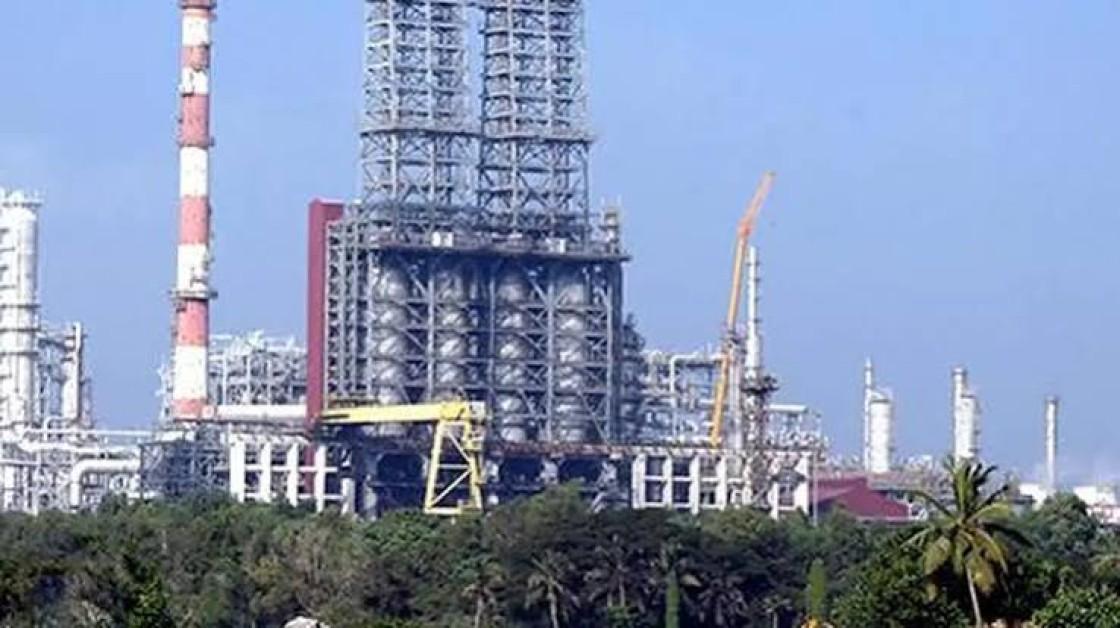
MRPL Reports Nearly Threefold Increase in September-Quarter Profit
Mangalore Refinery and Petrochemicals Limited (MRPL), a subsidiary of Oil and Natural Gas Corporation (ONGC), reported a nearly 195% year-on-year increase in standalone net profit to ₹1,880.89 crore for the second quarter of financial year 2026–27, supported by stronger refining profitability and higher revenue.
The public sector refiner recorded standalone revenue from operations of ₹35,590.40 crore for the quarter ended September 30, 2026, compared with ₹25,953.34 crore in the corresponding period of the previous financial year.
The increase represents revenue growth of approximately 37.1%.
Standalone profit rose from ₹638.67 crore in Q2 FY26, indicating a substantial improvement in earnings.
The company's board approved the quarterly financial results on October 14, 2026, and declared an interim dividend of ₹3 per equity share.
The results reflect improved operating profitability in a business where earnings are influenced by refining margins, crude oil prices, product realisations and inventory movements.
MRPL's performance also highlights the difference between revenue growth and profitability in the oil refining sector, where changes in processing economics can significantly influence earnings.
MRPL Q2 FY27 Financial Highlights
|
Financial metric |
Q2 FY27 |
Q2 FY26 |
YoY change |
|---|---|---|---|
|
Standalone revenue from operations |
₹35,590.40 crore |
₹25,953.34 crore |
+37.1% |
|
Standalone net profit |
₹1,880.89 crore |
₹638.67 crore |
Approximately +194.5% |
|
Standalone profit before tax |
₹2,519 crore |
₹975 crore |
Approximately +158% |
|
EBITDA |
₹3,210 crore |
₹1,565 crore |
Approximately +105% |
|
EBITDA margin |
Approximately 9.0% |
Approximately 6.0% |
Improved |
|
Interim dividend |
₹3 per share |
— |
Declared for FY27 |
The figures show that MRPL's operating earnings and net profit increased substantially faster than revenue.
The improvement indicates stronger profitability during the quarter, although refining earnings remain sensitive to commodity prices and market conditions.
Standalone Net Profit Rises to ₹1,880.89 Crore

MRPL's standalone net profit increased from ₹638.67 crore in the September 2025 quarter to ₹1,880.89 crore in the September 2026 quarter.
The company generated approximately ₹1,242 crore in additional quarterly profit compared with the previous year.
This represents growth of about 194.5%, commonly rounded to 195%.
The increase was considerably stronger than the company's revenue growth of 37.1%, indicating an improvement in profitability.
Oil refining companies can experience significant earnings fluctuations because their margins depend on the difference between the cost of crude oil and the value of refined petroleum products.
Changes in crude procurement costs, product prices, inventories and operating expenses can all affect profitability.
For MRPL, the latest results demonstrate a substantial improvement in earnings compared with the year-earlier period.
However, the sustainability of this performance will depend on refining economics in subsequent quarters.
Consolidated Profit Surges More Than 200%
MRPL also reported consolidated net profit of approximately ₹1,900.76 crore for Q2 FY27.
This compares with consolidated profit of ₹627.36 crore in Q2 FY26.
The increase represents year-on-year growth of approximately 203%.
Consolidated profit was also substantially higher than the ₹945.68 crore reported in the preceding June quarter.
|
Profit measure |
Q2 FY27 |
Q2 FY26 |
YoY growth |
|---|---|---|---|
|
Standalone net profit |
₹1,880.89 crore |
₹638.67 crore |
194.5% |
|
Consolidated net profit |
₹1,900.76 crore |
₹627.36 crore |
Approximately 203% |
The distinction between standalone and consolidated figures is important.
The headline increase of nearly 195% refers to standalone net profit, while the consolidated results show a larger percentage increase.
Investors should use consistent reporting bases when comparing quarterly financial performance.
Revenue From Operations Grows 37.1%
MRPL's standalone revenue from operations increased to ₹35,590.40 crore from ₹25,953.34 crore.
The increase of approximately ₹9,637 crore reflects a substantial expansion in reported sales value.
Refining revenue depends on the volume of petroleum products sold and the prices realised for those products.
The prices of refined fuels are closely connected to international crude oil and petroleum product markets.
Consequently, higher revenue does not necessarily indicate an equivalent increase in physical production or sales volumes.
A rise in petroleum product prices can increase reported revenue even when volumes remain relatively stable.
Similarly, falling product prices can reduce revenue without a corresponding decline in throughput.
For MRPL, the latest results show stronger sales value alongside a much larger improvement in profitability.
EBITDA More Than Doubles to ₹3,210 Crore
MRPL's earnings before interest, taxes, depreciation and amortisation increased to approximately ₹3,210 crore during the September quarter.
This compares with approximately ₹1,565 crore in the corresponding period of the previous financial year.
The increase represents growth of around 105%.
EBITDA is an important indicator of operating earnings, although it does not include depreciation, finance costs or taxes.
The company's EBITDA margin improved from approximately 6.0% to 9.0%, based on reported revenue from operations.
This indicates that MRPL generated higher operating earnings for each rupee of revenue.
The improvement was a major contributor to the stronger bottom-line performance.
However, refinery margins can fluctuate significantly between reporting periods.
The company will need to sustain operational efficiency and favourable product realisations to maintain stronger profitability.
Refining Margins Remain Central to MRPL's Earnings
Refining margins are among the most important determinants of profitability for oil refining companies.
A refinery purchases crude oil and processes it into products such as petrol, diesel, aviation turbine fuel and other petroleum products.
The economic value created through this process depends on the relationship between crude oil costs and the market value of the resulting products.
Gross refining margin is commonly used to evaluate the difference between the value of refined products and the cost of crude oil, subject to the relevant calculation methodology.
When product prices remain strong relative to crude costs, refining margins can improve.
Conversely, margins may narrow when crude oil becomes more expensive or petroleum product prices weaken.
Inventory valuation and the timing of purchases and sales can also influence reported profitability.
MRPL's September-quarter earnings improvement is consistent with stronger operating profitability, although the available headline financial figures do not establish the precise contribution of each factor.
Crude Oil Prices Influence Refinery Profitability
International crude oil prices are an important factor affecting MRPL's operating performance.
Crude oil represents the principal raw material used in petroleum refining.
Changes in crude prices can influence procurement costs, inventory values and working capital requirements.
However, the relationship between crude oil prices and refinery profits is not straightforward.
Lower crude prices do not automatically produce higher profits, and higher crude prices do not necessarily result in lower earnings.
The outcome depends on product prices, processing margins, inventory movements and operating conditions.
Geopolitical developments, production decisions by major oil suppliers and changes in global demand can affect these variables.
For MRPL, managing crude procurement and refining operations efficiently will remain important as international energy markets evolve.
First-Half Net Profit Rises Sharply to ₹2,796 Crore
MRPL's strong September-quarter performance also contributed to a substantial improvement in first-half financial results.
For the six months ended September 30, 2026, the company reported standalone net profit of approximately ₹2,796 crore.
This compares with approximately ₹367 crore in the corresponding period of FY26.
The increase indicates that earnings improvement extended beyond a single quarter.
Standalone revenue from operations for the first half rose to approximately ₹77,199 crore from ₹46,942 crore.
Profit before tax increased to approximately ₹3,734 crore from ₹572 crore.
The results demonstrate a significant recovery in profitability during the first six months of FY27.
However, first-half performance should not be extrapolated directly to the full financial year because refining margins and market conditions can change.
MRPL Declares ₹3 Interim Dividend
MRPL's board declared a first interim dividend of ₹3 per equity share for FY27.
The dividend represents 30% of the share's face value of ₹10.
The company fixed October 21, 2026, as the record date for determining shareholders eligible to receive the dividend.
Payment is scheduled to be completed by November 4, 2026.
MRPL interim dividend details
₹3
₹10
October 21, 2026
November 4, 2026
An interim dividend is a distribution approved during a financial year rather than after the completion of annual financial reporting.
Dividend eligibility depends on shareholding records and applicable market settlement rules.
The dividend declaration provides a direct shareholder distribution following the company's stronger financial performance.
However, future dividends remain subject to profitability, capital requirements and board decisions.
MRPL Secures International Credit Rating From Fitch
During the quarter, MRPL received its first international credit rating from Fitch Ratings.
The agency assigned the company a long-term issuer rating of BBB- with a stable outlook.
The rating is aligned with India's sovereign credit rating.
An international credit rating provides an assessment of an issuer's creditworthiness under the rating agency's methodology.
Such ratings can be relevant when companies seek access to international financing markets.
However, a credit rating does not eliminate financial risk or guarantee access to funding on particular terms.
Borrowing costs can also be influenced by global interest rates, market liquidity and investor demand.
For MRPL, the rating represents a development in its financial profile as it manages refining operations and future investment requirements.
Company Expands Petroleum Product Storage and Distribution Network
MRPL continued strengthening its product marketing and distribution infrastructure during the quarter.
The company finalised arrangements to hire storage tanks for aviation turbine fuel in Goa.
It also secured storage arrangements for motor spirit and high-speed diesel in Kochi.
These facilities can support the movement and availability of petroleum products in different regional markets.
Storage infrastructure is important for refiners because production and customer demand do not always occur at the same location or time.
Adequate storage and distribution arrangements can improve supply-chain flexibility.
However, additional logistics capacity also involves commercial commitments and operating costs.
The financial benefits depend on utilisation, distribution efficiency and product demand.
Product Loading Begins at New Distribution Locations
MRPL reported the commencement of product loading at several distribution locations.
These included the Aegis Terminal in Mangaluru, the Hindupur depot in Andhra Pradesh and the Ennore terminal in Tamil Nadu.
Expanding loading and distribution capabilities can improve access to regional petroleum product markets.
A broader logistics network may help the company serve customers more efficiently and reduce dependence on individual distribution routes.
However, the commercial contribution of these facilities depends on volumes handled and operating arrangements.
The expansion is relevant to MRPL's strategy of strengthening its presence beyond the refinery gate.
The company will need to manage logistics costs and customer demand to realise the benefits of these arrangements.
Sustainable Aviation Fuel Infrastructure Gains Attention
MRPL's marketing terminal at Devangonthi in Bengaluru received ISCC CORSIA certification for activities involving the receipt, storage and blending of sustainable aviation fuel with aviation turbine fuel.
Sustainable aviation fuel is being developed as one pathway for reducing lifecycle greenhouse gas emissions associated with aviation.
CORSIA is an international aviation emissions framework established through the International Civil Aviation Organization.
Certification systems are used to support traceability and compliance with relevant sustainability requirements.
The certification represents a development in MRPL's ability to handle qualifying aviation fuel supply-chain activities.
However, certification of infrastructure should not be interpreted as confirmation of commercial production volumes or future revenue.
The business opportunity will depend on fuel availability, customer demand, regulatory requirements and commercial arrangements.
MRPL Forms Petrochemical Marketing Joint Venture With ONGC
On October 7, 2026, MRPL incorporated ONGC Petrochemicals Marketing Limited in partnership with ONGC and ONGC Petro additions Limited.
The new company is intended to market petrochemicals, chemicals and related products.
The ownership structure is as follows:
|
Shareholder |
Equity stake |
|---|---|
|
Oil and Natural Gas Corporation |
50% |
|
Mangalore Refinery and Petrochemicals |
25% |
|
ONGC Petro additions Limited |
25% |
The joint venture represents an effort to strengthen marketing capabilities across the group's petrochemical businesses.
Petrochemicals are used in industries including packaging, automotive components, construction materials and consumer products.
A dedicated marketing platform may support coordination across products and customers.
However, the financial contribution of the new entity will depend on its commercial activities, operating costs and future business volumes.
Petrochemical Diversification Offers Additional Opportunities
Refining and petrochemicals are closely connected because petroleum processing produces feedstocks used in chemical manufacturing.
Petrochemical products serve a broad range of industrial and consumer applications.
Diversification into petrochemicals can provide refiners with additional revenue opportunities beyond transportation fuels.
However, petrochemical profitability depends on its own supply-and-demand conditions.
Product prices, feedstock costs, manufacturing capacity and global competition can influence margins.
The formation of ONGC Petrochemicals Marketing Limited may support commercial coordination, but it does not guarantee higher profitability.
For MRPL, the development is relevant to its longer-term participation in the broader hydrocarbon value chain.
MRPL Operates a Major Refinery in Karnataka
Mangalore Refinery and Petrochemicals operates a large petroleum refining complex at Mangaluru in Karnataka.
The refinery has a nameplate processing capacity of approximately 15 million metric tonnes per annum.
Its product portfolio includes transportation fuels and other refined petroleum products.
The facility serves domestic demand and participates in petroleum product markets through established supply and distribution arrangements.
Refining operations require continuous management of equipment reliability, safety, energy consumption and environmental compliance.
Maintenance schedules and unexpected operating disruptions can influence production and profitability.
For MRPL, maintaining refinery availability and processing efficiency is important for sustaining financial performance.
ONGC Ownership Provides Strategic Industry Linkage
MRPL is a subsidiary of Oil and Natural Gas Corporation, one of India's largest integrated energy companies.
ONGC's principal activities include crude oil and natural gas exploration and production.
MRPL operates in the downstream refining segment of the energy value chain.
The relationship connects upstream hydrocarbon production with downstream petroleum processing within the broader corporate group.
However, MRPL's profitability remains influenced by its own refinery operations, procurement arrangements and petroleum product markets.
Group ownership does not eliminate commodity price exposure or operating risks.
Investors should therefore assess MRPL's financial results independently while recognising its position within the ONGC group.
Indian Refining Sector Remains Exposed to Global Energy Markets
India is a major consumer and importer of crude oil.
Domestic refiners process crude into fuels and other petroleum products used across transportation, industry and commercial activities.
Refining profitability is influenced by international crude oil supply, petroleum product demand and global processing capacity.
Geopolitical developments can affect crude availability, shipping costs and trade flows.
Currency movements can also influence costs because international crude oil transactions are generally denominated in US dollars.
Domestic fuel demand provides a substantial market for Indian refiners, but strong demand alone does not guarantee high refining margins.
MRPL's improved September-quarter results demonstrate the potential for earnings recovery when operating economics become more favourable.
However, the sector remains cyclical.
Inventory Movements Can Affect Quarterly Earnings
Refineries typically hold inventories of crude oil, intermediate materials and finished petroleum products.
Changes in commodity prices can affect the value of these inventories.
Depending on accounting treatment and the timing of purchases and sales, inventory movements may influence reported earnings.
For example, a refinery may purchase crude at one price and sell the resulting products after market conditions have changed.
The financial impact depends on the relative movement in input and output prices.
These factors can create volatility in quarterly results.
Consequently, investors often examine refining margins and operating performance over several quarters rather than relying on a single reporting period.
For MRPL, the strong September-quarter profit should be evaluated alongside future commodity market developments.
Operating Costs and Refinery Efficiency Remain Important
Petroleum refining is a capital-intensive and energy-intensive industry.
Operating expenses include crude procurement, energy consumption, maintenance, employee costs and logistics.
Refinery efficiency can influence the amount and value of products generated from crude oil.
The composition of crude processed and the configuration of refining equipment also affect economics.
Companies seek to improve profitability through operational optimisation, maintenance planning and product mix management.
However, even efficient refineries remain exposed to market conditions.
For MRPL, maintaining operational reliability will be important in converting favourable refining margins into sustainable earnings.
The company's quarterly results demonstrate stronger profitability, but continued performance will depend on both internal efficiency and external market conditions.
Financial Performance Improves Sequentially
MRPL's standalone net profit increased from approximately ₹945.68 crore in Q1 FY27 to ₹1,880.89 crore in Q2 FY27.
The increase represents a substantial sequential improvement.
Consolidated profit also rose from approximately ₹945.68 crore in the June quarter to ₹1,900.76 crore in the September quarter.
The sequential improvement occurred despite a decline in quarterly revenue compared with the preceding period.
This reinforces the importance of margins and operating economics in the refining industry.
A refinery can generate higher profit on lower revenue when the relationship between input costs and product realisations improves.
However, the reverse can also occur when margins deteriorate.
The company's future results will therefore depend on the profitability of processing operations rather than revenue growth alone.
What Investors Should Monitor Next
The principal factor for MRPL will be the direction of refining margins.
Changes in international crude prices and petroleum product realisations will influence profitability.
Investors will also monitor refinery throughput, operational reliability and inventory-related effects.
The company's expansion of product storage and distribution arrangements may influence future marketing performance.
Developments involving sustainable aviation fuel infrastructure and the petrochemical marketing joint venture will also attract attention.
However, these initiatives may take time to generate measurable financial contributions.
Other important considerations include working capital, financing costs and capital expenditure.
The ₹3 interim dividend provides an immediate shareholder distribution, but future payouts will depend on financial performance and capital requirements.
Conclusion
Mangalore Refinery and Petrochemicals delivered a substantial earnings improvement during the second quarter of FY27.
Standalone net profit increased nearly 195% year-on-year to ₹1,880.89 crore, while revenue from operations rose 37.1% to ₹35,590.40 crore.
Operating EBITDA more than doubled to approximately ₹3,210 crore, reflecting stronger profitability.
Consolidated net profit increased approximately 203% to ₹1,900.76 crore.
The company's board also declared an interim dividend of ₹3 per share, with October 21, 2026, fixed as the record date.
Alongside its financial results, MRPL reported developments in credit ratings, petroleum product distribution, sustainable aviation fuel infrastructure and petrochemical marketing.
The results demonstrate a strong recovery in refining earnings, although future profitability will remain sensitive to crude oil prices, product margins and operating conditions.
For MRPL, sustaining operational efficiency and managing market volatility will be central to maintaining financial performance during the remainder of FY27.
 Mangalore Refinery Q2 FY27 Profit Jumps 195% to ₹1,881 Crore, Declares ₹3 Dividend FAQs
POST A COMMENT (0)
All Comments (0)
Replies (0)