




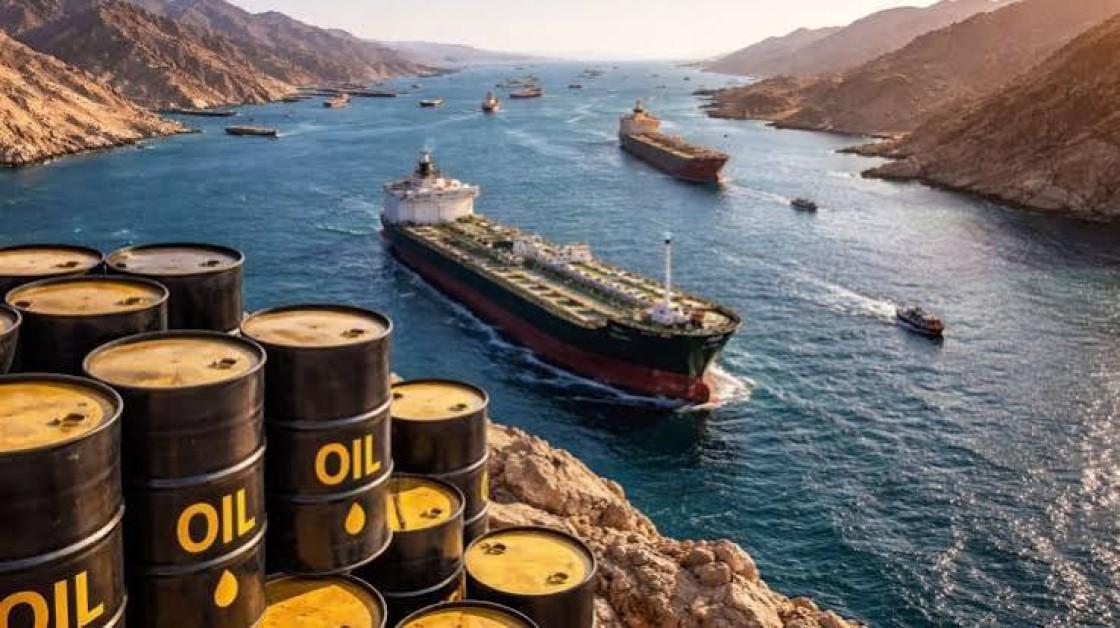
Oil Prices Rebound as Traders Assess Iran Conflict and US Political Changes
International crude oil prices rose on Wednesday, November 4, 2026, as investors assessed the future of the US-Iran conflict following the Democratic Party's victory in both chambers of the US Congress.
Brent crude futures, the international benchmark, advanced 0.7% to $104.36 per barrel at approximately 7:30 GMT.
US West Texas Intermediate crude futures gained 0.7% to $96.72 per barrel, reversing earlier declines.
The recovery followed a volatile trading session in which oil prices initially weakened as investors considered the possibility of diplomatic progress in the Middle East.
However, uncertainty over Washington's next military and diplomatic steps supported a rebound.
The market was also influenced by an unexpectedly large decline in US crude oil inventories, which suggested tighter near-term supply conditions than analysts had anticipated.
The latest price movements demonstrate how geopolitical uncertainty continues to influence energy markets despite efforts to negotiate an end to the conflict.
Investors are now monitoring whether the change in congressional control will affect President Donald Trump's approach to Iran, including military operations, diplomatic negotiations and sanctions.
Crude Oil Market Performance on November 4, 2026

|
Market Indicator |
Reported Value |
|---|---|
|
Brent crude futures |
$104.36 per barrel |
|
Brent daily increase |
$0.76 |
|
Brent percentage gain |
+0.7% |
|
WTI crude futures |
$96.72 per barrel |
|
WTI daily increase |
$0.63 |
|
WTI percentage gain |
+0.7% |
|
US crude inventory change |
−5.27 million barrels |
|
Expected US inventory change |
+0.88 million barrels |
|
US gasoline inventory change |
+1.43 million barrels |
|
US distillate inventory change |
−1.19 million barrels |
|
US inventory reporting period |
Week ended October 30, 2026 |
Prices reflect the reported 7:30 GMT market observation, not final settlement prices. Inventory figures are preliminary industry estimates.
The combination of geopolitical uncertainty and declining inventories helped crude futures recover after earlier losses.
Oil Prices Reverse Earlier Declines
Crude oil initially traded lower during Wednesday's Asian session.
Brent futures fell to approximately $103.34 per barrel, while WTI declined to around $95.56.
The weakness reflected expectations that diplomatic negotiations might reduce the risk of further military escalation.
On Tuesday, Brent had fallen more than 1% to its lowest settlement level in nearly four weeks.
However, prices subsequently recovered as investors reconsidered the likelihood of a near-term agreement between Washington and Tehran.
The reversal illustrates the uncertainty surrounding the conflict.
Signals suggesting diplomatic progress can reduce the geopolitical risk premium embedded in crude prices.
Conversely, reports of military activity or stalled negotiations can increase concerns about supply disruptions.
As a result, oil prices remain sensitive to developments that may not immediately change physical production.
Democratic Victory Changes Expectations for US Foreign Policy
The Democratic Party's victory in the November 3 midterm elections has introduced a new political dimension to the Iran conflict.
Democrats secured control of both the House of Representatives and the Senate, changing the balance of power in Washington.
Investors are assessing whether the result could place additional constraints on the administration's foreign policy.
Congress has authority over federal appropriations and oversight of government activities.
However, the president retains substantial powers in foreign affairs and military decision-making.
The newly elected Congress will not take office until January 3, 2027.
Consequently, the election result does not immediately change the legal authority or composition of the current Congress.
Any subsequent changes in policy will depend on legislation, executive decisions and negotiations.
For oil traders, the more immediate concern remains whether Washington pursues further military action or advances diplomatic negotiations.
Iran Conflict Remains the Principal Geopolitical Risk
The continuing US-Israeli conflict with Iran remains a major source of uncertainty for global energy markets.
Military operations have increased concerns about the security of energy infrastructure and shipping routes.
Oil prices can rise when traders anticipate potential disruptions, even before physical supply is interrupted.
The Middle East contains major oil-producing countries and strategically important transportation routes.
Any escalation that affects production facilities, export terminals or shipping could influence international crude availability.
However, the scale of any market impact depends on the location and duration of disruptions.
A limited military operation may have a different effect from a sustained campaign affecting regional energy infrastructure.
Investors are therefore assessing both the probability and potential severity of further escalation.
US Strikes on Iran's Qeshm Island Raise Concerns
The United States carried out military strikes on Iran's Qeshm Island, targeting surface-to-air missile systems.
US officials described the operation as limited and defensive.
The strikes were not presented as the beginning of a major new combat campaign.
Nevertheless, the incident added to concerns about the stability of the conflict.
Qeshm Island is located near the Strait of Hormuz, one of the world's most important maritime energy routes.
Military activity in the surrounding region can increase concerns about commercial shipping and regional security.
However, the reported strikes do not by themselves establish that oil shipments through the strait were interrupted.
Energy traders will continue monitoring whether military operations expand or remain limited.
Strait of Hormuz Remains Critical to Global Oil Supply
The Strait of Hormuz connects the Persian Gulf with the Gulf of Oman and the wider international shipping network.
It is a critical transportation route for crude oil and petroleum products exported from Gulf producers.
A significant disruption to shipping through the strait could affect energy markets worldwide.
The potential consequences include higher freight costs, increased insurance premiums and delays in oil deliveries.
Import-dependent economies could face higher energy costs.
However, the effect would depend on the duration and severity of any disruption.
Some oil producers have alternative export infrastructure, although these routes may not fully replace shipments through Hormuz.
The risk surrounding the strait remains an important reason why geopolitical developments continue supporting crude prices.
Trump Sends Mixed Signals on Military Escalation
President Donald Trump's statements have added uncertainty to market expectations.
The administration has continued military operations while indicating that it does not intend to pursue immediate escalation.
Trump said on November 3 that the United States had no immediate plans to launch additional strikes against Iran.
However, recent military activity has made it difficult for traders to determine whether tensions are likely to ease.
Financial markets generally respond more strongly to unexpected changes in policy than to established positions.
Conflicting signals can therefore increase volatility.
Oil traders are attempting to distinguish between tactical military actions and decisions that could lead to a broader conflict.
Until the administration's next steps become clearer, geopolitical uncertainty is likely to remain an important influence on prices.
Qatar Intensifies Diplomatic Mediation
Qatar has increased diplomatic efforts aimed at narrowing differences between the United States and Iran.
The mediation is intended to reduce the risk of further military escalation and support negotiations.
However, significant disagreements remain.
A senior Iranian official indicated on November 3 that Washington and Tehran were still far from reaching an agreement to end the conflict.
This suggests that a near-term settlement remains uncertain.
For oil markets, credible progress towards peace could reduce fears of supply disruption.
Conversely, stalled negotiations could maintain the geopolitical premium embedded in prices.
Diplomatic announcements may therefore generate substantial short-term market movements.
However, lasting price stability would depend on measurable improvements in regional security.
US Crude Inventories Fall Unexpectedly by 5.27 Million Barrels
Oil prices also received support from preliminary US inventory data.
Figures attributed to the American Petroleum Institute indicated that crude inventories declined by approximately 5.27 million barrels during the week ended October 30.
Analysts had expected an increase of approximately 880,000 barrels.
The difference between the expected increase and the reported decline was substantial.
An unexpected inventory draw can indicate stronger demand, lower supply or changes in refinery operations and imports.
However, a single weekly inventory figure does not establish a sustained tightening trend.
The underlying causes must be examined alongside production, imports, exports and refinery activity.
The US Energy Information Administration's official inventory report was scheduled for release later on November 4.
US Petroleum Inventory Data
Week ended October 30, 2026; million barrels

The figures provided fundamental support for crude prices at a time when geopolitical developments were creating uncertainty.
Gasoline and Distillate Inventories Show Mixed Conditions
The industry report also indicated differing trends across refined petroleum products.
Gasoline inventories increased by approximately 1.43 million barrels.
Distillate inventories declined by around 1.19 million barrels.
Distillates include diesel and heating oil.
A decline in distillate stocks can signal tighter supply conditions in markets important to transportation, manufacturing and heating.
Higher gasoline inventories may indicate comparatively weaker demand or increased supply.
However, weekly changes can be influenced by seasonal patterns and refinery operations.
The mixed figures suggest that petroleum market conditions are not uniform across products.
Investors will assess whether the official data confirm the preliminary estimates.
Oil Prices Remain Elevated Despite Recent Correction
Brent crude remains above $100 per barrel despite its decline from earlier highs.
Prices have been influenced by the conflict in the Middle East and concerns about supply availability.
However, the market has also experienced periods of selling as traders reassess geopolitical risks.
Some investors have reduced speculative long positions following the sharp rally in October.
Profit-taking can contribute to price declines even when underlying supply concerns remain.
This creates a market environment in which prices can move sharply in both directions.
Diplomatic progress may encourage selling.
Military escalation or unexpected supply disruptions may trigger renewed buying.
The balance between these forces will influence the near-term outlook.
Russia-Ukraine Peace Talks Add Another Variable
Energy markets are also monitoring diplomatic developments involving Russia and Ukraine.
Talks involving Russia, Ukraine and the United States were expected to take place in Abu Dhabi on November 10–11.
Any progress towards reducing hostilities could influence expectations for Russian energy exports and sanctions.
However, the effect would depend on the terms of any agreement and subsequent policy decisions.
Russia remains an important participant in global energy markets.
Changes in restrictions on Russian oil exports could influence international supply conditions.
At the same time, damage to energy infrastructure and logistical constraints may continue affecting production and transportation.
The interaction between the Iran conflict and the Russia-Ukraine war adds complexity to the global oil outlook.
Global Oil Supply Remains Exposed to Geopolitical Developments
Oil markets are influenced by production decisions, consumption and inventories.
However, geopolitical events can create sudden changes in expected supply.
The Middle East conflict has increased the importance of assessing shipping security and infrastructure risks.
Meanwhile, developments involving Russia and Ukraine may affect sanctions and export expectations.
Oil-producing countries must also consider the balance between market stability and production revenue.
The ability of other producers to compensate for disruptions depends on available capacity and logistical conditions.
Consequently, investors will monitor whether supply risks remain hypothetical or begin affecting actual export volumes.
OPEC and Other Producers Remain Important
Production policies among major oil-exporting countries continue to influence market conditions.
Changes in output can affect the balance between global supply and demand.
However, the ability to respond to geopolitical disruptions varies by producer.
Additional production may not immediately resolve transportation problems if shipping routes are affected.
Similarly, production increases may require time to reach international markets.
The current environment therefore highlights the difference between available oil production capacity and the ability to deliver crude to buyers.
Traders will monitor output decisions, export flows and inventory changes.
These factors will help determine whether elevated prices are supported by a sustained supply shortage.
Higher Oil Prices Create Inflation Risks
Crude oil prices influence the cost of transportation, manufacturing and household energy consumption.
A sustained increase can raise expenses for businesses that depend heavily on petroleum products.
Airlines, logistics companies and chemical manufacturers are particularly sensitive to energy costs.
Higher fuel prices can also affect household purchasing power.
When consumers spend more on transportation and energy, they may have less money available for other purchases.
However, the transmission from crude prices to consumer inflation depends on taxes, subsidies, refining margins and domestic pricing policies.
The impact therefore varies across countries.
Central banks will monitor whether energy prices contribute to persistent inflationary pressure.
Implications for the United States
Higher oil prices have become an important economic issue in the United States.
Fuel costs affect household budgets and business operating expenses.
Energy prices can also influence inflation expectations.
The Iran conflict has therefore had implications beyond foreign policy.
Political leaders face pressure to address affordability while managing national security concerns.
However, policy decisions involve competing objectives.
Measures intended to reduce military escalation may affect diplomatic negotiations.
Additional military operations could increase geopolitical risks.
The financial consequences will depend on whether the conflict intensifies or moves towards a negotiated settlement.
Impact on India's Economy
India is particularly sensitive to international crude oil prices because it imports most of its petroleum requirements.
Higher prices can increase the country's import bill.
They may also influence inflation, the rupee and corporate profitability.
Energy-intensive businesses can face additional operating expenses.
However, the impact on domestic fuel prices depends on government policies and pricing decisions by oil marketing companies.
For Indian financial markets, sustained crude prices above $100 per barrel could become an important macroeconomic concern.
The effects would depend on how long prices remain elevated and whether supply disruptions affect physical imports.
Sector-Wise Impact of Rising Crude Prices in India
|
Sector |
Potential Impact |
|---|---|
|
Airlines |
Higher aviation fuel expenses |
|
Logistics |
Increased transportation costs |
|
Chemicals |
Higher feedstock costs |
|
Paints |
Pressure from petroleum-linked raw materials |
|
Oil marketing companies |
Changes in refining and marketing economics |
|
Upstream oil producers |
Potential benefit from higher realised crude prices |
|
Automobiles |
Possible effects on consumer fuel expenses |
|
Consumer goods |
Higher distribution and packaging costs |
|
Manufacturing |
Increased energy and input expenses |
|
Banking |
Indirect exposure through inflation and economic activity |
The effects vary according to business models, pricing power and government policies.
Oil Prices and the Indian Rupee
Higher crude oil prices can increase demand for foreign currency because international petroleum transactions are commonly denominated in US dollars.
Greater dollar demand may place pressure on the rupee.
However, exchange rates depend on multiple factors.
These include foreign investment flows, interest-rate expectations and Reserve Bank of India operations.
A weaker rupee can increase the domestic cost of imported crude.
This may amplify the impact of higher international prices.
Conversely, a stronger rupee can offset part of the increase.
The interaction between oil prices and currency movements is therefore important for assessing India's external economic position.
Implications for Global Financial Markets
Higher crude prices can influence equity markets, bond yields and currencies.
Energy producers may benefit from higher realised prices.
Oil-consuming businesses may experience pressure on profit margins.
Inflation concerns can also influence expectations for central bank policy.
If higher energy costs contribute to persistent inflation, central banks may have less flexibility to reduce interest rates.
However, a geopolitical oil shock can also weaken economic growth.
This creates a difficult environment for policymakers.
Investors will therefore assess whether the current price increase represents a temporary risk premium or a sustained change in supply conditions.
Key Factors Supporting and Limiting Oil Prices
|
Supporting Factors |
Potential Downward Pressures |
|---|---|
|
Iran conflict uncertainty |
Diplomatic progress |
|
Strait of Hormuz shipping risks |
Reduced geopolitical tensions |
|
Recent US military strikes |
Expectations of limited escalation |
|
Unexpected US inventory draw |
Higher future production |
|
Tight distillate inventories |
Weaker global demand |
|
Potential infrastructure disruptions |
Profit-taking after October rally |
|
Uncertainty over US policy |
Reduced speculative positions |
|
Risk of regional retaliation |
Improvement in export flows |
The interaction between these factors explains why crude prices have experienced sharp intraday movements.
Key Indicators Oil Traders Will Monitor
|
Indicator |
Why It Matters |
|---|---|
|
Brent crude futures |
Global benchmark for crude pricing |
|
WTI crude futures |
Key US oil benchmark |
|
US-Iran diplomatic negotiations |
Influence geopolitical risk |
|
Strait of Hormuz shipping activity |
Indicates transportation security |
|
US military developments |
Affect escalation expectations |
|
Qatar mediation efforts |
May influence prospects for negotiations |
|
US crude inventories |
Measure near-term supply conditions |
|
US distillate inventories |
Reflect diesel and heating oil availability |
|
EIA petroleum reports |
Provide official US market data |
|
OPEC production |
Influences global supply |
|
Russian energy exports |
Affect international oil availability |
|
US dollar movements |
Influence commodity pricing |
|
Global economic growth |
Determines demand expectations |
|
Freight and insurance costs |
Reflect shipping disruption risks |
These indicators will help determine whether crude prices remain elevated or retreat as geopolitical conditions evolve.
Outlook for Crude Oil Prices
The near-term oil market outlook remains uncertain.
The Democratic victory in the US congressional elections has changed expectations for American foreign policy.
However, the immediate direction of the Iran conflict remains dependent on executive decisions and diplomatic negotiations.
The latest military developments have reinforced concerns about regional security.
At the same time, Qatar's mediation efforts provide a potential route towards reducing tensions.
The unexpected decline in US crude inventories has added fundamental support to prices.
However, the market will need confirmation from official data and subsequent inventory trends.
Brent's position above $100 per barrel reflects the importance of geopolitical risks.
A credible diplomatic breakthrough could reduce the risk premium.
Conversely, further military escalation or disruption to shipping through the Strait of Hormuz could increase prices.
For energy-importing economies, sustained volatility remains an important economic challenge.
Conclusion
Crude oil prices rose on November 4, 2026, as investors assessed uncertainty surrounding the Iran conflict following major political changes in the United States.
Brent futures advanced 0.7% to $104.36 per barrel, while WTI gained 0.7% to $96.72.
The recovery followed earlier declines as traders reconsidered the prospects for a diplomatic agreement between Washington and Tehran.
The Democratic Party's victory in both chambers of Congress introduced additional uncertainty about the future direction of US foreign policy.
However, the new Congress will not assume office until January 2027, and the president retains substantial authority over immediate military decisions.
Recent US strikes on Iran's Qeshm Island have reinforced concerns about regional security.
At the same time, Qatar is continuing mediation efforts aimed at reducing tensions.
An unexpected 5.27-million-barrel decline in US crude inventories provided additional support to oil prices.
The market remains highly sensitive to geopolitical developments, supply data and changes in investor positioning.
For businesses and energy-importing countries, the central concern is whether elevated crude prices become a sustained feature of the global economic environment.
 Crude Oil Prices Rise Amid Iran War and US Election Uncertainty FAQs

POST A COMMENT (0)
All Comments (0)
Replies (0)