




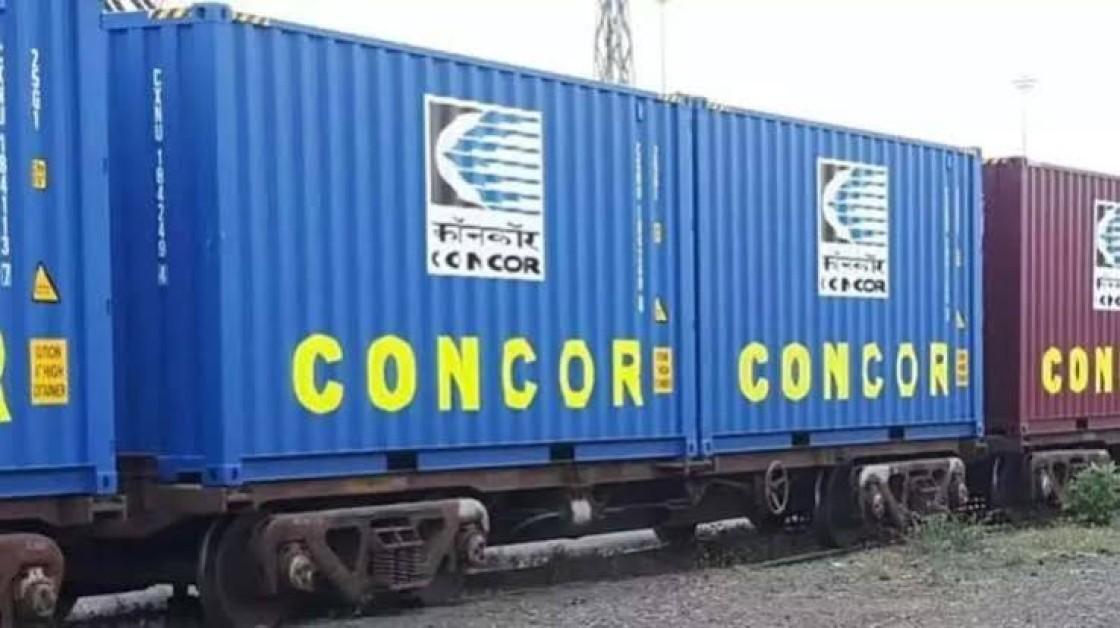
CONCOR Board to Review September-Quarter Earnings and Dividend Proposal
Container Corporation of India Limited (CONCOR), a public sector logistics company under the Ministry of Railways, has scheduled a meeting of its Board of Directors for November 2, 2026, to consider and approve unaudited financial results for the quarter and half-year ended September 30, 2026.
The board may also consider declaring a second interim dividend for the financial year 2026–27, alongside other corporate matters.
The company informed the stock exchanges about the meeting on October 23, 2026.
The earnings review comes as investors assess container freight demand, rail transportation volumes, terminal operations and profitability across India's logistics industry.
CONCOR operates an extensive network of inland container depots, terminals and multimodal logistics facilities that support domestic and international cargo movement.
Its performance is influenced by export-import trade, domestic container transportation, railway freight charges and the efficiency of its logistics network.
The company's recent announcement of a ₹485.93 crore order for 24 container wagon rakes has also brought attention to its infrastructure investment strategy.
Investors will examine whether freight activity supported revenue growth during the September quarter and whether the board approves another shareholder payout.
CONCOR has scheduled a post-results conference call for November 3, 2026, at 11:30 a.m. IST.
Key Details of CONCOR's Q2 FY27 Board Meeting

|
Particulars |
Details |
|---|---|
|
Company |
Container Corporation of India Limited |
|
Common name |
CONCOR |
|
Industry |
Rail freight and multimodal logistics |
|
Administrative ministry |
Ministry of Railways |
|
NSE symbol |
CONCOR |
|
Board meeting date |
November 2, 2026 |
|
Reporting period |
July–September 2026 |
|
Financial year |
FY2026–27 |
|
Results under consideration |
Unaudited quarterly and half-yearly financial results |
|
Additional agenda |
Possible second interim dividend and other business |
|
Board meeting intimation |
October 23, 2026 |
|
Trading window closure began |
October 1, 2026 |
|
Investor conference call |
November 3, 2026, at 11:30 a.m. IST |
|
Recent wagon procurement order |
₹485.93 crore |
The dividend proposal remains subject to the board's decision. A payout amount and record date should not be treated as confirmed until formally announced.
Board Meeting Confirmed Through Stock Exchange Filing
CONCOR submitted its board meeting intimation to the stock exchanges on October 23.
The filing confirmed that the board would meet on Monday, November 2, to consider the company's unaudited financial results for the quarter and period ended September 30, 2026.
The board may also consider declaring a second interim dividend for FY27.
The wording of the disclosure is important because dividend consideration does not automatically mean that a payout will be approved.
The company also confirmed that its trading window had been closed from October 1 and would remain closed until 48 hours after the declaration of the financial results.
The restriction applies to designated persons and their immediate relatives under the company's insider trading compliance framework.
These disclosures provide shareholders with advance information about the company's financial reporting schedule.
Second Interim Dividend Under Consideration
The possibility of a second interim dividend is an important part of CONCOR's November 2 board meeting.
Interim dividends allow companies to distribute a portion of their earnings to shareholders during the financial year.
The amount declared, if any, depends on profitability, cash availability, investment requirements and the board's assessment of financial conditions.
CONCOR has a history of returning cash to shareholders through dividends.
The company previously declared an interim dividend of ₹1.60 per share, with a record date of August 4, 2026.
It also had a final dividend of ₹1 per share with a record date of September 21, 2026.
These historical distributions provide context for the company's shareholder return policy.
However, previous dividends do not guarantee a similar payout in the current quarter.
The November 2 board decision will determine whether another interim dividend is approved.
Dividend Amount and Record Date Await Confirmation
CONCOR's board meeting notice does not specify the amount of the proposed second interim dividend.
It also does not establish a confirmed record date for any new payout.
If the board declares a dividend, the company will disclose the relevant details through the stock exchanges.
These would include the amount per share and the applicable eligibility and payment arrangements.
The record date determines which shareholders qualify to receive the dividend.
Investors should distinguish between an agenda item under consideration and a completed corporate action.
A dividend is not confirmed merely because it appears in a board meeting notice.
Rail Freight Volumes Remain Central to CONCOR's Earnings
CONCOR's business is closely connected to the movement of containerised cargo by rail.
The company transports containers between ports, inland terminals and industrial locations.
Its services support exporters, importers, manufacturers and domestic logistics customers.
Rail freight demand is influenced by industrial production, international trade and supply-chain activity.
Higher container volumes can support transportation revenue.
However, the financial impact depends on freight rates, route mix, operating costs and the balance between domestic and international cargo.
Investors will examine whether CONCOR's September-quarter container volumes improved compared with previous reporting periods.
They will also assess whether changes in cargo composition affected profitability.
Export-Import Cargo Influences Logistics Performance
Export-import cargo represents an important component of CONCOR's business.
The company provides transportation and logistics services connecting ports with inland industrial and consumption centres.
International trade conditions can therefore influence demand for its services.
Higher import and export volumes may increase the movement of loaded containers.
Conversely, weaker trade activity can affect transportation demand.
Container availability, port operations and shipping schedules can also influence cargo movement.
For CONCOR, the relationship between container volumes and revenue depends on the services provided and the associated pricing.
The September-quarter results will help clarify how international trade activity influenced its business.
Domestic Container Transportation Supports Diversification
CONCOR also operates in India's domestic container logistics market.
Domestic container transportation supports the movement of goods between industrial centres, warehouses and distribution locations.
Rail-based logistics can provide an alternative to road transportation, particularly over longer distances.
The economics depend on shipment volumes, terminal access, route availability and delivery requirements.
Growth in domestic manufacturing and distribution networks may support container transportation demand.
However, customers also evaluate service reliability, transit time and total logistics costs.
CONCOR's domestic business provides an opportunity to diversify beyond international cargo.
Investors will assess whether domestic transportation contributed to revenue growth during the September quarter.
CONCOR Places ₹485.93 Crore Order for 24 Container Wagon Rakes
On October 29, 2026, CONCOR disclosed an order worth approximately ₹485.93 crore for the procurement of 24 BLSS container wagon rakes from Braithwaite & Co. Limited.
The order represents an investment in the company's rail transportation infrastructure.
The scheduled completion date is June 20, 2028.
Additional wagon capacity can help logistics operators increase transportation availability and support future freight demand.
However, the financial benefits depend on delivery schedules, deployment, utilisation and customer requirements.
The procurement announcement came after the September quarter ended. It should therefore be considered a development affecting future capacity rather than evidence of additional freight revenue during Q2 FY27.
The investment also highlights the importance of capital expenditure when assessing CONCOR's dividend decisions and long-term financial position.
Wagon Capacity and Network Efficiency Influence Profitability
Rail logistics operators require adequate wagon availability to maintain service reliability and meet customer demand.
Higher wagon utilisation can improve asset productivity.
However, the benefits depend on the availability of cargo, efficient scheduling and terminal operations.
Empty container movements can also influence operating economics.
When cargo flows are unbalanced between locations, containers may need to be repositioned without generating equivalent revenue.
This can increase costs and reduce operational efficiency.
CONCOR's profitability therefore depends on more than the number of containers transported.
Investors will assess whether the company improved operating efficiency during the September quarter.
Inland Container Depots Support India's Trade Infrastructure
CONCOR operates inland container depots and logistics terminals across India.
These facilities support container handling, storage and connections between rail and road transportation.
Inland container depots are particularly important for manufacturers and exporters located away from major seaports.
They allow cargo to be consolidated and processed closer to production centres.
Efficient inland logistics infrastructure can reduce transportation complexity and improve supply-chain reliability.
However, terminal profitability depends on cargo throughput, operating costs and capacity utilisation.
Investors will examine whether CONCOR's terminal operations contributed positively to financial performance.
Multimodal Logistics Remains a Long-Term Opportunity
India's logistics sector is undergoing changes as businesses seek more efficient transportation networks.
Multimodal logistics combines different transportation methods, including rail and road, to move goods between origins and destinations.
CONCOR participates in this market through its rail transportation and terminal infrastructure.
The company's network can support customers seeking integrated logistics services.
However, successful multimodal operations require coordination between transport providers, terminals and customers.
Transit reliability and competitive pricing remain important.
CONCOR's long-term opportunities will depend on its ability to expand cargo volumes while maintaining operational efficiency.
Dedicated Freight Corridors Could Support Rail Logistics
India's dedicated freight corridor infrastructure is intended to improve freight transportation capacity and efficiency.
Dedicated rail freight routes can support more predictable cargo movement and reduce certain network constraints.
Container operators may benefit from improved rail connectivity and greater operational capacity.
However, the commercial impact depends on route availability, terminal connectivity, freight pricing and customer demand.
CONCOR's ability to utilise freight corridor infrastructure effectively will be important to its long-term competitiveness.
Investors will monitor whether improvements in rail transportation efficiency translate into stronger business volumes and margins.
Competition From Road Logistics Remains Important
Container transportation customers compare rail and road logistics based on cost, transit time, reliability and service requirements.
Road transportation can offer flexibility and direct delivery to customer locations.
Rail transportation can be competitive for larger volumes over longer distances.
The relative attractiveness of each mode varies by route and cargo type.
CONCOR must therefore maintain competitive service offerings to attract and retain customers.
Pricing decisions can influence both cargo volumes and operating margins.
The September-quarter results will help investors assess whether the company maintained profitability amid competition across transportation modes.
Railway Freight Charges Affect Operating Costs
CONCOR's rail transportation business is influenced by charges associated with moving cargo on the railway network.
Changes in freight costs can affect the economics of container transportation.
The company's ability to recover higher costs from customers depends on contractual arrangements and market conditions.
When transportation costs increase faster than customer charges, operating margins can come under pressure.
Conversely, improved asset utilisation and operating efficiency may help offset certain expenses.
Investors will examine the relationship between revenue growth and operating costs during the September quarter.
Container Handling and Terminal Operations Add Revenue Opportunities
Beyond transportation, CONCOR provides services associated with container handling and logistics terminals.
These activities can include storage, handling and other cargo-related services.
The financial contribution depends on cargo volumes, service requirements and applicable charges.
Terminal operations can create additional revenue opportunities alongside rail transportation.
However, they also involve infrastructure maintenance, equipment costs and staffing expenses.
The company's ability to coordinate transportation and terminal services efficiently is important to overall profitability.
Investors will monitor whether the mix of logistics services supported earnings during Q2 FY27.
Capital Expenditure and Shareholder Returns Require Balance
CONCOR's proposed interim dividend comes alongside continued investment in transportation infrastructure.
The ₹485.93 crore wagon procurement order illustrates the capital required to expand rail logistics capacity.
Infrastructure investment can support future business growth.
However, it also requires financial resources and may take time to generate returns.
The board must consider capital requirements, operating cash flow and financial flexibility when evaluating shareholder distributions.
A company can maintain a dividend policy while investing in expansion, provided its financial position supports both objectives.
Investors will therefore examine CONCOR's cash generation and capital expenditure alongside any dividend announcement.
Public Sector Ownership Adds Importance to Dividends
CONCOR is a public sector enterprise under the Ministry of Railways.
Its dividend distributions are relevant to both public shareholders and the government's ownership interests.
Dividends provide direct cash returns to eligible investors.
However, the amount of a dividend depends on the board's decision and applicable requirements.
Public sector ownership does not guarantee a particular payout.
The November 2 meeting will establish whether CONCOR declares a second interim dividend for FY27.
Investors will also consider the company's investment commitments and operating outlook when evaluating the decision.
September-Quarter Results Will Provide a Key Performance Update
The financial results for the quarter ended September 30, 2026, will provide an updated assessment of CONCOR's operating performance.
Investors will focus on revenue from operations, operating profit, net profit and profitability margins.
Container handling and transportation volumes will also be important.
The results may help clarify whether changes in freight demand and operating costs affected profitability.
Year-on-year comparisons will show how the business performed relative to the September 2025 quarter.
Sequential comparisons with the June 2026 quarter will provide additional context.
However, quarterly results can be influenced by cargo timing, pricing and operating conditions.
Investors will therefore assess both the reported figures and the underlying business trends.
Key Indicators Investors Will Monitor
|
Indicator |
Why It Matters |
|---|---|
|
Revenue from operations |
Measures overall business activity |
|
Export-import container volumes |
Reflects international trade-related demand |
|
Domestic container volumes |
Indicates demand for inland transportation |
|
EBITDA |
Measures operating profitability |
|
EBITDA margin |
Shows cost efficiency and revenue mix |
|
Net profit |
Indicates bottom-line performance |
|
Rail freight costs |
Influences transportation margins |
|
Wagon utilisation |
Measures asset productivity |
|
Terminal throughput |
Reflects logistics infrastructure activity |
|
Capital expenditure |
Indicates investment in future capacity |
|
Interim dividend decision |
Determines whether another shareholder payout is approved |
|
Operating cash flow |
Measures financial flexibility |
These indicators will help investors distinguish between growth driven by higher cargo volumes and improvements in operational efficiency.
Post-Results Conference Call Scheduled for November 3
CONCOR has scheduled a post-results conference call for November 3, 2026, at 11:30 a.m. IST.
The call will provide an opportunity for investors and analysts to discuss the September-quarter financial results.
Management commentary may address freight volumes, operating costs, terminal utilisation and capital expenditure.
The company's recent wagon procurement order may also attract attention.
Investors may seek information about the expected deployment of additional capacity and its potential contribution to future operations.
Any second interim dividend decision could also form part of the discussion.
The conference call may provide context beyond the financial statements, although forward-looking statements should be distinguished from reported results.
Outlook for CONCOR's Logistics Business
CONCOR enters its Q2 FY27 earnings review with opportunities linked to India's container transportation and logistics infrastructure.
The development of freight corridors, industrial activity and multimodal logistics networks can support long-term demand.
However, the company's financial performance remains sensitive to freight volumes, transportation costs and competition.
The ₹485.93 crore wagon procurement order represents an investment in future transportation capacity.
Its commercial benefits will depend on successful delivery and utilisation.
The November 2 financial results will provide a clearer assessment of CONCOR's operating performance during the September quarter.
The board's decision on a possible second interim dividend will also be important to shareholders.
Conclusion
Container Corporation of India Limited has scheduled its Board of Directors meeting for November 2, 2026, to consider and approve unaudited financial results for the quarter and half-year ended September 30, 2026.
The board may also consider declaring a second interim dividend for FY2026–27 and address other corporate matters.
The company confirmed the meeting through a stock exchange filing dated October 23.
The earnings review comes as investors monitor rail freight demand, container volumes, terminal operations and profitability across India's logistics industry.
CONCOR's recent ₹485.93 crore order for 24 container wagon rakes highlights its continued investment in transportation infrastructure.
However, the financial benefits of the procurement will depend on delivery and future deployment.
Investors will assess whether freight activity supported revenue growth and whether operating efficiency helped protect margins during the September quarter.
The proposed dividend will also provide insight into the company's approach to shareholder returns and capital allocation.
CONCOR's November 3 conference call will offer an additional opportunity to evaluate business performance and future priorities.
 CONCOR Q2 FY27 Results and Interim Dividend Review on November 2 FAQs

POST A COMMENT (0)
All Comments (0)
Replies (0)