





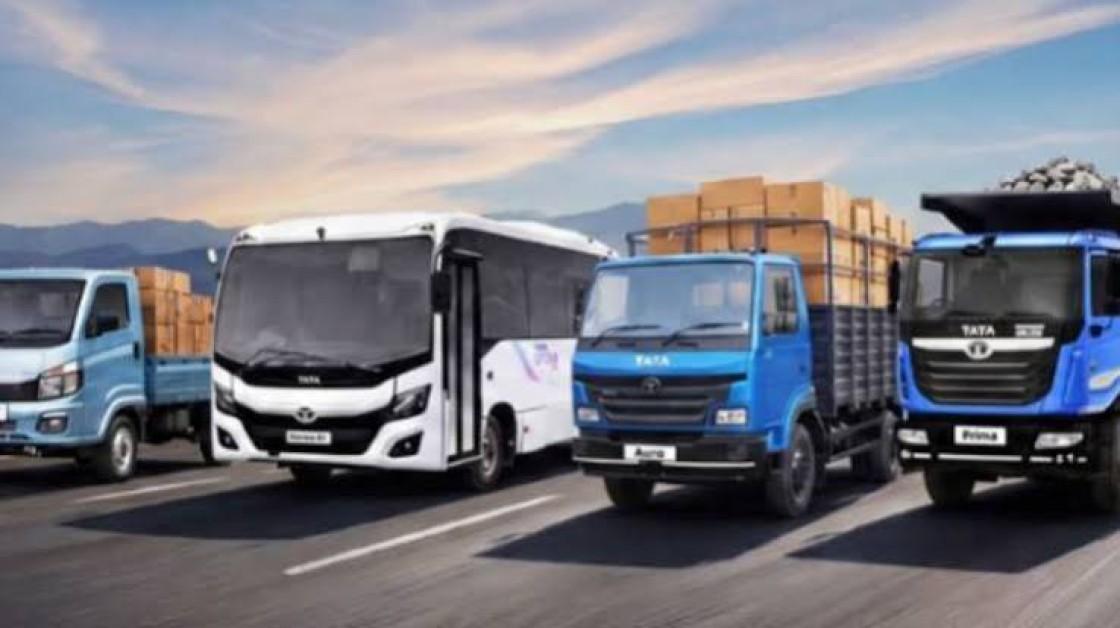
Commercial Electric Vehicles Gain Momentum as Tata Motors Reports Sharp Q1 EV Volume Growth
Commercial electric vehicles are gaining momentum in India as Tata Motors reports a sharp increase in EV volumes during the first quarter of FY27, highlighting growing interest in electrification across logistics, passenger transport and last-mile mobility.
Tata Motors said its commercial vehicle EV volumes grew 4.4 times year-on-year during Q1 FY27. The increase came alongside strong overall commercial vehicle performance, with domestic and international CV sales reaching 108,488 units during the quarter, up 27% from 85,606 units a year earlier.
The sharp EV growth provides an important indicator of how fleet electrification is beginning to expand beyond passenger cars and into commercial transportation, where operating economics can play an even larger role in vehicle purchasing decisions.
Tata Motors Reports 4.4-Fold Growth in EV Volumes

Tata Motors' Q1 FY27 commercial vehicle sales performance showed broad-based growth across major segments.
Total domestic and international commercial vehicle sales reached 108,488 units, representing 27% year-on-year growth.
Within that performance, EV volumes increased 4.4 times compared with the corresponding quarter of the previous financial year.
The increase suggests that electric mobility is becoming an increasingly meaningful component of Tata Motors' commercial vehicle strategy.
Overall Commercial Vehicle Demand Remains Strong
Electric vehicle growth comes against a supportive backdrop for Tata Motors' broader commercial vehicle business.
During Q1 FY27, domestic commercial vehicle sales reached 100,348 units, up 26% year-on-year.
International business volumes increased to 8,140 units from 6,034 units, representing growth of 35%.
Several major domestic segments also recorded expansion, including heavy trucks, intermediate and light commercial vehicles, passenger carriers and small commercial vehicles.
Small Commercial Vehicles Record Strong Growth
Small commercial vehicles and pickups were among the strongest contributors to Tata Motors' quarterly performance.
Q1 FY27 sales in the segment reached 38,346 units compared with 28,251 units in the year-earlier period, representing growth of approximately 36%.
This category is particularly important for electrification because small commercial vehicles are widely used for:
-
Urban deliveries
-
E-commerce logistics
-
Last-mile transportation
-
FMCG distribution
-
Local business deliveries
-
Courier services
-
Retail logistics
-
Intra-city transportation
Vehicles operating predictable daily routes can be particularly suitable for electric powertrains.
Fleet Economics Strengthen the EV Proposition
Commercial vehicle buyers evaluate electric vehicles differently from many individual passenger-car customers.
For fleet operators, purchasing decisions are heavily influenced by total cost of ownership.
Important considerations include:
-
Vehicle acquisition cost
-
Energy cost per kilometre
-
Maintenance expenses
-
Daily utilisation
-
Financing costs
-
Battery life
-
Charging expenses
-
Residual value
Electric vehicles can become economically attractive when lower energy and maintenance costs compensate for higher initial acquisition prices.
High Vehicle Utilisation Can Improve EV Economics
Commercial vehicles frequently cover substantial distances every day.
High utilisation can strengthen the economics of electrification because fuel savings accumulate across greater mileage.
Fleet operators running predictable routes can also plan charging more efficiently than individual consumers.
This makes categories such as urban delivery fleets, employee transportation, municipal vehicles and fixed-route buses particularly relevant for early commercial EV adoption.
E-Commerce Supports Electric Last-Mile Mobility
India's rapidly expanding e-commerce and organised delivery ecosystem is creating additional demand for efficient last-mile transportation.
E-commerce companies and logistics providers operate large fleets that make frequent short-distance trips within cities.
Electric commercial vehicles can potentially offer advantages including:
-
Lower running costs
-
Reduced local emissions
-
Lower noise
-
Predictable charging schedules
-
Fleet monitoring
-
Sustainability benefits
-
Reduced dependence on fuel prices
-
Improved urban suitability
These characteristics have made last-mile logistics one of the most closely watched segments for commercial EV adoption.
Electric Buses Create Another Growth Opportunity
Passenger transportation represents another important market for commercial vehicle electrification.
Electric buses can potentially reduce fuel expenditure and emissions across high-utilisation urban routes.
Adoption is being supported by growing interest from:
-
State transport authorities
-
Municipal corporations
-
Private fleet operators
-
Corporate transportation providers
-
Airport operators
-
Educational institutions
Large fleet deployments can also create sufficient vehicle concentration to justify dedicated charging infrastructure.
Charging Infrastructure Remains Critical
Commercial EV growth will depend heavily on access to reliable charging infrastructure.
Fleet operators need charging systems capable of supporting vehicles without significantly reducing operational availability.
Important considerations include:
-
Depot charging
-
Fast charging
-
Electricity supply
-
Charging speeds
-
Grid capacity
-
Charger reliability
-
Route planning
-
Energy management
Commercial fleets may have an advantage because vehicles can often charge at central depots rather than depending entirely on public charging networks.
Tata Motors Combines Electrification With Connected Technology
Tata Motors is also expanding connected and intelligent technologies across its commercial vehicle portfolio.
The combination of electrification and connected fleet management can help operators monitor:
-
Battery status
-
Energy consumption
-
Vehicle location
-
Charging requirements
-
Driver behaviour
-
Maintenance needs
-
Route efficiency
-
Vehicle utilisation
Digital fleet management becomes particularly valuable for electric vehicles because charging and range need to be integrated into daily operations.
Battery Economics Remain Important
Battery packs remain one of the most important cost components in electric vehicles.
Commercial EV economics can improve as battery technologies become more efficient and manufacturing scale increases.
Fleet operators will continue evaluating:
-
Battery acquisition cost
-
Usable capacity
-
Charging cycles
-
Warranty coverage
-
Degradation
-
Replacement costs
-
Energy efficiency
-
Residual value
Long-term battery performance can significantly affect the total cost of ownership of commercial EV fleets.
Commercial EVs Could Support Corporate Sustainability Goals
Large companies are increasingly setting targets to reduce emissions across operations and supply chains.
Transportation can represent a significant part of corporate emissions, particularly for businesses operating large distribution networks.
Electric fleets can therefore contribute toward sustainability strategies involving:
-
Lower transport emissions
-
Cleaner urban logistics
-
Renewable electricity integration
-
Supply-chain decarbonisation
-
ESG commitments
Corporate sustainability requirements could become another driver of commercial EV demand.
Financing Will Influence Adoption
Commercial vehicles are working assets, making financing a critical part of purchase decisions.
Electric commercial vehicle adoption could accelerate if financing becomes more competitive and lenders gain greater confidence in:
-
Battery durability
-
Vehicle resale values
-
Operating savings
-
Fleet utilisation
-
Charging availability
-
Technology reliability
Better financing terms can help reduce the impact of higher upfront EV acquisition costs.
India's Commercial Vehicle Market Provides Significant Scale
India's commercial transportation ecosystem provides a substantial addressable market for electrification.
Commercial vehicles support industries ranging from manufacturing and construction to retail and e-commerce.
The transition is unlikely to occur evenly across all vehicle categories. Instead, electrification could initially advance fastest in applications where routes are predictable, daily utilisation is high and charging can be centrally managed.
What the Industry Should Watch
Several indicators will help determine whether the current momentum develops into sustained commercial EV adoption:
-
Quarterly EV volumes
-
Electric SCV adoption
-
Electric bus deployments
-
Fleet orders
-
Charging infrastructure
-
Battery costs
-
Financing availability
-
Government incentives
-
Total cost of ownership
-
New electric vehicle launches
The pace at which large fleet operators adopt electric vehicles will be particularly important.
Outlook
Tata Motors' 4.4-fold year-on-year increase in Q1 FY27 commercial EV volumes provides a strong indication that electrification is gaining traction within India's commercial transportation market.
The company's broader CV business also entered FY27 with significant momentum, recording 27% overall quarterly sales growth.
Commercial EV adoption remains at an earlier stage than conventional vehicle demand, but improving operating economics, fleet digitisation and growing sustainability requirements could support continued expansion.
Conclusion
Commercial electric vehicles are emerging as an increasingly important part of India's mobility transition, with Tata Motors' sharp Q1 FY27 EV volume growth providing fresh evidence of accelerating adoption.
The strongest opportunities are likely to emerge in applications where vehicles operate frequently, follow predictable routes and return to central locations for charging.
For Tata Motors and the wider commercial vehicle industry, the next phase will depend on whether rising EV volumes can be supported by competitive total ownership costs, reliable batteries, adequate charging infrastructure and financing solutions.
If those conditions continue improving, electrification could gradually reshape India's logistics, last-mile delivery and passenger transportation markets.
 Tata Motors Reports Sharp Q1 EV Growth as Commercial Electric Vehicle Adoption Gains Momentum FAQs
POST A COMMENT (0)
All Comments (0)
Replies (0)