





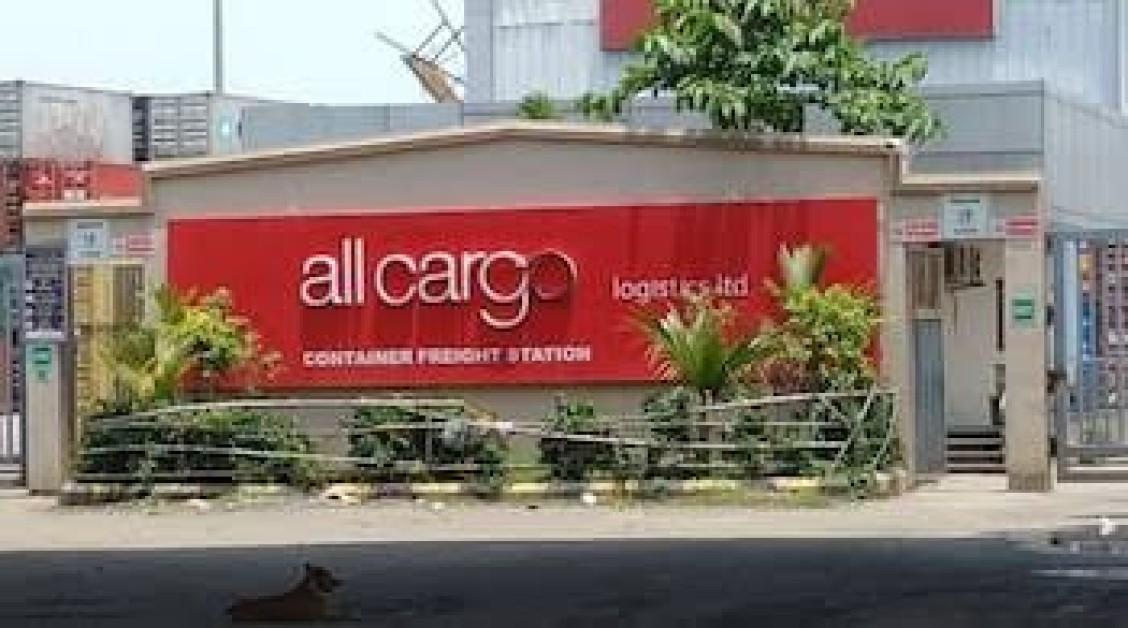
Allcargo Plans Major Warehousing Investment in West Bengal
Allcargo Logistics is planning a ₹1,000 crore multi-user warehousing development across approximately 45 acres in Dankuni, West Bengal, as the logistics group expands its infrastructure footprint.
The proposed project is designed to serve multiple customers rather than operate as a dedicated facility for a single company.
Multi-user logistics parks allow businesses to access professionally managed warehousing infrastructure without developing their own large facilities.
The model can also enable logistics operators to achieve higher asset utilisation by serving companies across different sectors and supply chains.
Dankuni Emerges as Strategic Logistics Location

Dankuni occupies an important position within West Bengal's industrial and transportation network.
Its connectivity with Kolkata and access to major road and rail corridors make the area strategically relevant for companies moving goods across eastern India.
The location can support distribution into West Bengal as well as neighbouring markets in eastern and northeastern India.
Large logistics facilities located near major transport corridors can reduce the distance between warehouses, industrial centres and consumption markets.
For Allcargo, the project could establish a substantial logistics hub within this regional network.
Project Planned Across 45 Acres
The proposed development will span approximately 45 acres, providing sufficient land for a large-scale warehousing complex and associated logistics infrastructure.
Modern logistics parks typically require more than storage buildings.
They can include truck-movement areas, loading infrastructure, internal roads, security systems, technology platforms and facilities supporting inventory management.
Large sites also provide greater flexibility to configure warehouses for different customers.
This is particularly important for multi-user developments, where individual occupiers can have substantially different storage and distribution requirements.
₹1,000 Crore Investment Signals Long-Term Expansion
The planned investment of approximately ₹1,000 crore reflects the capital-intensive nature of developing institutional-grade logistics infrastructure.
Investment can cover land development, warehouse construction, automation, utilities, safety infrastructure and supporting facilities.
Modern customers increasingly demand warehouses capable of supporting high-volume and technology-enabled supply chains.
As a result, organised logistics developments are becoming more sophisticated than traditional storage facilities.
The Dankuni project could allow Allcargo to address this demand while strengthening its presence in eastern India.
Multi-User Model Provides Flexibility
A multi-user warehousing facility is designed to accommodate several companies within a common logistics ecosystem.
Customers can potentially lease space according to their requirements rather than committing capital to constructing dedicated warehouses.
This structure can be attractive to companies entering new regional markets or expanding distribution networks.
Shared infrastructure can also provide operational efficiencies across security, technology, transportation and facility management.
For the logistics operator, having multiple customers can diversify occupancy and reduce dependence on any single business.
E-Commerce and Retail Drive Warehousing Demand
India's expanding e-commerce and organised retail sectors have significantly changed warehousing requirements.
Consumers increasingly expect faster delivery, requiring companies to position inventory closer to major markets.
Large regional warehouses can function as distribution hubs from which products are moved to smaller fulfilment centres and retail networks.
Consumer-goods companies are similarly modernising distribution systems to improve inventory availability.
These trends have contributed to growing demand for organised logistics infrastructure near major population and transportation centres.
Manufacturing Expansion Supports Logistics Investment
Manufacturing represents another important source of warehousing demand.
Factories require facilities for storing raw materials, components and finished goods before distribution.
As manufacturing networks expand, logistics infrastructure must grow alongside production capacity.
Eastern India has substantial activity across steel, engineering, mining, consumer goods and other industries.
A large logistics hub at Dankuni could serve manufacturers seeking regional storage and distribution infrastructure without developing captive facilities.
Organised Warehousing Gains Market Share
India's warehousing industry has been shifting from fragmented and relatively basic storage infrastructure toward larger institutional facilities.
GST implementation contributed to this transition by allowing companies to design distribution networks around operational efficiency rather than primarily around state-level tax considerations.
Companies have subsequently consolidated inventory into larger regional hubs while demanding better safety, technology and operational standards.
Institutional investors and major logistics companies have responded by increasing investment in modern warehouses and logistics parks.
Allcargo's proposed Dankuni development fits within this broader structural shift.
Technology Increasingly Shapes Modern Warehouses
Technology is becoming central to warehouse operations as customers seek greater visibility over inventory and movement of goods.
Warehouse-management systems can track products from arrival through storage, picking and dispatch.
Automation can improve productivity in high-volume facilities, while data analytics can help companies optimise inventory placement.
Digital integration between warehouses and transportation networks can further improve supply-chain efficiency.
New large-scale facilities have an opportunity to incorporate such capabilities from the design stage rather than retrofitting older infrastructure.
West Bengal Could Strengthen Eastern Logistics Role
The proposed project could reinforce West Bengal's position as a logistics gateway for eastern India.
Kolkata and surrounding industrial areas serve a large regional consumer market while providing connections to ports, highways and railway networks.
Dankuni's location makes it particularly relevant for freight movement between Kolkata and inland markets.
Additional modern warehousing capacity could support companies distributing products across the region while also serving industrial supply chains.
The investment could therefore have implications beyond the immediate project site.
Project Could Generate Employment and Ancillary Activity
Large logistics parks can create direct employment across warehouse operations, inventory management, security, maintenance and administration.
They can also generate indirect opportunities for transportation companies, equipment suppliers, technology providers and other service businesses.
Construction of the project would create another layer of economic activity during the development phase.
Once operational, the facility could attract additional businesses seeking locations close to a major logistics hub.
The broader economic impact will depend on the project's eventual scale, occupancy and operating model.
Allcargo Strengthens Integrated Logistics Footprint
Allcargo operates across multiple segments of the logistics industry, giving the group exposure to different parts of the supply chain.
Expanding warehousing capacity can complement transportation and other logistics services by allowing the company to provide customers with more integrated solutions.
Businesses increasingly prefer logistics providers capable of managing multiple stages of product movement rather than working with numerous independent operators.
Large multi-user facilities can become important nodes within such integrated networks.
The Dankuni project could therefore strengthen Allcargo's ability to serve customers requiring end-to-end logistics infrastructure.
Conclusion
Allcargo Logistics' planned ₹1,000 crore multi-user warehousing project across 45 acres in Dankuni represents a significant proposed investment in eastern India's logistics infrastructure.
Dankuni's connectivity with Kolkata and major transportation corridors provides the project with a strategic location for serving manufacturing, retail, e-commerce and consumer-goods supply chains.
The development also reflects India's broader transition toward larger, technology-enabled and professionally managed warehousing facilities.
As organised logistics networks expand, projects of this scale could play an increasingly important role in connecting manufacturers and distribution centres with India's growing regional consumer markets.
 Allcargo Logistics Plans ₹1,000 Crore Warehousing Project in Dankuni, West Bengal FAQs
POST A COMMENT (0)
All Comments (0)
Replies (0)