




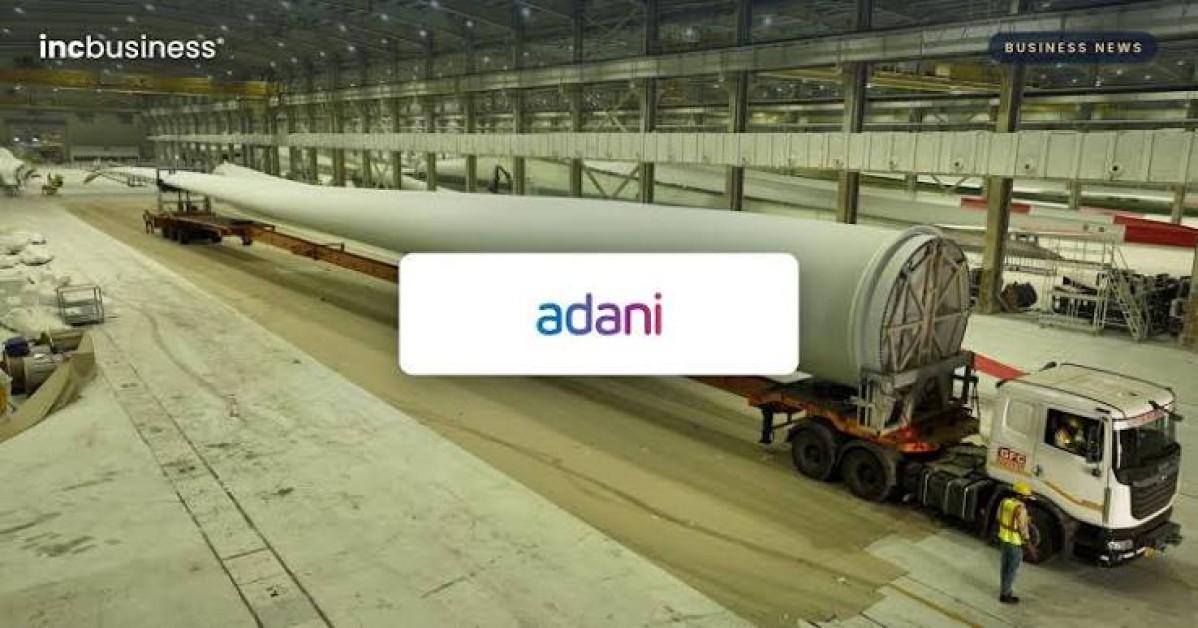
Adani Wind Starts Manufacturing India's Longest Onshore Wind Turbine Blades
Adani New Industries Limited (ANIL), a wholly owned subsidiary of Adani Enterprises Limited, has commenced production of 91.2-metre onshore wind turbine blades at its integrated manufacturing facility in Mundra, Gujarat, marking a significant development in India's domestic wind energy manufacturing industry.
The company announced the production milestone on November 16, 2026, alongside certification of its MWL185-5.0 MW wind turbine platform by Germany-based WindGuard Certification GmbH.
According to the company, the newly manufactured blades are the longest onshore wind turbine blades produced in India.
The blades have been developed for Adani Wind's MWL185-5.0 MW turbine, which features a rotor diameter of 185 metres and a hub height of 140 metres.
The rotor covers a swept area of nearly 26,600 square metres, allowing the turbine to capture energy across a large area.
The platform is designed to operate efficiently under varying wind conditions, including locations with relatively low and moderate wind speeds.
The development represents two important milestones for Adani Wind: the commencement of domestic production of larger turbine blades and certification of its 5 MW platform for serial manufacturing.
Both developments strengthen the company's position in India's wind turbine manufacturing sector as renewable energy developers increasingly seek larger and more efficient equipment.
Adani Wind's 91.2-Metre Blade Production: Key Details

|
Particulars |
Details |
|---|---|
|
Parent company |
Adani Enterprises Limited |
|
Manufacturing subsidiary |
Adani New Industries Limited |
|
Business division |
Adani Wind |
|
Announcement date |
November 16, 2026 |
|
Manufacturing location |
Mundra, Gujarat |
|
New blade length |
91.2 metres |
|
Wind turbine platform |
MWL185-5.0 MW |
|
Rated turbine capacity |
5 MW |
|
Rotor diameter |
185 metres |
|
Hub height |
140 metres |
|
Rotor swept area |
Approximately 26,600 sq. metres |
|
Certification agency |
WindGuard Certification GmbH |
|
Technology partner |
W2E (Wind to Energy), Germany |
|
Existing manufacturing capacity |
2.25 GW annually |
|
External IPP orders |
More than 1 GW cumulatively |
|
NSE symbol |
ADANIENT |
|
BSE code |
512599 |
The announcement confirms that production has commenced and the turbine platform has received certification.
However, the company has not disclosed the number of 91.2-metre blades manufactured so far or a separate production capacity specifically allocated to the new blade design.
Why the 91.2-Metre Wind Turbine Blade Is Important
Wind turbine blades are essential components of wind energy generation.
They capture the kinetic energy of moving air and transfer rotational energy through the turbine's mechanical and electrical systems.
The length of the blades influences the area through which the rotor can capture wind.
Longer blades generally allow turbines to access more wind energy, subject to aerodynamic design, operating conditions and engineering limitations.
Adani Wind's new 91.2-metre blades represent an expansion beyond the company's existing blade manufacturing range.
Existing and New Blade Sizes at Mundra
|
Blade length |
Manufacturing status |
|---|---|
|
78.6 metres |
Existing production |
|
80.5 metres |
Existing production |
|
91.2 metres |
Production commenced in November 2026 |
Moving to longer blades requires advances in manufacturing precision, materials engineering, structural design and handling capabilities.
Large turbine blades must withstand substantial aerodynamic and mechanical loads throughout their operating lives.
Their production therefore requires specialised facilities, equipment and quality control procedures.
For Adani Wind, the ability to manufacture 91.2-metre blades domestically represents an expansion of its technical capabilities.
MWL185-5.0 MW Wind Turbine Platform Receives International Certification
Alongside the production announcement, Adani Wind confirmed that its MWL185-5.0 MW platform has received certification from WindGuard Certification GmbH.
WindGuard is an independent German organisation involved in wind turbine testing and certification.
The certification follows prototype testing at the company's installation site in Mundra.
The assessment confirms conformity with relevant requirements under the internationally recognised IEC 61400 series of standards.
These standards address aspects of wind turbine design, testing and manufacturing.
Why Certification Matters
Certification provides independent assessment of whether a turbine design meets applicable technical requirements.
For manufacturers, it is an important step toward serial production and commercial deployment.
For project developers, certification can provide assurance that equipment has undergone defined testing and evaluation procedures.
However, certification does not guarantee the financial performance or energy output of a turbine at every installation site.
Actual generation depends on wind conditions, installation quality, maintenance and operating availability.
Serial Production Clearance
The certification clears the MWL185-5.0 MW platform for serial production.
This means Adani Wind can proceed with manufacturing the certified platform beyond the prototype stage.
The company has not disclosed a separate commercial delivery schedule for the newly certified model.
Understanding the 185-Metre Rotor Diameter
The MWL185-5.0 MW turbine features a rotor diameter of approximately 185 metres.
The rotor diameter measures the full circular span covered by the rotating blades.
A larger rotor captures wind across a greater area.
For the Adani Wind platform, the rotor sweeps approximately 26,600 square metres.
MWL185-5.0 MW turbine dimensions
Simplified schematic, not to scale. Blade length: 91.2 metres. Rotor swept area: approximately 26,600 square metres.The swept area is an important design parameter because it influences how much wind energy can be intercepted.
However, energy production also depends on wind speed, air density, turbine efficiency and operational limitations.
The rated capacity of 5 MW represents the turbine's maximum specified electrical output under defined operating conditions.
It does not mean the turbine continuously generates 5 MW.
Larger Turbines Could Improve Wind Energy Generation
One of the primary objectives of larger wind turbines is to increase energy capture.
The power available in moving air is strongly influenced by wind speed and the area swept by the turbine rotor.
Increasing rotor size can allow a turbine to capture more energy, particularly at sites where wind speeds are not consistently high.
Potential Benefits
Greater energy capture
A larger rotor can intercept wind across a wider area.
Improved capacity utilisation
Suitable turbine designs can generate electricity across a broader range of wind conditions.
More productive lower-wind sites
Improved energy capture may make certain locations more commercially attractive.
Higher output per turbine
Larger-capacity turbines can reduce the number of machines needed to achieve a given installed capacity.
Project design flexibility
Developers may evaluate different turbine configurations depending on site characteristics.
However, larger turbines also require suitable foundations, transportation arrangements and installation equipment.
Their economic advantages must be assessed at the project level.
Adani Wind CEO Highlights Manufacturing Milestone
Milind Kulkarni, Chief Executive Officer of Adani Wind, described the commencement of 91.2-metre blade production and certification of the 5 MW platform as important milestones for the company.
He highlighted the potential for larger turbines to capture more energy at sites with lower wind speeds.
According to management, this could expand the geographical range of locations suitable for wind power generation.
Kulkarni also emphasised the company's commitment to developing advanced wind technology within India.
The statement reflects Adani Wind's broader objective of expanding domestic manufacturing capabilities while developing products for different wind conditions.
German Technology Partnership Supports Turbine Development
Adani Wind developed the MWL185-5.0 MW platform in partnership with W2E, also known as Wind to Energy.
The German technology company contributes expertise in wind turbine technology.
The collaboration supports the development of large turbine platforms designed for commercial deployment.
Role of International Technology Collaboration
Wind turbine development involves several engineering disciplines.
These include aerodynamics, structural mechanics, electrical engineering, control systems and materials science.
International technology partnerships can provide access to specialised engineering knowledge.
They may also support product development and testing processes.
However, the announcement does not disclose the commercial terms or intellectual property arrangements associated with the W2E partnership.
Mundra Emerges as an Integrated Wind Turbine Manufacturing Centre
Adani Wind operates an integrated manufacturing ecosystem at Mundra in Gujarat.
The location supports production of major wind turbine components and related manufacturing activities.
The facility is strategically positioned near the Mundra port and industrial infrastructure.
Existing Manufacturing Capacity
Adani Wind currently has annual manufacturing capacity of approximately 2.25 GW.
The company intends to expand this capacity further.
Its wind turbine portfolio includes platforms in the 3 MW to 5 MW range.
The new 91.2-metre blade extends the manufacturing capabilities of the Mundra facility.
Why Integrated Manufacturing Matters
Wind turbine manufacturing involves several large and technically complex components.
These include blades, nacelles, towers and associated systems.
Coordinating production and assembly can influence manufacturing efficiency and delivery schedules.
Integrated facilities may provide advantages in quality control, production planning and logistics.
However, manufacturing scale must be matched with customer demand and project execution.
Manufacturing 91.2-Metre Blades Requires Advanced Engineering
Producing wind turbine blades of this size involves substantial technical challenges.
The blades must combine structural strength with relatively low weight.
They must also maintain their designed aerodynamic shape over extended operating periods.
Materials Engineering
Large wind turbine blades commonly use composite materials.
These materials can provide strength while limiting weight.
The specific material composition of Adani Wind's new blades has not been disclosed.
Structural Design
Long blades experience varying loads during operation.
Engineers must account for bending, fatigue and environmental conditions.
Manufacturing Precision
The aerodynamic performance of a blade depends on maintaining the intended shape and surface quality.
Large manufacturing moulds and controlled production processes are therefore important.
Quality Assurance
Blades must undergo inspections and testing to identify manufacturing defects.
Transportation and Handling
Moving a blade more than 90 metres long requires specialised logistics planning.
Road geometry, transportation equipment and site accessibility can affect delivery.
These challenges make the commencement of domestic production a notable manufacturing achievement.
Adani Wind Expands Its Product Portfolio
Adani Wind manufactures multiple turbine platforms designed for different operating conditions.
The company's portfolio spans models in the 3 MW to 5 MW range.
Its larger platforms are intended to serve utility-scale wind energy projects.
Three Platforms Listed Under ALMM-Wind
Adani Wind has three turbine platforms included in the Ministry of New and Renewable Energy's Approved List of Models and Manufacturers for wind turbines.
The list is part of India's regulatory framework for approved wind turbine models and manufacturers.
Inclusion is relevant to eligibility and compliance requirements for applicable wind projects.
The newly certified MWL185-5.0 MW platform adds to the company's technology development capabilities.
Adani Wind Crosses 2 GW of Installations at Khavda
Adani Wind's MWL160-5.2 MW platform has crossed 2 GW of installations at Khavda in Gujarat.
Khavda is the location of a major renewable energy development being built by Adani Green Energy.
The wind installations form part of the wider renewable energy infrastructure being developed in the region.
Why Khavda Matters
Large renewable energy parks create opportunities for the deployment of wind and solar generation at scale.
Wind turbines contribute electricity under different generation conditions from solar installations.
Combining multiple renewable energy technologies can help diversify electricity generation profiles.
The 2 GW installation milestone demonstrates the deployment scale achieved by Adani Wind's existing turbine technology.
However, the MWL160-5.2 MW platform is distinct from the newly certified MWL185-5.0 MW model.
Orders From Independent Power Producers Exceed 1 GW
Adani Wind has reported cumulative orders exceeding 1 GW from independent power producers outside the Adani Group.
This is an important commercial development because it demonstrates customer interest beyond the group's own renewable energy projects.
Independent power producers develop and operate electricity generation assets.
They purchase equipment based on technical, financial and project-specific requirements.
Why External Orders Matter
Customer diversification
Orders from independent developers reduce reliance on captive group projects.
Market validation
External customers provide an additional measure of commercial acceptance.
Manufacturing utilisation
Confirmed orders can support production planning.
Revenue opportunities
Commercial equipment supply creates potential revenue outside the parent group's project ecosystem.
Industry positioning
External orders may help strengthen a manufacturer's presence in the wider renewable energy market.
However, the company has not disclosed the revenue value or execution schedule of the entire external order portfolio.
India's Wind Energy Industry Seeks Higher-Capacity Turbines
India is expanding renewable electricity generation to support energy security and decarbonisation objectives.
Wind power remains an important component of the country's renewable energy portfolio.
Larger turbines can potentially improve energy generation at sites where wind conditions are less favourable.
Why Turbine Size Is Increasing
The development of larger turbines is driven by efforts to improve energy capture and project economics.
A higher-capacity turbine can generate more electricity under suitable conditions.
Larger rotors may also improve performance at lower wind speeds.
However, project developers must evaluate site conditions, land availability, logistics and installation costs.
Domestic Manufacturing Opportunities
Growing demand for wind turbines creates opportunities for Indian manufacturers of blades, nacelles, towers, generators and electronic systems.
Local production can support industrial supply chains and reduce dependence on certain imported finished components.
The extent of domestic value addition depends on individual products and sourcing arrangements.
Adani Wind's Mundra manufacturing milestone contributes to the development of India's large-turbine manufacturing capabilities.
Adani Wind Featured in BloombergNEF Global Ranking
Adani Wind has stated that it was the only Indian wind turbine manufacturer included in BloombergNEF's Global Top 15 turbine manufacturers ranking for 2025.
The company has been expanding its manufacturing and technology capabilities through domestic production and international research partnerships.
Its technology centre in Rostock, Germany, supports research and development activities.
The company also maintains a dedicated research and development team in India.
These capabilities support its efforts to develop turbine platforms for different wind conditions and customer requirements.
Financial Implications for Adani Enterprises
Adani New Industries is a wholly owned subsidiary of Adani Enterprises.
The expansion of wind turbine manufacturing is relevant to Adani Enterprises' broader new energy business strategy.
However, the November 16 announcement does not provide a separate investment amount or revenue forecast associated with the 91.2-metre blade production milestone.
Potential Revenue Opportunities
Serial production of the certified 5 MW platform could support future equipment sales.
Actual revenue will depend on orders, delivery schedules and commercial arrangements.
Manufacturing Investment
Producing larger blades may require specialised equipment and manufacturing infrastructure.
The company has not disclosed the incremental capital expenditure associated with the new blade production line.
Operating Efficiency
Higher manufacturing utilisation can influence unit costs.
However, the profitability of the new turbine platform has not been disclosed.
Customer Demand
The company's external order portfolio indicates opportunities beyond captive projects.
Future demand will depend on renewable energy project development and customer procurement decisions.
Long-Term Business Development
The milestone strengthens Adani Enterprises' exposure to renewable energy equipment manufacturing.
Nevertheless, its financial contribution will become clearer through future operating disclosures.
Adani Enterprises Share Price in Focus Following Announcement
Adani Enterprises shares may attract investor attention following the commencement of production and certification of the new wind turbine platform.
The company's shares trade on the National Stock Exchange under the symbol ADANIENT.
The manufacturing announcement represents progress in a subsidiary's technology and production capabilities.
However, the announcement does not include a new contract value or immediate earnings estimate.
Factors Investors Will Monitor
Investors are likely to assess demand for the newly certified turbine platform.
They may also examine the pace of manufacturing capacity expansion and the execution of external customer orders.
Other important considerations include capital expenditure, operating margins and the broader performance of Adani Enterprises' businesses.
The share price response will depend on market conditions and investor expectations.
A manufacturing milestone does not guarantee an immediate increase in profitability or market valuation.
Challenges in Scaling Large Wind Turbine Manufacturing
Although the production milestone is significant, large turbine manufacturing involves several challenges.
Production Complexity
Larger blades require specialised manufacturing processes and quality control.
Transportation
Moving oversized components can be expensive and logistically difficult.
Installation Requirements
Large turbines require suitable foundations, cranes and site infrastructure.
Component Supply
Manufacturing depends on reliable access to materials and specialised components.
Project Execution
Wind energy developers must secure land, permits, financing and grid connectivity.
Competition
Domestic and international turbine manufacturers compete on technology, pricing, reliability and service capabilities.
Technology Performance
Commercial performance depends on actual operating conditions and equipment availability.
These factors will influence the scale and profitability of Adani Wind's future operations.
What Happens Next for Adani Wind?
Following the commencement of 91.2-metre blade production and certification of the MWL185-5.0 MW platform, Adani Wind can advance serial manufacturing.
The next important developments will include commercial deployment, customer orders and manufacturing output.
The company may also continue expanding its production capacity beyond the current 2.25 GW.
Its technology centre in Germany and research team in India will remain important to future product development.
Investors and industry participants will monitor whether the new platform attracts orders from independent power producers.
The performance of the turbine in commercial installations will also help establish its suitability for different wind conditions.
The company has not announced a specific commissioning schedule for projects using the newly certified model.
Conclusion
Adani New Industries Limited's commencement of production of 91.2-metre wind turbine blades at Mundra marks an important milestone for India's domestic renewable energy manufacturing industry.
Announced on November 16, 2026, the development introduces what Adani Wind describes as the longest onshore wind turbine blades manufactured in India.
The blades have been designed for the MWL185-5.0 MW platform, which features a 185-metre rotor diameter, a 140-metre hub height and a swept area of approximately 26,600 square metres.
The platform has also received certification from Germany's WindGuard Certification GmbH, clearing the way for serial production.
The twin milestones strengthen Adani Wind's manufacturing and technology capabilities while supporting its efforts to expand beyond captive renewable energy projects.
With existing manufacturing capacity of 2.25 GW, more than 2 GW of installations at Khavda using its 5.2 MW platform and cumulative external orders exceeding 1 GW, the company has established a growing presence in India's wind turbine industry.
However, the financial contribution of the new blade production and certified turbine platform will depend on future customer orders, manufacturing utilisation and commercial deployment.
For Adani Enterprises, the development reinforces its investment in renewable energy equipment manufacturing and advanced industrial technologies.
The milestone also reflects India's expanding capabilities in producing larger, higher-capacity wind turbines domestically.
 Adani Enterprises Begins 91.2-Metre Wind Turbine Blade Production at Mundra FAQs

POST A COMMENT (0)
All Comments (0)
Replies (0)