





What Is End-to-End Encryption? How It Works and Why It Matters
End-to-End Encryption (E2EE) is one of the most effective technologies for protecting digital communications. It ensures that only the sender and the intended recipient can read or access the transmitted information. Even service providers, internet service providers (ISPs), hackers, or governments cannot decrypt the content while it is in transit. End-to-end encryption is widely used in messaging apps, video calls, email services, cloud storage, and business communication platforms to safeguard sensitive information.
What Is End-to-End Encryption?

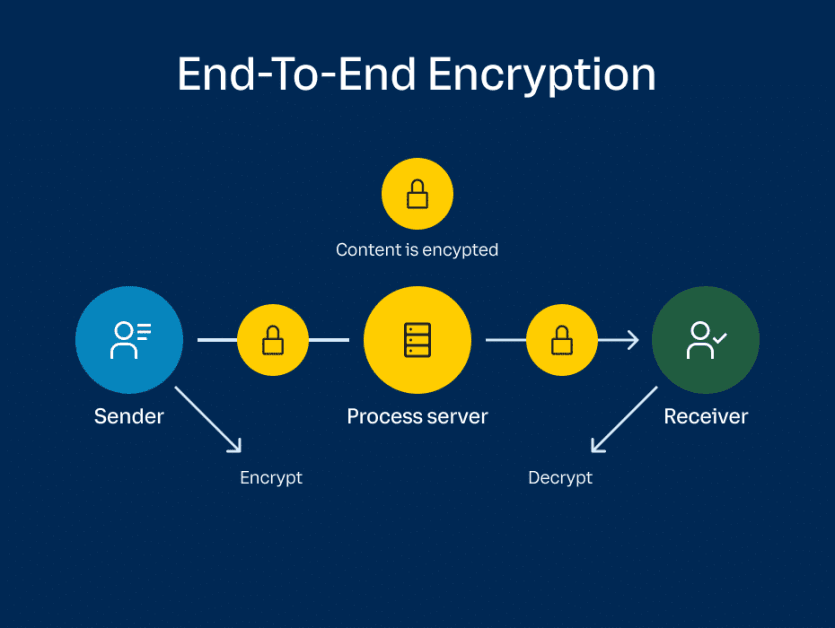
End-to-End Encryption (E2EE) is a security method that encrypts data on the sender's device and decrypts it only on the recipient's device, preventing anyone else from accessing the content during transmission.
How End-to-End Encryption Works
When a message or file is sent, it is encrypted using a cryptographic key before leaving the sender's device. The encrypted data travels across the internet and can only be decrypted using the recipient's unique decryption key. Even if attackers intercept the data, they cannot read it without the correct key.
Why End-to-End Encryption Matters
E2EE protects sensitive conversations, financial information, business communications, and personal data from cybercriminals, unauthorized surveillance, and data breaches.
Where End-to-End Encryption Is Used
End-to-end encryption protects many digital services.
Messaging Applications
Secure messaging apps use E2EE to protect text messages, photos, videos, voice messages, and file sharing.
Voice and Video Calls
Many communication platforms encrypt voice and video calls to prevent unauthorized interception.
Email Services
Some secure email providers offer end-to-end encryption to protect confidential email communications.
Cloud Storage
Encrypted cloud storage services ensure that files remain accessible only to authorized users with the correct encryption keys.
Benefits of End-to-End Encryption
End-to-end encryption offers several important advantages.
Strong Privacy Protection
Only the sender and intended recipient can access encrypted content, helping protect personal and business information.
Improved Security
Even if data is intercepted during transmission, encrypted information remains unreadable without the decryption key.
Protection Against Cyber Threats
E2EE reduces the risk of data theft, identity theft, and unauthorized surveillance during digital communication.
Increased User Trust
Organizations that implement end-to-end encryption demonstrate a stronger commitment to protecting customer privacy and confidential information.
Limitations of End-to-End Encryption
Although highly secure, E2EE has certain limitations.
Endpoint Security
If a sender's or recipient's device is infected with malware or accessed by an attacker, encrypted communications may still be compromised before encryption or after decryption.
Lost Encryption Keys
If users lose access to their encryption keys or recovery credentials, encrypted data may become permanently inaccessible.
Metadata Is Not Always Encrypted
While message content is protected, some services may still collect metadata such as timestamps, sender information, or communication frequency.
Best Practices for Using End-to-End Encryption
Following these practices improves communication security.
Use Trusted Applications
Choose communication platforms that provide verified end-to-end encryption by default.
Enable Device Security
Protect devices with strong passwords, biometric authentication, and multi-factor authentication to safeguard encrypted communications.
Keep Software Updated
Install security updates regularly to protect devices from newly discovered vulnerabilities.
Verify Contacts
Some secure messaging applications allow users to verify encryption keys, helping prevent impersonation or man-in-the-middle attacks.
Future of End-to-End Encryption
End-to-end encryption continues to evolve alongside advances in cybersecurity, quantum-resistant cryptography, secure messaging protocols, and privacy-enhancing technologies. As digital communication becomes increasingly important, stronger encryption standards will play a critical role in protecting personal privacy, business communications, financial transactions, and sensitive government information. Future encryption technologies will continue balancing strong security with usability and regulatory requirements.
Conclusion
End-to-End Encryption is one of the strongest methods available for protecting digital communications. By ensuring that only the sender and intended recipient can access encrypted information, E2EE significantly improves online privacy and cybersecurity. Whether used for messaging, email, voice calls, or cloud storage, end-to-end encryption helps protect sensitive data from interception and unauthorized access, making it an essential technology in today's digital world.
 What Is End-to-End Encryption? Complete Guide Explained FAQs
POST A COMMENT (0)
All Comments (0)
Replies (0)