





What Is DevOps? How It Works, Benefits and Best Practices
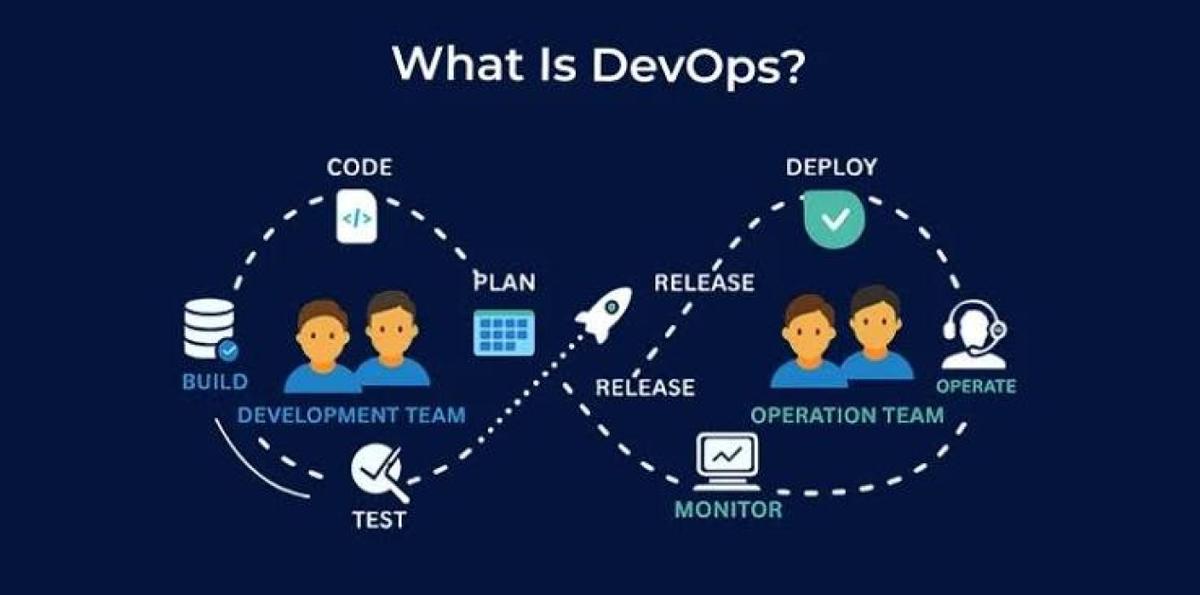
DevOps is a software development methodology and cultural approach that brings together development (Dev) and IT operations (Ops) to build, test, deploy, and maintain software more efficiently. Traditionally, developers focused on writing code while operations teams managed deployment and infrastructure. DevOps removes these silos by encouraging collaboration, automation, and continuous improvement, enabling organizations to deliver software faster, more reliably, and with higher quality.
Today, DevOps is widely used by technology companies, cloud service providers, financial institutions, healthcare organizations, and enterprises developing modern applications.
What Is DevOps?

DevOps is a set of practices, tools, and cultural principles that integrate software development and IT operations to accelerate software delivery while improving reliability and collaboration.
How DevOps Works
DevOps teams automate software development, testing, deployment, monitoring, and infrastructure management using Continuous Integration (CI), Continuous Delivery/Deployment (CD), infrastructure as code, and cloud-based tools. This allows software updates to be released frequently while maintaining stability and quality.
Why DevOps Matters
Organizations using DevOps can deliver new features faster, reduce deployment errors, improve system reliability, respond more quickly to customer needs, and accelerate digital transformation.
The DevOps Lifecycle
DevOps follows a continuous lifecycle that supports rapid software delivery.
Planning
Teams define project goals, gather requirements, prioritize tasks, and plan development work.
Development
Developers write application code while collaborating closely with operations and quality assurance teams.
Continuous Integration (CI)
Code changes are automatically integrated into a shared repository, where automated builds and tests verify software quality.
Continuous Delivery/Deployment (CD)
Applications are automatically prepared for release or deployed to production environments with minimal manual intervention.
Monitoring
Performance, availability, security, and user experience are continuously monitored to identify issues and improve future releases.
Feedback and Improvement
Teams analyze user feedback, monitoring data, and operational metrics to improve future software versions.
Key Principles of DevOps
Several core concepts define successful DevOps practices.
Collaboration
Developers, operations engineers, testers, and security teams work together throughout the software lifecycle.
Automation
Routine tasks such as testing, deployments, infrastructure provisioning, and monitoring are automated.
Continuous Improvement
Teams continuously refine development processes, software quality, and operational efficiency.
Infrastructure as Code (IaC)
Infrastructure is defined and managed using code, making deployments repeatable and consistent.
Monitoring and Observability
Continuous monitoring helps teams quickly detect, diagnose, and resolve issues.
Common DevOps Tools
DevOps relies on a wide range of automation and management tools.
Version Control
Git repositories enable developers to collaborate and manage code changes efficiently.
CI/CD Platforms
Continuous Integration and Continuous Delivery tools automate software builds, testing, and deployments.
Containerization
Containers package applications with their dependencies, ensuring consistent execution across environments.
Container Orchestration
Platforms manage the deployment, scaling, and operation of containerized applications.
Monitoring Tools
Monitoring platforms track application performance, infrastructure health, logs, and system metrics.
Cloud Platforms
Cloud infrastructure provides scalable environments for application development, testing, and deployment.
Benefits of DevOps
DevOps offers significant business and technical advantages.
Faster Software Delivery
Automation enables frequent, reliable software releases with shorter development cycles.
Improved Software Quality
Continuous testing identifies defects earlier, reducing production issues.
Better Collaboration
Development and operations teams work together more effectively, improving communication and productivity.
Increased Reliability
Automated deployments and monitoring reduce downtime and improve system stability.
Business Agility
Organizations can respond more quickly to customer feedback and changing market demands.
Challenges of DevOps
Despite its advantages, DevOps introduces several challenges.
Cultural Change
Successful DevOps requires organizations to embrace collaboration and shared responsibility.
Tool Integration
Combining multiple automation, monitoring, and deployment tools can increase complexity.
Skills Development
Teams need expertise in automation, cloud computing, scripting, containers, CI/CD, and infrastructure management.
Security Integration
Security must be integrated throughout the DevOps pipeline rather than treated as a final step.
DevOps vs. DevSecOps
These approaches are closely related but have different focuses.
DevOps
Focuses on improving collaboration, automation, and software delivery between development and operations teams.
DevSecOps
Extends DevOps by integrating security into every stage of the software development lifecycle through automated security testing, vulnerability management, and compliance checks.
Best Practices for DevOps
Organizations should follow these recommendations.
Automate Wherever Possible
Automate builds, testing, deployments, infrastructure provisioning, and monitoring.
Implement CI/CD Pipelines
Use automated pipelines to improve software quality and accelerate releases.
Adopt Infrastructure as Code
Manage servers, networks, and cloud resources using version-controlled configuration files.
Monitor Continuously
Track application performance, infrastructure health, security events, and user experience in real time.
Foster Collaboration
Encourage shared ownership, open communication, and continuous learning across teams.
Future of DevOps
DevOps continues to evolve through Artificial Intelligence, platform engineering, GitOps, cloud-native development, Kubernetes, serverless computing, and intelligent automation. AI-powered tools increasingly assist with code generation, testing, deployment optimization, anomaly detection, and predictive monitoring. As organizations accelerate digital transformation, DevOps will remain a core methodology for delivering scalable, secure, and reliable software.
Conclusion
DevOps has transformed software development by combining development and IT operations into a collaborative, automated workflow. Through Continuous Integration, Continuous Delivery, automation, infrastructure as code, and continuous monitoring, DevOps enables organizations to deliver software faster while improving quality, reliability, and operational efficiency. As cloud computing and AI continue to reshape technology, DevOps will remain a critical practice for building and maintaining modern digital applications.
 What Is DevOps? Complete Guide Explained in Detail FAQs
POST A COMMENT (0)
All Comments (0)
Replies (0)