






What Is an AI API? How It Works, Benefits and Applications
An AI API (Application Programming Interface) enables developers to integrate Artificial Intelligence capabilities into websites, mobile apps, enterprise software, and digital platforms without building AI models from scratch. AI APIs provide access to advanced features such as text generation, image creation, speech recognition, translation, data analysis, and computer vision through simple programming interfaces. As AI adoption continues to accelerate, AI APIs have become essential tools for businesses and developers looking to build intelligent applications quickly and efficiently.
What Is an AI API?
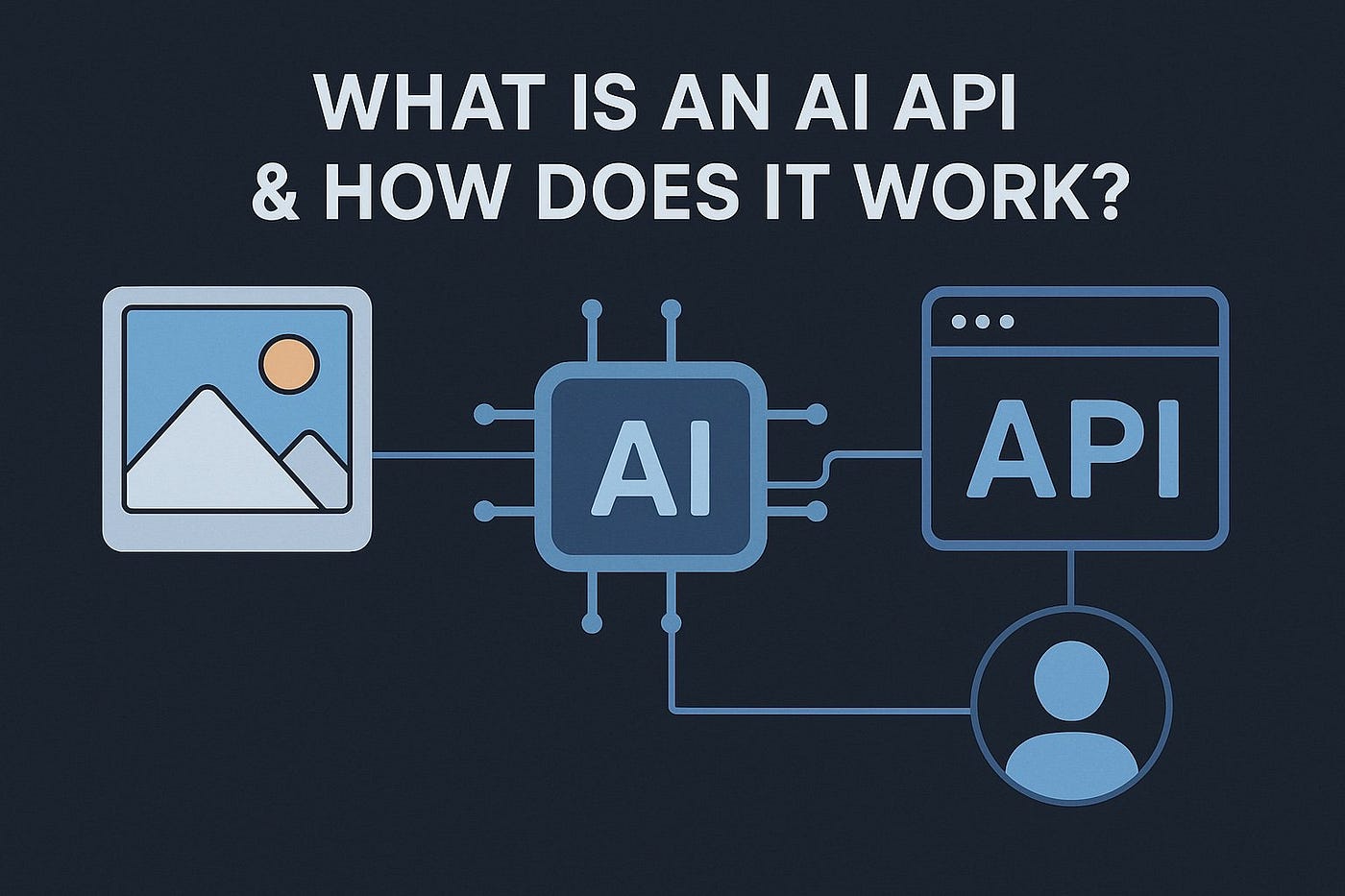
An AI API is a software interface that allows applications to communicate with AI models hosted on remote servers or cloud platforms. Developers send requests to the API, which processes the input using AI models and returns the generated results.
How an AI API Works
Applications send data such as text, images, audio, or code to an AI API through HTTP requests. The AI model processes the request, performs the required task, and returns the output in a structured format that developers can integrate into their applications.
Why AI APIs Matter
AI APIs eliminate the need to build and train complex AI models, enabling organizations to deploy intelligent features faster while reducing development costs and infrastructure requirements.
Key Features of AI APIs
AI APIs provide a wide range of capabilities for developers and businesses.
Easy Integration
Developers can quickly connect AI capabilities to websites, mobile applications, enterprise software, and cloud platforms using standard programming languages and frameworks.
Multiple AI Services
Many AI APIs support text generation, image generation, speech-to-text, text-to-speech, translation, summarization, sentiment analysis, and computer vision through a single platform.
Scalable Infrastructure
AI APIs are typically hosted on cloud infrastructure, allowing applications to scale efficiently without managing AI hardware or model deployment.
Applications of AI APIs
AI APIs are used across many industries and business functions.
Customer Support
Businesses integrate AI APIs into chatbots, virtual assistants, and help desk systems to automate customer interactions and improve response times.
Content Creation
Publishers, marketers, and media organizations use AI APIs to generate articles, product descriptions, summaries, translations, and creative content.
Software Development
Developers use AI APIs for code generation, debugging, documentation, testing automation, and intelligent programming assistance.
Enterprise Automation
Organizations deploy AI APIs for document processing, workflow automation, knowledge management, and business intelligence applications.
Benefits of AI APIs
AI APIs offer several advantages for businesses and developers.
Faster Development
Developers can integrate advanced AI functionality without building machine learning models from scratch.
Lower Costs
Organizations reduce infrastructure, maintenance, and development expenses by using managed AI services instead of self-hosted AI systems.
Continuous Innovation
AI API providers regularly update models and capabilities, allowing applications to benefit from ongoing improvements without significant redevelopment.
Challenges of AI APIs
Despite their advantages, AI APIs also present several considerations.
API Costs
Many AI APIs use usage-based pricing models, making cost management important for high-volume applications.
Data Privacy
Organizations should evaluate how sensitive information is transmitted, processed, and stored when using cloud-based AI services.
Vendor Dependency
Applications built around a specific AI API may require changes if pricing, features, or availability evolve over time.
Future of AI APIs
AI APIs are expected to become more powerful through advances in multimodal AI, reasoning models, real-time processing, and enterprise integrations. Future APIs will increasingly support autonomous AI agents, workflow automation, personalized AI assistants, and industry-specific AI solutions. As Artificial Intelligence adoption expands, AI APIs will remain a critical foundation for building next-generation intelligent applications across industries.
Conclusion
AI APIs have simplified AI adoption by giving developers easy access to advanced Artificial Intelligence capabilities through standardized programming interfaces. They enable organizations to integrate intelligent features into software quickly while reducing infrastructure complexity and development time. As AI technologies continue to evolve, AI APIs will play an increasingly important role in powering innovative digital products, enterprise software, and intelligent automation.
 What Is an AI API? Complete Guide for Developers and Businesses FAQs
POST A COMMENT (0)
All Comments (0)
Replies (0)