





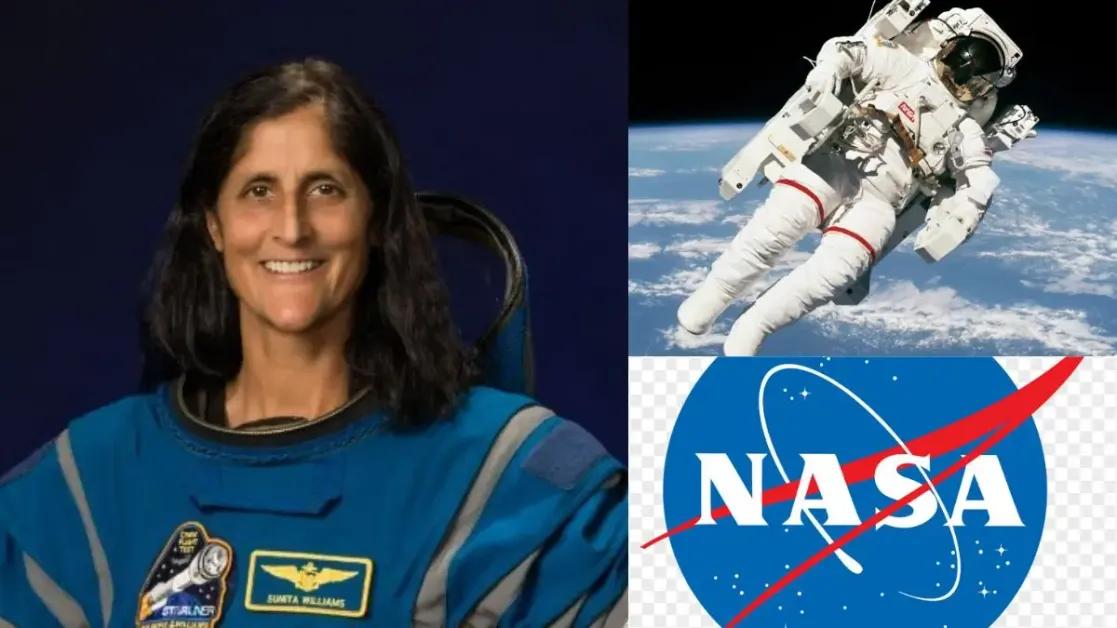
Sunita Williams: Shattering Records and Inspiring Generations
In a monumental achievement for space exploration and women in science, NASA astronaut Sunita Williams has set a new record for the longest cumulative spacewalk time by a female astronaut. This historic feat not only marks a significant milestone in her distinguished career but also serves as an inspiration for aspiring astronauts worldwide.
Who is Sunita Williams?
Sunita Williams is a celebrated astronaut of Indian-American descent whose career spans multiple missions aboard the International Space Station (ISS). Known for her technical expertise, physical endurance, and leadership skills, Williams has become a role model for women in STEM fields globally.
Since joining NASA in 1998, she has completed several missions, earning accolades for her spacewalks, scientific experiments, and contributions to the assembly and maintenance of the ISS.
The Spacewalk Record: What It Means
On her recent mission in 2025, Williams extended her total spacewalk (also called EVA - Extravehicular Activity) time to over 60 hours, surpassing the previous record held by another female astronaut. These spacewalks involve working outside the protective confines of the spacecraft, performing repairs, upgrades, and scientific work in the harsh environment of space.
Her record is a testament to:
-
Physical stamina: Spacewalks are physically demanding, requiring hours of movement while wearing bulky suits and operating in zero gravity.
-
Technical skill: Completing complex tasks during EVAs demands precision and problem-solving under challenging conditions.
-
Mental toughness: The psychological strain of working in space requires focus and resilience.
Details of the Record-Breaking Spacewalks
During her latest series of EVAs, Williams worked on:
-
Upgrading solar arrays on the ISS to enhance power generation.
-
Installing new scientific instruments designed to study cosmic radiation.
-
Conducting maintenance tasks to ensure the station's safety and functionality.
Each spacewalk lasted between 6 to 8 hours, often involving intricate work outside the station while tethered in microgravity. Her ability to operate efficiently and safely under these conditions contributed to the success of the mission and set a new benchmark for female astronauts.
Significance for Women in Space
Williams’ record advances the representation of women in space exploration, a field historically dominated by men. Her achievements demonstrate that women can perform at the highest levels in extreme environments and contribute vitally to scientific progress.
NASA has been actively promoting diversity and inclusion in its astronaut corps, and Williams’ success helps inspire future generations of girls and young women to pursue careers in space science, engineering, and technology.
The Bigger Picture: Spacewalks and Human Spaceflight
Spacewalks are crucial for maintaining the ISS, constructing future space habitats, and preparing for longer missions, such as those to the Moon and Mars. The expertise and endurance demonstrated by astronauts like Williams pave the way for:
-
Extended human presence in space.
-
Development of advanced space technologies.
-
Expanding humanity’s reach beyond Earth.
Looking Ahead: Future Missions
Sunita Williams is expected to continue participating in future missions, including NASA’s Artemis program, which aims to return humans to the Moon and eventually send astronauts to Mars. Her experience and leadership will be invaluable as NASA pushes the boundaries of exploration.
Conclusion: A Historic Milestone for Space Exploration
Sunita Williams’ record-breaking spacewalk time symbolizes both personal excellence and broader progress in human spaceflight. It highlights the critical role of women astronauts and sets a new standard for what can be achieved in the quest to explore the final frontier.
As her name joins the annals of space history, Williams continues to inspire millions to dream big and reach for the stars.
 Related News
POST A COMMENT (0)
All Comments (0)
Replies (0)