




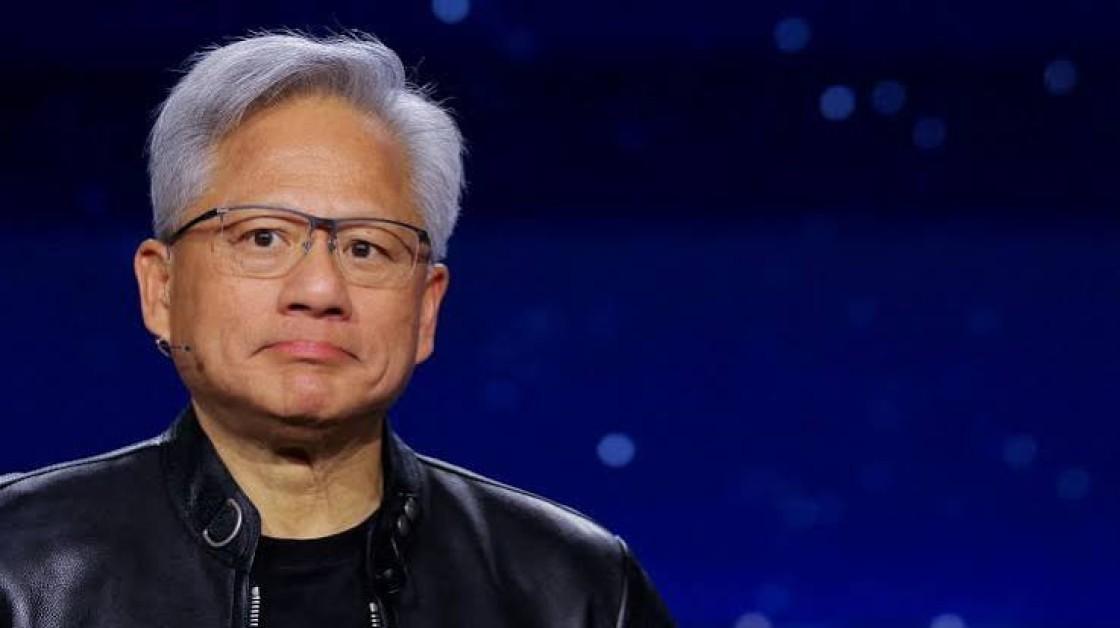
Nvidia CEO Jensen Huang Resigns as Colette Kress Takes Interim Charge, Sending Shockwaves Through Global AI and Semiconductor Markets
Santa Clara, California, November 13, 2026: Nvidia co-founder Jensen Huang has resigned as president, chief executive officer and a member of the company's board of directors, ending more than three decades of leadership at the artificial intelligence chipmaker and triggering fresh uncertainty across global technology and semiconductor markets.
Nvidia confirmed the leadership change on November 12, announcing that Chief Financial Officer Colette Kress would assume the position of interim chief executive while the board searches for a permanent successor.
The company also appointed longtime director Harvey C. Jones as its first board chairman.
Huang's departure follows reports concerning his personal relationships and questions about a possible foreign intelligence effort targeting the former chief executive. Nvidia's board had previously initiated an independent investigation into the national security concerns raised by those reports.
The resignation comes at a critical moment for Nvidia, whose graphics processing units, networking technologies and software ecosystem have become central to the global expansion of artificial intelligence infrastructure.
Nvidia shares declined approximately 4.3% during trading on November 12, recovering from a much steeper fall earlier in the session.
The leadership transition has raised questions about the company's strategic direction, relationships with major technology customers, semiconductor export restrictions and the future of its artificial intelligence computing platform.
However, Nvidia has stated that it expects its operations, customer commitments and product roadmap to continue without interruption.
Nvidia Confirms Jensen Huang's Immediate Resignation

Nvidia announced that Huang had stepped down from his executive and board positions with immediate effect.
The company confirmed that Kress would serve as interim chief executive while continuing her responsibilities as executive vice president and chief financial officer.
The board has begun a search for a permanent CEO and will consider candidates from both inside and outside the company.
The announcement represents one of the most significant leadership changes in the semiconductor industry.
Huang co-founded Nvidia in 1993 and led the company through its transformation from a graphics technology business into a major supplier of accelerated computing systems.
His departure removes the executive most closely associated with Nvidia's technology strategy, commercial partnerships and expansion into artificial intelligence.
The board has sought to reassure customers and shareholders that the company has an experienced management team capable of maintaining business continuity.
Nvidia Leadership Transition: Key Developments
| Development | Confirmed Position |
|---|---|
| Departing executive | Jensen Huang |
| Previous positions | President, CEO and board member |
| Resignation announcement | November 12, 2026 |
| Interim CEO | Colette Kress |
| Continuing CFO | Colette Kress |
| New board chairman | Harvey C. Jones |
| Permanent CEO selection | Search underway |
| Candidates under consideration | Internal and external |
| Nvidia stock movement on November 12 | Down approximately 4.3% |
| Next scheduled earnings announcement | November 17, 2026 |
| Employee meeting | Scheduled for November 18 |
The developments place leadership succession and business continuity at the centre of Nvidia's near-term outlook.
Colette Kress Appointed Interim CEO
Colette Kress has assumed responsibility for leading Nvidia during the transition period.
Kress joined Nvidia in September 2013 and has served as its chief financial officer for more than 13 years.
Before joining the company, she held senior finance positions at Cisco and Microsoft.
Her experience includes financial management, investor relations and supporting Nvidia's expansion into accelerated computing and artificial intelligence.
As interim CEO, Kress will oversee the company's operations while continuing to serve as CFO.
The dual role places significant responsibility on an executive already closely involved in Nvidia's financial strategy.
The board has expressed confidence in her leadership and the broader executive team.
However, it has not announced a timetable for selecting a permanent successor.
Harvey Jones Becomes Nvidia's First Board Chairman
Nvidia has appointed Harvey C. Jones as chairman of its board of directors.
Jones has served on Nvidia's board since the company's founding in 1993.
He has experience in technology management, semiconductor-related businesses and venture investment.
His appointment creates a separate board leadership position following Huang's resignation.
The new chairman will play an important role in overseeing the succession process and maintaining corporate governance.
Jones has indicated that Nvidia's management team is expected to continue executing the company's existing strategy.
The board will also need to address investor concerns surrounding the leadership transition and the circumstances preceding Huang's departure.
Nvidia Shares Fall 4.3% After Leadership Announcement
Nvidia shares closed approximately 4.3% lower on November 12 following the resignation announcement.
The stock had fallen more than 13% earlier in the trading session before recovering part of those losses.
The sharp intraday movement demonstrated the sensitivity of investors to leadership uncertainty at one of the world's most influential technology companies.
Nvidia's market valuation reflects expectations for continued growth in artificial intelligence infrastructure spending.
Any development that raises questions about the company's strategy or execution can influence those expectations.
However, the share-price decline does not establish that Nvidia's underlying business performance has deteriorated.
Investors will continue evaluating customer demand, financial results and the company's technology roadmap.
Why Jensen Huang's Departure Matters to the AI Industry
Huang played a central role in establishing Nvidia's position within artificial intelligence computing.
The company's graphics processing units were originally developed for graphics-intensive applications.
Over time, their ability to perform large numbers of calculations simultaneously made them increasingly useful for scientific computing and machine learning.
Nvidia expanded its technology portfolio to support data centres, artificial intelligence training and inference workloads.
Huang also helped develop relationships with major cloud computing providers, technology companies and AI developers.
His leadership became closely associated with the company's long-term product strategy.
The transition therefore raises questions about whether Nvidia can maintain the same pace of technological and commercial execution under new leadership.
Nvidia's AI Chip Business Remains Central to Global Computing
Nvidia supplies advanced processors used in artificial intelligence data centres.
Its products support the training and operation of large machine-learning models.
These systems require substantial computing power, high-speed memory and specialised networking technologies.
Nvidia's business extends beyond individual processors.
The company provides integrated computing platforms that combine chips, networking equipment and software.
Major technology companies use these systems to support cloud computing and artificial intelligence services.
The growing demand for AI infrastructure has contributed to Nvidia's financial expansion.
However, continued growth depends on customer investment, manufacturing capacity and competitive performance.
The leadership transition introduces additional uncertainty into that outlook.
CUDA Software Ecosystem Remains a Strategic Asset
CUDA is Nvidia's parallel computing platform and programming ecosystem.
It allows developers to use Nvidia processors for computing tasks beyond conventional graphics.
The platform has become important to artificial intelligence research and commercial applications.
Software compatibility and developer familiarity can influence customer decisions about computing infrastructure.
Nvidia's CUDA ecosystem is therefore a significant part of its competitive position.
The departure of its founder does not automatically alter the software platform or existing customer applications.
However, future leadership decisions could influence investment priorities, developer relationships and product development.
Investors will monitor whether Nvidia maintains its integrated hardware and software strategy.
Permanent CEO Search Becomes a Major Investor Focus
Nvidia's board has begun evaluating internal and external candidates for the permanent chief executive position.
The selection process is important because the next CEO will inherit a business operating at the centre of the global AI investment cycle.
The role requires technical understanding, operational leadership and the ability to manage relationships with major customers and regulators.
Kress provides continuity through her financial and management experience.
Longtime Nvidia engineer Ian Buck has also emerged in market discussions as a potential internal candidate.
Buck has played an important role in the development of CUDA and Nvidia's accelerated computing business.
However, Nvidia has not announced a shortlist or selected a permanent successor.
Any appointment will require a formal company announcement.
Leadership Transition Raises Execution Questions
Nvidia operates across a complex semiconductor supply chain.
Its products require advanced chip design, manufacturing partnerships, packaging technologies and software integration.
The company also coordinates product development with major cloud providers and enterprise customers.
Execution delays can affect the timing of product deliveries and revenue recognition.
Huang was closely involved in Nvidia's strategy and external partnerships.
His departure creates a transition risk because a new leadership structure must maintain coordination across these activities.
However, Nvidia has an established executive team and ongoing product development programmes.
The central question for investors is whether management can preserve execution discipline during the succession process.
Nvidia's Product Roadmap Remains Under Scrutiny
Semiconductor companies develop products through multiyear engineering programmes.
Advanced processors require substantial investment in architecture, design and manufacturing preparation.
Nvidia has established a technology roadmap intended to deliver successive generations of accelerated computing systems.
Customers make infrastructure investment decisions based partly on expected product availability.
The company's board has stated that it expects the roadmap to continue without interruption.
Nevertheless, investors will monitor whether the leadership transition affects development schedules or customer commitments.
There is no confirmed announcement that Nvidia has cancelled or delayed its existing product plans because of Huang's resignation.
Cloud Computing Customers Monitor Business Continuity
Major cloud computing companies are important customers for Nvidia's AI infrastructure products.
These businesses invest heavily in data centres to support computing services and artificial intelligence applications.
Their purchasing decisions depend on performance, supply availability and long-term technology planning.
Nvidia's leadership transition may prompt customers to seek additional clarity about delivery schedules and future product development.
However, existing commercial agreements and operational teams remain in place.
The company's ability to maintain customer confidence will be important.
Investors will monitor whether major cloud customers continue their planned infrastructure investments.
AI Infrastructure Spending Remains a Major Market Driver
Artificial intelligence infrastructure has become a significant area of investment for global technology companies.
Building advanced AI systems requires processors, networking equipment, electricity infrastructure and data centre capacity.
Nvidia has benefited from this expansion.
However, investors have also raised questions about the financial returns generated by rapidly increasing AI spending.
Large technology companies are committing substantial capital to computing infrastructure.
The sustainability of that spending depends on customer demand and the commercial value of AI applications.
Huang's departure adds a leadership dimension to an already closely watched investment cycle.
Nevertheless, the resignation does not by itself determine future AI infrastructure demand.
Semiconductor Competitors Gain Attention
Nvidia competes with other semiconductor companies across different computing markets.
Advanced Micro Devices and Broadcom are among the companies involved in AI-related computing technologies.
Major cloud providers are also developing specialised processors for certain workloads.
Following Nvidia's leadership announcement, shares of AMD and Broadcom rose approximately 6% during trading on November 12.
The movement reflected changing investor expectations within the semiconductor sector.
However, short-term share-price gains do not establish that competitors have secured additional customers or market share.
Actual competitive changes depend on product performance, availability, pricing and customer adoption.
US-China Semiconductor Relations Become More Sensitive
Nvidia operates in a semiconductor industry shaped by US-China technology competition.
Advanced AI processors are subject to US export controls intended to restrict access to certain computing capabilities.
The rules influence which products can be sold to Chinese customers and under what conditions.
Huang had advocated maintaining commercial access to China within applicable regulatory requirements.
His departure creates uncertainty about the company's future approach to export policy discussions.
However, Nvidia's commercial decisions remain subject to US law and regulatory approvals.
A change in chief executive does not automatically change export restrictions.
Investors will monitor whether the new leadership team adopts a different public policy strategy.
Independent Board Investigation Continues to Draw Attention
Before Huang's resignation, Nvidia's board announced an independent investigation following reports that the former chief executive may have been targeted by a foreign intelligence effort.
The board said on November 8 that independent directors, assisted by outside legal counsel, would oversee the review.
At that time, the company stated that it had no reason to believe national security or Nvidia confidential information had been compromised.
The investigation was intended to examine the available information.
Reports concerning Huang's personal relationships and potential intelligence connections subsequently intensified scrutiny of the company.
However, allegations involving foreign intelligence activity remain subject to investigation and should not be treated as established findings.
Nvidia has not publicly announced a final investigative conclusion.
Governance Questions Become Important for Shareholders
Corporate governance concerns can affect investor confidence in publicly traded companies.
Boards are responsible for overseeing executive leadership, risk management and compliance.
The circumstances surrounding Huang's departure have increased attention on Nvidia's governance arrangements.
The appointment of a separate board chairman represents an important structural change.
Investors will monitor how the board manages the succession process and addresses outstanding concerns.
The company must also maintain appropriate disclosures to shareholders and regulators.
However, governance developments should be assessed using confirmed company statements and regulatory filings rather than speculation.
Nvidia's Financial Results Scheduled for November 17
Nvidia is scheduled to report its third-quarter fiscal 2027 financial results on November 17, 2026.
The announcement is expected at approximately 1:20 p.m. Pacific Time, followed by an earnings conference call at 2:00 p.m.
The results will be the company's first scheduled quarterly earnings announcement following Huang's resignation.
Investors will focus on revenue growth, data centre demand, profitability and management guidance.
The conference call may also provide further information about the leadership transition.
However, the company has not indicated that its existing financial reporting schedule will change.
The earnings announcement will provide an important opportunity to assess business performance independently of the governance developments.
Data Centre Revenue Will Be a Key Earnings Indicator
Nvidia's data centre business is central to its financial performance.
The segment supplies computing and networking products used in artificial intelligence and other accelerated computing applications.
Revenue depends on demand from cloud providers, enterprises and other customers.
The timing of product deliveries can influence quarterly results.
Investors will examine whether data centre demand remains strong.
They will also assess the company's ability to meet customer requirements.
A leadership transition can create uncertainty, but financial performance will continue to depend on actual sales, costs and operational execution.
Manufacturing Partnerships Remain Critical
Nvidia relies on specialised semiconductor manufacturing partners.
Advanced AI processors require sophisticated production and packaging technologies.
Manufacturing capacity can influence supply availability and delivery schedules.
The company's commercial success depends partly on maintaining close coordination with suppliers.
A new CEO will need to preserve these relationships.
However, manufacturing arrangements are supported by established teams and contractual structures.
There is no confirmed evidence that Huang's resignation has disrupted semiconductor production.
Investors will monitor any future disclosures concerning supply-chain performance.
Nvidia's Investment Ecosystem Faces Questions
Nvidia has invested in companies involved in artificial intelligence infrastructure and related technologies.
These investments can support the development of markets for accelerated computing.
The company also maintains commercial relationships with cloud providers, AI laboratories and technology developers.
Huang played an influential role in shaping this broader ecosystem.
His departure may prompt questions about future investment priorities.
However, Nvidia has not announced a general withdrawal from its existing investment strategy.
The next permanent CEO will be responsible for evaluating capital allocation alongside the board.
Investors will monitor whether the company changes its approach to partnerships and strategic investments.
Global Semiconductor Markets React to Leadership Uncertainty
Nvidia is an important constituent of major US equity benchmarks.
Its share-price movements can influence technology-sector performance and broader market sentiment.
The company's leadership transition has therefore attracted attention beyond the semiconductor industry.
Investors are assessing whether the resignation could affect AI infrastructure spending, supply-chain relationships and competition.
However, the broader semiconductor market includes companies serving many different applications.
Demand for memory chips, industrial semiconductors, automotive electronics and consumer devices follows different market dynamics.
The effect of Nvidia's leadership change will therefore vary across the industry.
Implications for India's Technology Sector
India's technology sector participates in the global semiconductor and artificial intelligence ecosystem through software services, engineering, electronics manufacturing and digital infrastructure.
Indian companies are investing in AI applications and data centre capabilities.
Changes in Nvidia's commercial strategy could influence technology partnerships and equipment procurement.
However, there is no confirmed announcement that Huang's resignation has disrupted Nvidia's business relationships in India.
The longer-term implications will depend on the company's leadership decisions and product strategy.
Indian investors will also monitor global semiconductor stock movements and their effect on technology-sector sentiment.
Nvidia Faces a Critical Leadership Test
The resignation of a founder who led the company for more than three decades creates an unusual management challenge.
Huang was closely identified with Nvidia's corporate culture and strategic direction.
Replacing such a leader requires balancing continuity with independent executive decision-making.
Kress provides an experienced interim leadership structure.
The appointment of Harvey Jones as chairman also creates a clearer separation between board oversight and executive management.
However, investors will continue seeking clarity about the permanent succession plan.
The company's ability to maintain customer confidence and operational performance will be central to the transition.
Outlook for Nvidia and Global AI Markets
Nvidia enters the leadership transition with a significant position in artificial intelligence computing.
Demand for accelerated computing remains an important driver of its business.
However, the company faces competition, export restrictions and questions about the sustainability of global AI infrastructure investment.
Huang's resignation adds governance and leadership uncertainty to these existing challenges.
The November 17 earnings announcement will provide an opportunity to assess the company's financial performance.
The board's selection of a permanent CEO will be another major development.
Investors will monitor whether Nvidia maintains its technology roadmap, manufacturing relationships and commercial strategy.
The long-term outcome will depend on operational execution rather than the leadership announcement alone.
Conclusion
Nvidia co-founder Jensen Huang has resigned as president, chief executive officer and board member, ending more than three decades of leadership at one of the world's most influential semiconductor companies.
The company has appointed Chief Financial Officer Colette Kress as interim CEO and Harvey C. Jones as chairman of the board.
Nvidia shares declined approximately 4.3% on November 12 as investors reacted to the unexpected transition.
The departure comes amid heightened scrutiny of governance issues and an independent investigation into reported foreign intelligence concerns.
However, Nvidia has stated that its operations, customer commitments and product roadmap are expected to continue without interruption.
The company's upcoming November 17 earnings announcement will be closely watched for evidence of sustained AI infrastructure demand and financial performance.
For global technology markets, the central issue is whether Nvidia can preserve its competitive position and execution capabilities while selecting a permanent successor to the executive who helped define the modern AI computing industry.
 Nvidia CEO Jensen Huang Resigns: AI Chip Markets Face Leadership Uncertainty FAQs

POST A COMMENT (0)
All Comments (0)
Replies (0)