





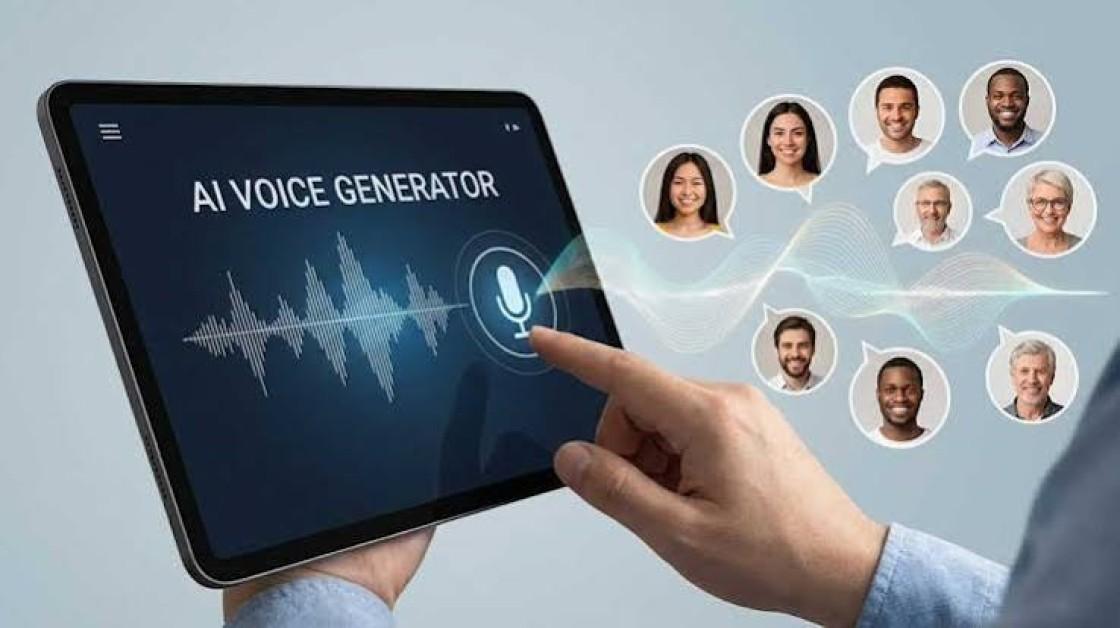
How to Use AI for Voice Generation: A Complete Guide to Creating Natural-Sounding AI Voices
Artificial Intelligence (AI) has transformed voice generation by making it possible to create realistic, natural-sounding speech from text. Businesses, educators, content creators, developers, and media professionals use AI voice generation to produce narrations, audiobooks, virtual assistants, customer support systems, and multilingual content more efficiently.
Rather than replacing human voice artists in every situation, AI serves as a powerful tool that automates routine voice production while enabling faster content creation and broader accessibility.
What Is AI Voice Generation?

AI voice generation is the process of using artificial intelligence to convert written text into spoken language using advanced speech synthesis technologies.
Modern AI voice systems combine machine learning, deep learning, natural language processing (NLP), and neural text-to-speech (TTS) models to generate speech that closely resembles natural human voices with appropriate pronunciation, pacing, and intonation.
Why Use AI for Voice Generation?
AI offers several advantages for producing spoken content.
- Creates natural-sounding voiceovers
- Reduces production time
- Supports multiple languages
- Lowers recording costs
- Improves accessibility
- Enables consistent audio quality
These benefits help individuals and organizations create audio content at scale.
How to Use AI for Voice Generation
Step 1: Define Your Purpose
Begin by determining how the generated voice will be used.
Common applications include:
- Video narration
- Podcasts
- Audiobooks
- Customer support
- Virtual assistants
- Online courses
- Marketing content
- Product demonstrations
A clear objective helps you choose the most suitable voice style and format.
Step 2: Prepare Your Script
Write a well-structured script that includes:
- Clear language
- Proper punctuation
- Logical sentence flow
- Correct grammar
- Pronunciation guidance for specialized terms
- Appropriate pauses
Well-written scripts produce more natural AI-generated speech.
Step 3: Choose a Suitable Voice
Select a voice that matches your audience and content.
Consider factors such as:
- Gender
- Accent
- Language
- Speaking style
- Tone
- Formality
Consistency in voice selection strengthens brand identity and user experience.
Step 4: Generate the Voice
Use AI to convert your script into speech.
Many AI voice generation systems allow adjustments for:
- Speaking speed
- Pitch
- Emphasis
- Pauses
- Emotional expression
- Pronunciation
Experiment with these settings to achieve natural and engaging results.
Step 5: Review the Audio
Carefully listen to the generated recording and check for:
- Pronunciation accuracy
- Natural pacing
- Audio clarity
- Proper emphasis
- Consistent tone
- Background artifacts
Revise the script or settings if improvements are needed.
Step 6: Integrate the Audio
Use the generated voice in projects such as:
- Marketing videos
- Training materials
- Mobile applications
- Websites
- Interactive voice response (IVR) systems
- Educational presentations
Ensure the audio fits seamlessly with visuals and other media elements.
Step 7: Update and Improve
As your content evolves, continue refining scripts, voice settings, and workflows to improve quality and maintain consistency across projects.
Benefits of AI Voice Generation
Faster Content Production
AI creates voiceovers in minutes without requiring lengthy recording sessions.
Cost Efficiency
Businesses can produce audio content without repeatedly hiring voice talent for routine projects.
Multilingual Support
Many AI systems generate speech in multiple languages and accents, making global communication easier.
Consistent Quality
AI maintains a uniform voice across multiple projects and updates.
Improved Accessibility
AI-generated narration supports users with visual impairments, reading difficulties, or language preferences.
Common Applications of AI Voice Generation
AI voice technology is widely used for:
- Audiobooks
- E-learning courses
- YouTube videos
- Podcasts
- Marketing campaigns
- Customer service systems
- Navigation systems
- Virtual assistants
- Accessibility tools
- News narration
- Corporate training
- Product demonstrations
Challenges of Using AI for Voice Generation
Although AI offers many benefits, users should understand its limitations.
Emotional Expression
AI voices continue to improve but may not fully match the emotional depth and nuance of skilled human voice actors.
Pronunciation Accuracy
Technical terms, names, and uncommon words may require manual adjustments.
Ethical Use
Organizations should avoid deceptive uses of AI-generated voices and obtain proper permission when recreating or cloning identifiable voices.
Copyright and Consent
Ensure compliance with copyright laws, licensing requirements, and consent policies when using voice recordings or voice cloning technologies.
Best Practices for Using AI Voice Generation
Follow these recommendations for the best results.
Write High-Quality Scripts
Clear, concise writing produces smoother and more natural speech.
Choose an Appropriate Voice
Select a voice that aligns with your audience, brand identity, and communication goals.
Review Every Recording
Listen carefully for pronunciation, pacing, and clarity before publishing.
Be Transparent
When appropriate, disclose that AI-generated voices are being used, especially in professional or public-facing content.
Respect Privacy and Ethics
Avoid using AI voice technology to impersonate individuals or create misleading content without authorization.
Future of AI Voice Generation
Artificial Intelligence is expected to make voice generation even more realistic through improved emotional expression, real-time multilingual translation, personalized digital voices, adaptive speech synthesis, and seamless integration with virtual assistants, media production, and communication platforms. As AI technology advances, voice generation will become more natural and accessible while ethical guidelines and responsible use remain increasingly important.
Conclusion
AI is transforming voice generation by enabling creators and organizations to produce realistic, high-quality audio quickly and efficiently. From educational content and customer support to marketing campaigns and virtual assistants, AI-powered speech synthesis offers numerous opportunities to improve communication and accessibility. When combined with thoughtful scripting, careful review, and responsible use, AI voice generation becomes a valuable tool for delivering engaging and professional audio experiences.
 How to Use AI for Voice Generation: Benefits, Applications, Best Practices, and Future Explained FAQs
POST A COMMENT (0)
All Comments (0)
Replies (0)