





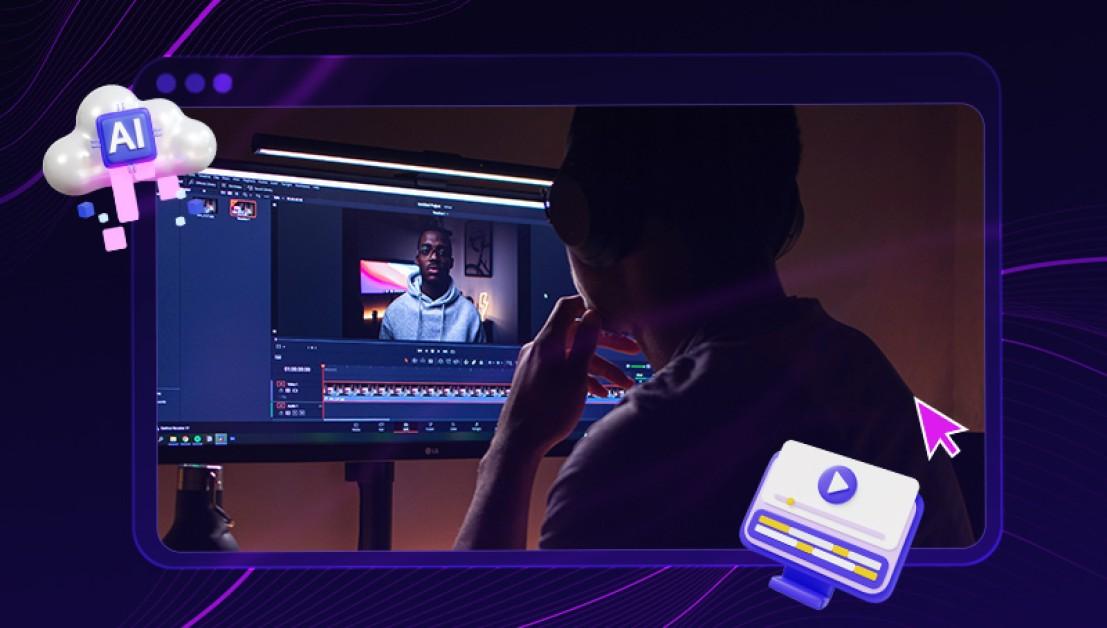
How to Use AI for Video Creation: A Complete Guide to Creating Professional Videos with Artificial Intelligence
Artificial Intelligence (AI) is transforming video creation by making it faster, more accessible, and more efficient. Whether you are a content creator, marketer, educator, business owner, or social media influencer, AI can help simplify the video production process by generating ideas, writing scripts, editing footage, creating voiceovers, and even producing complete videos.
Rather than replacing human creativity, AI serves as a powerful creative assistant that automates repetitive tasks while allowing creators to focus on storytelling, branding, and audience engagement.
What Is AI for Video Creation?

AI for video creation refers to the use of artificial intelligence technologies to assist in planning, producing, editing, and optimizing video content.
Modern AI tools use machine learning, natural language processing (NLP), computer vision, speech synthesis, and generative AI to automate various stages of video production, helping users create professional-quality videos with less time and technical expertise.
Why Use AI for Video Creation?
AI provides several benefits for video creators.
- Speeds up video production
- Reduces editing time
- Automates repetitive tasks
- Improves content quality
- Enhances creativity
- Makes professional video creation more accessible
These advantages allow creators to produce more content while maintaining consistency.
How to Use AI for Video Creation
Step 1: Define Your Video Goal
Begin by identifying the purpose of your video.
Common goals include:
- Product promotion
- Educational tutorials
- Social media content
- Marketing campaigns
- Customer training
- Company presentations
- Entertainment
- Brand awareness
A clear objective helps guide every stage of production.
Step 2: Generate a Script
AI can assist in creating:
- Video scripts
- Story outlines
- Dialogue
- Scene descriptions
- Calls to action
- Video introductions and conclusions
Review and refine AI-generated scripts to match your brand voice and messaging.
Step 3: Create Visual Content
AI can help generate or organize:
- Images
- Illustrations
- Animations
- Background visuals
- Video clips
- Presentation slides
Choose visuals that support your message and maintain visual consistency.
Step 4: Add AI Voiceovers
AI-powered voice generation can produce professional narration in multiple languages and accents.
Common uses include:
- Explainer videos
- Tutorials
- Training materials
- Product demonstrations
- Marketing videos
- Educational content
Always review pronunciation, pacing, and tone before publishing.
Step 5: Edit the Video
AI can automate editing tasks such as:
- Cutting unnecessary footage
- Removing background noise
- Generating subtitles
- Synchronizing audio
- Improving video quality
- Suggesting transitions
Human review ensures the final edit meets creative and quality standards.
Step 6: Optimize for Different Platforms
AI can help tailor videos for:
- Social media
- Business websites
- Online courses
- Marketing campaigns
- Presentations
- Video-sharing platforms
Optimizing format, aspect ratio, captions, and length improves audience engagement across channels.
Step 7: Analyze Video Performance
After publishing, AI can assist in evaluating:
- Viewer engagement
- Watch time
- Audience retention
- Click-through rates
- Conversion metrics
- Viewer feedback
These insights help improve future video content.
Benefits of AI for Video Creation
Faster Production
AI reduces the time needed for scripting, editing, and post-production.
Improved Productivity
Creators can produce more videos without significantly increasing workload.
Cost Efficiency
Automation reduces the need for extensive manual editing and production resources.
Consistent Quality
AI helps maintain uniform formatting, captions, audio quality, and editing styles.
Greater Accessibility
Automatic subtitles, translations, and voiceovers make videos accessible to broader audiences.
Common Applications of AI in Video Creation
AI is widely used for:
- Marketing videos
- Product demonstrations
- Educational content
- Corporate training
- Social media videos
- News content
- YouTube videos
- Promotional campaigns
- Customer support videos
- Event highlights
- Explainer videos
- Internal communications
Challenges of Using AI for Video Creation
Although AI offers many advantages, creators should understand its limitations.
Limited Creativity
AI can generate content efficiently but may not fully capture originality, emotional storytelling, or unique artistic vision.
Accuracy
AI-generated visuals, scripts, or voiceovers should be reviewed to ensure factual correctness and brand alignment.
Copyright and Licensing
Ensure that all generated or sourced assets comply with copyright laws and licensing requirements.
Ethical Considerations
Creators should disclose AI-generated content when appropriate and avoid producing misleading or deceptive videos.
Best Practices for Using AI for Video Creation
Follow these recommendations for better results.
Start with a Clear Plan
Define your audience, objectives, and key message before using AI tools.
Review Every AI Output
Carefully check scripts, visuals, audio, and edits for quality and accuracy.
Maintain Brand Consistency
Ensure fonts, colors, tone, and messaging remain consistent across all videos.
Combine AI with Human Creativity
Use AI to automate production tasks while relying on human creativity for storytelling and strategic decisions.
Keep Improving
Analyze audience feedback and performance metrics to refine future videos.
Future of AI in Video Creation
Artificial Intelligence is expected to make video production even more advanced through real-time editing, personalized video generation, multilingual voice synthesis, realistic digital avatars, automated scene creation, and deeper integration with creative workflows. As AI technologies continue to evolve, creators will be able to produce high-quality videos more efficiently while human creativity remains essential for authentic storytelling and audience connection.
Conclusion
AI is revolutionizing video creation by simplifying scripting, editing, voice generation, visual production, and performance analysis. When combined with thoughtful planning, creative direction, and careful human review, AI enables individuals and organizations to create engaging, professional-quality videos faster and more efficiently. Used responsibly, AI serves as a valuable production assistant that enhances creativity rather than replacing it.
 How to Use AI for Video Creation: Benefits, Workflow, Best Practices, and Future Explained FAQs
POST A COMMENT (0)
All Comments (0)
Replies (0)