





How to Use AI for Data Analysis: A Complete Guide to Smarter Data-Driven Decision Making
Artificial Intelligence (AI) is transforming data analysis by enabling organizations to process large datasets, identify hidden patterns, generate meaningful insights, and make informed decisions more quickly than traditional methods. Businesses, researchers, financial analysts, marketers, healthcare professionals, and educators increasingly rely on AI to simplify complex data analysis and improve productivity.
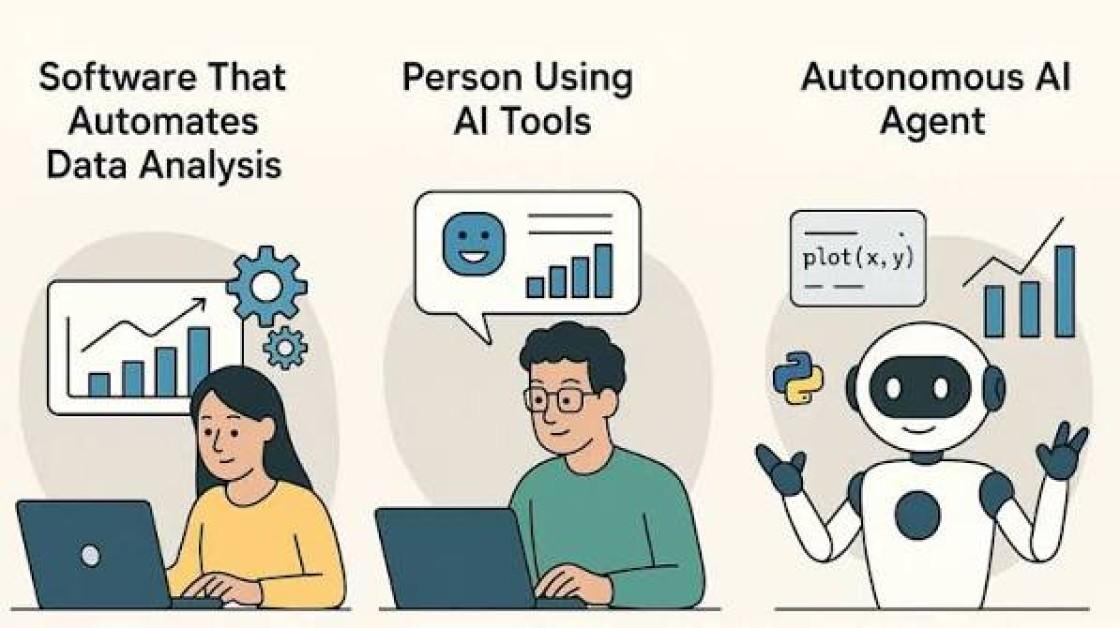
Rather than replacing data analysts, AI acts as an intelligent assistant that automates repetitive tasks, accelerates analysis, and highlights valuable insights while human expertise remains essential for interpreting results and making strategic decisions.
What Is AI for Data Analysis?

AI for data analysis refers to the use of artificial intelligence technologies to collect, process, organize, analyze, and interpret data.
Modern AI systems use machine learning, natural language processing (NLP), predictive analytics, and statistical techniques to discover trends, identify relationships, detect anomalies, generate reports, and support data-driven decision-making.
Why Use AI for Data Analysis?
AI offers several advantages for individuals and organizations.
- Processes large datasets quickly
- Identifies hidden trends
- Automates repetitive analysis
- Improves forecasting
- Supports faster decision-making
- Reduces manual effort
These benefits help businesses and researchers extract more value from their data.
How to Use AI for Data Analysis
Step 1: Define Your Objective
Start by identifying the question you want your data to answer.
Common objectives include:
- Understanding customer behavior
- Measuring business performance
- Forecasting sales
- Identifying operational inefficiencies
- Detecting fraud
- Evaluating marketing campaigns
A clearly defined objective helps focus the analysis.
Step 2: Collect Relevant Data
Gather accurate and relevant information from sources such as:
- Databases
- Spreadsheets
- Business applications
- Customer surveys
- Website analytics
- Sales systems
- Financial records
- IoT devices
Reliable data forms the foundation of meaningful analysis.
Step 3: Clean and Organize the Data
Before analysis, ensure your data is:
- Complete
- Consistent
- Free from duplicates
- Properly formatted
- Accurate
- Well organized
High-quality data leads to more reliable AI-generated insights.
Step 4: Analyze Patterns and Trends
AI can identify:
- Customer preferences
- Seasonal trends
- Business growth patterns
- Product performance
- Operational bottlenecks
- Market opportunities
These insights help organizations understand historical performance and emerging trends.
Step 5: Generate Reports and Visual Summaries
AI can automatically produce:
- Executive summaries
- Performance reports
- Dashboards
- Trend analyses
- Business insights
- Data visualizations
Clear reporting makes complex information easier to understand and communicate.
Step 6: Make Data-Driven Decisions
Use AI-generated insights to support decisions related to:
- Business strategy
- Marketing campaigns
- Product development
- Financial planning
- Resource allocation
- Customer experience improvements
Important decisions should always include human review and professional judgment.
Step 7: Continuously Monitor Results
AI systems can continuously analyze incoming data to:
- Detect changes
- Monitor key performance indicators (KPIs)
- Identify unusual activity
- Track business performance
- Measure campaign effectiveness
- Support ongoing optimization
Continuous monitoring enables organizations to respond quickly to changing conditions.
Benefits of AI for Data Analysis
Faster Analysis
AI processes large datasets much faster than manual analysis.
Improved Accuracy
Automation helps reduce repetitive manual errors while improving consistency.
Better Decision-Making
Organizations gain timely insights that support informed strategic decisions.
Predictive Capabilities
AI can identify patterns that help forecast future outcomes and potential risks.
Increased Productivity
Analysts spend less time preparing data and more time interpreting results.
Common Applications of AI in Data Analysis
AI is widely used for:
- Business intelligence
- Financial analysis
- Sales forecasting
- Customer analytics
- Marketing performance analysis
- Healthcare analytics
- Manufacturing optimization
- Supply chain management
- Fraud detection
- Risk assessment
- Academic research
- Operational reporting
Challenges of Using AI for Data Analysis
Although AI provides significant advantages, organizations should recognize its limitations.
Data Quality
Poor-quality data can produce inaccurate or misleading insights.
Privacy and Security
Sensitive information must be protected according to organizational policies and applicable regulations.
Human Interpretation
AI identifies patterns, but experienced professionals are needed to understand context and make strategic decisions.
Bias
If training data contains bias, AI-generated insights may also reflect those biases, making regular review important.
Best Practices for Using AI for Data Analysis
Follow these recommendations for effective AI-assisted analysis.
Define Clear Objectives
Know what business question or research problem you are trying to solve before beginning analysis.
Use High-Quality Data
Ensure datasets are accurate, complete, and regularly updated.
Verify AI Insights
Review AI-generated findings before acting on important recommendations.
Protect Sensitive Information
Use secure systems and follow privacy, security, and compliance requirements when handling data.
Combine AI with Human Expertise
Allow AI to automate analysis while relying on experienced professionals to interpret findings and make final decisions.
Future of AI in Data Analysis
Artificial Intelligence is expected to make data analysis even more powerful through real-time analytics, automated insight generation, predictive modeling, natural language querying, multimodal data processing, and deeper integration with business intelligence platforms. As AI technologies continue to advance, organizations will gain faster access to meaningful insights while human expertise remains essential for interpreting results, ensuring ethical data use, and making informed strategic decisions.
Conclusion
AI is revolutionizing data analysis by enabling organizations to process information faster, uncover valuable insights, automate reporting, and improve decision-making. By combining high-quality data, responsible AI practices, continuous monitoring, and human expertise, businesses and researchers can transform raw information into actionable intelligence. Used effectively, AI becomes a powerful partner in building smarter, data-driven organizations and achieving long-term success.
 How to Use AI for Data Analysis: Benefits, Techniques, Best Practices, and Future Explained FAQs
POST A COMMENT (0)
All Comments (0)
Replies (0)