





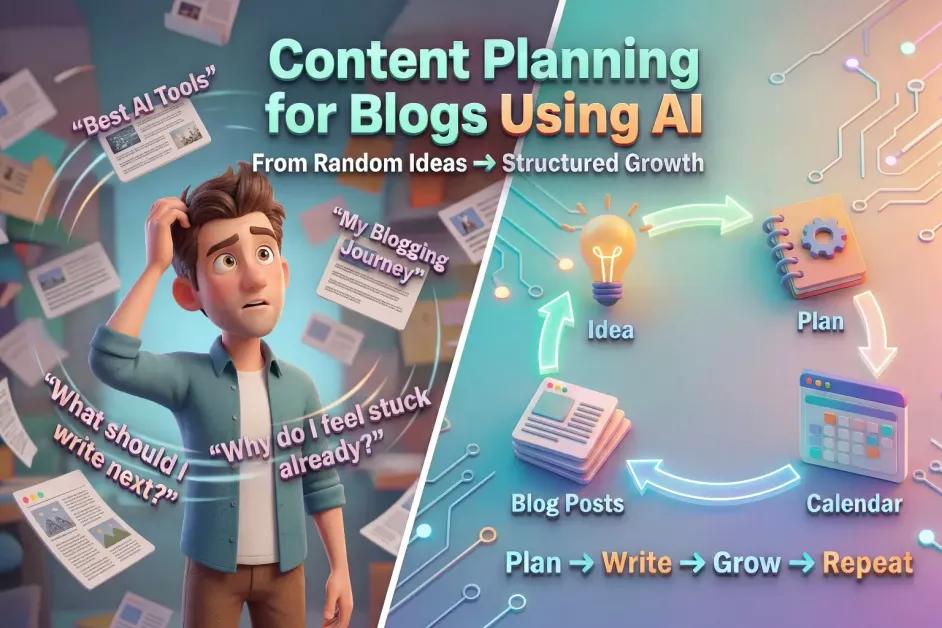
How to Use AI for Content Planning: A Complete Guide to Building Smarter Content Strategies
Artificial Intelligence (AI) is changing the way businesses, marketers, bloggers, and content creators plan and manage content. Instead of spending hours brainstorming ideas, researching topics, organizing publishing schedules, and analyzing audience interests, AI can assist with every stage of the content planning process.
While AI can greatly improve efficiency, successful content planning still depends on human creativity, strategic thinking, and a deep understanding of audience needs. AI works best as a planning assistant that helps generate insights and organize workflows rather than replacing human decision-making.
What Is AI Content Planning?
AI content planning is the process of using artificial intelligence to help organize, research, and develop a structured content strategy.
AI-powered tools can assist with:
- Topic discovery
- Content calendar creation
- Keyword research
- Audience analysis
- Content clustering
- Idea generation
- Workflow organization
- Performance analysis
These capabilities help content teams produce more consistent and relevant content.
Why Use AI for Content Planning?
AI provides several advantages for planning content.
- Saves time
- Improves organization
- Generates fresh ideas
- Supports SEO planning
- Identifies content opportunities
- Increases publishing consistency
These benefits enable creators to focus more on producing high-quality content.
How to Use AI for Content Planning

Step 1: Define Your Content Goals
Begin by identifying what you want your content to achieve.
Examples include:
- Increasing website traffic
- Generating leads
- Building brand awareness
- Educating customers
- Improving search rankings
- Growing social media engagement
Clear objectives guide the planning process.
Step 2: Understand Your Audience
Use AI to organize information about your target audience, including:
- Interests
- Challenges
- Frequently asked questions
- Search intent
- Skill level
- Preferred content formats
Understanding audience needs helps create more valuable content.
Step 3: Generate Topic Ideas
AI can suggest:
- Blog post ideas
- Educational articles
- Industry trends
- Frequently asked questions
- Seasonal content
- Evergreen topics
- Content series
- Supporting articles
These suggestions help maintain a steady flow of publishing ideas.
Step 4: Organize a Content Calendar
AI can assist in planning:
- Weekly publishing schedules
- Monthly editorial calendars
- Campaign timelines
- Product launch content
- Event-based articles
- Social media posting schedules
A structured calendar improves consistency and workflow management.
Step 5: Plan SEO Content
AI supports SEO planning by helping identify:
- Relevant keywords
- Search intent
- Topic clusters
- Internal linking opportunities
- Content gaps
- Frequently searched questions
Human review is still essential to ensure accuracy and align content with broader SEO goals.
Step 6: Create Content Outlines
AI can generate organized outlines that include:
- Headlines
- Subheadings
- Key discussion points
- Frequently asked questions
- Calls to action
- Supporting sections
Well-structured outlines make writing faster and more consistent.
Step 7: Review and Refine the Plan
Evaluate your content plan to ensure it:
- Aligns with business goals
- Meets audience needs
- Maintains consistent quality
- Covers diverse topics
- Supports long-term strategy
- Fits available resources
Human judgment ensures the final strategy remains relevant and effective.
Benefits of AI Content Planning
Faster Planning
AI significantly reduces the time required for brainstorming and organizing ideas.
Improved Consistency
Content calendars help maintain regular publishing schedules.
Better SEO Support
AI assists in identifying keywords, topic relationships, and content opportunities.
Increased Productivity
Content teams can spend more time creating and improving content rather than planning it manually.
Enhanced Creativity
AI-generated suggestions can inspire new perspectives and content ideas.
Common Applications of AI Content Planning
AI is widely used for:
- Blog planning
- SEO content strategy
- Social media calendars
- Email marketing campaigns
- Video content planning
- Podcast planning
- Educational content
- Product marketing
- Business communications
- Knowledge management
- Brand storytelling
- Editorial calendars
Challenges of Using AI for Content Planning
Although AI provides valuable assistance, users should understand its limitations.
Generic Ideas
AI-generated suggestions may require customization to match your brand and audience.
Accuracy
Topic suggestions and supporting information should be verified before publication.
Creativity
Original storytelling, unique perspectives, and emotional connection still depend on human creators.
Strategy
Long-term brand positioning and business decisions require human expertise and market understanding.
Best Practices for AI Content Planning
Follow these recommendations for better results.
Start with Clear Objectives
Define measurable goals before generating ideas or building a content calendar.
Combine AI with Human Creativity
Use AI to generate ideas while relying on human expertise to shape the final strategy.
Review Every Recommendation
Evaluate AI-generated topics for relevance, originality, and alignment with your audience.
Update Your Content Plan
Regularly review and adjust your calendar based on audience feedback, performance data, and changing business priorities.
Maintain Brand Consistency
Ensure all planned content reflects your organization's tone, messaging, and communication standards.
Future of AI in Content Planning
Artificial Intelligence is expected to make content planning even more intelligent through predictive trend analysis, real-time audience insights, automated editorial scheduling, advanced SEO recommendations, personalized content strategies, and seamless integration with marketing platforms. As AI continues to evolve, it will become an increasingly valuable partner for content creators while human creativity, brand storytelling, and strategic thinking remain essential for producing meaningful and engaging content.
Conclusion
AI is transforming content planning by helping creators generate ideas, organize editorial calendars, identify SEO opportunities, and streamline workflows. When combined with clear objectives, audience understanding, human creativity, and thoughtful review, AI enables businesses and content creators to build efficient, consistent, and effective content strategies. Used responsibly, AI serves as a powerful planning assistant that supports better decision-making and long-term content success.
 How to Use AI for Content Planning: Benefits, Strategy, Best Practices, and Future Explained FAQs
POST A COMMENT (0)
All Comments (0)
Replies (0)