





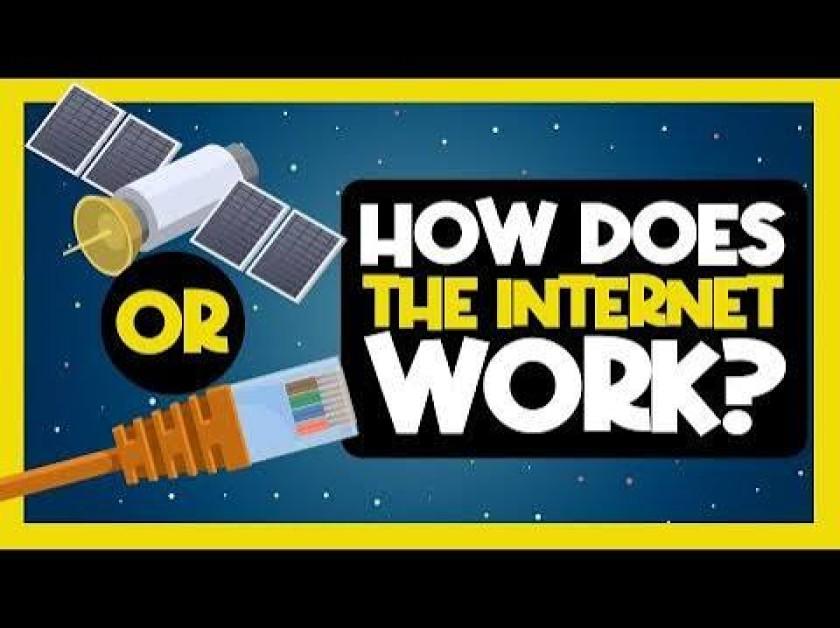
How the Internet Works: A Beginner's Guide to the World's Largest Network
The internet is a global network of interconnected computers, servers, mobile devices, and other digital systems that communicate using standardized networking protocols. It allows billions of people to access websites, send emails, stream videos, make video calls, play online games, and use cloud-based applications from almost anywhere in the world.
Although using the internet feels nearly instant, every online activity involves a complex series of processes that happen in just milliseconds.
What Is the Internet?

The internet is a worldwide network of networks that connects devices and enables them to exchange information using standard communication protocols.
Rather than being owned by a single company or government, the internet consists of millions of interconnected private, public, academic, and commercial networks working together.
How the Internet Works
Every time you open a website or use an online service, several steps take place behind the scenes.
Step 1: Connecting to the Internet
Your device connects to the internet through an Internet Service Provider (ISP) using technologies such as fiber-optic broadband, cable, DSL, satellite, mobile networks, or Wi-Fi.
Step 2: Entering a Website Address
When you type a website address such as www.example.com, your device first needs to determine where that website is located.
Step 3: DNS Converts the Domain Name
The Domain Name System (DNS) translates the human-readable domain name into an IP address, which uniquely identifies the server hosting the website.
For example:
- Domain Name:
www.example.com - IP Address:
93.184.216.34(illustrative example)
This allows computers to locate each other across the internet.
Step 4: Sending a Request
Your browser sends a request to the website's server using Internet Protocol (IP) and the Transmission Control Protocol (TCP) or, for many modern applications, the newer QUIC protocol built on UDP.
Step 5: Data Travels in Packets
Instead of sending one large file, the information is divided into small units called data packets.
Each packet contains:
- Source address
- Destination address
- Sequence information
- Payload (the actual data)
Routers forward these packets across multiple networks toward their destination.
Step 6: The Server Processes the Request
The web server receives the request, processes it, retrieves the required files or database information, and prepares a response.
Step 7: Data Returns to Your Device
The server sends data packets back across the internet. Your browser reassembles the packets and displays the webpage, video, image, or other requested content.
This entire process usually takes only fractions of a second.
Key Components of the Internet
Several technologies work together to make the internet function.
Internet Service Provider (ISP)
An ISP connects homes, businesses, and mobile devices to the global internet.
IP Address
Every device connected to the internet has an Internet Protocol (IP) address that uniquely identifies it on the network.
Domain Name System (DNS)
DNS acts like the internet's phonebook by translating domain names into IP addresses.
Routers
Routers determine the best available path for data packets as they travel across networks.
Servers
Servers store websites, applications, databases, videos, emails, and cloud services while responding to user requests.
Data Centers
Large facilities containing thousands of servers power cloud computing, streaming platforms, search engines, and online services.
Submarine Fiber-Optic Cables
Most international internet traffic travels through high-capacity fiber-optic cables laid beneath oceans, connecting continents at extremely high speeds.
Internet Communication Protocols
The internet depends on standardized communication rules called protocols.
IP (Internet Protocol)
Responsible for addressing and routing data packets between devices.
TCP (Transmission Control Protocol)
Ensures data is delivered accurately, in order, and without loss for applications that require reliable communication.
UDP (User Datagram Protocol)
Provides faster communication with lower overhead for applications such as live streaming, online gaming, and voice or video calls where occasional packet loss may be acceptable.
HTTP and HTTPS
Protocols used by web browsers to communicate with websites. HTTPS encrypts communication, making browsing more secure.
Why the Internet Is So Fast
Several technologies improve internet speed and reliability.
Fiber-Optic Networks
Transmit information using pulses of light through glass fibers at extremely high speeds.
Content Delivery Networks (CDNs)
Store copies of website content on servers located closer to users, reducing loading times.
Caching
Browsers and servers temporarily store frequently accessed data to avoid repeated downloads.
High-Speed Routers
Modern networking equipment efficiently forwards enormous volumes of internet traffic every second.
Benefits of the Internet
The internet has transformed nearly every aspect of modern life.
Instant Communication
Email, messaging, voice calls, and video conferencing connect people globally.
Access to Information
Search engines, digital libraries, and educational platforms provide vast amounts of knowledge.
Online Commerce
Businesses sell products and services through e-commerce platforms worldwide.
Cloud Computing
Users access software, storage, and computing resources over the internet.
Entertainment
Streaming services, gaming, music, and social media deliver digital content on demand.
Challenges Facing the Internet
Despite its benefits, the internet presents several challenges.
Cybersecurity Threats
Hackers, malware, ransomware, phishing, and Distributed Denial-of-Service (DDoS) attacks can disrupt services and compromise data.
Privacy Concerns
Organizations must protect personal information and use data responsibly.
Network Congestion
Heavy traffic can slow internet performance during peak usage periods.
Digital Divide
Reliable internet access remains unavailable or limited in some regions.
Future of the Internet
The internet continues to evolve through 5G and future wireless technologies, fiber-optic expansion, satellite broadband, edge computing, Artificial Intelligence, quantum networking research, and the Internet of Things (IoT). Emerging technologies are expected to deliver faster speeds, lower latency, greater reliability, and support for billions of connected devices. As digital transformation accelerates, the internet will remain the foundation of communication, commerce, education, healthcare, entertainment, and innovation worldwide.
Conclusion
The internet is one of the most significant technological achievements in history, connecting billions of devices through a vast global network. By combining technologies such as IP addresses, DNS, routers, servers, data packets, and communication protocols, the internet enables information to travel across the world in milliseconds. Understanding how the internet works provides valuable insight into the digital infrastructure that powers websites, cloud services, streaming platforms, online businesses, and everyday communication.
 How the Internet Works: Complete Guide Explained in Detail FAQs
POST A COMMENT (0)
All Comments (0)
Replies (0)