





How Recommendation Systems Work: The AI Behind Personalized Suggestions
Recommendation systems are Artificial Intelligence (AI) technologies that analyze user behavior, preferences, and patterns to suggest products, movies, music, videos, articles, advertisements, or other content that users are likely to find interesting. These systems power personalized experiences across e-commerce websites, streaming platforms, social media, online marketplaces, and digital services.
From recommending the next movie to watch to suggesting products while shopping online, recommendation systems have become one of the most widely used applications of AI.
What Is a Recommendation System?

A recommendation system is an AI-powered software system that predicts what a user is likely to prefer based on data such as browsing history, purchases, ratings, searches, and interactions.
Its primary goal is to help users discover relevant content while improving engagement and customer satisfaction.
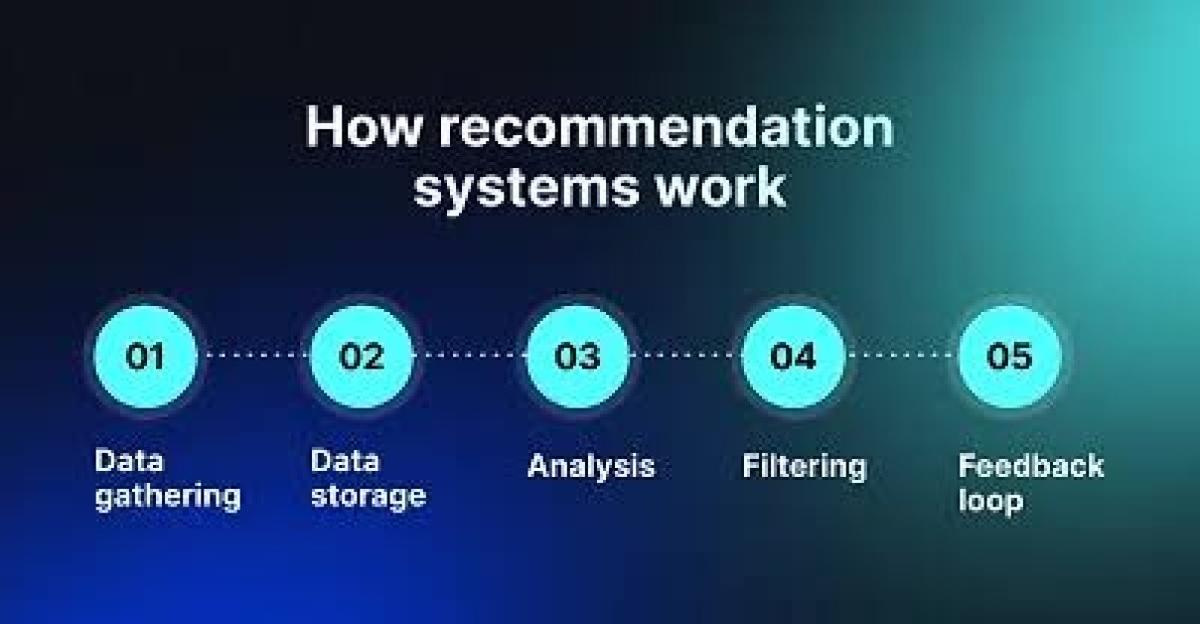
How Recommendation Systems Work
Recommendation systems follow several coordinated steps.
Step 1: Data Collection
The system collects information about user behavior, including:
- Search history
- Products viewed
- Purchase history
- Movies or videos watched
- Songs played
- Ratings and reviews
- Clicks and likes
- Time spent viewing content
Some systems also consider broader trends and contextual information, such as the device being used, approximate location (when permitted), or time of day.
Step 2: Data Analysis
Artificial Intelligence and machine learning analyze the collected information to identify patterns and relationships between users, products, and content.
Step 3: Build User Profiles
The system creates a dynamic profile representing each user's interests and preferences based on past interactions.
Step 4: Compare Similarities
Algorithms compare users with similar interests or compare content with similar characteristics.
Step 5: Rank Recommendations
Potential recommendations are ranked according to their predicted relevance for the individual user.
Step 6: Display Personalized Suggestions
The highest-ranked items appear as recommended products, videos, music, news articles, advertisements, or other personalized content.
The recommendation process continues learning as users interact with new content.
Main Types of Recommendation Systems
Modern recommendation engines use several approaches.
Collaborative Filtering
Collaborative filtering recommends items based on the behavior of users with similar interests.
For example, if many users who enjoyed one movie also watched another movie, the system may recommend the second movie to similar users.
Content-Based Filtering
Content-based filtering recommends items that share characteristics with content the user has previously liked.
For example, someone who frequently watches science fiction movies may receive recommendations for similar science fiction titles.
Hybrid Recommendation Systems
Most modern platforms combine multiple recommendation methods to improve accuracy and overcome the limitations of any single approach.
Technologies Behind Recommendation Systems
Several advanced technologies work together.
Artificial Intelligence
AI identifies complex relationships within large datasets.
Machine Learning
Machine learning models continuously improve recommendation accuracy as more user interactions become available.
Data Analytics
Large volumes of behavioral data help identify trends and user preferences.
Big Data
Recommendation systems process massive datasets generated by millions of users and interactions.
Cloud Computing
Cloud infrastructure provides the computing power needed to analyze data and deliver recommendations at scale.
Common Applications of Recommendation Systems
Recommendation engines are used across many industries.
E-Commerce
Online stores recommend products based on browsing history, purchases, and shopping behavior.
Video Streaming
Streaming platforms suggest movies, TV shows, documentaries, and live content based on viewing habits.
Music Streaming
Music services recommend songs, artists, albums, and playlists based on listening history.
Social Media
Platforms personalize feeds, posts, videos, groups, and suggested connections.
News Websites
News platforms recommend articles that match readers' interests and reading patterns.
Online Learning
Educational platforms recommend courses, lessons, and learning resources suited to each learner.
Digital Advertising
Advertising systems display promotions that are more likely to be relevant to individual users.
Benefits of Recommendation Systems
Recommendation systems provide numerous advantages.
Personalized Experiences
Users receive content tailored to their interests.
Faster Content Discovery
Relevant recommendations reduce the time spent searching.
Higher Customer Engagement
Personalized suggestions encourage users to interact with platforms more frequently.
Increased Sales
Businesses can recommend products that customers are more likely to purchase.
Better Customer Satisfaction
Relevant recommendations improve the overall user experience.
Challenges of Recommendation Systems
Despite their effectiveness, recommendation systems have several limitations.
Cold Start Problem
New users and newly added content may have limited interaction data, making accurate recommendations more difficult.
Privacy Concerns
Recommendation systems often rely on user behavior data, making responsible data handling and privacy protection essential.
Filter Bubbles
Repeatedly recommending similar content may reduce users' exposure to diverse perspectives or new interests.
Data Quality
Poor or incomplete data can reduce recommendation accuracy.
Best Practices for Recommendation Systems
Organizations should follow these recommendations.
Protect User Privacy
Collect and process personal data responsibly, with transparency and appropriate user controls.
Continuously Improve Models
Retrain machine learning models regularly using updated data.
Combine Multiple Techniques
Hybrid recommendation systems generally provide more accurate and balanced recommendations.
Monitor Performance
Measure recommendation quality using user engagement, conversion rates, and satisfaction metrics.
Promote Diversity
Balance personalized suggestions with opportunities for users to discover new and varied content.
Future of Recommendation Systems
Recommendation systems continue to evolve through generative Artificial Intelligence, deep learning, reinforcement learning, multimodal AI, and real-time personalization. Modern AI models increasingly understand user intent, context, language, images, audio, and video to deliver more accurate and relevant recommendations. As privacy-enhancing technologies and on-device AI mature, recommendation systems are expected to become more personalized while giving users greater control over their data.
Conclusion
Recommendation systems have become a fundamental part of the digital experience by helping users discover products, entertainment, information, and services that match their interests. By combining Artificial Intelligence, machine learning, user behavior analysis, and large-scale data processing, these systems deliver highly personalized experiences across industries. As AI continues to advance, recommendation systems will become even smarter, more contextual, and more effective at connecting users with the content most relevant to them.
 How Recommendation Systems Work: Complete Guide Explained FAQs
POST A COMMENT (0)
All Comments (0)
Replies (0)