





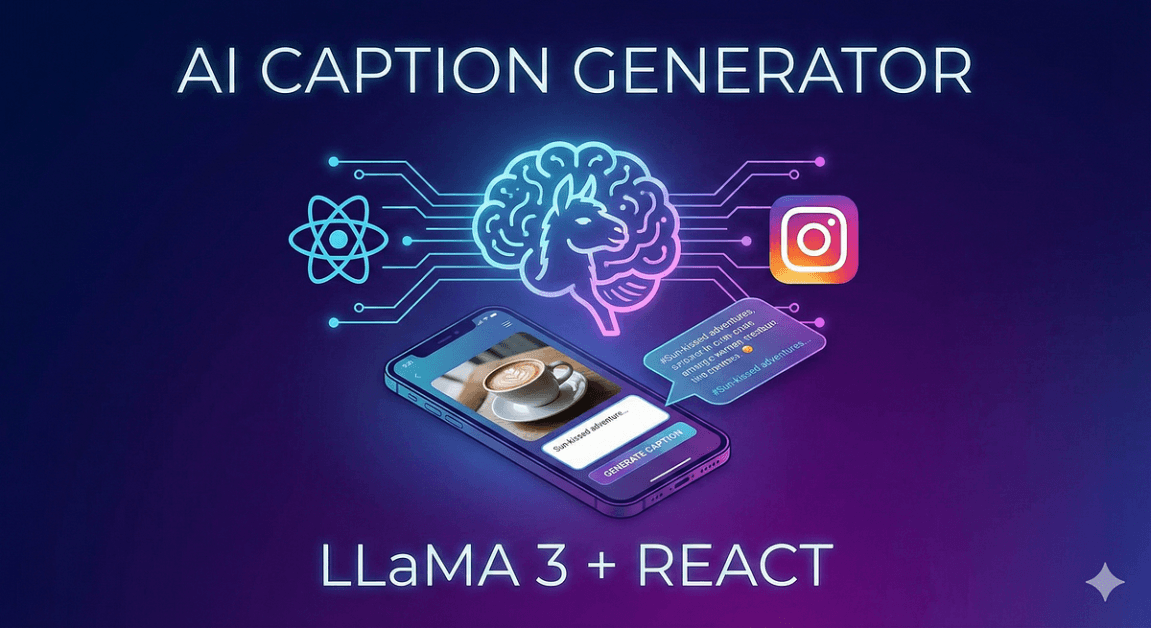
How AI Generates Image Captions: A Complete Guide
Every day, billions of images are shared across websites, social media platforms, e-commerce stores, news organizations, and enterprise systems. To make these images easier to search, organize, and understand, artificial intelligence can automatically generate descriptive text known as image captions.
Unlike simple image recognition, AI image captioning not only identifies objects within a picture but also explains what is happening in natural language. By combining computer vision with language generation, AI can describe scenes, actions, relationships, and important visual details.
Today, AI image captioning is widely used for accessibility, digital asset management, online shopping, social media, healthcare, autonomous systems, and content creation.
What Is AI Image Captioning?
AI image captioning is the process of using artificial intelligence to automatically generate natural-language descriptions of images.
Instead of listing individual objects, AI attempts to describe the overall scene in a way that resembles how a person might explain the image.
For example, rather than identifying:
-
Person
-
Bicycle
-
Park
An AI captioning system may generate:
"A person riding a bicycle through a park on a sunny afternoon."
Modern AI image captioning is powered by computer vision, deep learning, natural language processing (NLP), and vision-language models.
How Does AI Generate Image Captions?
AI-powered image captioning generally follows these steps.
1. Analyze the Image
The AI examines visual elements such as:
-
Objects
-
People
-
Animals
-
Backgrounds
-
Colors
-
Shapes
-
Textures
-
Lighting
2. Detect Important Elements
Computer vision models identify:
-
Objects
-
Faces
-
Activities
-
Relationships
-
Locations
-
Visual context
3. Understand the Scene
Rather than recognizing isolated objects, AI determines how different elements relate to one another.
For example:
-
A child throwing a ball
-
A dog chasing the ball
-
A park in the background
4. Generate Natural Language
A language model converts the visual understanding into a complete sentence that describes the image naturally.
5. Refine the Caption
Some systems improve grammar, clarity, and sentence structure before presenting the final caption.
Key Technologies Behind AI Image Captioning
1. Computer Vision
Identifies objects, faces, scenes, and visual features within images.
2. Deep Learning
Learns visual patterns from millions of labeled images during training.
3. Vision-Language Models (VLMs)
Combine image understanding with natural language generation to produce descriptive captions.
4. Natural Language Processing (NLP)
Generates grammatically correct, human-readable descriptions.
5. Object Detection and Scene Understanding
Help AI identify relationships, actions, and context rather than simply recognizing isolated objects.
Key Characteristics of AI Image Captioning
1. Context Awareness
AI considers the overall scene instead of describing individual objects separately.
2. Natural Language Generation
Captions are written as complete, readable sentences.
3. Automatic Processing
Large image collections can be captioned without manual effort.
4. Multi-Object Recognition
AI can describe several objects and their interactions within one image.
5. Scalable Deployment
Caption generation can support millions of images across websites, applications, and enterprise systems.
Common Applications of AI Image Captioning
AI image captioning is widely used in:
-
Accessibility for visually impaired users
-
Social media platforms
-
Search engines
-
Digital asset management
-
E-commerce product catalogs
-
News and media organizations
-
Healthcare imaging support
-
Autonomous vehicles
-
Robotics
-
Smart photo libraries
-
Enterprise content management
-
Educational platforms
-
Video analysis
-
Security monitoring
Benefits of AI Image Captioning
Improves Accessibility
Automatically generated image descriptions help users who rely on screen readers better understand visual content.
Saves Time
Organizations can generate captions for large image libraries automatically.
Enhances Searchability
Descriptive captions improve image indexing and retrieval.
Supports Content Management
Businesses can organize digital assets more efficiently.
Improves User Experience
Relevant captions help users understand visual content more quickly.
Challenges of AI Image Captioning
Complex Scenes
Crowded or visually complex images may be difficult to describe accurately.
Context Limitations
AI may misunderstand relationships, emotions, humor, or cultural references depicted in an image.
Specialized Domains
Medical, scientific, legal, or industrial images often require domain-specific AI models for accurate descriptions.
Bias in Training Data
Caption quality may be affected by limitations or biases in the data used to train the model.
Human Review Remains Important
Automatically generated captions should be reviewed for accuracy, especially in accessibility, journalism, healthcare, legal, and business-critical applications.
Image Recognition vs AI Image Captioning
| Feature | Image Recognition | AI Image Captioning |
|---|---|---|
| Primary Task | Identify objects | Describe the entire scene |
| Output | Labels or object names | Complete natural-language sentences |
| Context Understanding | Limited | Strong contextual understanding |
| Language Generation | No | Yes |
| Best For | Object detection | Human-readable image descriptions |
Best Practices for Using AI Image Captioning
Review Automatically Generated Captions
Verify important captions before publication or distribution.
Use Domain-Specific Models
Choose specialized captioning systems for healthcare, legal, industrial, or scientific applications.
Protect Sensitive Images
Ensure confidential images are processed using secure and approved AI platforms.
Combine AI with Human Editing
Use AI to automate initial caption generation while allowing editors to refine important descriptions.
Monitor Performance
Continuously evaluate caption accuracy, clarity, accessibility, and user satisfaction.
Future of AI Image Captioning
AI image captioning is expected to become significantly more advanced as vision-language models, multimodal AI, and large language models continue to evolve. Future systems will better understand complex scenes, recognize subtle interactions, interpret emotions, and generate richer, more context-aware descriptions.
Image captioning is also becoming an important component of enterprise AI, powering digital asset management, customer support, autonomous systems, accessibility services, and intelligent search. As multimodal AI systems mature, they will increasingly combine images, text, audio, and video to produce more comprehensive descriptions and insights.
As artificial intelligence continues to improve, AI image captioning will play a central role in making visual information more accessible, searchable, and useful across industries.
Conclusion
AI image captioning combines computer vision, deep learning, natural language processing, and vision-language models to automatically generate descriptive text for images. By recognizing objects, understanding relationships, and producing natural-language explanations, AI can transform visual information into meaningful written descriptions.
From improving accessibility and organizing digital assets to supporting healthcare, media, e-commerce, and enterprise applications, AI-powered image captioning is helping organizations manage and understand vast collections of visual content more efficiently. While the technology has made remarkable progress, human review remains important for applications where precision and context are critical.
As AI continues to advance, image captioning will become even more accurate, context-aware, and capable of supporting a growing range of intelligent visual applications.
 How AI Generates Image Captions: The Technology Behind AI Image Captioning FAQs
POST A COMMENT (0)
All Comments (0)
Replies (0)