





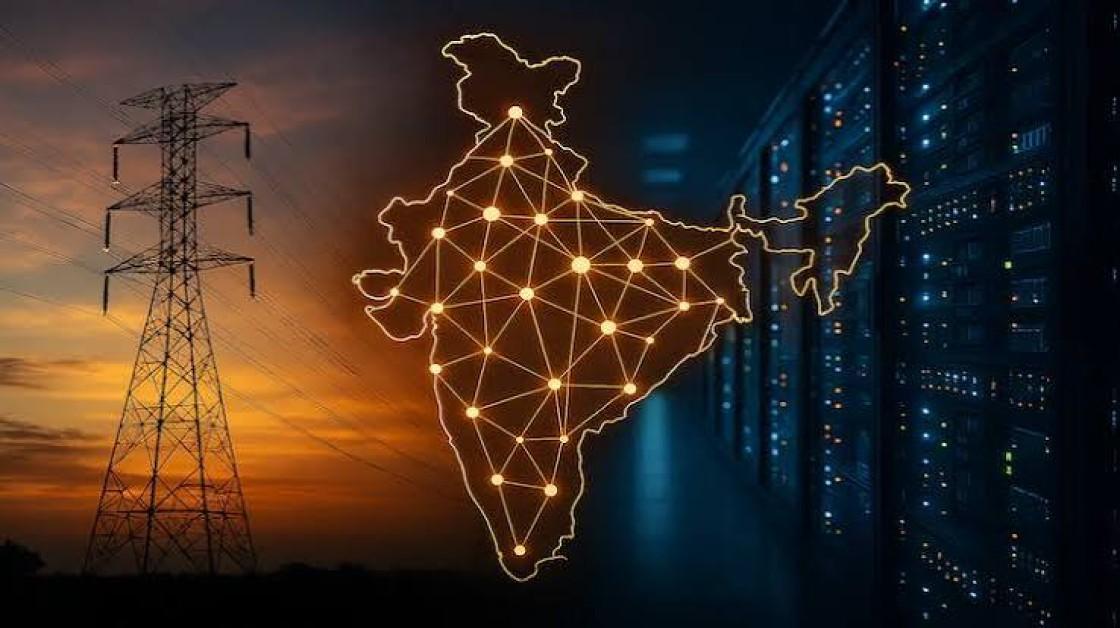
Hindustan Power Strengthens AI-Led Energy Operations
Hindustan Power is deepening the integration of artificial intelligence, real-time data analytics and automation across its energy operations as India's electricity industry faces increasing pressure to balance rising demand with a more complex generation mix.
The company, led by Chairman Ratul Puri and Director Arman Puri, is incorporating digital technologies into operational planning, coal logistics, forecasting and asset management.
Its approach reflects a wider shift in the power industry, where operational efficiency and coordination are becoming increasingly important alongside investments in physical generation infrastructure.
Hindustan Power has a diversified energy portfolio of approximately 6 gigawatts spanning conventional power, solar energy, storage-related developments and mining activities.
The company is using AI-enabled systems to improve selected existing operations while exploring wider applications in grid coordination and renewable energy integration.
One of its clearest operational examples involves coal logistics, where automation has reportedly eliminated approximately 1,000 hours of manual work and 50,000 pages of paperwork every month.
The company is also focusing on forecasting accuracy, predictive analytics and digital monitoring to improve operational decisions.
However, its long-term vision for software-coordinated electricity grids should be distinguished from AI applications already deployed within its own business.
The developments illustrate how Indian power producers are increasingly evaluating technology not simply as an administrative tool but as part of their core operating infrastructure.
Hindustan Power's AI Transformation: Key Highlights
|
Area |
Development |
|---|---|
|
Energy portfolio |
Approximately 6 GW across multiple energy businesses |
|
Technology focus |
AI, automation and real-time analytics |
|
Coal logistics |
Automated monitoring and documentation |
|
Reported labour savings |
Approximately 1,000 hours monthly |
|
Reported paperwork reduction |
Approximately 50,000 pages monthly |
|
Renewable operations |
Greater emphasis on forecasting accuracy |
|
Asset management |
Predictive monitoring and maintenance applications |
|
Mining operations |
Drone-based LiDAR and analytical tools |
|
Grid strategy |
Data integration and coordination of distributed resources |
|
Leadership |
Chairman Ratul Puri and Director Arman Puri |
The reported operational savings relate to specific logistics applications and should not be interpreted as company-wide cost reductions.
Artificial Intelligence Becomes Central to Energy Management

The electricity industry is becoming more complex as conventional generation, renewable energy and storage resources operate within the same system.
Traditional power networks were largely designed around electricity flowing from large generating stations to consumers.
However, rooftop solar installations, batteries and electric vehicles are creating a more distributed system.
Electricity may increasingly flow in multiple directions.
This requires greater visibility into generation, consumption and network conditions.
Artificial intelligence can support these requirements by analysing large volumes of operational data.
AI systems can identify patterns, improve forecasts and assist operators in making decisions.
For Hindustan Power, the objective is to incorporate these capabilities into routine operational processes rather than treat them as isolated technology projects.
The company sees real-time information and system integration as increasingly important sources of operational efficiency.
Hindustan Power's 6 GW Portfolio Creates Digital Integration Opportunities
Hindustan Power operates across different parts of India's energy industry.
Its portfolio includes conventional power generation, renewable energy, storage-related development and mining.
These businesses have different operating characteristics.
Thermal power stations require fuel supply coordination, equipment monitoring and generation scheduling.
Solar projects depend on weather conditions and the availability of sunlight.
Storage systems require decisions about when electricity should be charged, retained and discharged.
Mining operations involve equipment utilisation, resource management and transportation.
Digital integration can help management assess these activities using more consistent operational information.
However, each business requires technology suited to its own technical and commercial conditions.
The company's strategy therefore involves applying AI to specific operating problems while developing a broader data-driven approach.
AI-Enabled Coal Logistics Delivers Measurable Efficiency Gains
Coal logistics provides one of Hindustan Power's most tangible examples of operational automation.
The company has introduced AI-supported monitoring and document-processing systems for coal transportation.
Coal must be moved from mining locations to generating facilities through a sequence of logistical activities.
These include dispatch, transportation, verification, weighing and receipt.
Traditional processes can involve substantial paperwork and manual reconciliation.
Hindustan Power's digital systems are designed to automate selected stages of this process.
According to company management, the initiative saves approximately 1,000 hours of manual work each month.
It has also reduced the handling of around 50,000 pages of paperwork monthly.
These figures demonstrate the potential benefits of applying automation to repetitive industrial workflows.
However, the company has not disclosed a comprehensive audited financial estimate of the savings generated by this particular initiative.
Coal Transportation Route Highlights Operational Complexity
Hindustan Power's coal logistics operations include transportation between mining facilities in Chhattisgarh and a thermal power station in Madhya Pradesh.
The route covers approximately 200 kilometres.
Transportation can take seven to eight hours, depending on operating conditions.
Managing such movements requires coordination among vehicles, dispatch systems, security personnel and receiving facilities.
Delays or documentation errors can affect the efficiency of fuel supply.
Digital monitoring can improve visibility into vehicle movements and operational exceptions.
Automated documentation can also reduce repetitive administrative work.
For a thermal power producer, reliable fuel logistics are important because generation schedules depend on coal availability.
The company's use of AI in this area demonstrates how digital transformation can extend beyond electricity generation equipment.
Predictive Maintenance Could Reduce Equipment Downtime
Predictive maintenance is another important application of AI in the energy industry.
Traditional maintenance programmes may rely on fixed inspection schedules or repairs after equipment failures.
Predictive systems instead analyse operating data to identify potential problems before a breakdown occurs.
Relevant information may include vibration, temperature, pressure and other equipment measurements.
Machine-learning models can identify unusual patterns that warrant further investigation.
For power plants, this can support maintenance planning and reduce the risk of unexpected interruptions.
However, predictive maintenance does not eliminate the need for physical inspections or engineering judgement.
The effectiveness of such systems depends on sensor quality, historical data and accurate interpretation.
Hindustan Power is placing greater emphasis on predictive monitoring as part of its digital operating strategy.
The company has not publicly quantified a portfolio-wide reduction in outages attributable to these systems.
Renewable Energy Forecasting Becomes a Commercial Priority
Accurate forecasting is particularly important for renewable energy producers.
Solar generation depends on sunlight, cloud cover and seasonal conditions.
Wind generation varies with weather patterns.
Power producers must estimate expected electricity output when planning delivery schedules.
Differences between scheduled and actual generation can create operational challenges and financial exposure under applicable electricity market rules.
AI-based forecasting systems can analyse weather data, historical generation and operating conditions.
These tools may improve estimates of future electricity production.
For Hindustan Power, forecasting accuracy is an important area of technology investment.
Improved forecasts could support more effective scheduling and reduce avoidable deviations.
However, forecasting performance depends on local weather conditions, data quality and model design.
No specific company-wide forecasting accuracy improvement has been disclosed.
Grid Coordination Requires Real-Time Data and Automation
As India's electricity system becomes more decentralised, coordinating generation and consumption is becoming increasingly important.
Grid operators must balance electricity demand with available supply at every moment.
The growing contribution of solar and wind power introduces additional variability.
Energy storage systems, distributed generation and electric vehicles add further operational complexity.
AI-enabled systems can assist operators by analysing data from different resources and identifying potential imbalances.
They can also support decisions about generation scheduling and storage deployment.
Hindustan Power's leadership views this transition as an opportunity for more integrated digital platforms.
However, operating the national or regional electricity grid remains the responsibility of authorised system operators.
The company's strategy concerns its own operational capabilities and its vision for more intelligent energy infrastructure, rather than a confirmed deployment of a national grid-management platform.
Arman Puri Emphasises the Role of Operational Intelligence
Director Arman Puri has highlighted the importance of real-time information, interoperable technology platforms and AI-enabled decision-making.
His assessment reflects a broader change in the competitive requirements of the energy industry.
Power producers have traditionally differentiated themselves through generating capacity, fuel availability and operational reliability.
These factors remain important.
However, companies increasingly need the ability to analyse information and respond quickly to changing conditions.
Integrated digital systems can support decisions across generation, logistics and maintenance.
Puri has also emphasised the need to embed AI into core business workflows rather than deploy technology without clearly defined operational objectives.
This approach requires coordination between technology teams, engineers and operational management.
The commercial value of AI will ultimately depend on measurable improvements in performance.
Drone-Based LiDAR Supports Mining Operations
Hindustan Power is also applying digital technologies to mining-related activities.
These include drone-based Light Detection and Ranging, commonly known as LiDAR, and real-time analytical tools.
LiDAR uses laser measurements to create detailed representations of physical environments.
In mining operations, such technology can support surveying, mapping and the assessment of terrain.
Drone-based systems can collect information across areas that may be difficult or time-consuming to inspect manually.
Digital models can help engineers evaluate site conditions and plan operations.
When combined with analytical software, the information may support more precise resource management.
However, LiDAR measurements and AI analysis still require technical validation.
Their usefulness depends on data quality, equipment calibration and operational integration.
For Hindustan Power, these technologies form part of its wider effort to improve industrial decision-making.
Solar Power Expansion Increases Forecasting Requirements
Hindustan Power continues to expand its renewable energy business.
In August 2026, the company announced financial closure of ₹1,135 crore for a 435 MWp solar project in Uttar Pradesh.
It also secured a 100 MW AC solar project, equivalent to approximately 150 MWp, from Punjab State Power Corporation Limited in April 2026.
These developments reflect continued investment in solar generation.
As the company's renewable portfolio expands, forecasting and generation scheduling become increasingly important.
Solar projects must account for changing weather conditions and grid requirements.
Accurate generation forecasts can support electricity scheduling and operational planning.
Digital monitoring can also help identify equipment issues and performance variations.
However, the financial benefits of AI applications will depend on how effectively the systems are deployed across individual projects.
Energy Storage Adds Another Layer of Complexity
Energy storage is becoming an important component of India's electricity infrastructure.
Battery systems can store electricity when generation exceeds immediate demand.
Stored electricity can then be supplied during periods of higher consumption or lower renewable output.
Operating these systems efficiently requires decisions about charging, discharging and available capacity.
AI-based analytical tools may help optimise these decisions.
They can consider expected electricity demand, renewable generation and operating constraints.
For energy companies developing storage-backed renewable projects, these capabilities could become increasingly valuable.
However, storage performance depends on battery technology, degradation, system design and contractual requirements.
Digital optimisation can support operations but cannot eliminate physical limitations.
Hindustan Power's wider technology strategy is aligned with the growing importance of coordinated generation and storage.
India Moves Toward AI-Enabled Electricity Infrastructure
Hindustan Power's digital transformation coincides with a broader government initiative to increase AI adoption in the electricity sector.
On October 14–15, 2026, the Central Electricity Authority organised a conference in New Delhi focused on making India's power sector AI-enabled.
Discussions covered generation, transmission, distribution, renewable energy integration and system reliability.
The government identified demand forecasting, predictive maintenance, outage prediction and operational optimisation as important applications.
The initiative reflects the increasing complexity of managing India's expanding electricity infrastructure.
AI could help utilities move from reactive maintenance and decision-making toward more predictive operations.
However, successful deployment requires reliable data, cybersecurity safeguards and trained personnel.
Private power producers such as Hindustan Power may benefit from the development of more consistent digital infrastructure and industry standards.
National Electricity Data Sharing Framework Could Support Innovation
India is also developing a National Electricity Data Sharing Framework intended to improve access to structured information across the power sector.
The proposed framework is designed to support appropriate data sharing among electricity generators, transmission operators, distribution companies and other authorised participants.
Better data availability could help technology developers build forecasting, grid-management and analytical applications.
However, electricity infrastructure information can be commercially and operationally sensitive.
Data sharing must therefore incorporate access controls, security requirements and governance arrangements.
The framework could support more consistent information standards across the industry.
For companies investing in AI, interoperability may reduce some of the difficulties associated with integrating different software systems.
The benefits will depend on the framework's implementation and the extent to which usable data becomes available.
India Energy Stack Could Improve Digital Coordination
The India Energy Stack initiative is intended to support the development of interoperable digital infrastructure for the electricity sector.
Such infrastructure could facilitate more consistent data exchange and service development.
A common digital architecture may support applications involving smart meters, distributed generation, electricity markets and consumer services.
For power producers, better interoperability could improve coordination with other parts of the electricity system.
However, digital infrastructure initiatives require industry participation and appropriate technical standards.
Their effectiveness depends on adoption by the relevant institutions.
Hindustan Power's emphasis on open interfaces and platform integration is consistent with the direction of these developments.
Nevertheless, the company has not announced that it operates a completed grid-wide platform under the India Energy Stack.
Rising Electricity Demand Increases Pressure on Grid Operations
India's electricity demand is increasing alongside industrial activity, urbanisation and digital infrastructure investment.
Manufacturing facilities, transport systems and data centres require dependable electricity.
Cooling demand can also rise sharply during periods of high temperatures.
These developments create additional requirements for generation and network capacity.
However, building more power plants is only one part of the solution.
The electricity system must also coordinate existing assets efficiently.
Better forecasting can help identify periods of high demand.
Predictive maintenance may reduce unexpected equipment failures.
Digital monitoring can support faster responses to operational problems.
For Hindustan Power, these developments strengthen the case for incorporating intelligent systems into energy operations.
AI Can Support Thermal Power Efficiency
Conventional power generation involves complex industrial equipment operating under demanding conditions.
Thermal plants depend on reliable boilers, turbines, generators and auxiliary systems.
Equipment performance can be affected by operating conditions, fuel characteristics and maintenance practices.
AI-based monitoring can assist engineers in identifying unusual operating patterns.
Analytical systems may also help evaluate efficiency and equipment performance.
However, the use of AI does not guarantee lower fuel consumption or higher plant availability.
The results depend on the quality of the technology and its integration with plant operations.
Hindustan Power's digital strategy includes applying analytical capabilities to operational activities where measurable improvements may be possible.
The company has not disclosed a verified portfolio-wide improvement in thermal efficiency directly attributable to AI.
Cybersecurity Becomes a Critical Requirement
Increasing digital connectivity can create additional cybersecurity risks.
Power infrastructure includes operational technology systems that control or monitor physical equipment.
Unauthorised access or disruption could affect business continuity and operational safety.
AI deployment therefore requires appropriate security controls.
These may include network segmentation, access management, monitoring and incident-response procedures.
Data governance is also important.
Operational information must be accurate, appropriately protected and accessible to authorised personnel.
For companies integrating digital platforms across multiple business units, cybersecurity becomes an essential part of technology planning.
Hindustan Power's strategy will need to balance greater connectivity with the protection of critical systems.
AI Adoption Requires Skilled Employees and Organisational Change
Technology deployment is not solely a software investment.
Energy companies need employees who understand both digital systems and physical infrastructure.
Engineers must be able to interpret analytical outputs and determine appropriate operational responses.
Technology teams must understand the requirements of power generation and industrial processes.
Management must also identify which applications can deliver measurable benefits.
Training and organisational coordination are therefore important.
AI tools that are not integrated into routine workflows may produce limited commercial value.
Hindustan Power's leadership has emphasised organisational readiness as a key element of digital transformation.
This includes developing the capabilities required to use data and automation effectively.
Automation Does Not Eliminate the Need for Human Oversight
AI systems can process large volumes of information and identify patterns more quickly than manual analysis in certain applications.
However, they can also produce inaccurate or incomplete results.
Energy operations involve safety, reliability and regulatory requirements.
Consequently, important operational decisions require appropriate human supervision.
Predictive maintenance recommendations must be evaluated by qualified personnel.
Generation scheduling must comply with applicable grid codes and operating instructions.
Automated logistics systems also require verification and exception-handling procedures.
For Hindustan Power, the objective is to use technology to support better decisions rather than remove accountability from operational teams.
Responsible deployment will be important as AI applications become more widespread.
Potential Financial Benefits Depend on Execution
AI adoption can create opportunities to reduce costs and improve productivity.
Automated documentation may lower administrative workloads.
Better maintenance planning could reduce equipment downtime.
Improved forecasting may help limit avoidable scheduling deviations.
However, these benefits should be evaluated against implementation costs.
Technology systems require software, hardware, data infrastructure and employee training.
They also involve ongoing maintenance and cybersecurity expenses.
Hindustan Power has reported measurable administrative savings in coal logistics.
However, it has not disclosed a comprehensive financial return on its wider AI investment programme.
The company's future financial benefits will depend on the scale and effectiveness of deployment.
Digital Transformation Could Influence Industry Competition
India's power industry is investing in generation capacity, transmission networks and renewable energy.
As the electricity system becomes more complex, operational intelligence may become an additional competitive factor.
Companies capable of using data effectively could improve asset utilisation and maintenance planning.
Better forecasting may also support renewable energy operations.
However, digital capabilities are only one part of competitiveness.
Power producers must continue managing project costs, financing, fuel supply and regulatory requirements.
For Hindustan Power, AI investment complements its physical infrastructure strategy.
The company's long-term performance will depend on whether these capabilities produce sustained operational and financial improvements.
What to Watch in Hindustan Power's AI Strategy
The next stage of Hindustan Power's digital transformation will depend on how widely its existing applications can be deployed.
Coal logistics provides an example of measurable administrative efficiency.
Investors and industry observers will look for additional evidence of benefits in maintenance, forecasting and asset management.
The company may also expand digital capabilities as new renewable projects become operational.
Important indicators include forecasting accuracy, equipment availability, operating costs and cash-flow improvements.
Technology integration across different business units will also matter.
Cybersecurity, employee training and data quality will remain essential requirements.
The broader development of India's digital electricity infrastructure could create additional opportunities for interoperable systems.
However, future benefits will need to be demonstrated through operating results rather than technology adoption alone.
Conclusion
Hindustan Power is strengthening its use of artificial intelligence, automation and real-time analytics as India's energy industry becomes increasingly complex.
The company's digital strategy covers coal logistics, operational monitoring, renewable energy forecasting and the development of more intelligent energy-management capabilities.
Its coal logistics automation has reportedly reduced manual work by approximately 1,000 hours and paperwork by 50,000 pages each month.
Hindustan Power is also exploring how predictive maintenance, digital monitoring and integrated data platforms can improve the reliability and efficiency of energy operations.
The strategy is supported by a diversified portfolio of approximately 6 GW across conventional power, renewable energy and related businesses.
However, the company must distinguish between proven operational applications and longer-term ambitions for software-coordinated electricity networks.
As India's power sector expands, AI-enabled forecasting, maintenance and system coordination are likely to become increasingly important.
For Hindustan Power, the challenge will be converting technology investment into measurable improvements in efficiency, reliability and financial performance.
 Hindustan Power Expands AI in Grid Coordination, Forecasting and Energy Operations FAQs
POST A COMMENT (0)
All Comments (0)
Replies (0)