




AWS Introduces National AI Programme to Strengthen Malaysia's Digital Economy
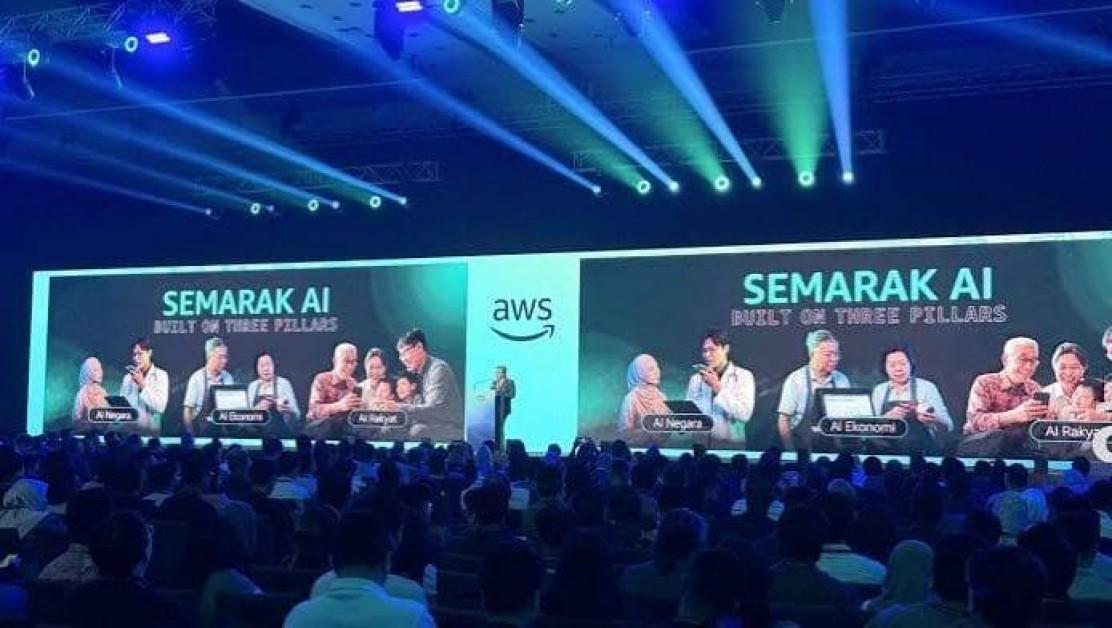
Amazon Web Services (AWS), the cloud computing subsidiary of Amazon, launched Semarak AI Malaysia on November 4, 2026, introducing a nationwide initiative designed to accelerate artificial intelligence adoption across government agencies, businesses, educational institutions and local communities.
Announced at AWS Cloud and AI Day in Kuala Lumpur, the programme aims to provide Malaysian organisations with practical AI tools, technical training and opportunities to develop their own AI-powered applications.
The initiative targets access to Amazon Quick for up to 445,000 government officers and aims to support 10,000 small and medium-sized enterprises (SMEs) by 2028.
It also includes developer training, software industry development and educational programmes designed to strengthen Malaysia's domestic AI capabilities.
Semarak AI Malaysia operates through three pillars: AI Negara for government, AI Ekonomi for businesses and AI Rakyat for communities.
The initiative builds on AWS's existing commitment to invest RM29.2 billion in Malaysia through 2038, supporting the expansion of cloud infrastructure and the country's digital economy.
The launch reflects Malaysia's ambition to become a regional centre for AI development, with greater emphasis on creating domestic technology capabilities rather than relying exclusively on imported digital solutions.
Semarak AI Malaysia: Key Highlights

|
Programme Component |
Key Details |
|---|---|
|
Initiative |
Semarak AI Malaysia |
|
Organisation |
Amazon Web Services |
|
Launch date |
November 4, 2026 |
|
Launch location |
Kuala Lumpur, Malaysia |
|
Government officers targeted |
Up to 445,000 |
|
Government developer pilot |
500 developers in 2026 |
|
Developer target |
4,000 by 2028 |
|
SME adoption target |
10,000 businesses by 2028 |
|
SME tool access |
Six complimentary months for eligible participants |
|
Principal AI tools |
Amazon Quick and Kiro |
|
Education participation |
More than 3,000 students and lecturers |
|
Sarawak accelerator graduates |
More than 20 software companies |
|
Existing AWS Malaysia investment commitment |
RM29.2 billion through 2038 |
The programme combines technology access, workforce development and support for domestic software companies.
Three Strategic Pillars of Semarak AI Malaysia
AWS has structured the initiative around three interconnected programmes.
|
Pillar |
Target Group |
Primary Objective |
|---|---|---|
|
AI Negara |
Government officers and public-sector developers |
Improve public services and government productivity |
|
AI Ekonomi |
Businesses, SMEs and software companies |
Support AI adoption, innovation and commercial growth |
|
AI Rakyat |
Students, educators and communities |
Expand AI literacy and practical technical skills |
The three-pillar structure is intended to connect AI infrastructure investment with practical applications across Malaysia's economy.
Rather than focusing exclusively on technology deployment, the initiative seeks to develop the skills required to design, implement and maintain AI solutions.
AI Negara Targets Up to 445,000 Government Officers
AI Negara focuses on expanding artificial intelligence capabilities across Malaysia's public sector.
Under the programme, AWS is investing to make Amazon Quick available to up to 445,000 government officers through the National Digital Department's AI-as-a-Service platform.
Amazon Quick is designed to help employees perform workplace tasks using AI-powered assistance.
Potential government applications include analysing procurement information, consolidating policy research and identifying patterns in large datasets.
These capabilities could reduce time spent on repetitive administrative activities.
They may also help public-sector employees analyse information more efficiently.
However, successful implementation will depend on training, data quality, cybersecurity safeguards and responsible AI governance.
The 445,000 figure represents the programme's intended reach, not a confirmed number of officers already using the technology.
Amazon Quick to Support Government Productivity
Amazon Quick is an AI-powered workplace tool designed to help users retrieve, analyse and work with information.
In government environments, potential applications include preparing research summaries, analysing procurement records and supporting administrative decision-making.
For example, government departments may need to review large volumes of documents when evaluating procurement activities.
AI tools could help identify relevant information and highlight patterns requiring further examination.
Similarly, policy teams may use AI assistance to organise research across multiple agencies.
However, AI-generated outputs require appropriate human review.
Public-sector decisions involving legal obligations, financial expenditure or citizen rights should not depend solely on automated recommendations.
The effectiveness of the programme will therefore depend on combining technical capabilities with governance and accountability.
GovTech Malaysia Launches GovHub Using AWS Kiro
A major component of AI Negara is the launch of GovHub.
GovTech Malaysia, operating under the Ministry of Digital, is introducing the platform through the National Digital Department's AI-as-a-Service infrastructure.
GovHub uses Kiro, AWS's AI-powered software engineering tool.
The initial programme will involve 500 developers during 2026.
The government aims to expand participation to 4,000 developers by 2028.
Kiro supports specification-driven development.
This approach helps developers translate requirements into structured plans covering software design, implementation and testing.
The objective is to improve the reliability and efficiency of AI-assisted software development.
For government technology teams, the platform could support the creation of applications addressing administrative and public-service requirements.
Government Developer Programme Targets Expansion by 2028
Number of developers

The planned expansion represents an eightfold increase from the initial pilot.
Achieving the target will require sustained training, technical support and participation across government organisations.
AI Ekonomi Focuses on Businesses and SMEs
The second pillar, AI Ekonomi, aims to strengthen AI adoption among Malaysian businesses.
The programme focuses particularly on SMEs and domestic software companies.
Smaller businesses often face barriers to implementing advanced technologies.
These can include limited technical expertise, uncertainty about costs and difficulty identifying practical applications.
AWS intends to address some of these challenges by providing access to AI tools and supporting technical development.
Potential business applications include customer relationship management, marketing automation, inventory analysis and demand forecasting.
However, the commercial value of AI adoption depends on whether these tools improve measurable business outcomes.
The programme therefore places emphasis on practical use cases rather than technology adoption alone.
AWS Targets 10,000 SMEs by 2028
AWS is collaborating with GD XCHANGE, the solutions division of Malaysian logistics provider GDEX, and technology distributor VSTECS to expand AI adoption among SMEs.
The collaboration aims to onboard 10,000 eligible businesses by 2028.
Participating SMEs will undergo an AI readiness assessment.
Eligible companies will then receive six months of complimentary access to Amazon Quick and Kiro.
The arrangement is intended to reduce initial barriers to experimenting with AI-powered business applications.
Businesses may use the tools to automate selected processes, improve information analysis and develop software solutions.
However, complimentary access does not mean that every implementation cost is covered.
Businesses may still need to invest in employee training, data preparation and integration with existing systems.
The long-term impact will depend on whether participating companies continue using AI after the introductory period.
Logistics and Technology Partnerships Support SME Adoption
The collaboration with GD XCHANGE and VSTECS provides AWS with access to established business networks.
GDEX serves customers across logistics, e-commerce, retail and manufacturing.
These sectors contain numerous SMEs that could potentially benefit from automation.
VSTECS contributes technology distribution capabilities.
Together, the partnerships are intended to connect AI tools with businesses that may not otherwise have the resources to develop advanced systems independently.
One retail SME participating in the initiative has already used Amazon Quick and Kiro to automate competitor-price tracking and demand forecasting.
AWS said the implementation enabled the business to respond to market changes within hours rather than weeks.
This example demonstrates a potential commercial application, although results may differ across businesses.
Malaysian Software Companies Increase Cloud and AI Workloads
AWS reported that Malaysia-based software companies using its infrastructure increased their cloud and AI workloads by an average of approximately 30% between 2024 and 2025.
The growth followed the launch of the AWS Asia Pacific (Kuala Lumpur) Region in 2024.
The expansion suggests increasing demand for cloud-based software and AI services.
However, workload growth is not equivalent to revenue growth.
The reported figure measures activity among relevant software companies rather than the financial performance of Malaysia's entire technology sector.
Nevertheless, greater cloud usage can support the development of domestic software products.
Local companies may be able to build applications for industries such as banking, retail, manufacturing, hospitality and logistics.
The challenge is converting technology adoption into sustainable commercial businesses.
MOCHI Technologies Demonstrates AI Applications for SMEs
Malaysia-based MOCHI Technologies is among the companies developing AI-powered business applications using AWS infrastructure.
The company is building an AI-native platform intended to help more than 1,000 SMEs manage business activities.
The platform combines functions such as marketing, customer relationships, human resources and operations.
For smaller companies, integrated software can reduce the need to manage multiple disconnected systems.
AI features may also help automate selected administrative processes.
However, commercial success depends on affordability, reliability and the ability to integrate with existing business workflows.
MOCHI's development illustrates the type of domestic software activity that AWS aims to support through AI Ekonomi.
Sarawak SaaS Accelerator Supports Local Technology Companies
AWS is also working with the Sarawak Digital Economy Corporation (SDEC) through the Sarawak SaaS Accelerator, known as SaSAR.
The programme supports software companies developing AI-enabled products.
It also connects technology providers with businesses seeking digital solutions.
The pilot cohort has graduated more than 20 software companies.
Participants represented sectors including agriculture, automotive and healthcare.
Graduates received AWS cloud credits and technical mentorship.
SDEC provided business development guidance and support for commercial partnerships.
The accelerator aims to strengthen Malaysia's domestic software industry by helping companies move from product development towards commercial deployment.
SaSAR Connects Software Developers With Industry Customers
A key feature of the Sarawak accelerator is its emphasis on connecting software developers with potential customers.
Building an AI application does not guarantee commercial adoption.
Companies must identify specific business problems and demonstrate that their products can address them effectively.
SaSAR seeks to reduce this gap by matching software developers with organisations interested in AI solutions.
Graduates have established collaborations with government agencies, energy providers and enterprise customers.
One early project involves an AI-enabled software testing application.
The system is designed to help organisations test and validate software, including mobile applications.
The solution is undergoing validation with pilot users before broader deployment.
This illustrates the importance of testing AI products in real operating environments.
AI Rakyat Focuses on Students and Communities
The third pillar, AI Rakyat, aims to expand artificial intelligence skills beyond government agencies and established businesses.
The programme focuses on students, lecturers, schools and local communities.
AWS is working with Malaysia's higher education institutions to introduce practical AI development activities.
The initiative recognises that long-term AI adoption requires a workforce capable of understanding and applying the technology.
Training programmes can help students develop familiarity with software development, automation and AI-assisted problem-solving.
However, introductory training alone does not establish professional proficiency.
Continued education and practical experience will be important for building advanced technical capabilities.
More Than 3,000 Students and Lecturers Participate in AI Competition
More than 3,000 students and lecturers from Malaysian polytechnics and community colleges participated in the POLYCC Agentic AI League 2026.
The event established a Malaysia Book of Records milestone for participation in an agentic AI competition.
AWS Kiro served as the primary coding tool.
The competition enabled participants, including those without traditional programming backgrounds, to explore AI-assisted software development.
Participants could use natural-language instructions to work on software solutions.
The event demonstrates how AI development tools may reduce some barriers to introductory programming activities.
However, effective software engineering still requires understanding of requirements, testing, security and system design.
The competition forms part of AWS's broader effort to strengthen Malaysia's future technology workforce.
AWS Supports Digital Education at Kuala Lumpur School
AWS has also adopted Sekolah Kebangsaan Datuk Keramat (1) in Kuala Lumpur under Malaysia's Sekolah Angkat MADANI programme.
The initiative includes improvements to digital and science, technology, engineering and mathematics facilities.
AWS plans to provide teacher training in coding and robotics.
Students will also receive practical exposure to drone technology and digital safety.
The programme aims to introduce technology skills at an earlier stage of education.
Such initiatives can support long-term workforce development by increasing familiarity with digital tools.
However, their impact will depend on sustained implementation and the availability of qualified educators.
The school programme complements the higher education activities under AI Rakyat.
Malaysia's RM29.2 Billion AWS Investment Commitment
Semarak AI Malaysia builds on AWS's existing commitment to invest RM29.2 billion in Malaysia through 2038.
The investment is associated with the company's cloud infrastructure expansion.
Malaysia's Investment, Trade and Industry Minister Johari Abdul Ghani said the planned investment is estimated to contribute RM57.3 billion to the country's gross domestic product.
It is also projected to support an annual average of more than 3,500 jobs at local businesses.
These figures represent projected economic contributions rather than completed outcomes.
The estimates depend on the investment programme and associated economic activity developing as anticipated.
The Semarak AI initiative is intended to help Malaysian organisations make greater practical use of the country's expanding digital infrastructure.
AWS Malaysia Investment and Economic Projections
|
Indicator |
Announced Commitment or Projection |
|---|---|
|
AWS investment commitment through 2038 |
RM29.2 billion |
|
Estimated GDP contribution |
RM57.3 billion |
|
Average annual jobs supported at local businesses |
More than 3,500 |
|
Government officers targeted for AI tool access |
Up to 445,000 |
|
SME adoption target by 2028 |
10,000 |
|
Government developer target by 2028 |
4,000 |
The investment commitment and projected economic contribution are distinct from the operational targets of Semarak AI Malaysia.
AWS has not disclosed a separate total budget for the newly launched programme.
AWS Kuala Lumpur Cloud Region Supports AI Expansion
The AWS Asia Pacific (Kuala Lumpur) Region began operations in 2024.
The infrastructure provides cloud computing services that businesses and public-sector organisations can use to develop and operate digital applications.
Local cloud infrastructure can support organisations with requirements involving latency, service availability and data residency.
However, compliance with data protection and sovereignty requirements depends on the specific architecture, services and controls used.
The availability of cloud infrastructure can also support domestic software development.
Companies can access computing resources without building their own large-scale data centres.
This may reduce some initial infrastructure barriers.
Semarak AI Malaysia seeks to connect that infrastructure with practical AI skills and commercial applications.
Malaysian Government Emphasises Domestic AI Capabilities
Investment, Trade and Industry Minister Johari Abdul Ghani highlighted the importance of developing Malaysia's own AI capabilities.
The government's objective is to strengthen the country's ability to create technology rather than rely exclusively on externally developed applications.
Domestic software companies can contribute to this objective by building products tailored to local business requirements.
Such companies may also pursue opportunities across Southeast Asia.
However, regional competitiveness depends on product quality, pricing, security and customer support.
The minister's remarks reflect a broader policy emphasis on developing local suppliers, technical talent and higher-value economic activities.
The success of Semarak AI Malaysia will therefore be measured not only by access to AI tools but also by the ability of Malaysian organisations to create useful products and services.
Alignment With Malaysia's Digital Economy Strategy
Semarak AI Malaysia supports the country's wider digital transformation objectives.
Malaysia has been expanding initiatives involving AI governance, digital infrastructure and workforce development.
The government launched Malaysia Digital 2030 in June 2026.
It also established AI Malaysia Bhd as a permanent national AI office in July.
These developments reflect an effort to coordinate AI policy and implementation.
AWS's programme complements those objectives by focusing on practical technology adoption.
However, private-sector initiatives and government policies have different responsibilities.
Public institutions remain responsible for regulatory frameworks, procurement standards and citizen protections.
Technology providers contribute infrastructure, software and technical expertise.
Effective coordination will be important for achieving national digital development goals.
Agentic AI Becomes a Major Focus
A notable feature of Semarak AI Malaysia is its emphasis on agentic AI.
Agentic AI refers to systems capable of carrying out sequences of tasks towards defined objectives, often using software tools and external information.
These systems can go beyond producing text responses.
They may help analyse data, prepare structured workflows or assist with software development.
Amazon Quick and Kiro are positioned to support different workplace and engineering applications.
However, greater automation introduces operational risks.
AI systems may produce inaccurate outputs, misunderstand instructions or handle information incorrectly.
Organisations therefore need appropriate oversight, testing and access controls.
Responsible implementation will be particularly important in government and regulated industries.
Potential Benefits for Malaysian Businesses
AI adoption may offer several opportunities for SMEs and larger enterprises.
Businesses can use AI to analyse customer behaviour, improve forecasting and automate selected administrative tasks.
Manufacturers may explore applications in quality control and maintenance planning.
Retailers may use AI to analyse pricing and inventory patterns.
Logistics companies may apply it to route planning and operational forecasting.
However, benefits depend on the quality of available data and the suitability of individual applications.
Companies must also consider cybersecurity, privacy and employee training.
Technology adoption should be evaluated against measurable outcomes such as cost savings, productivity and customer satisfaction.
Industry Applications of Semarak AI Malaysia
|
Industry |
Potential AI Application |
|---|---|
|
Government |
Procurement analysis and policy research |
|
Retail |
Demand forecasting and competitor-price monitoring |
|
Manufacturing |
Production analysis and quality control |
|
Logistics |
Operational planning and shipment analysis |
|
Agriculture |
Farm data analysis and productivity support |
|
Healthcare |
Administrative workflows and software applications |
|
Banking |
Data analysis and customer service support |
|
Hospitality |
Customer engagement and operational forecasting |
|
Education |
AI-assisted learning and software development |
|
Software services |
Application development and automated testing |
These are potential use cases rather than confirmed deployments across every participating industry.
Challenges Facing Nationwide AI Adoption
The scale of Semarak AI Malaysia creates significant implementation challenges.
Government agencies and businesses have different levels of technical readiness.
Some organisations may lack structured data or modern software systems.
Others may face constraints involving cybersecurity and employee skills.
AI adoption can also create concerns about information privacy and accountability.
Public-sector systems require particular care when processing sensitive information.
SMEs may face additional difficulties maintaining AI tools after introductory access periods end.
The programme's success will therefore depend on sustained training, governance and commercial viability.
Providing technology access is an important first step, but long-term adoption requires organisational change.
Implications for Southeast Asia's Technology Industry
Malaysia's initiative reflects growing competition among Southeast Asian economies to attract AI investment.
Countries across the region are expanding cloud infrastructure and digital workforce programmes.
The growth of AI applications could create opportunities for software developers, technology service providers and specialist training companies.
Malaysia's domestic software industry may benefit from improved access to cloud resources and potential customers.
However, regional competition remains significant.
Businesses will need to demonstrate technological capability and commercial performance to expand internationally.
Semarak AI Malaysia could strengthen the country's position if participating companies successfully develop products that serve domestic and regional markets.
Implications for Amazon Web Services
For AWS, the initiative represents an opportunity to expand adoption of its AI and cloud services in Malaysia.
Government agencies, SMEs and software developers are potential long-term users of cloud infrastructure.
Training programmes can increase familiarity with AWS tools.
However, participation does not guarantee future commercial spending.
Businesses may evaluate alternative technology providers based on price, performance and operational requirements.
AWS will also need to support secure and reliable implementation.
The programme therefore represents both a market development initiative and an investment in Malaysia's digital technology ecosystem.
Key Indicators to Monitor
|
Indicator |
Why It Matters |
|---|---|
|
Government officers receiving AI access |
Measures public-sector rollout |
|
GovHub developer participation |
Tracks technical capacity development |
|
SMEs onboarded |
Measures business adoption |
|
SME retention after complimentary access |
Indicates commercial sustainability |
|
Local software products developed |
Tracks domestic innovation |
|
Sarawak accelerator outcomes |
Measures commercial partnerships |
|
AI skills programme participation |
Reflects workforce development |
|
AWS cloud workload growth |
Indicates infrastructure usage |
|
Public-sector productivity improvements |
Measures operational impact |
|
Cybersecurity and governance standards |
Supports responsible adoption |
|
Regional expansion by Malaysian software firms |
Indicates international competitiveness |
|
Progress on AWS investment commitments |
Tracks infrastructure development |
These indicators will help determine whether the initiative produces measurable economic and operational benefits.
Outlook for Semarak AI Malaysia Through 2028
The programme establishes several targets extending through 2028.
GovHub aims to expand from 500 developers in 2026 to 4,000.
The SME collaboration seeks to onboard 10,000 businesses.
AWS also intends to make Amazon Quick available to up to 445,000 government officers.
Achieving these objectives will require coordination among government agencies, educational institutions and commercial partners.
The programme's long-term value will depend on how effectively participants use the tools.
Businesses must demonstrate productivity improvements or new revenue opportunities.
Government agencies will need to assess service quality and administrative efficiency.
Educational institutions must translate introductory exposure into lasting technical skills.
The initiative's progress will therefore be judged by both participation and measurable outcomes.
Conclusion
Amazon Web Services launched Semarak AI Malaysia on November 4, 2026, introducing a national programme designed to accelerate artificial intelligence adoption across government, businesses and communities.
The initiative operates through three pillars: AI Negara, AI Ekonomi and AI Rakyat.
AWS plans to provide Amazon Quick access to up to 445,000 government officers while supporting GovHub's expansion from 500 developers in 2026 to 4,000 by 2028.
The business programme targets 10,000 SMEs by 2028 through collaborations with GD XCHANGE and VSTECS.
Eligible businesses will receive six months of complimentary access to Amazon Quick and Kiro following an AI readiness assessment.
The initiative also supports domestic software development through the Sarawak SaaS Accelerator and expands AI education through programmes involving thousands of students and lecturers.
Semarak AI Malaysia builds on AWS's RM29.2 billion investment commitment through 2038.
The programme reflects Malaysia's ambition to strengthen domestic AI capabilities and convert digital infrastructure investment into economic value.
Its long-term success will depend on whether government agencies, businesses and educational institutions can translate access to AI tools into improved productivity, useful software applications and sustainable technology skills.
 AWS Launches Semarak AI Malaysia to Accelerate AI Adoption FAQs

POST A COMMENT (0)
All Comments (0)
Replies (0)