





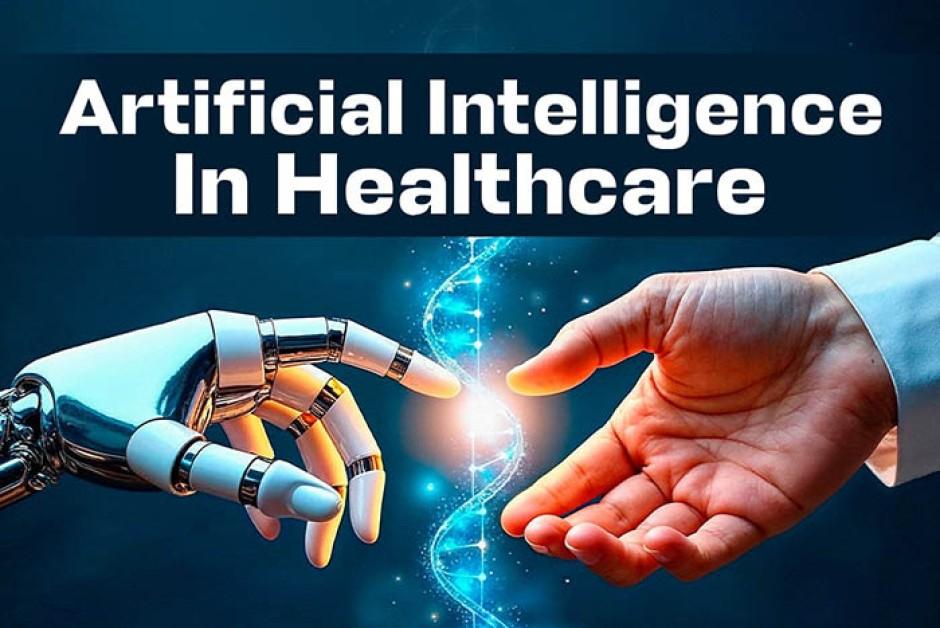
AI in Healthcare: How Artificial Intelligence Is Transforming Modern Medicine
Artificial Intelligence (AI) is transforming healthcare by improving disease diagnosis, enhancing patient care, accelerating drug discovery, and streamlining hospital operations. AI-powered systems can analyze medical images, process electronic health records, predict patient outcomes, and assist healthcare professionals in making faster, more informed decisions. As healthcare organizations continue adopting digital technologies, AI is becoming an essential tool for improving efficiency, reducing costs, and delivering more personalized medical care.
What Is AI in Healthcare?

AI in healthcare refers to the use of Artificial Intelligence technologies to assist medical professionals, automate healthcare processes, analyze clinical data, and improve patient outcomes across hospitals, clinics, laboratories, and research institutions.
How AI in Healthcare Works
AI combines machine learning, deep learning, Natural Language Processing (NLP), computer vision, and predictive analytics to process medical data, identify patterns, support diagnoses, and automate administrative tasks.
Why AI in Healthcare Matters
AI enables healthcare providers to make faster clinical decisions, improve diagnostic accuracy, optimize hospital operations, and deliver more personalized treatment plans while reducing administrative workloads.
Key Applications of AI in Healthcare
AI is being used across nearly every area of modern medicine.
Disease Diagnosis
AI analyzes patient symptoms, laboratory results, and medical histories to assist healthcare professionals in identifying diseases and recommending possible diagnoses.
Medical Imaging
AI helps radiologists analyze X-rays, CT scans, MRI scans, ultrasound images, and other medical images by identifying abnormalities and supporting faster diagnoses.
Drug Discovery and Research
Pharmaceutical companies use AI to identify potential drug candidates, analyze biological data, accelerate clinical research, and reduce the time required to develop new medicines.
Hospital and Clinical Operations
Healthcare organizations use AI to automate appointment scheduling, patient documentation, billing, medical coding, resource planning, and administrative workflows.
Benefits of AI in Healthcare
AI offers significant advantages for healthcare providers and patients.
Improved Diagnostic Accuracy
AI can identify subtle patterns in medical data that support earlier disease detection and more accurate diagnoses.
Better Patient Care
AI-powered decision support systems help healthcare professionals deliver personalized treatment recommendations and improve patient outcomes.
Increased Efficiency
Automating administrative tasks allows healthcare staff to spend more time providing direct patient care.
Challenges of AI in Healthcare
Despite its potential, AI adoption in healthcare presents several challenges.
Data Privacy and Security
Healthcare organizations must protect sensitive patient information and comply with healthcare regulations and privacy standards.
Regulatory Compliance
AI-powered medical technologies must meet strict regulatory and clinical validation requirements before widespread adoption.
Human Oversight
AI supports clinical decision-making but cannot replace the expertise, experience, and judgment of qualified healthcare professionals.
Future of AI in Healthcare
AI is expected to play an even greater role in healthcare through advances in precision medicine, robotic surgery, predictive analytics, wearable health technologies, and autonomous clinical decision support systems. Future AI platforms will help physicians detect diseases earlier, personalize treatments, monitor patients remotely, and improve healthcare accessibility worldwide. As Artificial Intelligence continues to evolve, AI-driven healthcare will become more efficient, proactive, and patient-centered.
Conclusion
Artificial Intelligence is reshaping healthcare by improving diagnostics, enhancing patient care, accelerating medical research, and streamlining hospital operations. From disease detection and medical imaging to drug discovery and administrative automation, AI is helping healthcare providers deliver higher-quality care while improving operational efficiency. As technology advances, AI in Healthcare will continue to play a vital role in building smarter, more accessible, and more effective healthcare systems.
 AI in Healthcare: Benefits, Use Cases and Future Trends FAQs
POST A COMMENT (0)
All Comments (0)
Replies (0)