





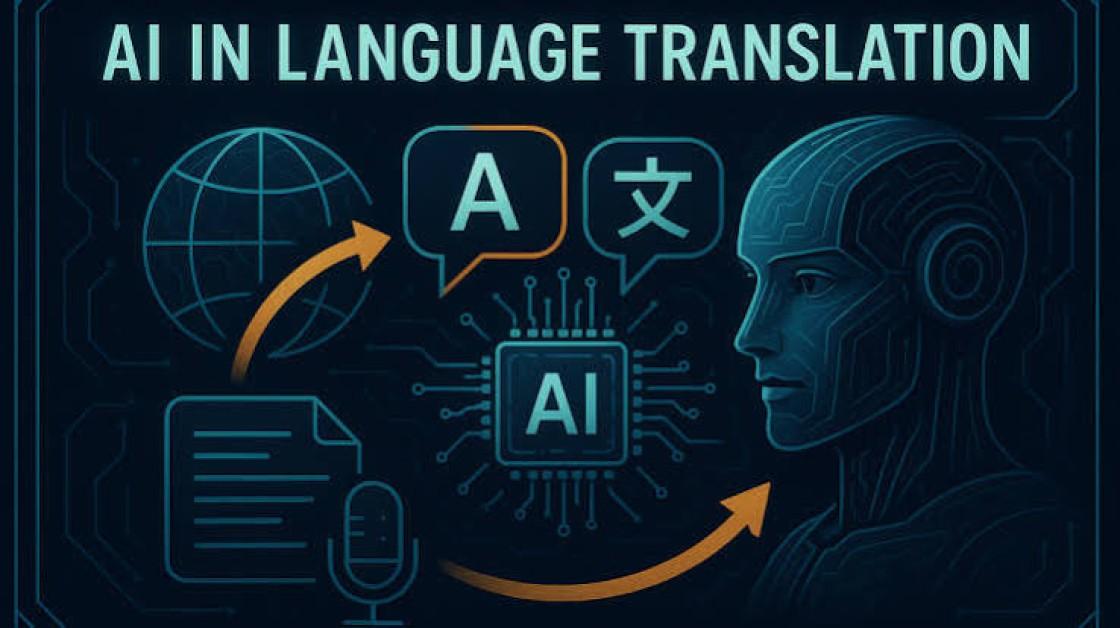
AI for Translation: How Artificial Intelligence Is Transforming Language Translation
Artificial Intelligence (AI) is transforming translation by helping individuals, businesses, educators, and organizations communicate across multiple languages more quickly and efficiently. From translating documents and websites to interpreting speech and localizing marketing content, AI-powered translation tools have made multilingual communication more accessible than ever.
Rather than replacing professional translators, AI serves as an intelligent language assistant that automates routine translation tasks while allowing human experts to focus on cultural accuracy, context, and linguistic quality.
What Is AI for Translation?

AI for translation refers to the use of artificial intelligence technologies to automatically translate text, speech, audio, and digital content from one language to another.
Modern AI translation systems use machine learning and natural language processing (NLP) to understand grammar, vocabulary, sentence structure, and context, producing more natural translations than traditional rule-based systems.
How AI Helps with Translation
AI supports translators and multilingual communication in many ways.
1. Text Translation
AI can translate:
- Documents
- Emails
- Articles
- Websites
- Product descriptions
- Business reports
Users should review important translations for accuracy and cultural appropriateness.
2. Speech Translation
AI can translate spoken conversations during:
- Business meetings
- Video conferences
- Customer support
- Travel conversations
- Online learning
- International events
Human interpreters may still be required for legal, diplomatic, or highly sensitive discussions.
3. Website Localization
AI helps businesses localize websites by translating:
- Web pages
- Navigation menus
- Product information
- Help centers
- User interfaces
- Marketing content
Localization should also consider regional culture, currency, measurements, and legal requirements.
4. Document Translation
AI assists with translating:
- Contracts
- Manuals
- Research papers
- Training materials
- Presentations
- Technical documentation
Critical legal, medical, and financial documents should always be reviewed by qualified professionals.
5. Customer Support
AI-powered translation enables customer service teams to:
- Respond in multiple languages
- Translate live chats
- Support international customers
- Improve response times
- Reduce communication barriers
Complex customer issues may still require human language experts.
6. Content Localization
AI helps adapt content for different markets, including:
- Social media posts
- Advertisements
- Blog articles
- Mobile applications
- Marketing campaigns
- Product catalogs
Human review helps ensure cultural relevance and brand consistency.
7. Subtitle and Caption Translation
AI can generate and translate:
- Video subtitles
- Closed captions
- Educational content
- Online courses
- Podcasts
- Webinars
Users should verify timing, terminology, and translation quality before publishing.
8. Workflow Automation
AI automates repetitive translation tasks such as:
- Glossary management
- Translation memory support
- File organization
- Content synchronization
- Project documentation
- Workflow tracking
This increases efficiency for translators and localization teams.
Benefits of AI for Translation
AI provides several important advantages.
Faster Translation
AI can translate large amounts of content within seconds.
Lower Translation Costs
Automation reduces the time and effort required for routine translation projects.
Better Global Communication
AI enables organizations to communicate with international audiences more effectively.
Increased Productivity
Translation professionals can focus on editing, quality assurance, and cultural adaptation.
Scalable Localization
Businesses can translate websites, products, and documentation into multiple languages more efficiently.
Challenges of AI for Translation
Despite its benefits, AI also presents important challenges.
Context and Meaning
AI may struggle with idioms, humor, cultural references, and nuanced language.
Accuracy
Translations involving technical, legal, or medical terminology require careful human review.
Cultural Adaptation
Successful localization involves more than translating words—it requires adapting content to local customs and expectations.
Human Expertise
Professional translators remain essential for high-stakes communication, creative writing, and culturally sensitive content.
Best Practices for Using AI for Translation
Individuals and organizations should follow these recommendations.
Use AI as a Translation Assistant
Allow AI to perform initial translations while relying on human experts for review and refinement.
Review Important Documents
Verify translations for accuracy, terminology, and cultural appropriateness before publication.
Maintain Consistent Terminology
Use approved glossaries and translation memories to ensure consistency across projects.
Protect Confidential Information
Use secure AI translation platforms when working with sensitive or proprietary content.
Continue Developing Language Skills
Translation professionals should combine AI tools with linguistic expertise, cultural knowledge, and subject-matter specialization.
Common Applications of AI for Translation
AI is increasingly used for:
- Document translation
- Website localization
- Speech translation
- Customer support
- Email translation
- Subtitle generation
- Content localization
- Technical documentation
- Business communication
- Mobile application localization
- Translation memory support
- Workflow automation
Future of AI for Translation
Artificial Intelligence is expected to become even more advanced through real-time multilingual conversations, context-aware translation, voice cloning for multilingual content, personalized localization, AI-powered interpretation, and seamless integration with global communication platforms. As AI technologies continue to evolve, translators and businesses will increasingly combine intelligent automation with human linguistic expertise to deliver faster, more accurate, and culturally appropriate communication across languages.
Conclusion
Artificial Intelligence is transforming translation by helping individuals and organizations translate text, speech, websites, and multimedia content more efficiently. Rather than replacing professional translators, AI serves as a valuable language assistant that improves productivity and supports global communication. When combined with human expertise, cultural understanding, and careful quality assurance, AI enables more accurate, scalable, and effective multilingual communication.
 AI for Translation: Benefits, Translation Applications, Challenges, and Future Explained FAQs
POST A COMMENT (0)
All Comments (0)
Replies (0)