





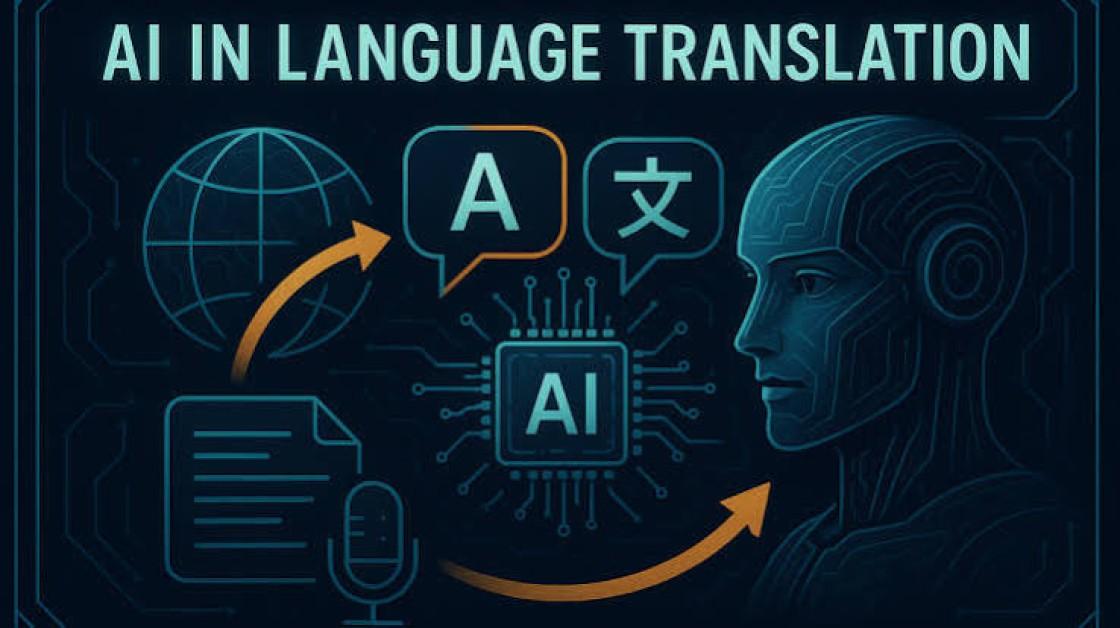
AI for Transcription: How Artificial Intelligence Is Transforming Speech-to-Text Technology
Artificial Intelligence (AI) is transforming transcription by converting spoken language into written text quickly and accurately. From business meetings and interviews to lectures, podcasts, customer support calls, and legal proceedings, AI-powered transcription tools help individuals and organizations save time while improving documentation and accessibility.
Rather than replacing professional transcriptionists, AI serves as an intelligent transcription assistant that automates routine speech-to-text tasks while allowing human reviewers to ensure accuracy, context, and quality.
What Is AI for Transcription?

AI for transcription refers to the use of artificial intelligence technologies to automatically convert spoken audio or video into written text.
AI-powered transcription systems use speech recognition, natural language processing (NLP), and machine learning to recognize spoken words, identify speakers, apply punctuation, and organize transcripts into readable documents.
How AI Helps with Transcription
AI supports users throughout the transcription process.
1. Speech-to-Text Conversion
AI can convert audio from:
- Meetings
- Interviews
- Podcasts
- Lectures
- Webinars
- Voice recordings
The resulting transcripts can be searched, edited, and shared digitally.
2. Meeting Transcription
AI automatically records and transcribes:
- Team meetings
- Client discussions
- Project updates
- Brainstorming sessions
- Video conferences
Users should review transcripts for names, technical terminology, and important decisions.
3. Speaker Identification
AI can distinguish between multiple speakers by labeling conversations where supported by audio quality and the transcription platform.
Human review is recommended to verify speaker attribution in important discussions.
4. Subtitle and Caption Creation
AI helps generate:
- Video subtitles
- Closed captions
- Educational captions
- Social media captions
- Webinar subtitles
Users should verify timing, punctuation, and translation before publishing.
5. Interview Documentation
AI assists researchers, journalists, recruiters, and businesses by transcribing:
- Research interviews
- Job interviews
- Customer interviews
- Focus groups
- Press interviews
This allows professionals to focus on analysis rather than manual transcription.
6. Searchable Documentation
AI organizes transcripts using:
- Keywords
- Topics
- Time stamps
- Speaker labels
- Searchable text
This makes locating specific discussions much faster.
7. Multilingual Transcription
Some AI systems support transcription in multiple languages and can generate translated transcripts for international communication.
Important multilingual documents should be reviewed by qualified language professionals.
8. Workflow Automation
AI automates repetitive transcription tasks such as:
- Transcript formatting
- Meeting summaries
- Action item extraction
- File organization
- Documentation
- Project tracking
This improves productivity across organizations.
Benefits of AI for Transcription
AI offers several important advantages.
Saves Time
AI converts hours of audio into text within minutes.
Improves Productivity
Automation reduces manual transcription work.
Better Accessibility
Transcripts make audio and video content easier to access, search, and review.
Enhanced Collaboration
Teams can easily share searchable meeting records and discussion summaries.
Supports Knowledge Management
Organizations can preserve conversations and make information easier to retrieve.
Challenges of AI for Transcription
Despite its benefits, AI also presents important challenges.
Accuracy
Background noise, accents, technical terminology, and overlapping speech can affect transcription quality.
Speaker Recognition
AI may incorrectly identify speakers in noisy or complex conversations.
Privacy
Organizations should use secure transcription platforms when processing confidential or sensitive recordings.
Human Review
Important transcripts should always be reviewed and corrected before official use or publication.
Best Practices for Using AI for Transcription
Users should follow these recommendations.
Use High-Quality Audio
Clear recordings significantly improve transcription accuracy.
Review Every Transcript
Verify names, technical terms, punctuation, and speaker labels before sharing transcripts.
Protect Sensitive Information
Use trusted AI transcription platforms that comply with privacy and security requirements.
Combine AI with Human Editing
Use AI to accelerate transcription while relying on human reviewers for final quality assurance.
Maintain Organized Records
Store transcripts using clear file names, tags, and categories for easy retrieval.
Common Applications of AI for Transcription
AI is increasingly used for:
- Meeting transcription
- Interview transcription
- Podcast transcription
- Lecture transcription
- Video subtitles
- Closed captions
- Customer support documentation
- Legal transcription support
- Medical transcription support
- Research documentation
- Voice recordings
- Workflow automation
Future of AI for Transcription
Artificial Intelligence is expected to become even more advanced through real-time multilingual transcription, improved speaker recognition, emotion-aware speech analysis, automatic meeting summaries, intelligent action item detection, and seamless integration with productivity platforms. As AI technologies continue to evolve, organizations and professionals will increasingly use intelligent transcription assistants to improve documentation, accessibility, and collaboration while relying on human expertise for quality assurance and context-sensitive interpretation.
Conclusion
Artificial Intelligence is transforming transcription by helping users convert speech into text, generate captions, document meetings, organize conversations, and automate workflow tasks. Rather than replacing human transcription professionals, AI serves as a valuable assistant that enhances productivity and improves access to spoken information. When combined with careful review and quality assurance, AI enables individuals and organizations to create faster, more accurate, and more accessible documentation.
 AI for Transcription: Benefits, Speech-to-Text Applications, Challenges, and Future Explained FAQs
POST A COMMENT (0)
All Comments (0)
Replies (0)