





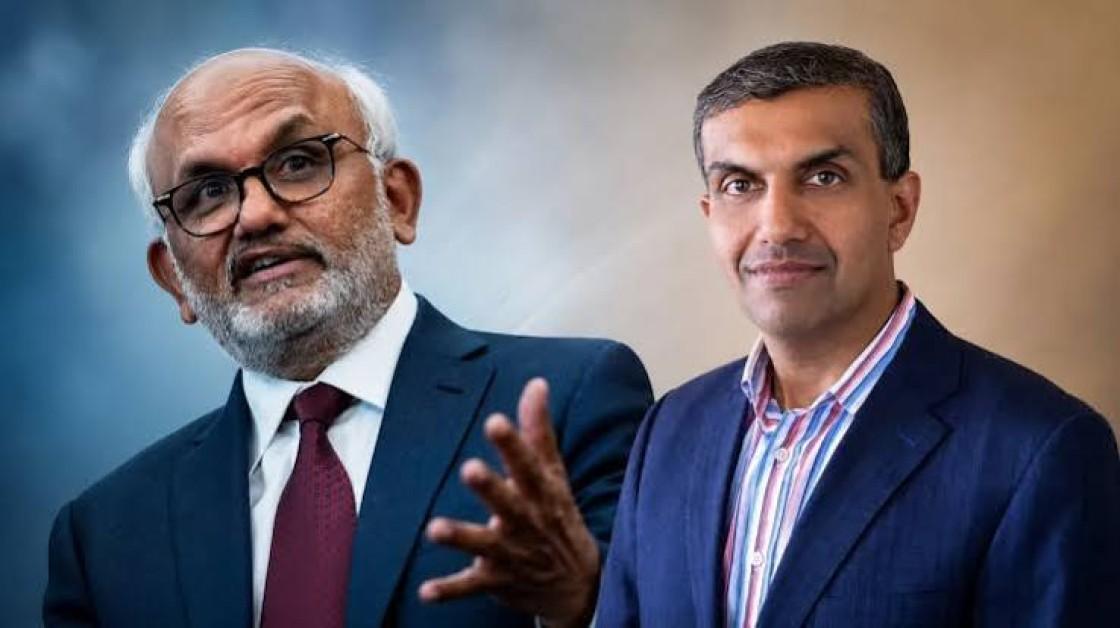
Adobe Names Anil Chakravarthy as CEO From December 1 as Shantanu Narayen Moves to Executive Chair
Adobe has appointed Anil Chakravarthy as its next president and chief executive officer, effective December 1, 2026, marking one of the most significant leadership transitions in the software company's history as longtime CEO Shantanu Narayen moves to executive chair.
Chakravarthy will also join Adobe's board of directors when he takes charge.
The appointment places an experienced enterprise-software executive at the helm as Adobe navigates one of the biggest technological shifts since its transition to cloud subscriptions:
artificial intelligence.
Chakravarthy currently leads Adobe's Customer Experience Orchestration business and worldwide field operations, giving him responsibility for an important part of the company's enterprise software portfolio and customer relationships.
He joined Adobe in 2020 after previously serving as CEO of enterprise data-management company Informatica.
Narayen, meanwhile, will remain closely involved with Adobe as executive chair, providing continuity after more than 18 years as CEO.
The transition comes as Adobe seeks to establish a leading position in generative and agentic AI across:
creativity,
productivity,
and:
customer experience.
Anil Chakravarthy to Become Adobe CEO on December 1

Adobe's board has named Chakravarthy:
President and Chief Executive Officer
effective:
December 1, 2026.
He will simultaneously become a member of the company's board.
Adobe's board unanimously selected Chakravarthy following a formal succession process overseen by a special committee.
The company had announced earlier in 2026 that Narayen planned to step down as CEO once a successor was identified.
The selection of an internal executive provides continuity while giving Adobe a leader with previous public-company CEO experience.
Chakravarthy has spent more than six years inside Adobe and already oversees major customer-facing and enterprise operations.
Shantanu Narayen Moves to Executive Chair
Shantanu Narayen will not leave Adobe following the transition.
Instead, he will become:
Executive Chair.
In that position, Narayen is expected to work closely with Chakravarthy to ensure an orderly transition and support Adobe's continuing transformation.
The arrangement gives the company continuity during a particularly important period for the software industry.
Narayen has led Adobe since:
2007.
His tenure transformed Adobe from a company largely dependent on traditional packaged software into one of the world's most prominent subscription-software businesses.
He will now move from day-to-day CEO responsibilities into a senior board leadership role.
Narayen Led Adobe for More Than 18 Years
Narayen's tenure represents an unusually long period of leadership in the technology industry.
He joined Adobe in:
1998
and became:
President and Chief Operating Officer in 2005,
CEO in 2007,
and Chairman of the Board in 2017.
One of the defining decisions of his tenure was Adobe's transition away from selling major creative software through perpetual licences.
Instead, products such as Photoshop and Illustrator increasingly became available through recurring subscriptions under Creative Cloud.
The transition initially represented a major strategic risk.
Over time, however, subscription revenue created a more predictable business model and fundamentally changed Adobe's economics.
Adobe Built Three Major Businesses Under Narayen
During Narayen's leadership, Adobe expanded beyond its traditional creative-software roots.
The company developed major positions across three broad areas:
creativity,
digital documents and productivity,
and:
digital experience.
Creative Cloud established subscription access to products including Photoshop, Illustrator and Premiere.
Document Cloud expanded Adobe's position around Acrobat and PDF workflows.
Experience Cloud developed into a major enterprise platform serving marketing and customer-experience functions.
This diversification created the Adobe that Chakravarthy will inherit.
Chakravarthy Joined Adobe in 2020
Anil Chakravarthy joined Adobe in:
January 2020.
He initially served as executive vice president and general manager of the company's Digital Experience business.
Later that year, his responsibilities expanded to include:
worldwide field operations.
That placed him closer to Adobe's global enterprise customers across the company's wider product portfolio.
In December 2021, he was promoted to president of Digital Experience and worldwide field operations.
His responsibilities subsequently evolved as Adobe reorganised its customer-experience business around a broader orchestration strategy.
Chakravarthy Currently Leads Customer Experience Orchestration
Before becoming CEO, Chakravarthy is serving as president of Adobe's:
Customer Experience Orchestration business
and:
worldwide field operations.
The role puts him at the intersection of:
enterprise software,
customer data,
marketing technology,
artificial intelligence,
and global sales.
This experience could prove particularly important as Adobe attempts to build stronger connections between its creative tools and enterprise customer-experience platform.
Businesses increasingly want to create enormous volumes of personalised content and distribute it across digital channels.
Adobe is attempting to position its products across that entire workflow.
AI Will Define Chakravarthy's CEO Mandate
Artificial intelligence is likely to be the defining strategic issue of Chakravarthy's early tenure.
Generative AI has dramatically lowered the barriers to producing:
images,
video,
designs,
marketing content,
documents,
and software-assisted creative work.
That creates both an opportunity and a threat for Adobe.
AI can make Adobe's products more valuable by helping customers produce content faster.
But AI-native competitors can also allow users to create content without relying on traditional professional software workflows.
Chakravarthy will therefore inherit the challenge of proving that Adobe can become a major beneficiary of AI rather than being disrupted by it.
Adobe Is Betting on Agentic Software
Chakravarthy has specifically identified:
agentic software
as an important part of Adobe's next era.
Traditional software waits for a user to perform individual actions.
Agentic systems can increasingly understand objectives, coordinate tasks and execute multi-step workflows with greater autonomy.
For Adobe, agentic AI could reshape workflows across:
creative production,
marketing,
content management,
analytics,
customer engagement,
and productivity.
Rather than simply adding AI features to existing software, Adobe is increasingly attempting to redesign workflows around intelligent agents.
Chakravarthy Has Led Major AI Product Development
Under Chakravarthy's leadership, Adobe has expanded its Customer Experience Orchestration portfolio with products including:
Adobe CX Enterprise,
GenStudio,
and:
Brand Visibility.
He has also played an important role in scaling:
Adobe Experience Platform.
Another major initiative has been:
CX Enterprise Coworker,
which reflects Adobe's push toward agentic customer-experience workflows.
These products are designed to help businesses use data and AI to coordinate increasingly complex customer interactions.
The experience gives Chakravarthy direct exposure to one of Adobe's most strategically important AI opportunities.
Adobe Wants to Connect Creativity and Enterprise Marketing
One of Adobe's biggest competitive advantages is its position on both sides of the content economy.
Creative professionals use Adobe products to:
create content.
Enterprises use Adobe's experience products to:
manage customer data,
run campaigns,
personalise experiences,
and measure performance.
Generative AI can potentially connect these environments much more tightly.
A marketing organisation could use AI to create thousands of content variations and automatically personalise them for different customers.
That requires integration between:
creative tools,
enterprise data,
AI models,
marketing workflows,
and measurement systems.
Adobe's ability to connect these capabilities could become central to its AI strategy under Chakravarthy.
Adobe Faces Growing AI Competition
The leadership change also comes during intense competitive pressure.
Adobe's traditional creative-software position is being challenged by increasingly sophisticated alternatives.
Competitors include established design platforms as well as new AI-native applications capable of generating professional-looking visual content through simple prompts.
Generative AI is changing the economics of creativity.
Tasks that previously required:
specialised software,
technical expertise,
and significant time
can increasingly be completed much faster.
Adobe must therefore demonstrate that professional creators and enterprises continue to see sufficient value in its ecosystem to maintain subscriptions and expand spending.
Investor Concerns Have Pressured Adobe Shares
These competitive questions have affected investor sentiment.
Adobe shares have faced significant pressure as markets debate whether generative AI will strengthen or weaken the company's competitive position.
The stock declined approximately:
21% during 2025
and had fallen roughly:
18% during 2026
around the time the leadership transition was announced.
Adobe shares also fell in extended trading following the CEO announcement.
The reaction illustrates the expectations facing Chakravarthy.
Investors will want evidence that Adobe can translate its substantial AI investment into durable:
revenue growth,
customer adoption,
and profitability.
Adobe Has Raised Its Profit Outlook
Despite concerns around disruption, Adobe continues to see demand for its AI-enabled products.
The company raised its annual profit forecast earlier in 2026 as adoption of AI-powered tools supported its business.
This highlights the central contradiction surrounding Adobe's position.
Artificial intelligence creates new competitors.
But it can also increase the value and productivity of Adobe's existing products.
The strategic question is therefore not simply whether AI disrupts Adobe.
It is whether Adobe can commercialise AI faster and more effectively than emerging competitors can weaken its established franchises.
Chakravarthy Previously Led Informatica
Before joining Adobe, Chakravarthy served as CEO of:
Informatica.
He originally joined the enterprise data-management company in 2013 as an executive vice president before eventually becoming chief executive.
He served as Informatica CEO for approximately:
four years.
That previous CEO experience distinguishes him from many internal succession candidates.
He has already managed a major enterprise technology organisation and understands the responsibilities associated with:
corporate strategy,
investor expectations,
product development,
sales,
and organisational leadership.
Earlier Career Included Symantec, VeriSign and McKinsey
Chakravarthy's career also includes senior roles at:
Symantec,
VeriSign,
and:
McKinsey & Company.
This gives him experience spanning:
enterprise technology,
cybersecurity,
internet infrastructure,
strategy,
and management consulting.
That breadth could be valuable as Adobe's competitive environment becomes increasingly complex.
The company must simultaneously manage:
creative software,
enterprise platforms,
AI infrastructure,
cloud services,
data,
and global customer relationships.
Chakravarthy Has Strong Academic Technology Background
Chakravarthy also has a substantial technical academic background.
He earned a:
Bachelor of Technology in Computer Science and Engineering
from the Institute of Technology, Varanasi in India.
He later completed:
a Master of Science
and:
a Ph.D.
at the Massachusetts Institute of Technology.
His combination of technical education and enterprise leadership experience places him among a growing group of Indian-origin executives leading major global technology companies.
Adobe Board Unanimously Selected Chakravarthy
Adobe's board described the CEO search as a rigorous selection process.
Lead Independent Director Frank Calderoni led the special committee overseeing succession.
The board ultimately reached a:
unanimous decision
to appoint Chakravarthy.
His record of expanding Adobe's Customer Experience Orchestration business, developing talent and driving innovation were among the factors highlighted by the company.
The decision also signals confidence that Adobe's enterprise and customer-experience operations will become increasingly important to its future.
David Wadhwani to Leave Adobe
The CEO transition is accompanied by another major leadership change.
David Wadhwani, who led Adobe's Creativity and Productivity business, is leaving the company.
Wadhwani and Chakravarthy had been viewed as leading internal candidates to succeed Narayen.
Wadhwani's departure is significant because he oversaw Adobe's flagship creative operations, which account for a substantial portion of the company's business.
Adobe will therefore be managing changes across multiple senior leadership positions while simultaneously accelerating its AI strategy.
Chakravarthy Also Led Strategic Acquisitions
During his Adobe tenure, Chakravarthy has played an important role in acquisitions and integration.
Adobe specifically highlighted his involvement with:
Workfront
and:
Semrush.
Acquisitions can help enterprise-software companies expand capabilities more quickly than relying entirely on internal development.
But acquiring a company is only the first step.
The larger challenge is integrating:
technology,
employees,
products,
customers,
and go-to-market operations.
Chakravarthy's experience in this area could become increasingly relevant as Adobe considers how to strengthen its portfolio during the AI transition.
Customer Experience Could Become Larger Growth Engine
Chakravarthy's appointment may also signal the strategic importance Adobe places on its enterprise customer-experience business.
The division he oversees generated approximately:
$5.86 billion in revenue during Adobe's 2025 fiscal year.
That represented roughly one-quarter of Adobe's total revenue.
While the creative business remains larger, enterprise customer experience provides an important diversification opportunity.
AI could substantially increase demand for tools that help companies coordinate customer interactions across:
websites,
mobile apps,
email,
advertising,
commerce,
and emerging AI interfaces.
Adobe wants to position itself as the infrastructure connecting those experiences.
Narayen's Executive Chair Role Provides Continuity
Leadership transitions can create uncertainty, particularly when a CEO has led a company for nearly two decades.
Adobe's decision to retain Narayen as executive chair reduces some of that risk.
He will remain available to:
advise Chakravarthy,
support strategic continuity,
work with the board,
and help navigate the transition.
At the same time, Chakravarthy will have responsibility for day-to-day leadership and Adobe's next growth chapter.
The structure allows Adobe to combine:
continuity with succession.
Next Era Will Test Adobe's Ability to Reinvent Itself Again
Adobe has successfully navigated major technology transitions before.
It moved from:
packaged software
to:
cloud subscriptions.
It expanded from:
creative applications
into:
enterprise digital experiences.
It transformed PDF from a document format into a broad productivity ecosystem.
Artificial intelligence now represents another such transition.
The difference is speed.
Generative AI is evolving extraordinarily quickly, with new models and products appearing continuously.
Adobe cannot rely solely on its historical market position.
It must demonstrate that its products remain essential even as the tools available to creators and businesses multiply.
That will be Chakravarthy's central strategic challenge.
Conclusion
Adobe's appointment of Anil Chakravarthy as president and CEO from December 1, 2026 marks the beginning of a new leadership era for one of the world's most influential software companies.
Chakravarthy succeeds Shantanu Narayen, who will transition to executive chair after more than 18 years as CEO and continue working closely with the new chief executive.
The succession comes at a pivotal moment.
Generative and agentic AI are transforming creativity, productivity and enterprise software — the same markets at the centre of Adobe's business.
Chakravarthy brings deep knowledge of Adobe, previous CEO experience at Informatica and direct responsibility for the company's Customer Experience Orchestration business, where he has overseen major AI-driven products and platforms.
His mandate will now become considerably broader:
protect Adobe's established creative franchises while building the company's leadership in the AI era.
Narayen helped reinvent Adobe for cloud subscriptions.
Chakravarthy's challenge will be determining whether Adobe can reinvent itself just as successfully for intelligent and increasingly agentic software.
 Adobe Names Anil Chakravarthy CEO as Shantanu Narayen Becomes Executive Chair FAQs
POST A COMMENT (0)
All Comments (0)
Replies (0)