




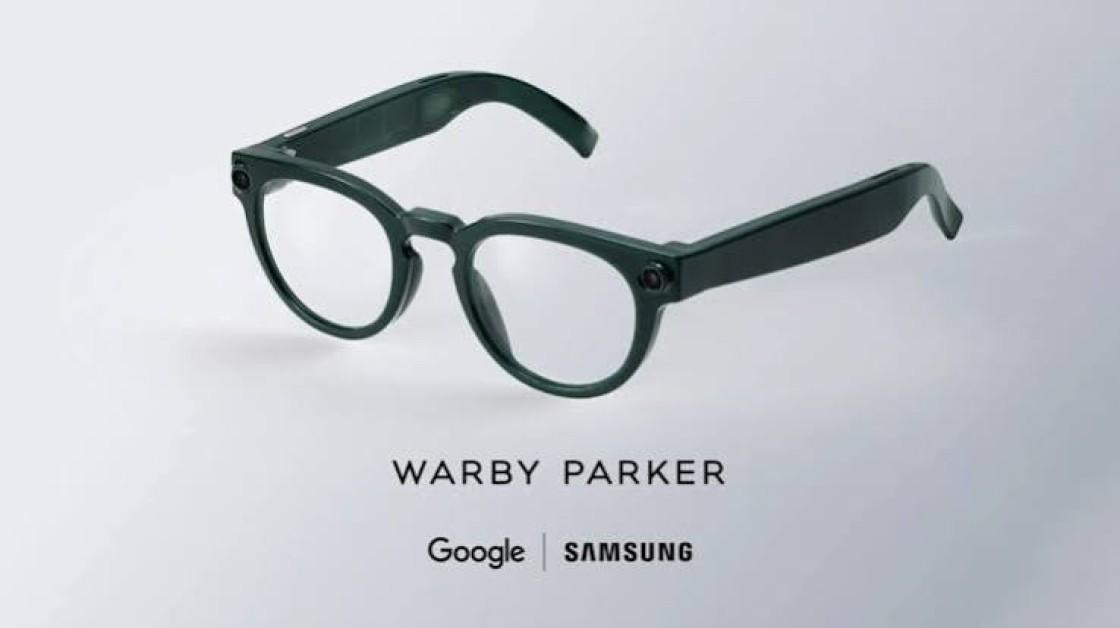
Warby Parker Launches Google Gemini AI Smart Glasses Starting at $395 as Privacy Concerns Challenge Growth
New York, November 13, 2026: US eyewear retailer Warby Parker is positioning artificial intelligence-powered smart glasses as a major future growth opportunity, launching its first intelligent eyewear collection in partnership with Google and Samsung as concerns over privacy, surveillance and public acceptance continue to challenge the emerging wearable technology market.
The company opened preorders on November 12 for three smart-glasses designs—Alden, Reid and Wren—with prices starting at $395.
The glasses integrate Google's Gemini artificial intelligence assistant, allowing users to access navigation, language translation, visual information and other services without repeatedly using a smartphone.
The products are expected to become available in December, with Warby Parker anticipating deliveries beginning in the middle of the month.
The launch places Warby Parker in direct competition with established smart-glasses products from Meta and EssilorLuxottica, including the Ray-Ban Meta and Oakley Meta ranges.
Warby Parker expects intelligent eyewear to contribute several percentage points to fourth-quarter revenue growth, potentially providing a new revenue source as demand in the traditional optical market remains relatively subdued.
However, the company's expansion comes amid increasing scrutiny of camera-equipped glasses that can capture images, video and audio in public places.
Google and Warby Parker are emphasising privacy protections intended to address these concerns, although consumer advocates warn that the safeguards may not fully resolve the risks of unwanted recording.
Warby Parker Opens Preorders for Google-Powered Smart Glasses

Warby Parker officially introduced its first Intelligent Eyewear collection on November 12, 2026.
The collection consists of three frame styles designed to combine the appearance of conventional eyewear with artificial intelligence capabilities.
The products were developed through a collaboration involving Warby Parker, Google and Samsung.
Warby Parker contributed its experience in eyewear design, prescription lenses and retail distribution.
Google provides the Gemini assistant and associated software technologies.
Samsung participates in the hardware and technology partnership.
The launch represents an important expansion beyond Warby Parker's traditional business of prescription glasses, sunglasses and optical services.
Customers can preorder the products online or through Warby Parker stores in the United States.
The company is also offering demonstrations to help consumers understand the new features.
Warby Parker AI Smart Glasses: Key Launch Details
| Feature | Details |
|---|---|
| Product | Warby Parker Intelligent Eyewear |
| Launch announcement | November 12, 2026 |
| Starting price | $395 |
| Frame designs | Alden, Reid and Wren |
| Technology partners | Google and Samsung |
| AI assistant | Google Gemini |
| Operating platform | Android XR |
| Preorders | Open from November 12 |
| Retail availability | December 10, 2026 |
| Warby Parker deliveries | Expected from mid-December |
| Main competitor | Meta-powered Ray-Ban and Oakley glasses |
| Principal privacy features | Recording indicator, facial-recognition restrictions and AI-data protections |
The specifications position the products within the growing category of AI-enabled consumer eyewear.
Google Gemini Brings AI Assistance to Everyday Eyewear
The new glasses connect to Google's Gemini assistant.
Gemini can process user requests and provide contextual information.
The technology allows wearers to ask questions about objects or situations they encounter.
For example, users may request help interpreting signs, understanding unfamiliar surroundings or translating another language.
The glasses also support navigation-related assistance.
These functions are intended to reduce the need to take out a smartphone for routine tasks.
However, the usefulness of the technology depends on the accuracy of AI responses, connectivity and user preferences.
Artificial intelligence systems can produce incorrect or incomplete information.
Users must therefore exercise judgment when relying on AI-generated assistance.
Three Frame Designs Target Different Consumer Preferences
Warby Parker introduced three designs in its first intelligent eyewear collection.
The models are named Alden, Reid and Wren.
The company has emphasised the importance of offering glasses that consumers would be comfortable wearing throughout the day.
Unlike conventional electronics, eyewear is highly visible and closely connected to personal style.
Consumers consider frame shape, weight, comfort and appearance when purchasing glasses.
Warby Parker is attempting to use its established design expertise to address these requirements.
The strategy reflects a broader industry challenge: smart glasses must function as both technology products and everyday fashion accessories.
The company believes attractive designs could help encourage adoption beyond early technology enthusiasts.
Google and Samsung Partnership Supports Product Development
Warby Parker announced its partnership with Google in 2025.
The companies agreed to collaborate on AI-enabled glasses intended for everyday use.
Under the arrangement, Google committed up to $75 million toward product development and commercialisation expenses.
Google also committed to investing up to an additional $75 million in Warby Parker, subject to specified conditions and milestones.
The combined potential commitment reaches $150 million.
However, the full amount should not be interpreted as funding already received.
The arrangement demonstrates Google's interest in working with established eyewear brands rather than developing all consumer-facing designs independently.
Samsung's involvement adds hardware and technology expertise.
Together, the companies aim to build products that combine AI capabilities with familiar eyewear designs.
Warby Parker Seeks a New Growth Engine
Warby Parker is entering smart glasses at a time when the traditional optical market faces relatively soft demand.
The company continues operating its prescription eyewear and optical services business.
However, intelligent eyewear offers access to a different category of consumer spending.
Smart glasses combine fashion, electronics and digital services.
This creates opportunities for product upgrades and new customer relationships.
Warby Parker expects the technology to become an increasingly important contributor to growth.
However, the commercial opportunity remains uncertain.
The company must demonstrate that consumers are willing to pay a premium for AI features and continue using them after purchase.
Smart Glasses Expected to Boost Fourth-Quarter Revenue
Warby Parker executives expect intelligent eyewear to contribute several percentage points to fourth-quarter revenue growth.
The expectation was discussed during the company's earnings call earlier in November.
The launch timing means the products will initially contribute during the final weeks of 2026.
The company is relying on consumer interest in AI-enabled devices and its established retail network.
However, the precise revenue contribution will depend on preorder conversion, product availability and customer demand.
The company has not established that intelligent eyewear will become a larger business than its traditional optical products.
The fourth-quarter results will provide an early indication of the product's commercial performance.
Warby Parker Shares Gain Nearly 40% in 2026
Investor optimism surrounding Warby Parker's smart-glasses strategy has contributed to a strong share-price performance.
The company's stock has gained nearly 40% during 2026 through the period surrounding the November launch.
This compares with an increase of approximately 10% in the S&P 500.
The outperformance suggests that investors are assigning value to the company's potential expansion into wearable technology.
However, share-price gains also reflect broader market conditions and expectations about future earnings.
Strong investor enthusiasm does not guarantee commercial success.
Warby Parker must convert product interest into sustainable revenue and profitability.
The company's performance will therefore remain sensitive to adoption rates, operating costs and competition.
Meta Currently Dominates the AI Smart Glasses Market
Warby Parker faces an established competitor in Meta.
Meta has partnered with EssilorLuxottica to develop smart glasses sold under the Ray-Ban and Oakley brands.
These products combine eyewear design with cameras, microphones, speakers and AI-related functions.
According to technology research company Omdia, Meta's smart-glasses products accounted for approximately 81.3% of global AI glasses shipments during the first half of 2026.
The figure demonstrates the company's strong position in the emerging category.
However, market leadership does not guarantee that Meta will maintain the same share as competition expands.
Warby Parker, Google, Samsung and other companies are introducing alternative products.
The competitive landscape could change as consumers evaluate new designs, features and prices.
Global AI Glasses Shipments More Than Double
The global market for AI-enabled glasses expanded rapidly during the first half of 2026.
Omdia reported that shipments more than doubled compared with the corresponding period in 2025.
The growth reflects increasing consumer interest in wearable devices that integrate artificial intelligence.
However, the research company also indicated that growth had slowed compared with the second half of 2025.
The distinction is important.
Rapid year-on-year growth can occur when a product category is expanding from a relatively small base.
It does not necessarily indicate that adoption will continue at the same rate indefinitely.
The market's longer-term development will depend on affordability, usefulness, comfort and consumer trust.
Google's Android XR Strategy Expands Into Eyewear
The Warby Parker collection forms part of Google's broader Android XR strategy.
Android XR is a software platform designed for extended reality devices and related wearable computing products.
Google is working with hardware and eyewear partners to introduce products using the platform.
The company has also collaborated with Gentle Monster on intelligent eyewear designs.
This approach allows Google to provide software and AI capabilities while partners contribute product design and manufacturing expertise.
The strategy differs from building every device under a single consumer brand.
However, its success will depend on the availability of compelling applications and a reliable user experience.
Google must also address the privacy concerns associated with wearable cameras.
Privacy Becomes a Central Challenge for AI Glasses
Smart glasses raise privacy questions because they can contain cameras and microphones that are less noticeable than conventional recording devices.
Wearers may be able to capture their surroundings without holding a smartphone.
This creates concerns for people who do not wish to be recorded.
The issue is particularly sensitive in workplaces, schools, restaurants and other shared environments.
Unlike a conventional camera, smart glasses may appear similar to ordinary eyewear.
Bystanders may therefore find it difficult to determine whether recording is taking place.
Warby Parker and Google have introduced safeguards intended to reduce these risks.
However, technical protections cannot completely eliminate concerns about consent and surveillance.
Recording Indicator Designed to Alert Bystanders
The new glasses include a visible notification light that activates when the wearer records video.
The indicator is intended to alert people nearby that recording is taking place.
Google says the system includes protections designed to prevent users from disabling or tampering with the indicator.
The company also restricts applications and accessories intended to bypass recording safeguards.
These measures are designed to address concerns about covert recording.
However, their effectiveness depends partly on whether bystanders notice and understand the light.
A recording indicator does not automatically establish that everyone being filmed has consented.
The distinction remains central to the public debate surrounding smart glasses.
Google Restricts Facial Recognition of Bystanders
Google has introduced restrictions on facial recognition involving people captured by the glasses.
The company says applications are prohibited from using the platform for real-time identification of bystanders.
The policy is intended to prevent the technology from being used to identify strangers automatically.
Google also says faces appearing in visual information are redacted before relevant footage is processed by Gemini.
These protections aim to reduce the risk of unwanted identification.
However, restrictions on AI facial recognition do not necessarily prevent a wearer from recording identifiable people.
A photograph or video may still contain personal information.
Privacy advocates therefore continue calling for safeguards that address both automated identification and the original act of recording.
Captured Visuals Will Not Be Used to Train Google's AI
Google says visual information captured through the intelligent eyewear will not be used to train its artificial intelligence models.
The company has also stated that the glasses will not use captured visual information for targeted advertising.
These commitments are intended to address concerns about personal data being collected for unrelated commercial purposes.
The restrictions distinguish the announced product framework from some broader concerns surrounding consumer AI systems.
However, users should still review the applicable privacy policies and service settings.
Different features may involve different processing arrangements.
The fact that information is not used for model training does not mean that all data collection or processing is eliminated.
Warby Parker's Privacy Policy Explains Partner Responsibilities
Warby Parker's intelligent eyewear privacy framework identifies Google and Samsung as technology partners.
The company states that certain AI, camera, microphone, speaker and data-processing functions are operated or controlled by those partners.
Information processed through those features may therefore be governed by the relevant partner's terms and privacy policies.
This distinction matters because consumers may interact with multiple companies through a single device.
Warby Parker also explains that information captured during certain in-store demonstrations may be collected through company-controlled accounts.
Consumers should understand which organisation handles their information and for what purpose.
Transparent data-processing arrangements will be important to building trust in the category.
Privacy Advocates Warn That Safeguards Have Limits
Consumer privacy organisations have acknowledged the value of restrictions on AI training and facial recognition.
However, they remain concerned about the ability of strangers to record people without permission.
The Electronic Privacy Information Center has highlighted the distinction between protecting data after collection and preventing unwanted recording in the first place.
Even if footage is not used to train an AI system, the original recording may still create privacy risks.
These concerns are particularly important when children or other vulnerable individuals are involved.
The debate demonstrates that privacy protections must address both technological capabilities and social expectations.
Companies may need to provide clear guidance about appropriate recording behaviour.
Regulatory Scrutiny Expands Across Countries
Smart glasses are attracting regulatory and institutional attention in several countries.
In Britain, a major pub chain has restricted the use of camera-equipped glasses at its establishments.
Norway is considering temporary restrictions on AI glasses in certain locations.
Australia is also examining restrictions on camera-equipped smart glasses in government workplaces.
These developments reflect concerns about recording, privacy and sensitive environments.
However, the measures differ in scope and legal status.
Some involve private business policies, while others are government proposals.
They should not be interpreted as a universal prohibition on AI smart glasses.
Manufacturers will need to monitor how privacy rules develop across different jurisdictions.
Consumer Trust Could Determine Market Adoption
The commercial success of smart glasses depends on more than technical performance.
Consumers must feel comfortable wearing the devices in everyday situations.
People around them must also understand and accept the technology.
Privacy concerns could limit adoption even when products offer useful features.
Google has acknowledged that public trust is a significant challenge.
The company is attempting to address the issue through recording indicators, data restrictions and application policies.
However, consumer attitudes may change slowly.
The history of wearable cameras demonstrates that technical innovation does not automatically lead to social acceptance.
Smart Glasses Must Deliver Practical Everyday Benefits
For smart glasses to become a mainstream product, consumers must find their features consistently useful.
Navigation, translation and hands-free assistance are among the functions manufacturers are promoting.
These capabilities may reduce dependence on smartphones in certain situations.
However, users must also consider battery life, comfort, connectivity and reliability.
AI-generated information can be inaccurate.
Voice-based interactions may also be inconvenient in noisy or crowded environments.
The product's long-term appeal will depend on whether the benefits outweigh these limitations.
Warby Parker's strategy places particular emphasis on combining useful technology with attractive eyewear design.
Prescription Eyewear Could Differentiate Warby Parker
Warby Parker has established expertise in prescription eyewear.
This could provide an advantage in developing smart glasses intended for everyday use.
Consumers who require corrective lenses may prefer devices that integrate prescription options rather than separate electronic accessories.
Warby Parker's optical services and retail network could help address these requirements.
However, integrating technology into prescription frames introduces design and manufacturing complexity.
Products must balance optical performance, electronic components, comfort and appearance.
The company's ability to manage these factors will influence customer satisfaction.
Prescription compatibility could become an important competitive feature as the market develops.
Retail Stores Provide a Product Demonstration Advantage
Warby Parker operates physical retail locations alongside its online business.
The company is using its stores to introduce consumers to intelligent eyewear.
Customers can examine the frames, assess comfort and experience selected features before purchasing.
This approach may help overcome uncertainty about a relatively unfamiliar product category.
Smart glasses differ from conventional eyewear because customers must evaluate both fit and technology.
Demonstrations can help explain how AI functions operate.
However, providing demonstrations also involves employee training and operating costs.
The effectiveness of the retail strategy will depend on whether product experiences translate into purchases.
Competition Extends Beyond Meta and Warby Parker
The smart-glasses market is attracting companies from technology, fashion and consumer electronics.
Google is working with multiple eyewear partners.
Gentle Monster has introduced its own designs using Google's intelligent eyewear platform.
Luxury group Kering is also preparing products through a partnership with Google.
These developments suggest that companies view smart glasses as a potential new consumer electronics category.
However, the market remains relatively young.
Future competition will depend on product design, software capabilities, pricing and distribution.
Companies must also address privacy requirements and regulatory scrutiny.
No manufacturer can assume that early market growth guarantees long-term profitability.
Google's AI Strategy Gains Another Consumer Platform
The smart-glasses launch gives Google another way to distribute Gemini beyond smartphones and computers.
Wearable devices can provide AI assistance in situations where users may not want to interact with a screen.
This creates opportunities for visual queries, language assistance and other context-aware services.
However, wearable AI introduces additional privacy and reliability challenges.
Google must ensure that applications operate within its stated safety and data-processing rules.
The company also needs to support hardware partners and developers.
The success of Android XR eyewear could influence Google's position in the next generation of consumer computing devices.
Warby Parker Faces Execution and Profitability Risks
Entering smart glasses creates new opportunities but also introduces operational risks.
Warby Parker must coordinate product development, inventory management and customer support with technology partners.
Electronic eyewear may require different service arrangements from conventional glasses.
Customers may expect software updates, device compatibility and technical assistance.
The company must also manage returns, warranties and product availability.
These requirements can affect operating costs.
Higher revenue does not automatically translate into stronger profitability.
Investors will monitor whether intelligent eyewear contributes positively to margins as sales expand.
Outlook for Warby Parker and the Smart Glasses Market
Warby Parker enters the smart-glasses market with a recognised eyewear brand, an established retail network and partnerships with Google and Samsung.
The company expects intelligent eyewear to contribute to fourth-quarter revenue growth.
Its initial collection starts at $395 and is expected to reach customers in December.
However, competition from Meta remains substantial.
The market leader accounted for more than four-fifths of global AI glasses shipments during the first half of 2026.
Warby Parker must also address privacy concerns and demonstrate that consumers find the products useful enough for regular use.
The next several quarters will provide an indication of whether intelligent eyewear can become a meaningful long-term business.
Conclusion
Warby Parker has launched its first Google Gemini-powered intelligent eyewear collection, marking an important expansion into the rapidly developing AI smart-glasses market.
The company opened preorders on November 12 for three designs priced from $395, with deliveries expected in December.
The partnership with Google and Samsung gives Warby Parker access to advanced AI capabilities while allowing it to apply its eyewear design and retail expertise.
The company expects the new products to support fourth-quarter revenue growth and potentially become a more important business over time.
However, Meta currently dominates the category, and privacy concerns remain a major obstacle to broader adoption.
Google's safeguards include recording indicators, facial-recognition restrictions and commitments not to use captured visuals for AI training or targeted advertising.
These measures may help build confidence, but they cannot fully resolve concerns about unwanted recording.
For Warby Parker, the commercial opportunity is substantial, yet its success will depend on whether consumers embrace smart glasses as useful everyday products while accepting the privacy implications of wearable cameras.
 Warby Parker Launches Google AI Smart Glasses Amid Privacy Concerns FAQs

POST A COMMENT (0)
All Comments (0)
Replies (0)