





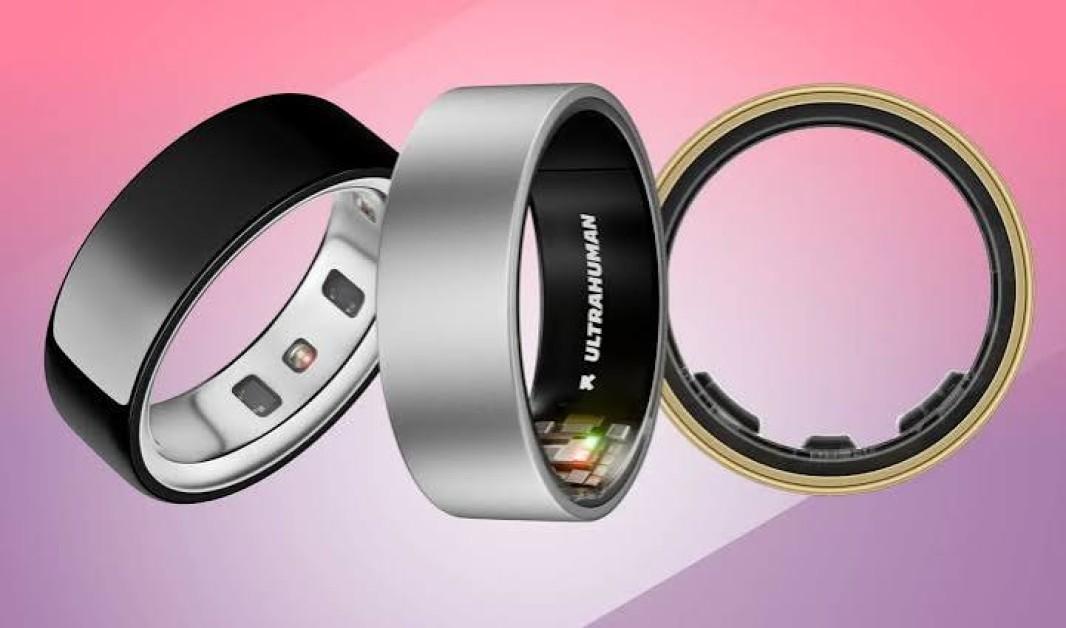
Ultrahuman Raises $60 Million Led by Qualcomm Ventures as Indian Wearables Startup Accelerates Global Expansion
Bengaluru-based wearable health technology company Ultrahuman has raised about $60 million, or approximately ₹583 crore, in a funding round led by Qualcomm Ventures, strengthening its balance sheet as it accelerates international expansion and rebuilds its presence in the strategically important US wearables market.
The transaction values Ultrahuman at approximately:
$360 million.
The financing brings together a diverse group of strategic and financial investors spanning semiconductors, healthcare, venture capital and consumer technology.
Alongside Qualcomm Ventures, participants include Alpha Wave, Labcorp, Blume Ventures, Nexus Venture Partners, Steadview Capital and Zomato founder Deepinder Goyal, among other investors.
The fresh capital comes at a pivotal point for Ultrahuman.
The company is expanding its smart-ring and metabolic-health ecosystem globally while simultaneously recovering its US business following a patent dispute with Finnish smart-ring market leader Oura.
With global demand for screenless health-monitoring wearables continuing to grow, Ultrahuman is positioning itself as one of the most prominent Indian consumer-hardware startups competing internationally.
Ultrahuman Raises Around ₹583 Crore

Regulatory filings indicate that Ultrahuman is raising approximately:
₹583 crore
in the latest financing.
That translates to roughly:
$60 million.
The investment gives the company additional capital for:
global expansion,
product development,
manufacturing,
US market growth,
and broader business requirements.
For an Indian consumer-hardware startup, the size of the financing is significant.
Hardware businesses generally require more capital than software startups because companies must finance physical inventory, manufacturing, logistics, research and product development alongside software infrastructure.
Qualcomm Ventures Leads Funding Round
Qualcomm Ventures is leading the latest financing.
The investment arm of semiconductor and wireless-technology group Qualcomm is expected to contribute approximately:
₹143 crore.
Qualcomm's participation has strategic significance beyond the amount invested.
Wearable devices increasingly depend on sophisticated combinations of:
low-power processors,
wireless connectivity,
sensors,
edge computing,
artificial intelligence,
and energy-efficient hardware.
As smart rings become more capable, semiconductor technology will play an increasingly important role in product differentiation.
Having a major semiconductor-focused investor on its shareholder register could therefore provide strategic relevance for Ultrahuman as it develops future wearable categories.
Alpha Wave Is Investing Around ₹114 Crore
Investment firm Alpha Wave is participating with approximately:
₹114 crore.
Alpha Wave has previously backed technology businesses across India and international markets.
Its participation provides another institutional endorsement of Ultrahuman's global ambitions.
The startup is no longer building primarily for the Indian wearables market.
Its strategy increasingly revolves around competing in major international consumer-health markets, particularly:
the United States,
United Kingdom,
Canada,
Australia,
Europe,
and India.
Labcorp Joins Ultrahuman Funding Round
US laboratory-services company Labcorp is expected to invest approximately:
₹95 crore.
Its participation is particularly notable because Ultrahuman's ambitions extend beyond conventional fitness tracking.
The company is building a broader health-data ecosystem combining wearable information with metabolic and blood-based biomarkers.
Labcorp's involvement could therefore carry strategic importance as Ultrahuman develops products connecting consumer wearables with broader health diagnostics and personalised health insights.
The relationship highlights how the boundary between consumer wearables and healthcare technology is becoming increasingly blurred.
Blume Ventures Continues Backing Ultrahuman
Existing investor Blume Ventures is also participating in the financing.
Blume has been associated with Ultrahuman through earlier stages of the company's development.
Participation by an existing investor can be an important signal during a new funding round because it demonstrates continued conviction after observing the company's execution over multiple years.
Other existing and new investors are also participating, creating a broad investor base for Ultrahuman's next growth phase.
Deepinder Goyal Invests in Ultrahuman
Entrepreneur and investor Deepinder Goyal is participating in the financing with approximately:
₹47.4 crore.
The Zomato founder has increasingly invested personally in technology and consumer businesses outside his primary operating company.
His participation adds another prominent Indian technology entrepreneur to Ultrahuman's shareholder base.
The financing also includes participation from investors such as:
Nexus Venture Partners,
Krypton Fund,
Steadview Capital,
GGM Family Trust,
InCred Wealth,
and others.
Ultrahuman Valued at Around $360 Million
The financing values Ultrahuman at approximately:
$360 million on a post-money basis.
That represents a substantial increase from the company's earlier funding valuations.
The higher valuation reflects Ultrahuman's growing international revenue base, expanding product portfolio and position in the global smart-ring category.
However, the company is entering its next growth phase after a financially demanding period involving:
US market disruption,
patent litigation,
product redesign,
international expansion,
and investment in manufacturing.
The new capital provides additional resources to navigate those challenges.
Ultrahuman Was Founded by Mohit Kumar and Vatsal Singhal
Ultrahuman was founded in 2019 by:
Mohit Kumar
and
Vatsal Singhal.
The founders initially focused heavily on metabolic health and continuous glucose monitoring before expanding into broader wearable technology.
The company's strategy gradually evolved toward creating a health-monitoring ecosystem rather than relying on a single hardware product.
That ecosystem now includes smart rings, glucose-monitoring products, blood testing and software-driven health intelligence.
Ring Air Established Ultrahuman in Global Wearables Market
Ultrahuman became widely recognised internationally through its Ring Air smart ring.
The device tracks health and wellness indicators including:
sleep,
movement,
recovery,
heart rate,
temperature,
and other physiological signals.
Smart rings occupy a distinctive position within the wearable market.
Unlike smartwatches, they do not require users to interact constantly with a screen.
Instead, they operate primarily as passive health-monitoring devices.
This has helped create a growing category of consumers interested in continuous health tracking without wearing a conventional smartwatch.
Smart Ring Market Is Growing Rapidly
Global demand for smart rings has expanded significantly.
Industry estimates indicate that worldwide smart-ring shipments grew sharply during 2025 as consumers increasingly adopted compact, screenless health trackers.
The category benefits from several trends:
greater interest in sleep tracking,
preventive healthcare,
recovery monitoring,
longer battery life,
and continuous biometric measurement.
Oura remains the dominant global smart-ring company.
Ultrahuman has nevertheless established itself among the category's most significant challengers.
Its ability to compete internationally is particularly notable because few Indian consumer-hardware startups have built meaningful global positions.
Ultrahuman Is Rebuilding Its US Business
A major objective of the new funding is strengthening Ultrahuman's presence in the United States.
The US has historically been one of the company's most important markets.
Its American business faced substantial disruption following a patent dispute with Finnish competitor Oura.
A US International Trade Commission ruling in 2025 affected Ultrahuman's ability to import new Ring Air inventory into the country.
The disruption was financially significant because the US represented a substantial share of Ultrahuman's global user base.
Patent Dispute Cost Ultrahuman Significant US Sales
Ultrahuman CEO Mohit Kumar previously indicated that the US import restrictions may have cost the company as much as:
$50 million in lost sales.
Before the disruption, the US accounted for approximately:
45% of Ultrahuman's roughly 700,000 daily active users worldwide.
That concentration illustrates why restoring the American business has become strategically important.
Rather than abandoning the market, Ultrahuman redesigned its smart-ring architecture and developed a new product intended to address the patent issue.
Ring Pro Marks Ultrahuman's US Comeback
The result of that redesign is the Ultrahuman Ring Pro.
The third-generation smart ring was introduced in February 2026.
The device offers up to:
15 days of battery life
compared with approximately four to six days for the Ring Air.
Longer battery life is particularly valuable for health-monitoring wearables because users can collect more continuous physiological data without frequently removing the device for charging.
The Ring Pro also features a redesigned architecture intended to differentiate it from the technology involved in the earlier patent dispute.
Ultrahuman Secures Clearance for Ring Pro in US
In March 2026, Ultrahuman received clearance from US Customs and Border Protection for the redesigned Ring Pro.
That allowed the company to begin rebuilding its American market presence.
The development was strategically important because the US remains the world's largest consumer market for premium health wearables.
Re-entering the country gives Ultrahuman access to a large customer base while restoring a revenue channel that had previously represented a major part of its international business.
The latest funding provides additional capital to support this comeback.
US Manufacturing Provides Strategic Advantage
Ultrahuman has also invested in local manufacturing in the United States.
Its UltraFactory in Plano, Texas, operated in partnership with US electronics manufacturer SVtronics, has been producing wearable devices since late 2024.
The facility was designed to increase local production capacity and reduce dependence on imported finished devices.
Ultrahuman previously announced plans to scale the Texas operation to production capacity exceeding:
500,000 smart rings annually.
The company has also said the facility is intended to support 100% of US demand for its smart-ring products as production scales.
Local Manufacturing Can Strengthen Supply-Chain Resilience
Manufacturing within the United States can provide several advantages.
It can reduce:
international shipping times,
import dependence,
inventory delays,
and exposure to some trade-related disruptions.
Local production can also improve quality-control responsiveness and make it easier to adjust output based on American demand.
For a hardware startup competing with established global brands, manufacturing efficiency can become as important as product design.
Ultrahuman's expansion therefore requires simultaneous investment in technology and industrial execution.
Company Expands Beyond Smart Rings
Ultrahuman does not intend to remain solely a smart-ring manufacturer.
The company's broader strategy is to build an integrated health-technology ecosystem.
Its product portfolio has included:
Ring Air,
Ring Pro,
M1 Live glucose monitoring,
and Blood Vision.
The objective is to combine multiple sources of physiological information into a unified health platform.
Rather than simply showing users raw metrics, Ultrahuman increasingly wants to interpret how different biological signals interact.
M2 Live Expands Glucose-Monitoring Strategy
In June 2026, Ultrahuman expanded its US metabolic-health offering with the launch of M2 Live.
The platform incorporates continuous glucose-monitoring technology to provide users with information about their metabolic responses.
Glucose data can show how individual bodies respond to:
food,
exercise,
sleep,
stress,
and other behavioural factors.
Combining these signals with smart-ring data could create a more comprehensive picture of individual health.
This integrated approach is central to Ultrahuman's differentiation strategy.
Blood Vision Adds Biomarker Data
Ultrahuman has also expanded its Blood Vision platform across the United States.
Blood testing provides information that wearable sensors cannot measure directly.
Laboratory biomarkers can offer insights into areas such as:
metabolic health,
cardiovascular risk,
nutritional status,
hormones,
and other physiological indicators.
Combining laboratory information with continuously collected wearable data creates an opportunity for more personalised health analysis.
Labcorp's participation in the latest funding round is therefore particularly relevant to Ultrahuman's longer-term healthcare ambitions.
Artificial Intelligence Is Becoming Central to Wearables
The future of wearable technology will increasingly depend on software and artificial intelligence rather than sensors alone.
Many devices can already collect similar types of physiological data.
The competitive advantage increasingly comes from what companies can do with that information.
AI can potentially identify:
sleep patterns,
recovery trends,
metabolic responses,
health anomalies,
and personalised behavioural recommendations.
Ultrahuman has been investing in AI-driven health intelligence as it attempts to convert large volumes of biometric data into useful consumer insights.
Jade AI Supports Real-Time Health Intelligence
With Ring Pro, Ultrahuman introduced Jade, a real-time biointelligence AI system.
The technology is intended to interpret health data and provide more contextualised insights to users.
This reflects a broader shift across the wearables industry.
The first generation of fitness trackers primarily counted steps.
Later devices measured:
heart rate,
sleep,
oxygen levels,
temperature,
and recovery.
The next competitive phase is increasingly about understanding the relationship between those measurements and translating them into actionable information.
International Markets Remain Important Growth Engines
While rebuilding the US business is a major priority, Ultrahuman has developed significant demand in other markets.
The company's key international regions include:
the United Kingdom,
Canada,
Australia,
and Europe.
India has also become increasingly important following investment in local customer support and distribution.
This geographic diversification became particularly valuable during the disruption to Ultrahuman's American business.
A more balanced global revenue base can reduce dependence on any single country.
India Contributes Growing Share of Ultrahuman Business
India represents a relatively smaller but increasingly important market for Ultrahuman.
The company has indicated that India contributes approximately:
8% to 9% of overall revenue.
Demand for premium health wearables is growing as higher-income consumers become increasingly interested in:
fitness,
sleep,
metabolic health,
preventive healthcare,
and longevity.
India also gives Ultrahuman a strategically important home market where it can develop products while competing globally.
FY26 Revenue Rises to Around ₹651 Crore
The latest funding filings also provide insight into Ultrahuman's financial performance.
Provisional figures indicate that revenue increased approximately:
15%
to around:
₹651 crore in FY26.
Total income rose to approximately:
₹688 crore
from about ₹581 crore previously.
The revenue growth occurred despite disruption to the company's US business.
That suggests expansion in other markets helped offset part of the American slowdown.
Ultrahuman Swings to ₹176 Crore Loss
Growth has nevertheless come at a significant cost.
Ultrahuman reported a provisional net loss of approximately:
₹176 crore in FY26.
That compares with a profit of around:
₹73 crore in FY25.
EBITDA also moved into negative territory.
The company recorded an EBITDA loss of approximately:
₹133 crore
after reporting a profit of around ₹35 crore previously.
The reversal illustrates the financial impact of rapid expansion, litigation, product redesign and disruption in the US market.
Funding Provides Capital During Investment-Heavy Phase
The $60 million financing therefore arrives at an important point.
Ultrahuman is investing simultaneously in:
new hardware,
artificial intelligence,
international expansion,
manufacturing,
health diagnostics,
and US market rebuilding.
Each of these initiatives requires capital.
The latest funding gives the company greater financial flexibility while it attempts to restore profitability and maintain growth.
Investors will eventually expect these investments to translate into stronger revenue and improved operating leverage.
Hardware Startups Face Different Economics From Software Companies
Ultrahuman's growth also illustrates the challenges of building a global hardware company from India.
Software businesses can distribute products digitally with relatively limited incremental manufacturing cost.
Hardware companies must manage:
factories,
components,
inventory,
logistics,
quality control,
warranties,
returns,
and retail distribution.
Consumer electronics also require continuous product development because competitors regularly release improved devices.
This makes access to substantial growth capital particularly important.
Qualcomm Investment Highlights Convergence of Chips and Health
Qualcomm Ventures' leadership of the funding round highlights the increasing convergence between semiconductor technology and digital health.
Future wearable devices will need to process more data while consuming less power.
They may also perform increasing amounts of AI computation directly on the device.
This requires advances in:
chip design,
energy efficiency,
connectivity,
sensor processing,
and edge AI.
Smart rings create an especially demanding engineering challenge because sophisticated electronics must fit inside an extremely small form factor.
Labcorp Investment Highlights Healthcare Opportunity
Labcorp's participation points toward another dimension of Ultrahuman's strategy.
The company increasingly sits between:
consumer electronics,
fitness,
diagnostics,
and healthcare.
Wearable data alone provides continuous information.
Laboratory testing provides deeper biological measurements at specific points in time.
Combining the two could create a richer understanding of individual health.
If consumers increasingly use wearables as part of preventive-health management rather than simply fitness tracking, companies capable of integrating these different data sources could gain strategic advantages.
Ultrahuman Competes in Increasingly Crowded Market
The global wearables market is highly competitive.
Smart rings face competition not only from other rings but also from:
smartwatches,
fitness trackers,
medical wearables,
and smartphone-based health platforms.
Major technology companies have substantial advantages in:
distribution,
brand recognition,
software ecosystems,
and R&D budgets.
Ultrahuman must therefore differentiate through product design, health insights and specialised functionality.
Its subscription-free positioning on several smart-ring features has also been an important part of its strategy.
Oura Remains the Global Market Leader
Oura continues to dominate the smart-ring category, with industry estimates giving it more than two-thirds of global shipments during parts of 2025.
Ultrahuman has nevertheless emerged as a significant second player in the category.
That position gives the Indian company an opportunity but also creates pressure.
Oura has greater scale, an established brand and substantial financial resources.
Ultrahuman needs to innovate quickly while maintaining manufacturing quality and international distribution.
The latest funding strengthens its ability to compete.
$360 Million Valuation Creates Higher Expectations
The latest financing places Ultrahuman's valuation around:
$360 million.
With higher valuation comes greater investor expectations.
Future funding rounds will likely depend on whether the company can demonstrate:
strong international revenue growth,
successful US recovery,
product adoption,
improving margins,
and a credible path back toward profitability.
The company must also show that it can build a broader health platform rather than relying entirely on smart-ring hardware sales.
Ultrahuman Represents India's Global Consumer-Tech Ambition
The company occupies an unusual position within India's startup ecosystem.
India has produced numerous globally successful software and enterprise-technology companies.
Building international consumer-hardware brands has historically been more difficult.
Ultrahuman is attempting to prove that an Indian company can design sophisticated health hardware, manufacture internationally and compete directly with global consumer-technology brands.
Its progress will therefore be watched beyond the wearables industry itself.
Conclusion
Ultrahuman's approximately $60 million, or ₹583 crore, funding round led by Qualcomm Ventures gives the Bengaluru wearable-health startup substantial new capital as it accelerates international expansion and rebuilds its strategically important US business.
The financing values the company at approximately $360 million and includes participation from investors such as Alpha Wave, Labcorp, Blume Ventures, Deepinder Goyal, Nexus Venture Partners and Steadview Capital.
The capital arrives during a critical transition.
Ultrahuman has successfully expanded from metabolic monitoring into smart rings, blood biomarkers and AI-driven health intelligence, but its rapid growth has also required substantial investment.
Provisional FY26 figures show revenue rising to around ₹651 crore, while the company swung to a net loss of approximately ₹176 crore following a profitable FY25.
Restoring the US business through Ring Pro, expanding manufacturing, strengthening international distribution and building a broader health-data ecosystem will now become central to the company's next phase.
For India's startup ecosystem, Ultrahuman represents a relatively rare attempt to build a globally competitive consumer-hardware and health-technology brand from India.
The $60 million financing gives it considerably more resources to pursue that ambition.
 Related News
POST A COMMENT (0)
All Comments (0)
Replies (0)