





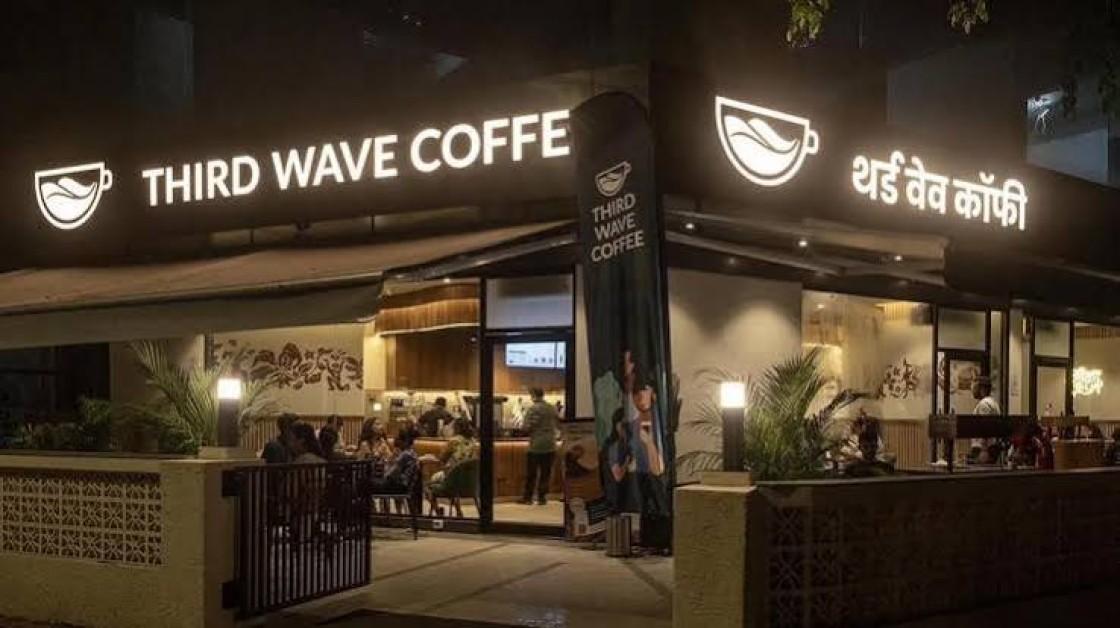
Third Wave Coffee Raises $43 Million in WestBridge Capital-Led Round to Accelerate Café Expansion
Third Wave Coffee has raised ₹408 crore, approximately $43 million, in a fresh funding round led by existing investor WestBridge Capital, giving the Bengaluru-based coffee and food chain additional capital to accelerate its nationwide expansion.
The funding round comprises a combination of primary and secondary capital and also includes participation from existing investor Creaegis and other angel investors.
Third Wave plans to deploy the fresh capital toward expanding its café footprint, increasing store density in high-potential markets and strengthening newer food categories, including its Third Rush Desserts business.
The company currently operates more than 240 cafés across India and is targeting approximately 320 locations by the end of FY27, representing one of its most aggressive periods of physical expansion to date.
The latest round takes Third Wave Coffee's total funding raised to approximately $105 million and highlights continuing investor interest in India's rapidly developing premium café and food-service market.
WestBridge Capital Leads ₹408 Crore Funding Round

WestBridge Capital, an existing investor in Third Wave Coffee, led the latest ₹408 crore financing.
The participation of an existing backer is significant because it demonstrates continued financial support as the business moves into a more capital-intensive expansion phase.
Creaegis, another existing investor, also participated alongside other individual investors.
The company did not publicly disclose the precise split between primary and secondary capital.
Primary and Secondary Capital Serve Different Purposes
The structure of the transaction is important.
Primary capital involves new shares being issued by the company, with the proceeds going directly to Third Wave Coffee.
That money can be invested in:
new cafés,
technology,
employees,
marketing,
supply chains,
and product development.
Secondary capital, by contrast, allows existing shareholders to sell some of their holdings to other investors.
The combination can simultaneously provide growth capital and liquidity to existing shareholders.
Third Wave Coffee Plans Rapid Café Expansion
Physical expansion is the central objective of the new funding.
Third Wave currently operates more than 240 cafés and aims to reach 320 cafés by the end of the current financial year.
That implies the addition of dozens of new locations within a relatively short period.
The company has also articulated a longer-term ambition of adding approximately 100 new cafés every year.
If executed successfully, that pace could significantly increase Third Wave's national footprint.
Expansion Will Deepen Existing Markets
Third Wave is not relying entirely on new-city expansion.
Part of the strategy involves increasing store density in markets where the brand is already established.
The company has operations across major cities including:
Bengaluru,
Delhi-NCR,
Mumbai,
Pune,
Hyderabad,
Chennai,
Ahmedabad,
and Kolkata.
Adding cafés within existing markets can provide operational advantages because the company already has customer awareness, supply-chain infrastructure and local management capabilities.
Store Density Can Improve Brand Visibility
A café business often benefits from clustering.
Customers are more likely to develop regular habits around a brand when multiple locations are conveniently accessible.
Greater density can improve:
brand recognition,
delivery coverage,
supply-chain efficiency,
and marketing effectiveness.
However, companies need to avoid placing outlets too close together and cannibalising existing store sales.
Eastern India Is Becoming Major Expansion Focus
Third Wave has recently entered Kolkata and is evaluating expansion across additional eastern Indian cities.
Potential markets include:
Guwahati,
Ranchi,
Patna,
and Bhubaneswar.
The expansion represents an important geographic diversification beyond the company's stronger southern and metropolitan footprint.
By entering these markets relatively early, Third Wave can attempt to establish brand recognition before organised specialty-coffee competition becomes more intense.
Eight New Geographies Are Planned
Management has indicated that Third Wave is preparing to enter eight new geographies as part of its expansion programme.
The move demonstrates how India's branded café opportunity is extending beyond the country's largest metropolitan markets.
Consumers in tier-one and tier-two cities increasingly have access to premium coffee, modern retail and organised food-service concepts.
That creates room for national café chains to build networks beyond traditional high-income urban centres.
Third Rush Desserts Becomes Second Growth Engine
Third Wave is also using the funding to scale Third Rush Desserts, a newer dessert category launched by the company.
This is strategically important because café profitability does not depend only on coffee.
Food can increase:
average transaction value,
customer frequency,
and all-day demand.
A customer who visits for dessert or food represents additional revenue without requiring Third Wave to create an entirely separate retail infrastructure.
Coffee and Desserts Can Complement Each Other
The pairing of coffee with desserts creates natural cross-selling opportunities.
A customer purchasing coffee may add a dessert.
A dessert customer may purchase a beverage.
This can increase average order value.
The combination also allows cafés to attract customers during periods when coffee demand alone might be weaker.
Food Helps Extend Café Usage Across the Day
Coffee consumption tends to have strong morning and afternoon demand.
Food broadens the use case.
Customers may visit for:
breakfast,
lunch,
meetings,
evening snacks,
or desserts.
That increases the potential utilisation of expensive café real estate throughout the day.
For a physical retail business, improving sales per square foot can significantly affect profitability.
India’s Café Market Is Becoming More Competitive
Third Wave is expanding during a period of intense competition in India's organised café industry.
The market includes international brands as well as rapidly expanding domestic chains.
Consumers now have access to:
specialty coffee,
premium cafés,
quick-service beverage chains,
and independent coffee shops.
The competitive challenge is therefore shifting from simply creating awareness about premium coffee toward building customer loyalty.
Premium Coffee Is Moving Beyond a Niche Category
India has traditionally been associated more strongly with tea consumption.
Coffee nevertheless has deep cultural roots in southern India and is increasingly becoming part of urban lifestyle consumption nationally.
Younger consumers increasingly view cafés as places for:
socialising,
working,
studying,
and meetings.
This gives coffee chains an opportunity that extends beyond the beverage itself.
Cafés Sell Space as Well as Coffee
A successful café is partly a food-and-beverage business and partly a physical-experience business.
Customers often stay significantly longer than they would at a conventional quick-service restaurant.
That means design, seating, Wi-Fi, music and location can influence customer preference.
Third Wave has positioned itself around this broader café experience.
The “Third Place” Concept Supports Café Demand
The idea of a "third place" refers to a social environment outside the home and workplace.
Cafés have become one of the most common examples.
India's growing population of:
students,
entrepreneurs,
freelancers,
and hybrid workers
creates demand for these informal meeting and working environments.
Third Wave's expansion strategy is partly built around capturing this behavioural shift.
Indian Consumers Are Becoming More Coffee Literate
The premium coffee market is also benefiting from greater consumer interest in how coffee is produced.
Customers increasingly encounter terms such as:
single origin,
cold brew,
pour-over,
and specialty roast.
This allows café chains to differentiate through product quality and storytelling rather than competing entirely on price.
India Has Strong Domestic Coffee Supply
India is itself an important coffee-producing country.
Karnataka, Kerala and Tamil Nadu account for much of domestic production.
This gives Indian café brands the opportunity to build products around locally grown beans.
Domestic sourcing can also become part of brand identity.
Third Wave Was Built Around Specialty Coffee
Third Wave Coffee was established by Sushant Goel, Ayush Bathwal and Anirudh Sharma and developed around the idea of making higher-quality coffee more accessible to Indian consumers.
The business has since expanded beyond specialty coffee into a broader café and food-service platform.
That evolution is increasingly visible in its menu, store network and investment strategy.
Latest Funding Takes Total Capital Raised to $105 Million
Following the new $43 million round, Third Wave Coffee has raised approximately $105 million in total funding.
That is substantial capital for a café business.
Physical retail requires continuous investment because each new location involves:
leases,
interiors,
equipment,
staff,
and working capital.
Large funding rounds allow café companies to expand much faster than businesses relying only on internally generated cash.
Café Expansion Is Capital Intensive
Opening a café requires significant upfront expenditure.
Companies typically need to finance:
security deposits,
fit-outs,
espresso machines,
kitchen equipment,
furniture,
and technology.
The business then needs time to build customer traffic.
A rapidly expanding café chain can therefore consume significant capital before new stores reach maturity.
Store-Level Economics Will Determine Success
The number of cafés is an easy growth metric.
But investors will ultimately care more about the economics of those cafés.
Important measures include:
revenue per store,
store EBITDA,
payback period,
and same-store sales growth.
A network of 500 profitable cafés creates value.
A network of 500 underperforming cafés can destroy it.
Third Wave Is Focusing on Unit Economics
Management has previously indicated that improving café-level economics is an important priority.
The company has said that a large majority of its cafés are operating at positive store-level EBITDA.
This becomes increasingly important as Third Wave accelerates expansion.
New stores need to mature without placing excessive pressure on consolidated profitability.
FY25 Revenue Reached ₹285 Crore
Third Wave Coffee reported operating revenue of approximately ₹285 crore in FY25.
The company remained loss-making, although its net loss narrowed to approximately ₹94 crore.
These numbers illustrate the central financial challenge facing growth-stage café chains.
Revenue can expand rapidly while profitability takes longer because new stores require substantial investment.
New Funding Gives Company More Runway
The ₹408 crore financing gives Third Wave additional resources to fund expansion without relying entirely on operating cash flow.
This can be strategically valuable while the business remains in investment mode.
However, investors will eventually expect the company to demonstrate that its growing network can produce sustainable cash generation.
Funding can finance expansion.
It cannot permanently substitute for profitability.
Profitability Becomes More Important as Company Scales
Early-stage consumer companies often prioritise expansion.
As businesses mature, investors increasingly focus on:
operating margins,
cash flows,
and return on capital.
Third Wave is reaching a scale where those questions become more important.
A larger café network should theoretically create efficiencies.
If those efficiencies do not emerge, the economics of expansion become harder to justify.
Procurement Scale Could Improve Margins
A larger network can negotiate better terms for:
coffee beans,
milk,
food ingredients,
packaging,
and equipment.
Centralised procurement spreads purchasing power across hundreds of locations.
This can reduce unit costs.
The savings may improve margins or allow more competitive pricing.
Central Kitchens Can Support Food Expansion
Food becomes more operationally complicated as the café network grows.
Centralised or regional production facilities can improve consistency.
They can also reduce preparation requirements inside individual cafés.
If Third Rush Desserts expands nationally, supply-chain design will become increasingly important.
Technology Can Improve Café Operations
Modern café chains use technology across:
ordering,
payments,
inventory,
loyalty programmes,
and workforce scheduling.
Data can reveal which products sell at specific times and locations.
This helps reduce waste and improve menu decisions.
At hundreds of locations, even small efficiency improvements can create meaningful financial impact.
Loyalty Programmes Can Increase Customer Frequency
Coffee can be a highly repeatable consumer category.
A customer may visit several times per week.
This makes loyalty particularly valuable.
Digital rewards and personalised offers can encourage customers to consolidate spending with one café chain.
A growing store network makes the loyalty ecosystem more useful because customers have more places to redeem benefits.
Delivery Adds Another Revenue Channel
Cafés increasingly generate revenue beyond walk-in customers.
Delivery platforms allow consumers to order:
coffee,
food,
and desserts
to homes and offices.
This can increase utilisation of existing kitchens.
Third Rush Desserts may be particularly suited to delivery because customers do not necessarily need the physical café experience to purchase the product.
New Cities Bring Different Consumer Behaviour
A café format that performs well in Bengaluru may not generate identical economics in Patna or Guwahati.
Differences can include:
real-estate costs,
customer spending,
menu preferences,
and peak demand periods.
Third Wave will therefore need to adapt without diluting its brand.
Smaller Cities Can Offer Lower Occupancy Costs
Tier-two cities may generate lower average ticket sizes than major metros.
But rents can also be significantly lower.
This means profitability is not determined simply by revenue.
A smaller-city café with lower sales can still generate attractive returns if operating costs are appropriately structured.
Site Selection Will Be Critical
Location is one of the most important variables in café economics.
Successful sites generally need some combination of:
high footfall,
office populations,
residential density,
or destination appeal.
Poor site selection can permanently weaken store economics.
Rapid expansion therefore increases the importance of disciplined real-estate decisions.
WestBridge’s Continued Support Is Significant
WestBridge Capital's decision to lead another round suggests continued conviction in the long-term opportunity.
The investment firm has backed Third Wave through earlier stages of growth.
Existing investors generally possess considerably more information about company performance than outside investors.
Their continued participation can therefore be an important signal, although it does not guarantee future success.
Consumer Investors Are Betting on Formalisation
The broader investment thesis extends beyond coffee.
India's food-service market remains highly fragmented.
As consumers shift toward organised chains, companies with:
strong brands,
standardised operations,
and technology
can gain share.
Private-equity and venture investors have therefore continued backing scalable consumer platforms.
Coffee Has Attractive Repeat-Purchase Characteristics
Unlike many discretionary products, coffee can be consumed frequently.
That makes the category attractive from a customer-lifetime-value perspective.
A loyal café customer can generate hundreds of transactions over several years.
The challenge is acquiring and retaining that customer economically.
Brand Loyalty Is Difficult to Build
Coffee chains compete on more than product quality.
Customers consider:
location,
price,
ambience,
menu,
and convenience.
Switching costs are extremely low.
A consumer can simply visit another café.
Brands therefore need to continuously reinforce loyalty through experience and consistency.
Competition Will Intensify as Market Expands
India's café opportunity is attracting multiple operators.
Domestic chains are expanding aggressively while international companies continue investing.
Independent specialty cafés are also growing.
This means Third Wave's capital raise provides growth resources but does not remove competitive pressure.
The company needs to expand while maintaining product and service quality.
Rapid Expansion Can Create Quality-Control Risks
A café chain operating 50 stores is easier to supervise than one operating 300.
Growth creates challenges around:
barista training,
food consistency,
cleanliness,
and customer service.
One poorly operated location can damage brand perception.
Standardised training and quality-control systems therefore become increasingly important.
Human Capital Will Be Major Requirement
Adding approximately 100 cafés per year requires a large workforce.
The company needs:
baristas,
store managers,
kitchen staff,
regional managers,
and corporate support teams.
Recruiting and training employees at this scale is a significant operational challenge.
Employee retention can directly affect customer experience.
Real Estate Will Be Another Constraint
Premium café chains typically compete for attractive locations in:
malls,
high streets,
business districts,
and affluent neighbourhoods.
These sites can command high rents.
As multiple chains expand simultaneously, competition for prime real estate may intensify.
Third Wave will need to balance visibility against occupancy costs.
Funding Creates Opportunity to Negotiate at Scale
A well-capitalised company can negotiate multiple leases and invest confidently in store development.
Landlords may also prefer established brands with strong financial backing.
The latest funding therefore improves Third Wave's ability to compete for attractive locations.
Expansion Could Strengthen National Brand Recognition
A consumer brand becomes more powerful when customers encounter it repeatedly across cities.
A traveller who knows Third Wave in Bengaluru may choose it again in Delhi, Mumbai or Kolkata.
National coverage can therefore create brand familiarity that regional operators struggle to replicate.
This network effect becomes stronger as store count increases.
320 Cafés Would Represent Important Scale Milestone
Reaching 320 locations by fiscal year-end would place Third Wave firmly among India's largest organised café networks.
Scale can create advantages in:
procurement,
technology,
marketing,
and customer data.
But it also increases management complexity.
The company will need systems capable of operating hundreds of locations consistently.
Long-Term Opportunity Extends Beyond Cafés
Third Rush Desserts demonstrates that Third Wave is beginning to think beyond coffee alone.
A successful consumer platform can potentially extend into:
packaged coffee,
ready-to-drink beverages,
food,
and other adjacent categories.
The physical café network can serve as both a distribution channel and a brand-building platform for these products.
Cafés Can Become Consumer-Brand Incubators
Physical stores provide direct customer feedback.
Third Wave can test new products in cafés before expanding them more broadly.
Products that perform well could eventually move into:
delivery,
ecommerce,
or packaged retail.
This gives the company a potential path from café operator to broader food-and-beverage brand.
Expansion Must Eventually Translate Into Cash Flow
The $43 million round gives Third Wave substantial resources.
But capital markets ultimately reward businesses capable of generating cash.
Management therefore needs to demonstrate that:
new cafés mature efficiently,
existing cafés continue growing,
food increases average spending,
and corporate costs scale more slowly than revenue.
Those factors will determine whether rapid expansion creates sustainable value.
Conclusion
Third Wave Coffee's ₹408 crore ($43 million) funding round led by WestBridge Capital marks another major step in the company's transformation from a Bengaluru specialty-coffee business into a national café and food-service platform.
The round, which includes both primary and secondary capital, also saw participation from Creaegis and other investors.
Third Wave currently operates more than 240 cafés and plans to reach approximately 320 locations by the end of FY27, while expanding into new geographies and increasing density across established markets.
The company is also using fresh capital to strengthen Third Rush Desserts, signalling that its growth strategy increasingly extends beyond coffee into broader food occasions.
With the latest round taking total funding to approximately $105 million, Third Wave has substantial capital to pursue its ambitions.
The more important question now is how efficiently that capital is deployed.
India's premium café market offers considerable room for growth, but expansion brings high real-estate costs, intense competition and significant operational complexity.
Third Wave's next phase will therefore be judged not simply by how quickly it reaches 320 cafés, but by whether those stores can generate strong unit economics, repeat customers and a credible path toward sustainable profitability.
 Third Wave Coffee Raises $43 Million to Accelerate Café Expansion Across India FAQs
POST A COMMENT (0)
All Comments (0)
Replies (0)